

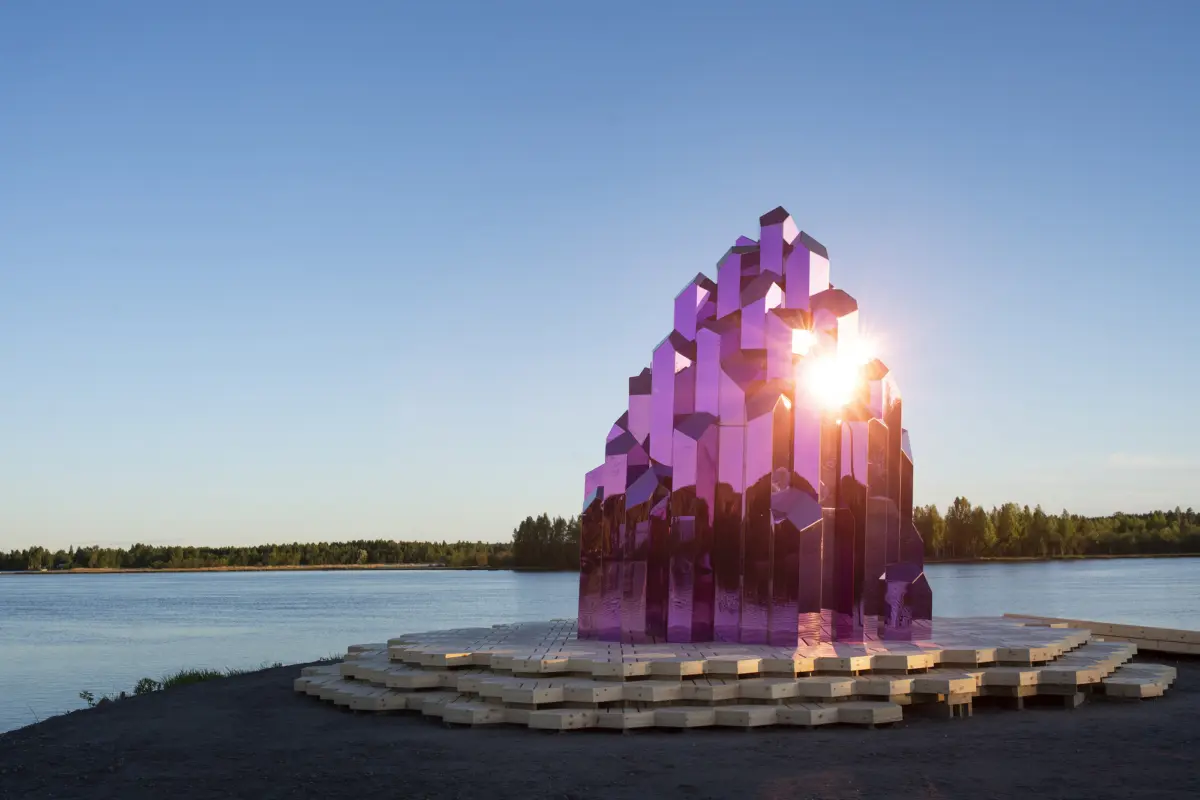
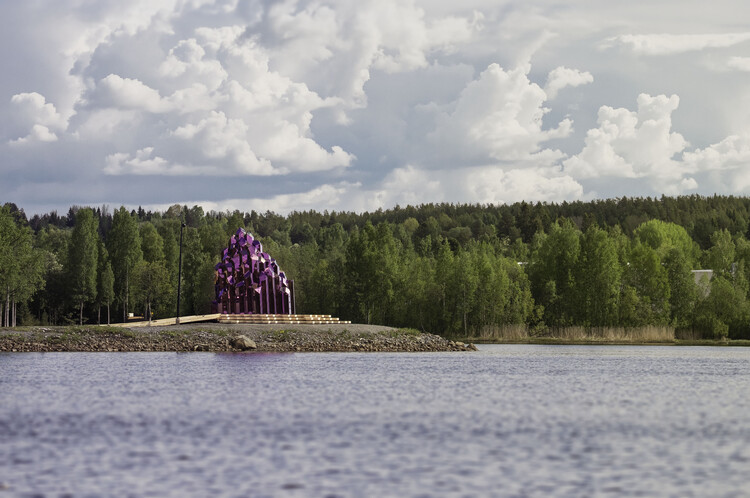
SKELLEFTEÅ, SWEDEN — In the subarctic reaches of northern Sweden, a striking architectural and artistic intervention is changing the conversation around industrial legacy, ecological healing, and community resilience. Guided by the provocative manifesto "From Waste to Promise," the newly developed WasteLand park has transformed a heavily contaminated former industrial brownfield into a vibrant public greenspace. At the heart of this regenerative landscape sits the Crystal Sauna, a sculptural tour de force designed by the renowned Swedish artist duo Bigert & Bergström.
Serving simultaneously as a functioning public bathhouse, an immersive contemporary art installation, and a socio-ecological anchor, the Crystal Sauna bridges the gap between hard climate science and visceral human experience. By inviting residents and visitors to sweat, gather, and reflect on the edge of a once-toxic site, the project redefines what it means for a city to heal itself from the inside out.
Main Facts
The Crystal Sauna is the premier architectural centerpiece of the WasteLand initiative in Skellefteå, a municipality experiencing rapid industrial growth driven by the green transition.
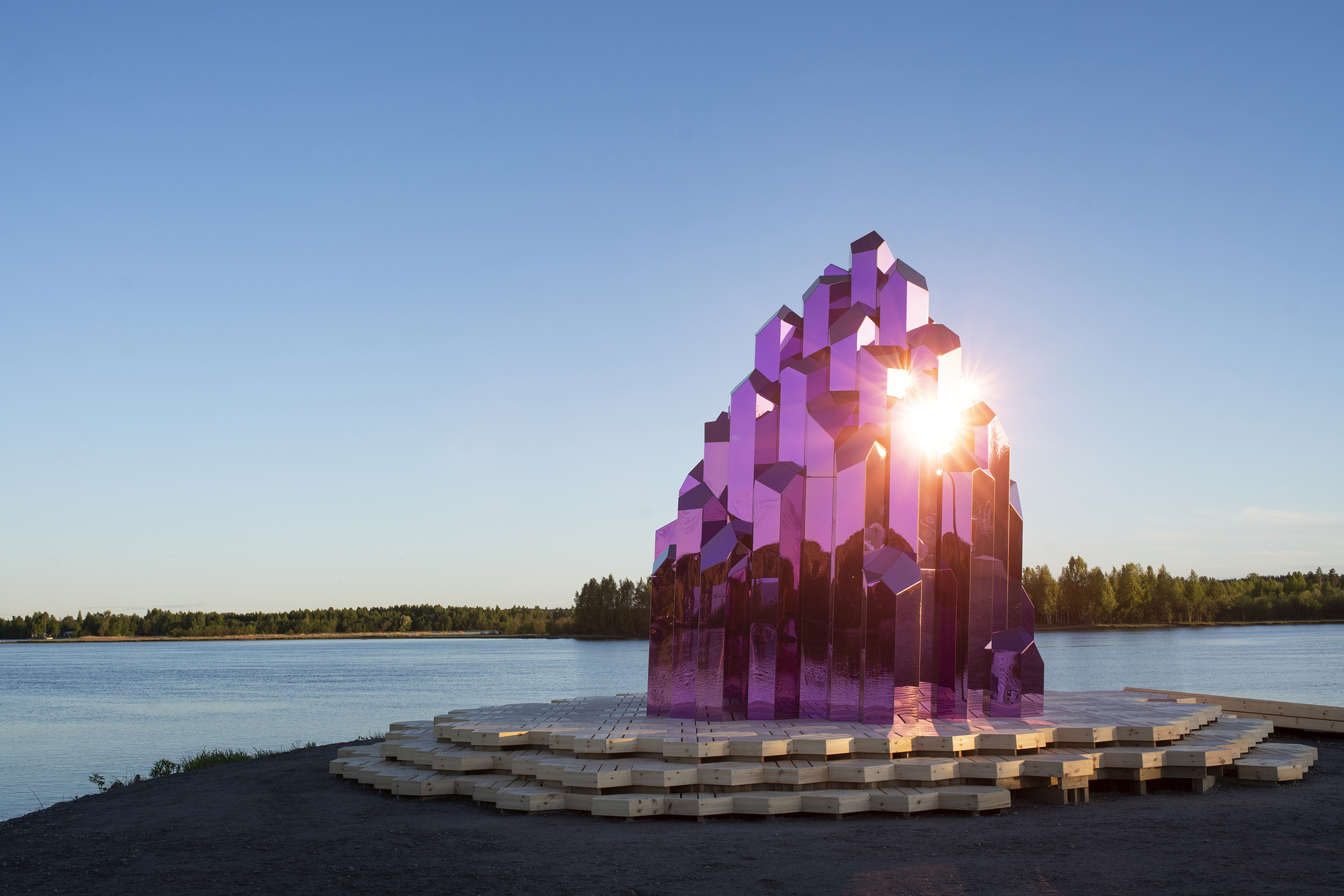
- Project Name: Crystal Sauna
- Location: Skellefteå, Sweden
- Architects / Artists: Bigert & Bergström
- Core Concept: A synthesis of regenerative urban design, contemporary art, and climate science rooted in the philosophy of "From Waste to Promise."
- Primary Function: A fully operational public sauna and communal social space built on a remediated industrial brownfield.
- Photographers: Pär Olofsson and Jonas Westling
The project challenges conventional landscape architecture by refusing to sweep the site’s industrial scars under the rug. Instead, the sauna and its surrounding park embrace the history of contamination, transforming an environmental liability into a living laboratory for urban ecology and public wellness.
Chronology of Transformation: From Toxic Ruin to Thermal Sanctuary
The realization of the Crystal Sauna and the broader WasteLand park is the culmination of years of strategic planning, environmental remediation, and visionary artistic intervention.
Phase 1: The Industrial Legacy and Abandonment (Late 20th Century)
For decades, the plot of land hosting the current park was dedicated to heavy industrial operations. Like many post-industrial sites across northern Europe, the area accumulated significant soil and environmental contamination. Long viewed as a dead zone, the plot was fenced off, representing a physical and psychological barrier within the urban fabric of Skellefteå.
Phase 2: The Shift Toward Regenerative Urbanism (Early 2020s)
As Skellefteå positioned itself as a vanguard for sustainable industrial growth—most notably through major investments in green battery manufacturing and carbon-neutral forestry—local leadership recognized the need to address its own internal brownfields. Rather than opting for standard commercial redevelopment, the city embraced a radical proposition: remediate the land while using art and architecture to tell the story of ecological recovery. The WasteLand project was conceived to turn a neglected liability into an ecological asset.
Phase 3: Commissioning Bigert & Bergström (Mid-2020s)
Known for their large-scale, climate-focused installations that often explore humanity’s relationship with extreme weather and environmental systems, Bigert & Bergström were brought on board to anchor the park. The duo envisioned a structure that would embody the paradox of industry and nature. The Crystal Sauna was designed not as an escapist retreat, but as a transparent, participatory monument that forces visitors to confront the landscape’s past while enjoying the restorative traditions of Nordic bathing culture.
Phase 4: Construction, Completion, and Opening (September 2026)
Following rigorous soil remediation and landscape restructuring, construction of the Crystal Sauna was completed. The site officially opened to the public, instantly establishing itself as a landmark where contemporary art, climate discourse, and communal relaxation intersect.

Supporting Data & Architectural Context
The design philosophy of the Crystal Sauna relies heavily on material contrast, geographic positioning, and psychological engagement.
The Brownfield Context
Brownfield regeneration is notoriously complex, requiring meticulous containment, soil washing, and biological phytoremediation to ensure public safety. By placing a sauna—an intimate structure dedicated to health, cleansing, and bodily vulnerability—directly on top of a remediated industrial site, Bigert & Bergström subvert traditional anxieties associated with contaminated land. The act of sweating and cleansing becomes a symbolic ritual of purification for both the human body and the urban earth.
Integration of Art and Architecture
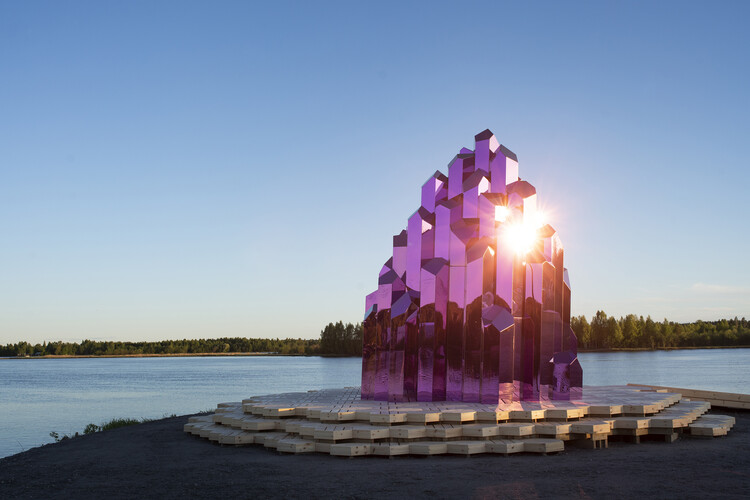
Bigert & Bergström have long experimented with extreme architectural typologies, such as meteorological rescue pods and biosphere-inspired greenhouses. The Crystal Sauna continues this lineage by utilizing crystalline geometry. The structure’s faceted exterior acts as an optical apparatus, catching the shifting subarctic light—from the endless twilight of the northern summer to the deep, starry nights of winter—and refracting it back into the landscape.

+-------------------------------------------------------------+
                   THE RENEWAL CYCLE
+-------------------------------------------------------------+
  [ Contaminated Brownfield ] ---> ( Soil Remediation )
              |
              v
  [ WasteLand Public Park ] <--- ( Ecological Healing )
              |
              v
  [ Crystal Sauna Anchor ]  ---> ( Communal Well-being )
+-------------------------------------------------------------+
Climate and Microclimate Engineering
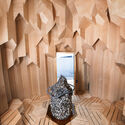
In northern Sweden, architectural performance must respond aggressively to extreme thermal fluctuations. The Crystal Sauna balances high-efficiency thermal insulation inside its timber-clad bathing chambers with an external crystalline envelope designed to withstand heavy snow loads and sub-zero temperatures. The building serves as a thermal buffer, offering a warm sanctuary against the biting cold of the subarctic climate while maintaining an open visual connection to the recovering park outside.
Official Responses and Perspectives
The unveiling of the Crystal Sauna and the WasteLand park has garnered significant praise from urban planners, art critics, and local municipal leaders alike.
The Artists’ Vision
In their project statement, Bigert & Bergström emphasized the narrative power of the intervention:
"Guided by the philosophy ‘From Waste to Promise,’ WasteLand transforms a heavily contaminated former industrial site into a public park where regenerative urban development, contemporary art, and climate science meet. The Crystal Sauna was conceived… as both a public artwork and a functioning social space: a place where questions of climate, technology, and societal transformation can be experienced physically."
Art critics have noted that the project successfully avoids the pitfalls of "greenwashing" or sterile gentrification. By keeping the memory of the industrial wasteland alive through the park’s thematic framework, the designers ensure that the site’s history is neither erased nor romanticized, but actively metabolized by the community.
Municipal Leadership
City officials in Skellefteå have highlighted the project as a cornerstone of their broader identity as a modern, forward-thinking municipality. By intertwining culture with heavy industrial transformation, the city demonstrates that ecological recovery does not have to look clinical or exclusive. Instead, it can be deeply social, warm, and integrated into everyday civic life.

Implications for Future Urban Development
The Crystal Sauna and the wider WasteLand initiative carry profound implications for how post-industrial cities across the globe approach brownfield regeneration in the era of climate change.
1. Art-Led Remediation as a Catalyst for Public Engagement
Traditional brownfield redevelopment often focuses strictly on engineering metrics: parts per million of contaminants reduced, capping layers installed, and zoning approvals secured. While essential, these processes rarely capture the public imagination. By embedding a high-profile art installation and a beloved cultural typology—the sauna—into the cleanup process, Skellefteå has proven that civic pride can be rebuilt concurrently with the soil.
2. Somatic Environmentalism
The project introduces the concept of somatic environmentalism—the idea that climate science and urban ecology are best understood not just through data dashboards, but through physical, bodily experience. Sitting in the heat of the Crystal Sauna while gazing out over a remediated industrial park forces visitors to physically inhabit the liminal space between human industry and ecological restoration.
3. A New Blueprint for Subarctic Cities
As northern latitudes experience rapid industrial development driven by the global green transition, towns like Skellefteå face unique pressures on their land, housing, and infrastructure. The Crystal Sauna model shows that urban growth can be paired with spaces of deep contemplation, slowness, and communal healing.
Ultimately, Bigert & Bergström have crafted more than just a bathhouse. They have built a crystalline lens through which a northern industrial city can view its past, endure its present, and sweat its way into a more promising future.
