

By David Lumb
Published: September 2026
Main Facts: Bandai Namco’s Bold New Direction for the Mech Franchise
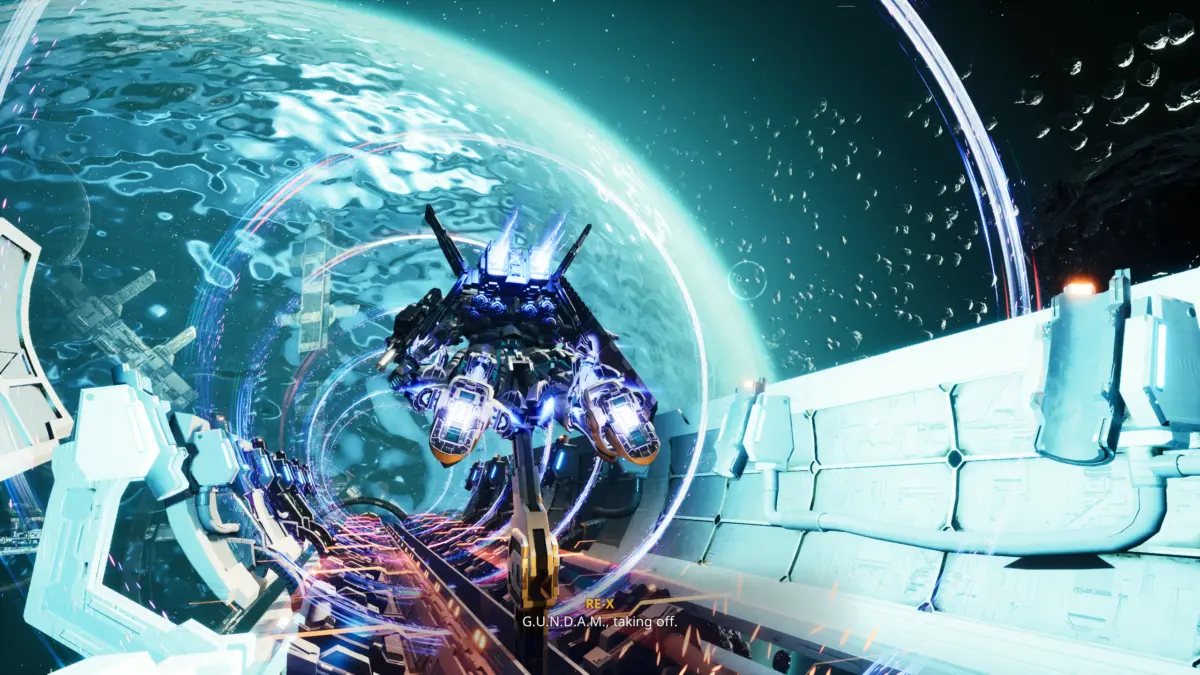
When piloting a massive, highly sophisticated bipedal weapon in a video game, players generally demand two things: a distinct, larger-than-life personality and devastating punch. Following an extensive, hands-on preview session with Bandai Namco’s upcoming Gundam: Rogue Orbit, it is increasingly clear that the title aims to deliver aggressively on both fronts. Scheduled for a global launch on March 5, 2027, for PC, Xbox Series X/S, and PlayStation 5, Rogue Orbit represents a fascinating structural pivot for a franchise historically rooted in deeply political space operas, complex factional warfare, and meticulous resource management.
Unlike recent heavyweights in the mech action genre—most notably 2023’s critically acclaimed Armored Core VI: Fires of Rubicon—Gundam: Rogue Orbit strips away the dizzying array of micro-customization parameters and blindingly fast three-dimensional aerial maneuvers that often made optimization feel like an accounting exercise. Instead, Bandai Namco is steering the property toward a streamlined, aggressively focused, melee-centric action game.
The early preview build provided access to two distinct stages and three pre-configured mobile suits. While full kit customization—a hallmark of the broader Gundam universe—was locked off to keep the spotlight firmly on immediate mechanical engagement, the hour-long session offered a remarkably clear window into how the studio plans to modernize the storied intellectual property for a broader action-gaming audience.

Chronology: From First Look to the March 2027 Launch Window
The path toward Gundam: Rogue Orbit has been gradual, marked by stylized teaser trailers and cryptic narrative drops at major gaming showcases, culminating in a prominent appearance during a State of Play broadcast.
- Late 2025 – Early 2026: Bandai Namco begins dropping promotional material for a wholly original standalone Gundam universe, teasing a dramatic departure from the long-standing Universal Century timeline and steering clear of traditional factions like the Earth Federation or Zeon.
- Mid-2026: Official release date trailers debut, confirming the March 5, 2027, launch window alongside early character reveals, including the protagonist RE-X and key crew members Commander April and Sophia.
- September 2026: Media hands-on previews go live. Journalists are given a strict, one-hour vertical slice of the game, experiencing two unique combat scenarios—an enemy gauntlet featuring a miniboss and a grand-scale boss encounter—utilizing three preset mobile suits.
- March 5, 2027 (Upcoming): Global release across current-generation consoles and PC.
Supporting Data: Breaking Down the Combat Mechanics and HUD
For a game focusing so heavily on kinetic, up-close brutality, understanding the user interface and tactical feedback loops is essential. The preview build revealed a clean, uncluttered heads-up display (HUD) optimized for lightning-fast reading during frantic melee exchanges.
The HUD Breakdown
From left to right, the interface displays:
- Health Bar: Standard survival metric tracking damage sustained from enemy attacks.
- Support Items: Cool downs and readiness for auxiliary equipment, such as automated orbiting defense drones that fire synchronized volleys when the player executes a dash.
- Ultimate Ability Meter: Centered prominently, this gauge tracks high-impact, temporary game-changers. In the preview build, activation granted unlimited dashes for a limited duration, concluding with a devastating downward lance of concentrated energy beams.
- Special Attack Skills: Tied directly to specific elemental or physical properties of the equipped melee loadout.
- Weapon Skills: Core operational moves mapped to standard inputs.
Arsenal and Weapon Dynamics
While traditional mecha titles lean heavily on long-range beam rifles, artillery shells, and missile barrages, Rogue Orbit aggressively restricts primary damage output to close-quarters engagement.

- The Sword: Favors sweeping, wide-area arcs that trigger trailing explosive aftermaths upon impact.
- The Whip: Uncoils to extend striking reach, allowing for mid-range crowd control and sweeping strikes against fast-moving targets.
- The Lance: Features a signature "drill-dash" maneuver, enabling players to rapidly close the gap while simultaneously repositioning their mobile suit for a high-impact piercing strike.
A particularly satisfying touch is the inclusion of brief hit-stop frames—momentary pauses in animation upon physical contact with an enemy. This classic action-game design choice accentuates the perceived weight of every swing, letting players fully savor the visual and acoustic feedback of their destructive output.
Official Responses and Narrative Context: Beyond the Universal Century
Because the preview window was restricted to pure gameplay, narrative exposure was intentionally kept light. However, promotional materials and brief dialogue snippets have painted a picture of a universe distinct from anything fans of the classic anime timeline have experienced before.
Cast and Lore
Players step into the cockpit as RE-X, a genetically or artificially engineered human male whose very existence is explicitly tied to piloting a Gundam—in this case, the sleek and responsive Gundam Helix. Accompanying RE-X from the safety and strategy of their mother ship are Commander April and the game’s central heroine, Sophia.
Familiar Easter eggs make an appearance, most notably Haro, the franchise’s iconic, ball-shaped green mascot droid. Speculation remains high within the fanbase regarding the potential inclusion of a masked antagonist in the storied tradition of Char Aznable, though Bandai Namco has kept tight-lipped on such narrative twists.

The Alien Threat Paradigm
Perhaps the most striking narrative departure is the enemy roster. Traditional Gundam media thrives on sociopolitical friction: colonial dropouts, corrupt space federations, and tragic ideological schisms between humans. Rogue Orbit, however, introduces what appears to be a fundamentally xenomorphic, monstrous threat.
The enemies encountered during the preview were distinctly organic and monstrous in silhouette rather than mechanical. This shift opens up fresh mechanical and aesthetic design space, allowing the developers to build massive, fantasy-inspired boss encounters that break away from traditional mechanical Mobile Armors.
- The Giant: Encountered at the conclusion of the space station exterior mission, this ogre-like humanoid miniboss features a dedicated health bar and a secondary stagger meter. Depleting the stagger meter temporarily incapacitates the foe, opening windows for sustained assault. Furthermore, targeted structural damage to specific limbs can actively disable or degrade the boss’s offensive capabilities.
- The Drake: The climax of the second mission pits the player against a colossal, dragon-like entity complete with flaming wings, sweeping tail attacks, and ranged energy projectiles. Breaking its wings and tail through concentrated damage temporarily neuters its most devastating aerial assaults.
Implications: Does Rogue Orbit Feel Like a Real Gundam Game?
As the March 2027 release date approaches, the gaming community finds itself divided on a fundamental question: How much Gundam is actually inside Rogue Orbit?
By trimming away the microscopic component-swapping and hyper-complex physics simulations seen in titles like Armored Core, Bandai Namco is clearly courting a wider demographic—fans of character action games, Dynasty Warriors, and fast-paced melee brawlers. The decision to ground the mobile suits in a familiar, gravity-defying terrestrial movement style while operating on the exterior of a space station requires a brief suspension of disbelief, but it successfully eliminates the floaty, disorienting zero-g mechanics that often alienate casual players.

Yet, purists may wonder if stripping away the dense political intrigue and replacing political factions with monstrous, dragon-like entities drifts too far from franchise roots. Is a Gundam game still a Gundam game if it trades ideological warfare for high-fantasy kaiju hunting?
Ultimately, the answer will hinge on the depth of the narrative and the ultimate flexibility of the full game’s customization suite. If the combat’s high degree of polish translates seamlessly across a fully realized campaign, and if the narrative can recapture the emotional gravity of a human pilot grappling with the existential weight of war, Gundam: Rogue Orbit could easily emerge as one of 2027’s standout action titles. Until then, the combat’s crisp execution is more than enough reason to look forward to climbing back into the cockpit.
