

SAN FRANCISCO — In the upper echelons of automotive luxury, the definition of a flagship vehicle is undergoing a seismic shift. No longer is it enough for a high-end luxury vehicle to simply glide silently down the asphalt, insulate its occupants from the chaos of the outside world, or wrap its cabin in fine leather and polished wood. The modern ultra-luxury vehicle must double as a rolling sanctuary, a mobile productivity suite, and, increasingly, a private cinematic experience.
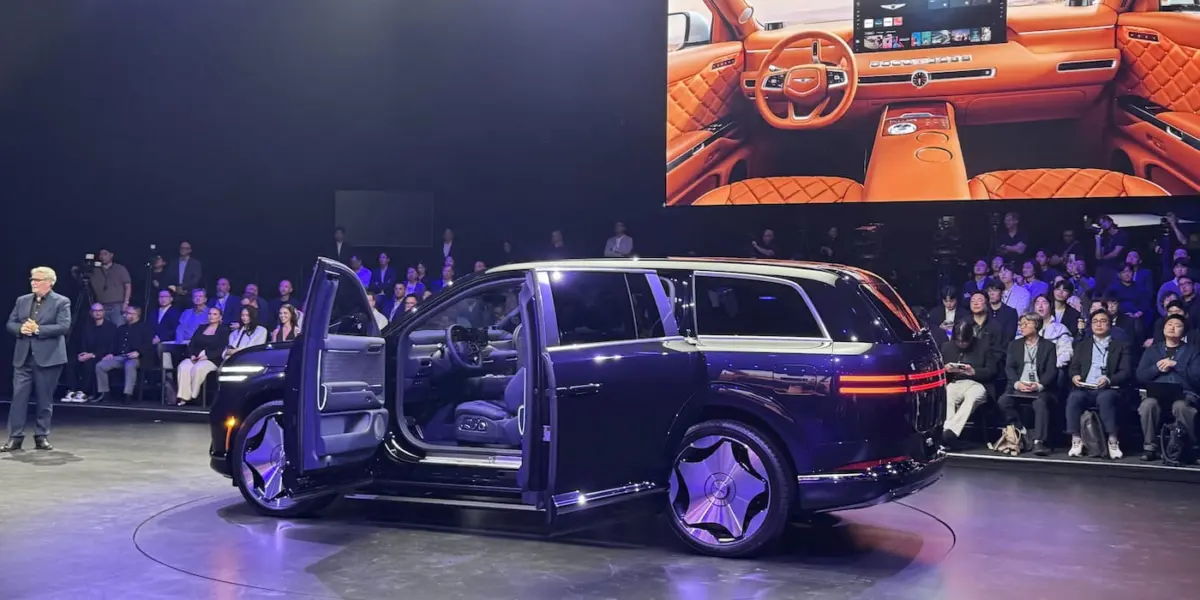
Enter the Genesis GV90. Officially unveiled to a captivated audience at San Francisco’s historic Palace of Fine Arts, Hyundai’s luxury division has formally planted its flag in the elite tier of the global automotive market. While its striking B-pillarless coach doors—known as the "Neolun Arch Gate"—and its innovative swiveling front seats initially stole the headlines, a deeper dive into the vehicle reveals an interior ecosystem designed to redefine how humans interact with technology while on the move.
At the center of this revolution is a piece of engineering that turns the cabin into a personal theater: a pop-up, extendable OLED cinematic display stretching up to 24.6 inches, paired with an acoustic environment designed to rival high-end commercial cinemas.
Main Facts: The Anatomy of a New Flagship
The Genesis GV90 represents the pinnacle of Hyundai Motor Group’s engineering prowess, merging avant-garde design with bleeding-edge technology. Measuring an imposing 208.1 inches (5,285 mm) long, 79.9 inches (2,030 mm) wide, and 71.5 inches (1,815 mm) tall—with a sprawling 127.8-inch (3,245 mm) wheelbase—the GV90 eclipses corporate stablemates like the Hyundai IONIQ 9 and Kia EV9.
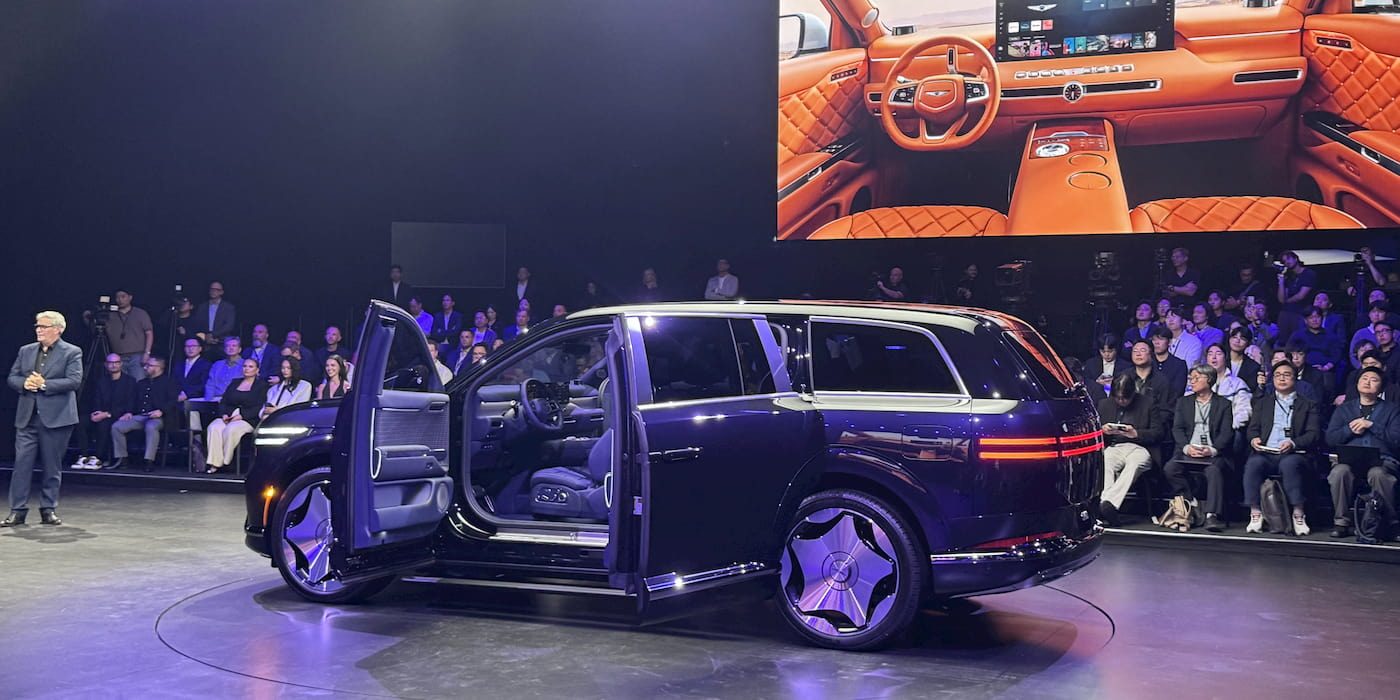
Underneath its regal sheet metal lies a massive 123.5 kWh battery pack, the largest ever deployed in a Hyundai Motor Group electric vehicle. This powerhouse feeds the vehicle’s dual-motor setup, delivering an estimated range of roughly 310 miles (500 kilometers) for the standard seven-seater variant.
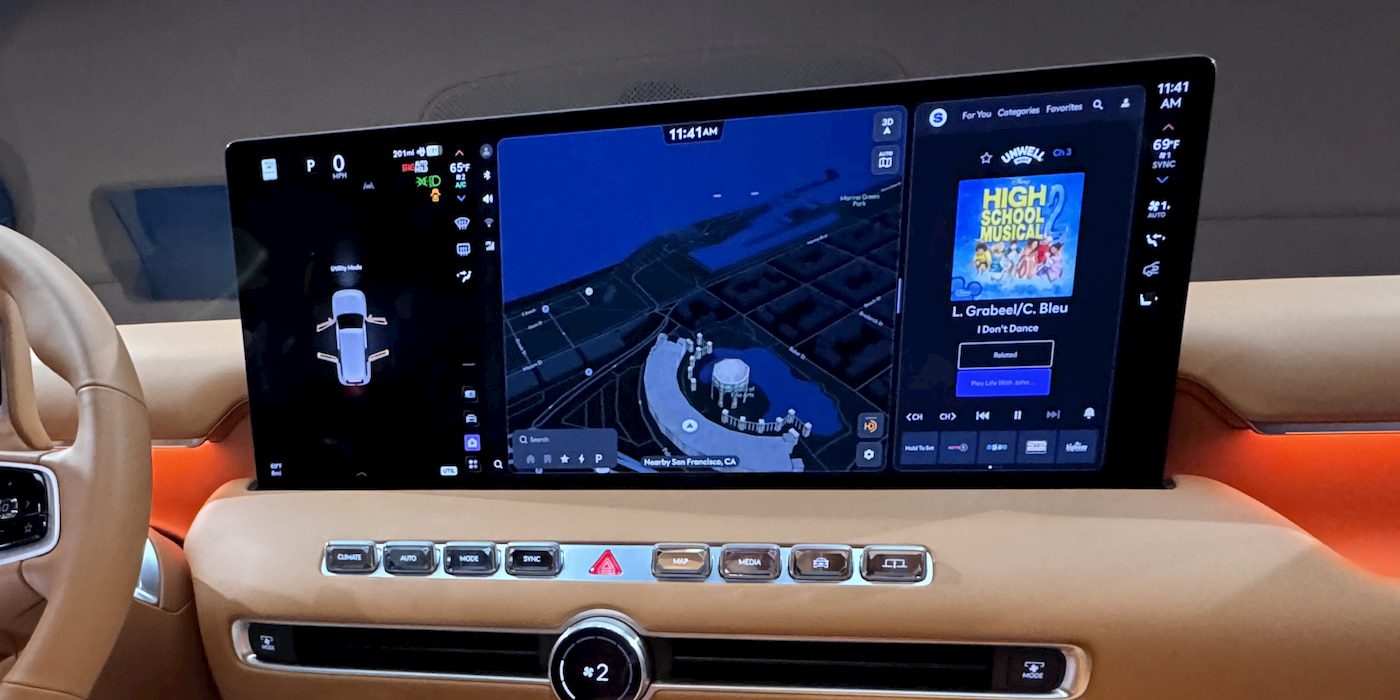
However, the hardware dimensions only tell half the story. The GV90 is the first vehicle within the broader Hyundai Motor Group portfolio to feature a brand-new extendable display architecture, and the pioneer of Genesis’s proprietary Pleos Connect infotainment system. While variations of Pleos Connect are slated for other upcoming models, the software running inside the GV90 has been exhaustively customized to match the flagship’s ultra-premium positioning.
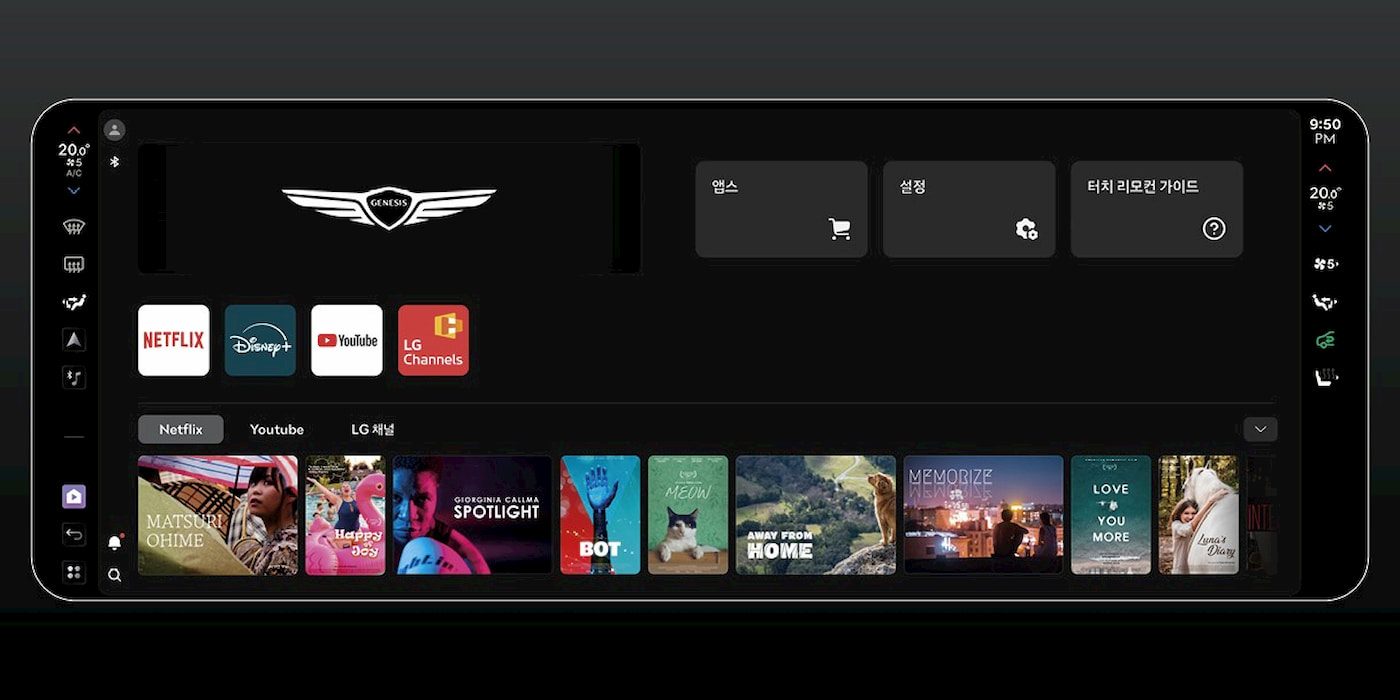
The centerpiece of this system is the aforementioned pop-up OLED display. When the vehicle is in motion, the screen measures a functional, driver-friendly 23.6 inches. But the moment the vehicle is shifted into park, the screen expands at the touch of a button to an immersive 24.6 inches, activating "Media Home" mode. This unlocks seamless integration with third-party streaming services like Netflix, live television, and high-definition audio platforms.
To anchor this visual feast, Genesis partnered with Bang & Olufsen to install a 25-speaker Premier 3D Sound System equipped with Dolby Atmos. The result is an acoustic envelope that transforms the cabin into an acoustically tuned auditorium.
Chronology: From Concept Genesis to San Francisco Debut
The journey of the GV90 from a glimmer in designers’ eyes to a physical reality has been a carefully orchestrated evolution.
- Early 2024: Genesis hints at its future design language with sweeping concept vehicles, establishing the aesthetic blueprint for what would eventually become its flagship architecture. Whispers of a large, three-row electric SUV bearing the "GV90" moniker begin to circulate through automotive industry circles.
- August 19, 2026: Genesis officially lifts the veil on the production-ready GV90 during a high-profile global debut event at the Palace of Fine Arts in San Francisco. The automotive world catches its first real glimpse of the Neolun Arch Gate coach doors, the swiveling seats, and the transformable OLED display.
- Late August to Early September 2026: Automotive journalists and industry insiders are given exclusive, hands-on first looks with the vehicle. Detailed walkthroughs of the Pleos Connect software and its contextual UI states are demonstrated to the press, highlighting the stark division between driving-focused ergonomics and parked-relaxation modes.
- Present Day: As the initial wave of post-debut analysis settles, the industry recognizes the GV90 not just as a vehicle, but as a technological benchmark for the next decade of luxury motoring.
Supporting Data: Dimensions, Power, and Digital Architecture
To truly understand where the Genesis GV90 sits in the automotive landscape, one must examine the hard metrics that define its platform.
Dimensional Comparison and Physical Specs
- Length: 208.1 inches (5,285 mm)
- Width: 79.9 inches (2,030 mm)
- Height: 71.5 inches (1,815 mm) [71.4 inches when configured with 24-inch wheels]
- Wheelbase: 127.8 inches (3,245 mm)
- Battery Capacity: 123.5 kWh (Lithium-ion)
- Estimated Range: ~310 miles (500 km) for the 7-seater variant
Digital and Infotainment Specifications
- Driving Screen Size: 23.6 inches (OLED)
- Parked Cinematic Screen Size: 24.6 inches (OLED, motorized extension)
- Head-Up Display (HUD): Custom 25-inch projection across the windshield
- Audio System: 25-speaker Bang & Olufsen Premier 3D Sound System with Dolby Atmos
- AI Companion: Gleo AI (natural language processing for vehicle controls, media search, and web queries)
The interior ergonomics are deliberately bifurcated. Unlike standard infotainment setups that dump all controls into a monolithic center tablet, the GV90’s Pleos Connect interface features dedicated menu bars flanking both sides of the screen. The driver’s side is meticulously optimized for piloting duties—handling navigation, real-time vehicle telemetry, and climate control configurations. Meanwhile, the passenger side acts as a media and app command center. Individual seat control buttons are embedded directly into these menu bars, ensuring that adjustments can be made without digging through complex software sub-menus.
Furthermore, Genesis has wisely resisted the industry-wide temptation to entirely eliminate tactile feedback. Nestled neatly beneath the expansive digital glass are physical buttons for critical climate control functions and media playback, acknowledging that muscle memory still matters when driving at highway speeds.
Official Responses: The Philosophy Behind the Screen
The rationale behind the GV90’s radical user experience (UX) design comes directly from the engineers and designers tasked with building it. Modern electric vehicles are no longer judged solely by their horsepower or quarter-mile times; they are evaluated on how they manage the human experience during travel and downtime.
Inho Yoon, the lead designer and developer for the GV90’s Pleos Connect system, articulated this paradigm shift during the vehicle’s debut briefings.
"Modern automobiles are no longer used simply as tools to get from Point A to Point B," Yoon noted. "Electric vehicles, in particular, serve as mobile power banks and living spaces. Our goal with the GV90 was to leverage this architectural flexibility to provide a highly immersive, movie theater-like experience when occupants want to unwind."
This sentiment is echoed by Lee Min-ah, a senior researcher on the Infotainment UX Development Team, who spearheaded the interface design for Pleos Connect. Lee emphasized that the challenge was balancing the rich, smartphone-like familiarity of the apps with the rigorous safety and functional demands of an automobile.
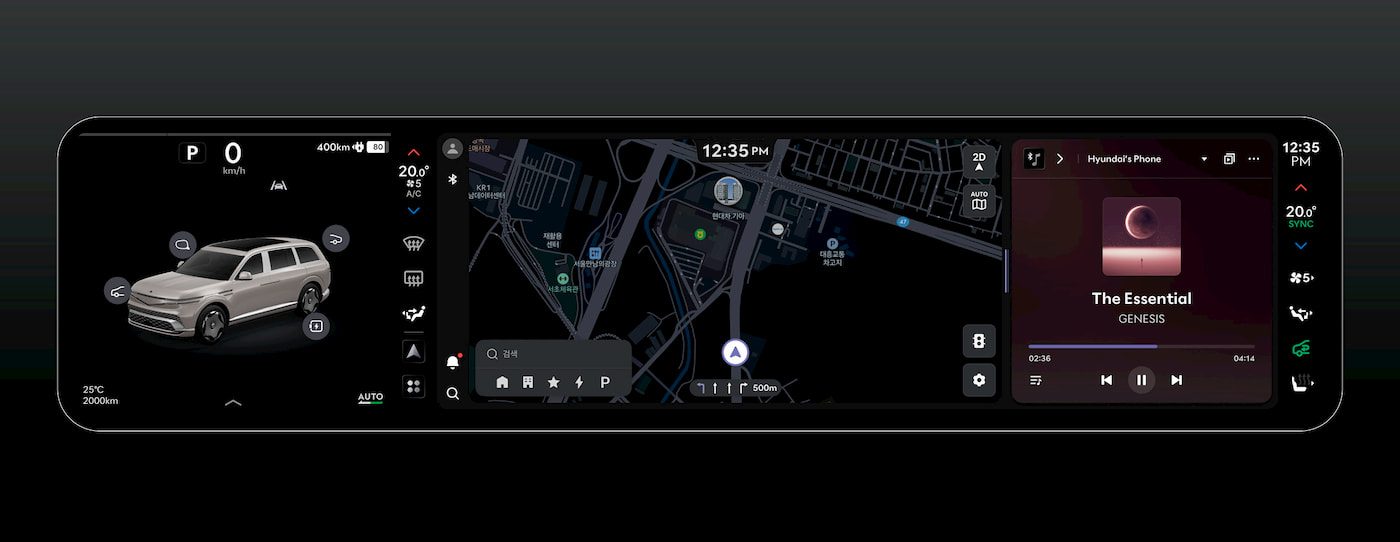
"I devoted considerable effort to designing the display’s app screen policies so that the experience of using navigation and other apps simultaneously could flow seamlessly," Lee explained. "While driving, the system needs to feel intuitive, fast, and familiar. When parked, it needs to instantly pivot to entertainment without feeling cluttered."
The inclusion of Gleo AI—Hyundai’s advanced in-car artificial intelligence companion—further cements this philosophy. Whether a driver needs to find an esoteric restaurant recommendation along their route or query real-time sports scores and news headlines via natural language voice commands, Gleo AI handles the request without requiring the user to take their eyes off the road or their hands off the steering wheel.
Implications: Genesis Graduates to the Big Leagues
The launch of the Genesis GV90 carries profound implications for both the brand and the broader luxury automotive market. For years, Genesis has fought an uphill battle as a well-regarded challenger brand—a "dark horse" attempting to steal market share from entrenched European heavyweights like Mercedes-Benz, BMW, and Audi, as well as elite British stalwarts like Bentley and Rolls-Royce.
With the GV90, that narrative changes definitively. By offering two distinct exterior configurations—the ultra-exclusive GV90 Neolun featuring the pillarless coach doors, and the more traditional GV90 variants outfitted with conventional swing doors—Genesis is catering to both traditionalists and avant-garde luxury buyers.

More importantly, the technology showcased inside the GV90 demonstrates that legacy automakers can out-innovate tech startups when they combine world-class mechanical engineering with thoughtful, human-centric software design. Features like the motorized 24.6-inch OLED cinematic display and the acoustic mastery of the Bang & Olufsen 3D sound system set a brand-new benchmark for what consumers should expect from a flagship electric vehicle.
As the GV90 prepares to roll onto public roads, it stands as tangible proof that Genesis is no longer just nipping at the heels of the luxury establishment. It is leading the charge into the next generation of automotive opulence.
