

Main Facts
For the modern tradesman, footwear is arguably the most critical piece of equipment worn daily. Standing on concrete, navigating uneven terrain, and scaling ladders places immense physical stress on the feet, knees, and lower back. Enter the Timberland Pro Boondock line—a staple in the industrial footwear sector boasting an expansive family of 26 distinct styles tailored for demanding environments. Among the most anticipated additions to this lineup are the new Ultralight models, highlighted by two specific configurations featuring the innovative dual-dial BOA Fit System.
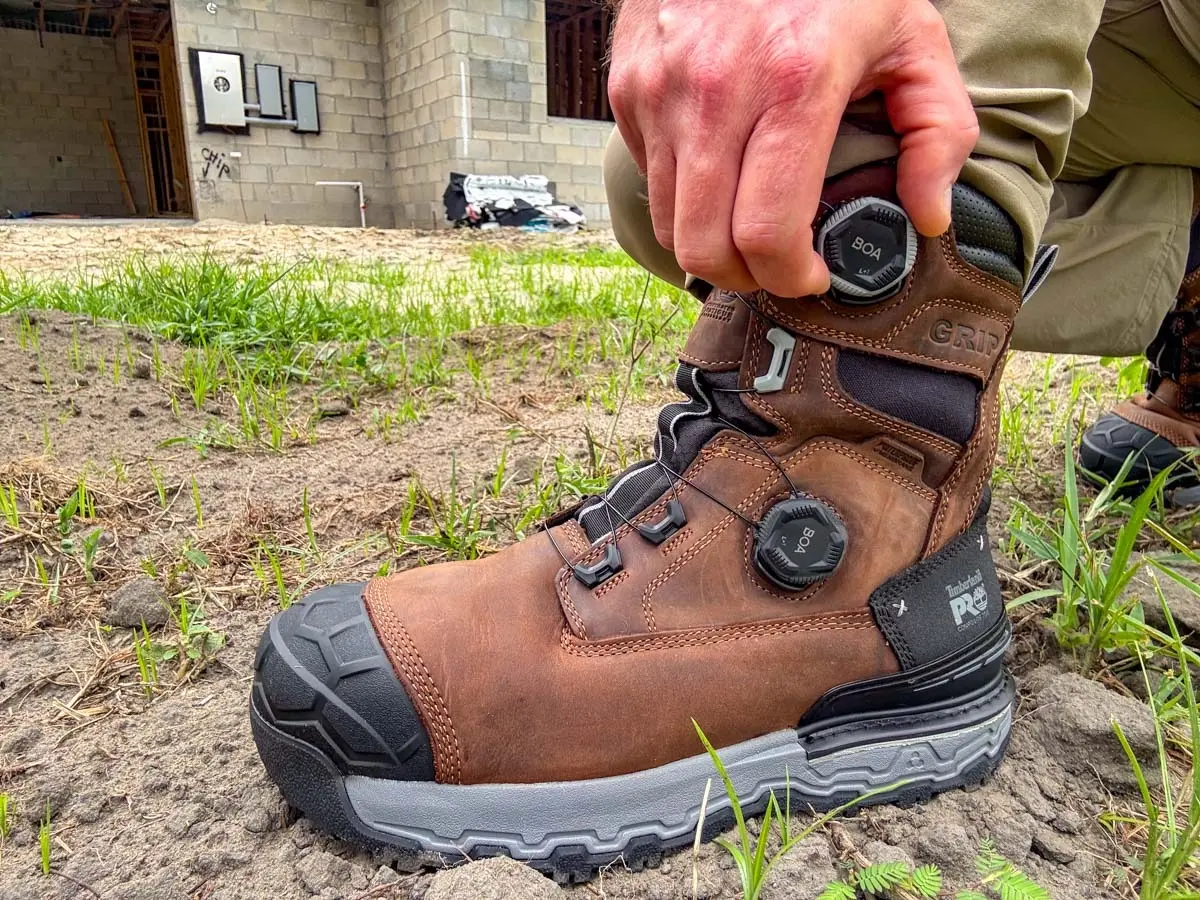
The Timberland Pro Boondock Ultralight work boot is engineered to bridge a historically difficult gap in industrial footwear: offering heavy-duty protection and cloud-like cushioning without the burdensome weight that typically accelerates leg fatigue. This review dives deep into the 8-inch dual-dial BOA variant of the Boondock Ultralight, investigating whether the massive weight reduction impacts durability, evaluating the true utility of a dual-dial lacing system, and determining if these boots justify their $190 to $270 price tag.
Key specifications at a glance:
- Product Line: Timberland Pro Boondock Ultralight
- Tested Model: 8-Inch with Dual-Dial BOA Fit System
- Weight (Size 9 Spec): 33.5 ounces per boot
- Weight (Tested Size 13): 36.6 ounces per boot
- Weight Comparison: Standard 8-inch Boondock weighs 44.4 ounces (a savings of roughly 2/3 of a pound per boot on the Ultralight model)
- Price Range: $190 to $270 depending on style and features (Tested model retails at $270)
Chronology and Field Testing
The evaluation of the Timberland Pro Boondock Ultralight was not conducted in a sterile laboratory setting; rather, it was put through rigorous, real-world trials under grueling conditions. The testing phase specifically took place during the peak of an oppressive August in Florida, introducing high ambient temperatures and heavy humidity into the equation to test breathability, sweat management, and material integrity under duress.
Phase 1: Unboxing and Initial Impressions
Upon first handling the 8-inch Boondock Ultralight, the immediate takeaway was the noticeable lack of heft. For larger workers and endurance athletes, the cumulative effect of ounces turning into pounds over a ten-hour shift is well-documented. While an 8-inch boot inherently carries more material than a low-cut hiker or 6-inch work boot, the Ultralight design immediately feels nimble. Stepping into the boot for the first time revealed an immediate plushness in the midsole, transitioning quickly into a profound sense of shock absorption upon stepping onto concrete surfaces.
Phase 2: Daily Jobsite Integration
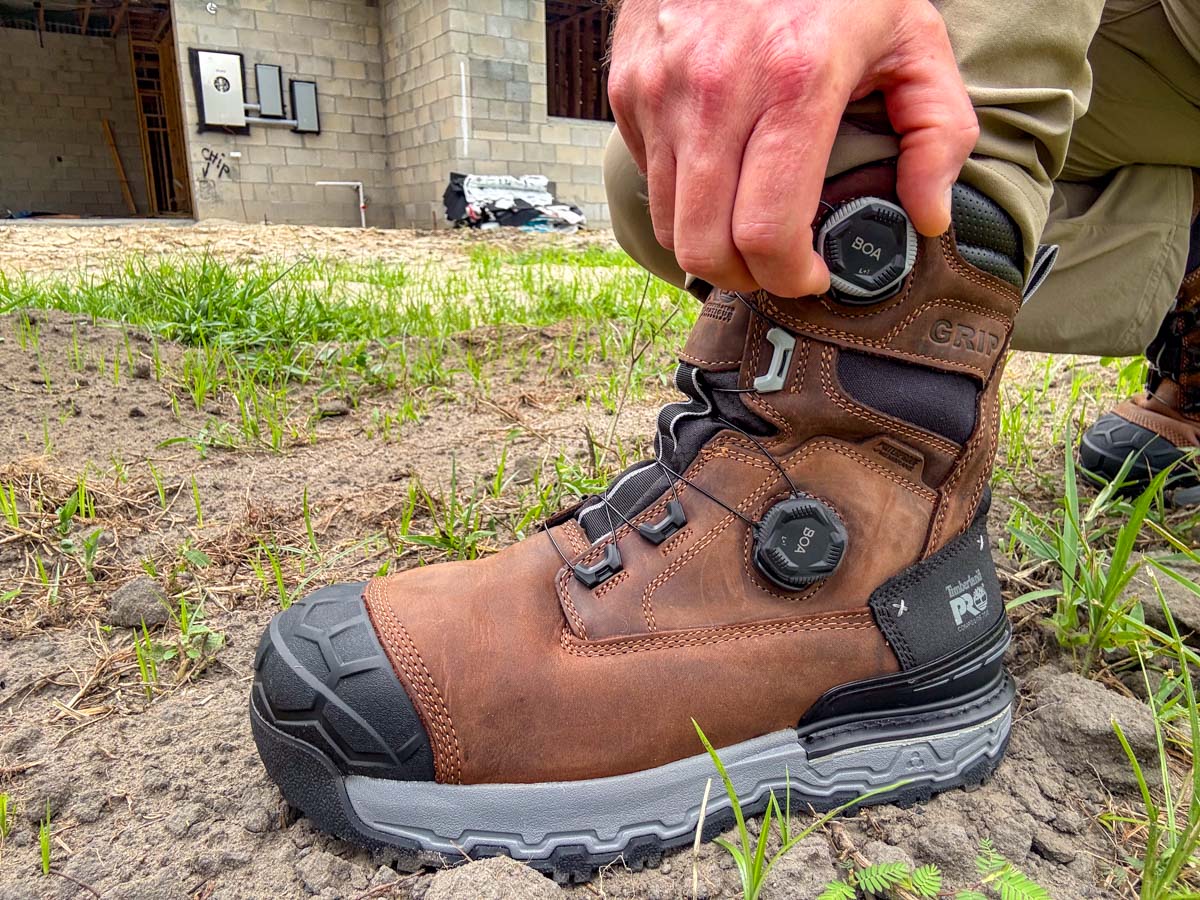
Throughout multi-week testing cycles, the boots were subjected to mixed terrain, ranging from flat industrial slabs to sloping grades. The dual-dial BOA system was continually adjusted to monitor micro-adjustments during temperature shifts and foot swelling throughout long workdays.
Phase 3: Long-Term Ergonomic Assessment
As the testing concluded, focus shifted toward how the lightweight architecture and ultra-cushioned midsoles affected overall physical fatigue at the end of a shift, laying the groundwork for a realistic projection of long-term durability versus immediate comfort trade-offs.
Supporting Data and Comparative Analysis
To truly understand how Timberland achieved the dramatic weight reduction in the Boondock Ultralight, one must look at the engineering and material science behind the boot, as well as how it stacks up against its predecessor.
The Weight Savings Breakdown
The standard iteration of the Timberland Pro Boondock tips the scale at a hefty 44.4 ounces per boot. In contrast, the Ultralight variant drops down to a baseline specification of 33.5 ounces for a size 9, and roughly 36.6 ounces for a size 13. This translates to nearly two-thirds of a pound of weight savings per foot.
Where did the weight go? The standard Boondock includes integrated insulation and a heavy-duty puncture-resistant plate. The Ultralight models omit these specific features to shed pounds. Consequently, buyers must evaluate their environmental needs: workers requiring thermal insulation for winter work or puncture resistance against sharp debris on demolition sites may need to weigh these safety trade-offs against the ergonomic benefits of a lighter boot.
Midsoles and Cushioning Mechanics
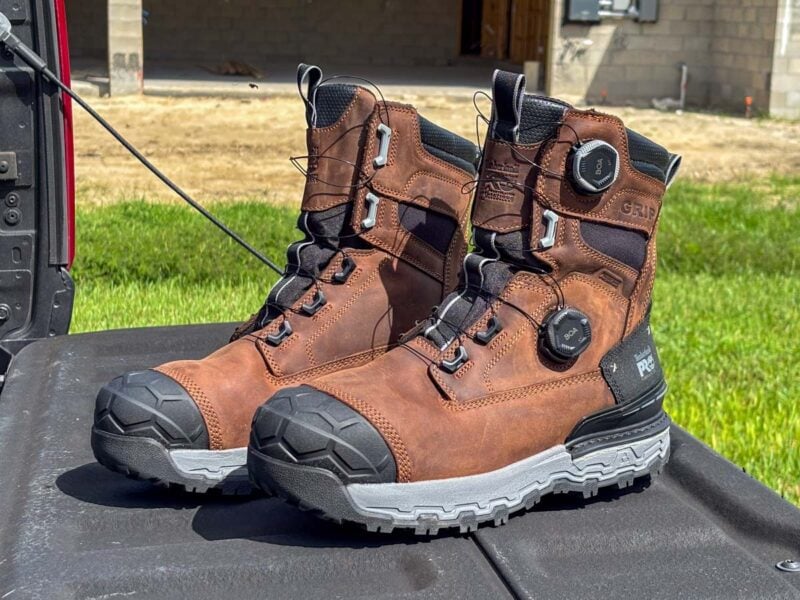
Timberland utilizes its proprietary Hover Spring foam in the Boondock Ultralight. During concrete impact testing, this foam demonstrated exceptional energy return and pressure distribution. Foot-strike impact is noticeably softened, providing immediate relief to joints.
However, footwear engineering involves an inherent law of physics: plush, highly compliant cushioning materials tend to compress and lose their rebound properties faster than dense, rigid compounds. While no structural breakdown occurred during the initial testing window, historical industry data on ultra-plush work boot midsoles suggests an optimal comfort lifespan of roughly 6 months to a year under heavy daily use. For workers dealing with chronic joint and back pain, this is universally accepted as a worthwhile trade-off.
Official Responses and Manufacturer Intent
According to Timberland’s product development and marketing teams, the foundational philosophy of the Boondock Ultralight line is clear:
"Designed to combine lightweight performance with a dialed-in fit so that you can lock into the job all day long."
Timberland recognized that traditional, rugged work boots often forced workers to choose between absolute safety/durability and end-of-day physical exhaustion caused by heavy footwear. By integrating advanced lightweight compound midsoles, aggressive traction outsoles, and the precision engineering of the BOA Fit System, the brand aimed to create a modern industrial boot that moves naturally with the wearer’s foot while maintaining the structural integrity required on commercial jobsites.
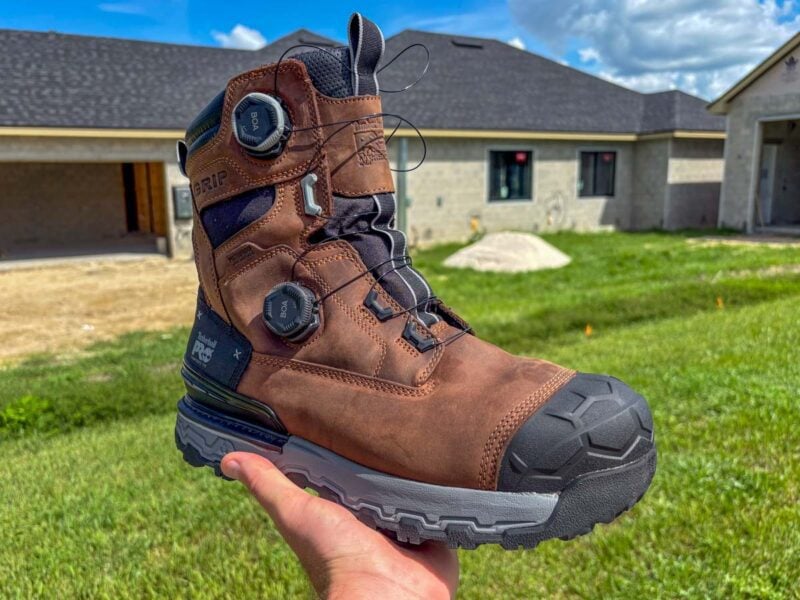
Furthermore, the inclusion of the dual-dial BOA Fit System on select models represents a direct response to professional tradesmen demanding faster ingress/egress and hyper-customizable tension zones that traditional laces simply cannot replicate.
Implications for Tradesmen and Buying Recommendations
Is the Dual-Dial BOA System Worth the Investment?
Traditional laces have been the default for centuries, but they come with notable flaws: they loosen under tension, create hot spots from uneven pulling, and fray over time. Single-dial BOA systems significantly improve upon this by offering uniform tension distribution.
However, the dual-dial system takes things a step further, which is especially noticeable in an 8-inch boot profile. The upper dial controls ankle and shaft lockdown, while the lower dial manages the forefoot and metatarsal area. For workers operating on sloped surfaces—where ankle stability is paramount—being able to crank down the upper zone for lateral support while keeping the lower zone comfortably loose prevents metatarsal cramping. Once a worker experiences the convenience of quick micro-adjustments throughout the day, returning to traditional laces becomes difficult. While pricier, the dual-dial configuration earns a strong recommendation for those who can fit it into their budget.
Height Selection: 6-Inch vs. 8-Inch
The 8-inch model reviewed is exceptional for workers navigating uneven ground, sloped terrain, or environments requiring heightened ankle protection. However, for professionals working primarily on flat, stable ground, stepping down to the 6-inch variant allows for even greater weight reduction without sacrificing protective qualities.
Ladder Safety Consideration
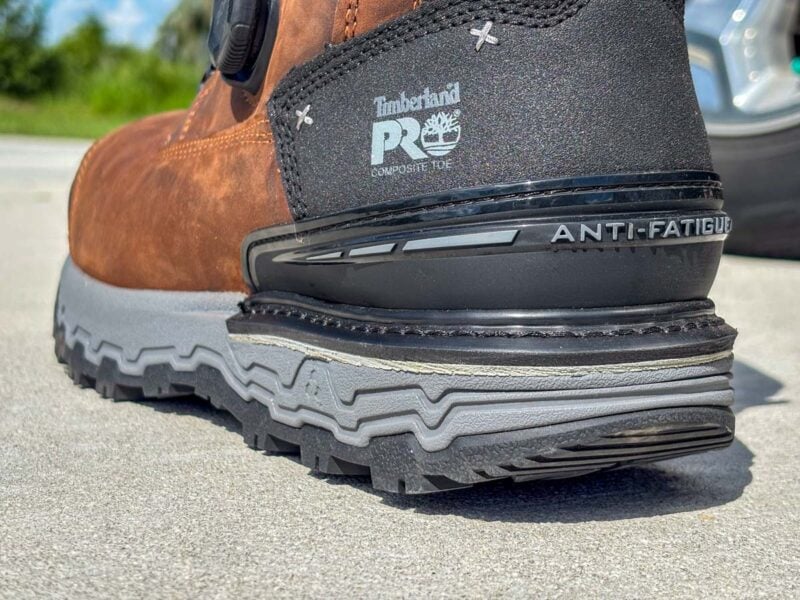
A notable design note for certain trades: none of the current Ultralight models feature a dedicated 90-degree heel, which is preferred by electricians, carpenters, and roofers who spend significant time climbing and locking onto rungs. Workers who rely heavily on ladders will need to weigh whether the lightweight comfort of the Ultralight outweighs the traditional safety geometry of a 90-degree heel found on heavier legacy models.
Final Verdict
The Timberland Pro Boondock Ultralight work boot successfully delivers on its core promise. It marries exceptional, immediate step-in comfort with a substantial reduction in leg fatigue. Whether purchasing the premium dual-dial BOA model at $270 or opting for standard lacing configurations starting around $190, tradesmen investing in these boots will find a capable, ergonomic, and remarkably comfortable partner for the daily grind.
