


BRUSSELS — Tesla’s autonomous driving ambitions in Europe are facing an unprecedented regulatory roadblock. A rigorous new independent safety audit conducted in Brussels has revealed that Tesla’s “Full Self-Driving (Supervised)” software systematically violates local speed limits, struggling to differentiate between high-density pedestrian corridors and standard urban thoroughfares.
The findings, published by the Brussels-based pedestrian and cyclist advocacy group Johanna.be, land at a precarious moment for the American electric vehicle manufacturer. With a pivotal European Union vote looming on October 6 to decide whether to clear the technology for all 27 member states, the report directly validates the core safety concerns previously raised by skeptical member nations like Sweden, France, and Norway.
Main Facts: What the "FSD30" Study Uncovered
The independent safety study, titled “FSD30,” paints a concerning picture of Tesla’s Level 2 driver-assistance software when deployed in dense, European urban environments. Over a three-day testing period in July, safety advocates spent approximately 400 kilometers behind the wheel of a Tesla operating on FSD (Supervised), focusing heavily on low-speed infrastructure where pedestrians and cyclists are most vulnerable.
The headline metrics from the study underscore a profound software limitation:
- Systematic Speeding in 30 Zones: FSD exceeded the legal speed limit in 55% of the 30 km/h (approx. 18.6 mph) road segments tested, driving at an average speed of 44 km/h (27.3 mph) where authorities mandate 30 km/h.
- Failure in Residential Shared Spaces: Beyond standard low-speed zones, the vehicle exceeded the strict 20 km/h (12.4 mph) limit in 42% of tested woonerven (residential shared streets).
- The Root Cause: According to the audit team, the primary driver of these violations was a baseline software failure in speed-limit recognition. In the vast majority of 30 km/h zones navigated during the test, the Tesla’s dashboard display incorrectly identified the limit as 50 km/h (31 mph).
- Infrastructure Conflicts: The study also documented instances where the software repeatedly attempted to legally overtake cyclists in fietsstraten (designated cycle streets), where Belgian traffic statutes explicitly prohibit motor vehicles from passing bicyclists.
The implications of these speed discrepancies are stark. Data compiled by the World Health Organization (WHO) indicates that a pedestrian struck by a vehicle traveling at 44 km/h is nearly six times more likely to die than one struck at 30 km/h—the very reason Brussels converted the vast majority of its municipal roadways to a 30 km/h default limit in 2021.
While Johanna.be credited the system for displaying courteous behavior toward pedestrians and cyclists at crosswalks—often yielding proactively—the group argued that good manners cannot compensate for systematic, potentially fatal speeding in protected urban environments. Consequently, the nonprofit officially transmitted its findings to the Netherlands Vehicle Authority (RDW) and the Flemish mobility ministry, urging regulators to re-evaluate their provisional approvals.
Chronology: The Road to the Brussels Audit and the Pan-European Clash
To understand how Tesla’s European rollout reached this friction point, it is necessary to trace the regulatory timeline over the past several months:
- April 2026: The Netherlands’ RDW grants FSD (Supervised) a landmark provisional approval under UN Regulation 171, establishing a baseline path for European authorization.
- June 10, 2026: Prompted by 5,000 kilometers of supervised testing on local pavement, Flemish Mobility Minister Annick De Ridder officially signs off on FSD in Flanders, making Belgium one of the first European nations to recognize the Dutch provisional green light.
- June 15, 2026: European transit analysts and safety watchdogs raise alarms over safety metrics presented by Tesla to Dutch and Swedish regulators, noting the data relied on apples-to-oranges comparisons that heavily favored FSD’s safety claims.
- June 18, 2026: Sweden formally calls on the European Union to reject FSD unless Tesla removes the software’s capability to exceed statutory speed limits. Finland and Norway quickly echo these objections.
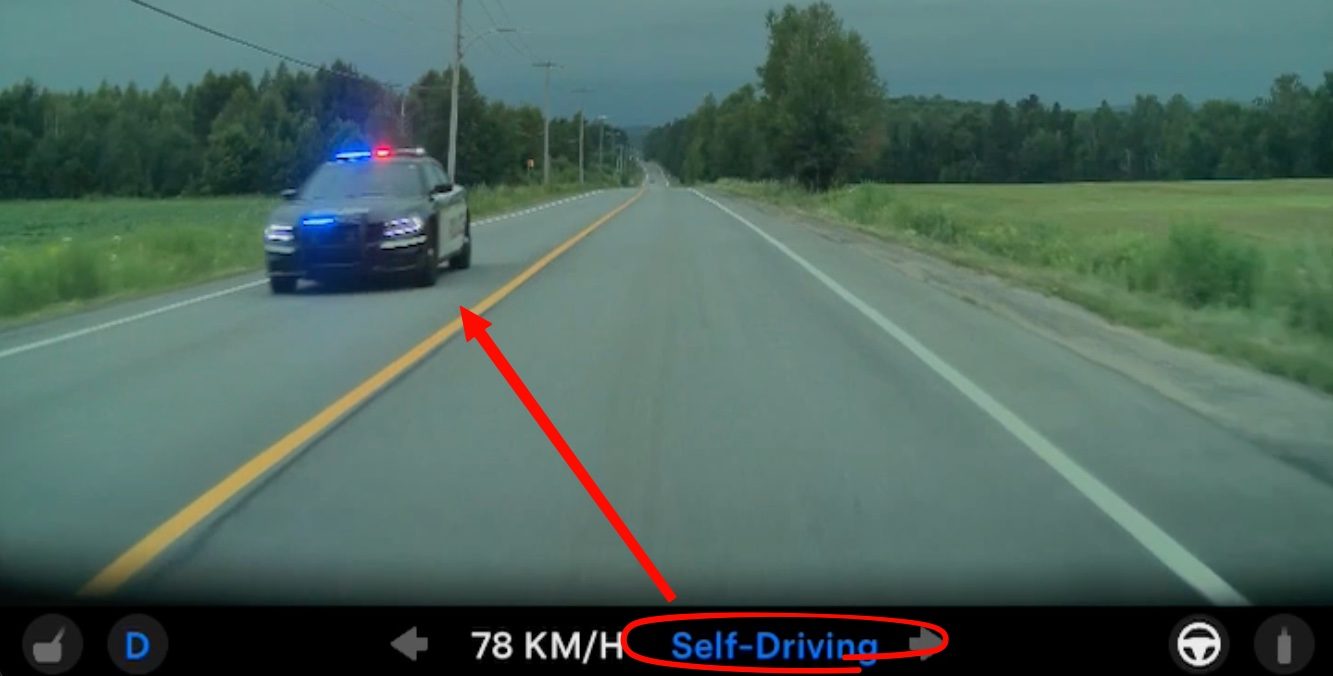
- July 2026: Individual testing exposes real-world friction. Independent drivers and media outlets document FSD triggering automated speeding tickets—such as traveling 78 km/h in a 50 km/h zone—after Tesla removed internal software limiters that previously prevented such behavior.
- July 22, 2026: France officially breaks ranks, with Transport Minister Philippe Tabarot citing persistent urban speeding concerns and driver distraction risks to formally refuse recognition of the Dutch RDW approval.
- September 7, 2026: Johanna.be submits its "FSD30" audit data directly to Dutch and Flemish regulatory bodies, demanding immediate policy reviews.
- October 6, 2026: The scheduled Technical Committee on Motor Vehicles (TCMV) vote is set to determine if the RDW approval expands across all 27 EU member states.
Supporting Data and Regulatory Divisions
As Brussels policymakers digest the Johanna.be findings, the broader European regulatory landscape remains deeply fractured along national lines.
Following the initial RDW approval in April, a patchwork of nations—including Denmark, Belgium, Estonia, Lithuania, Slovenia, and Czechia—recognized the certification nationally. However, Western Europe’s major transport powers have pushed back hard.
[ UN Regulation 171 Framework ]
       │
       ├── Pro-Approval Bloc (Netherlands, Belgium, Denmark, etc.)
       │     └─ Rely on manufacturer testing & "Driver is 100% responsible" policy.
       │
       └── Skeptical Bloc (Sweden, France, Norway, Finland)
             └─ Demand speed-limit compliance locks & reject provisional frameworks.
Tesla has attempted to counter mounting regulatory resistance by publishing its own internal studies. The company claims that its FSD-equipped vehicles "do not speed excessively" and merely mirror the pace of surrounding human traffic. In essence, Tesla’s defense is that its software speeds no more than an average human driver.

Urban planners and safety advocates find this defense counterproductive, noting that cities like Brussels deliberately lowered speed limits precisely because human drivers were traveling at unsafe velocities. Relying on autonomous software to mimic human bad habits undercuts the foundational safety promise of artificial intelligence in transportation.
Official Responses and Accountability
When questioned about the Johanna.be study by international new agencies, representatives for the Flemish government maintained a defensive posture. A spokesperson reiterated the standard liability framework for Level 2 driver-assistance systems: the software is actively "learning," and the human behind the steering wheel remains "100% responsible."
This stance has ignited fierce criticism from traffic safety experts and automotive watchdogs. On paper, the legal designation of Level 2 automation places absolute liability on the driver. In practice, however, it creates a dangerous regulatory loophole. Critics argue that approving a software package that misidentifies legal thresholds in a majority of low-speed zones—while shifting total blame onto distracted or over-reliant drivers when the system accelerates unlawfully—is an abdication of regulatory duty.
Tesla, true to form, did not respond to requests for comment regarding the Brussels study.
Implications for the Upcoming EU Vote
All eyes are now fixed on the upcoming October 6 meeting of the Technical Committee on Motor Vehicles (TCMV). To secure pan-European validity, the European Commission requires a qualified majority vote: at least 15 member states representing a minimum of 65% of the total European Union population.

If the pro-approval bloc—led by the Netherlands and Belgium—can marshal sufficient votes, Tesla will unlock a massive market for its supervised autonomy software. But if the united resistance from Sweden, France, Finland, and Norway sways undecided member states, the rollout could stall indefinitely, forcing Tesla to rewrite core algorithms governing regional speed management and sign recognition.
Electrek’s Take
For months, Tesla has attempted to convince European regulators of FSD’s safety using internal datasets and carefully curated metrics. Now, an independent urban study has evaluated the system in the exact environment Europe values most: dense, shared city streets teeming with vulnerable pedestrians and cyclists. The results demonstrate that the software still struggles with fundamental tasks, such as distinguishing a 30 km/h zone from a 50 km/h corridor.
Reading a roadside speed limit sign is not an exotic edge case; it is the absolute bare minimum requirement for vehicular operation. Anyone who regularly utilizes FSD knows firsthand that its sign-recognition capabilities remain unreliable.
The Flemish government’s assertion that "the driver is 100% responsible" is a convenient regulatory cop-out. Regulators are not certifying the human driver; they are certifying the software. When that software accelerates past legal safety thresholds in the majority of low-speed zones tested, pointing the finger at the driver fails to protect the public. Whether European regulators have the political will to hold Tesla’s software to a higher standard will be decided on October 6.
