

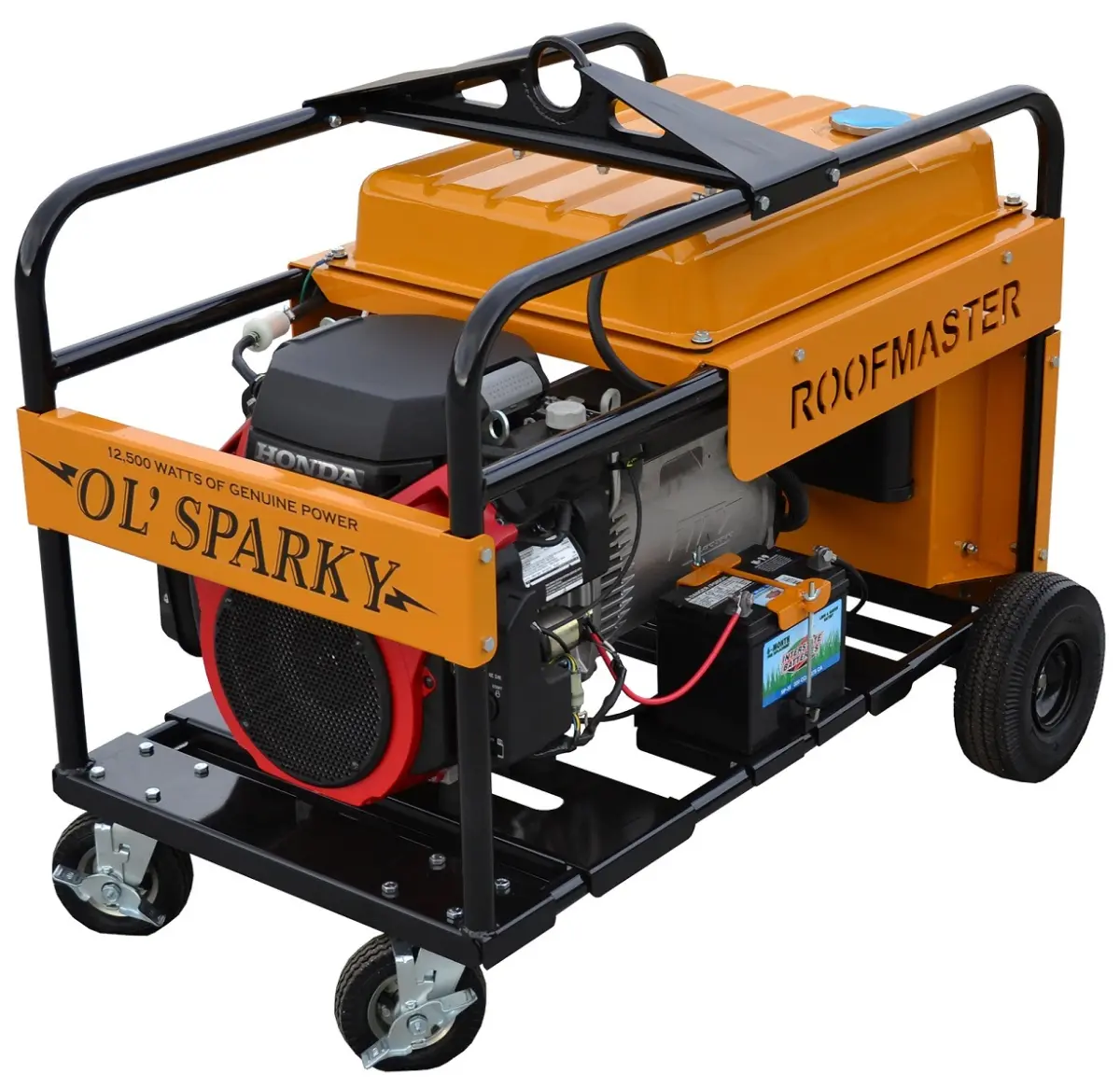
As California ushers in a new era of environmental regulations, a quiet transformation is taking place across commercial jobsites, industrial yards, and suburban neighborhoods. While the public spotlight has focused on the state’s phase-out of gas-powered lawnmowers and leaf blowers, a far more complex reality is unfolding for the construction and roofing sectors.
Passed under Assembly Bill 1346 in 2021, the state’s ban on the sale of new gas-powered Small Off-Road Engines (SORE) officially took effect on January 1, 2024. While marketed as a necessary measure to curb greenhouse gas emissions and hazardous air pollutants from landscaping equipment, the broad wording of the legislation has swept up critical industrial machinery. Today, contractors find themselves navigating a rapidly changing market where essential tools of their trade—from high-output generators to heavy-duty roofing pumps—are caught in the regulatory dragnet.
Main Facts: The Scope of Assembly Bill 1346
At its core, Assembly Bill 1346 targets Small Off-Road Engines (SORE), which are defined by the California Air Resources Board (CARB) as spark-ignition engines rated at or below 19 kilowatts—equivalent to approximately 25 gross horsepower.
While early public relations campaigns focused heavily on residential lawn care, the legal framework of AB 1346 does not distinguish engines by their end-use application, but rather by their engine classification and horsepower rating. Consequently, the ban encompasses a vast array of commercial and industrial tools, including:
- Landscaping Equipment: Leaf blowers, lawnmowers, string trimmers, and chainsaws.
- Specialty Vehicles: Gas-powered golf carts, airport tugs, and utility vehicles.
- Roofing and Construction Machinery: Heavy-duty material handlers, tear-off machines, asphalt pumps, hydraulic power units, and portable generators.
The Exclusion Myth vs. Regulatory Reality
During the legislative drafting process, industry trade groups were assured that primary agricultural and heavy construction equipment would be shielded from the ban. However, the regulatory execution by CARB revealed a significant loophole: unless a specific piece of machinery was explicitly granted an exemption, any equipment powered by an engine under 25 horsepower fell under the sales prohibition.
Because many specialized roofing tools rely on small, versatile utility engines (such as those manufactured by Honda, Briggs & Stratton, or Kohler), they are now legally barred from being sold new in California once current pre-2024 inventories are exhausted. While contractors and homeowners are still legally permitted to operate their existing gas-powered equipment, the pipeline for purchasing new replacements has been effectively severed.
Chronology: From Bill to Borderline Crisis
The path to the 2024 ban was marked by rapid legislative action, followed by a period of intense regulatory rulemaking and mounting industry anxiety.
[Oct 2021] AB 1346 Signed into Law
   │
[Dec 2021] CARB Adopts SORE Regulations
   │
[2022-2023] Industry Mobilization & Stockpiling
   │
[Jan 1, 2024] Ban on New SORE Sales Takes Effect
   │
[Post-2024] Depletion of Pre-2024 Inventory / Transition to Alternatives- October 9, 2021: Governor Gavin Newsom signs Assembly Bill 1346 into law. The bill directs CARB to adopt regulations to phase out the sale of SORE by 2024, or as soon as CARB determines is technologically and commercially feasible.
- December 9, 2021: CARB formally adopts the new SORE regulations, establishing a hard deadline of January 1, 2024, for the transition to zero-emission equipment (ZEE) for most applications.
- 2022–2023: Industry groups, including the Western States Roofing Contractors Association (WSRCA) and the National Roofing Contractors Association (NRCA), petition regulators for exemptions, highlighting the lack of commercially viable electric alternatives for heavy industrial applications. During this window, manufacturers and distributors begin stockpiling pre-2024 certified engines to prepare for the impending market freeze.
- January 1, 2024: The sales ban officially takes effect. No new gas-powered SORE manufactured after December 31, 2023, can be legally sold in the state of California.
- Present Day: Distributors and manufacturers are permitted to sell through their remaining stock of pre-2024 compliant equipment. However, as these inventories dwindle, contractors face a rapidly closing window to purchase traditional gas-powered machinery.
Supporting Data: The Environmental Calculus and the Energy Gap
The driving force behind AB 1346 was a series of startling environmental metrics published by CARB. According to regulatory findings, the lack of robust emissions control systems on small engines made them disproportionately dirty compared to modern passenger vehicles.
The Emissions Comparison
CARB’s data asserted that operating a commercial gas-powered leaf blower for just one hour emitted the same amount of smog-forming emissions (reactive organic gases and nitrogen oxides) as driving a 2017 Toyota Camry approximately 1,100 miles—roughly the distance from Los Angeles to Denver.
| Equipment Type / Activity | Smog-Forming Emissions Equivalent |
|---|---|
| 1 Hour of Gas Leaf Blower Use | Driving a 2017 Toyota Camry 1,100 miles |
| 1 Hour of Gas Lawnmower Use | Driving a 2017 Toyota Camry 300 miles |
| Total CA SORE Emissions (2020) | Exceeded total emissions from all light-duty passenger cars in the state |
While these statistics provided powerful political leverage for banning residential lawn care tools, critics argue they fail to account for the vastly different operational realities of industrial job sites.
The Energy Density and Power Deficit
In commercial roofing, the transition to battery or electric power faces steep physical and thermodynamic hurdles. Industrial applications require continuous, high-draw power that current battery technology struggle to deliver efficiently.
For example, a standard single-ply roofing installation requires the use of automatic hot-air welders (such as Leister welders) to fuse TPO or PVC membranes. These welders typically require a continuous draw of 4,600 to 5,500 watts of "clean" electricity to maintain the precise temperatures (often exceeding 1,000°F) needed for a waterproof seal.
[Gasoline Energy Density]  ~46 MJ/kg
       ████████████████████████████████████████ (46x more energy dense)
[Lithium-Ion Battery]      ~1 MJ/kg
       █
To run a single hot-air welder for an eight-hour shift using current lithium-ion battery technology would require a battery pack weighing several hundred pounds, costing thousands of dollars, and requiring hours to recharge. On large-scale commercial roofs where three-phase power is often required and grid hookups are unavailable, portable gas or diesel generators have historically been the only viable solution.
Official Responses: Clash of Priorities
The implementation of AB 1346 has drawn starkly different reactions from state regulators, industry trade groups, and equipment manufacturers.
The Regulator’s Stance: California Air Resources Board (CARB)
CARB maintains that the regulation is a vital component of California’s broader strategy to achieve carbon neutrality by 2045 and protect public health. In official statements, CARB representatives emphasize that the transition is backed by a $30 million funding initiative designed to help small businesses, particularly landscaping contractors, transition to electric equipment through the Clean Off-Road Equipment Voucher Incentive Project (CORE).
However, construction and roofing contractors note that these incentive programs are heavily tilted toward landscaping tools, leaving heavy industrial users with few financial avenues for support.
The Industry’s Critique: Roofing and Construction Coalitions
Industry representatives have expressed deep frustration over what they view as a disconnect between regulatory ambitions and practical jobsite realities.
In a statement addressing the challenges of jobsite electrification, the Western States Roofing Contractors Association (WSRCA) highlighted the technical limitations of current battery-operated tools:
"While hand-held tools like screw guns, reciprocating saws, and impact drivers have successfully transitioned to lithium-ion platforms, heavy-duty application equipment cannot run on batteries. To suggest that contractors can simply plug into jobsite power ignores the fact that many new construction sites do not have active utility connections, and existing structures often lack the three-phase power required for heavy thermal welding equipment."
Manufacturers have also voiced concerns about the speed of the mandate. While companies like Honda and Milwaukee have expanded their commercial-grade electric lineups, they acknowledge that high-draw, heavy-duty utility equipment remains difficult to electrify without dramatic increases in battery cost and weight.
Implications: The Road Ahead for Contractors
As the transition period progresses and pre-2024 inventories of gas-powered equipment are depleted, the roofing and construction industries in California face several critical implications.
1. The Supply Chain Squeeze and "Border Buying"
The most immediate consequence is a run on remaining pre-2024 compliant gas equipment. Distributors report high demand for remaining inventory of gas-powered generators, pumps, and tear-off machines.
Once these stocks are exhausted, California contractors may face a competitive disadvantage. Industry analysts predict a rise in "border buying," where California-based contractors travel to neighboring states like Nevada, Arizona, or Oregon to purchase gas-powered equipment that is illegal to sell in California, though operating such newly purchased equipment in-state remains a legal gray area fraught with regulatory risks.
2. Escalating Operational Costs
Adopting zero-emission alternatives will require significant capital investment. Commercial-grade portable battery power stations (often referred to as "solar generators" or battery energy storage systems) capable of running heavy equipment are far more expensive than their gas-powered counterparts. A high-quality 5,000-watt gas generator typically costs between $1,000 and $2,500; a comparable industrial-grade lithium-ion battery power station with sufficient capacity for an active jobsite can easily exceed $8,000 to $12,000, especially when factoring in the cost of spare battery packs and rapid-charging infrastructure.
3. Logistic Hurdles on the Roof
Transitioning to battery-heavy setups introduces new structural and logistical challenges:
- Weight Restrictions: Lifting heavy battery banks onto roofs requires cranes or material hoists, increasing labor costs and setup times.
- Temperature Sensitivity: Lithium-ion batteries experience reduced efficiency and shorter lifespans when exposed to the extreme heat common on commercial rooftops during summer months.
- Charging Infrastructure: Contractors must establish complex charging stations on-site, requiring either a reliable grid connection or large-scale, towable diesel generators (which are governed under different, larger-engine regulations but represent a contradiction to the "zero-emission" goal).
4. Strategic Advice for Contractors
For commercial roofing and construction firms operating in California, the window for proactive planning is closing fast. Industry experts offer three key recommendations:
- Audit and Secure Inventory: Assess the current state of your fleet. If your operations rely heavily on small gas generators, pumps, or specialty engines, consider securing remaining pre-2024 compliant models from distributors immediately.
- Invest in Hybrid Workflows: Begin integrating hybrid power systems, utilizing battery banks for low-draw tasks and reserving remaining gas assets strictly for high-draw applications like thermal welding.
- Monitor Regulatory Adjustments: Stay actively engaged with regional trade associations. As the practical challenges of the ban become more apparent on active jobsites, industry groups continue to lobby for targeted variances or delayed enforcement timelines for specific industrial applications.
The transition to an emissions-free California is no longer a distant policy goal—it is an active operational challenge. For the roofing and construction sectors, adapting to the post-SORE landscape will require a careful mix of immediate asset acquisition, technological adaptation, and strategic financial planning.
