

WASHINGTON — The U.S. manufactured housing sector is standing on the precipice of a structural revolution. Following a monumental policy victory in July—marked by the passage of the 21st Century ROAD to Housing Act and the historic removal of the permanent steel chassis requirement—federal regulators have taken their first official stride toward turning modern legislative intent into regulatory reality.
On Wednesday, the U.S. Department of Housing and Urban Development (HUD) released its comprehensive “Next Generation Manufactured Housing Action Plan.” The document outlines a seven-part roadmap designed to overhaul aging federal construction and safety standards, tear down bureaucratic bottlenecks, and usher factory-built housing into higher-density urban, suburban, and infill markets.
While industry advocates and major developers celebrate the strategic horizon ahead, stakeholders caution that a complex and lengthy regulatory transition remains. Nevertheless, the unveiling of HUD’s action plan signals that the gears of federal implementation are officially in motion, paving the way for what optimists are calling a “blue-sky era” for manufactured and modular housing.
Chronology of Reform: From Legislative Victory to Federal Implementation
The journey toward a chassis-free future has been decades in the making, marked by persistent lobbying from industry groups, shifting demographics, and a desperate national need for affordable housing options.
- July: The manufactured housing industry secured a massive policy milestone with the enactment of the 21st Century ROAD to Housing Act. Beyond funding and broader housing supply initiatives, the law fundamentally altered the regulatory landscape by eliminating the mandate that manufactured homes must be built atop a permanent steel chassis.
- Late July: Industry leaders, including Manufactured Housing Institute (MHI) CEO Lesli Gooch and Cavco Industries CEO William Boor, weighed in on the profound implications of the law during earnings calls and media interviews. They emphasized that while the long-term impact would be transformative, regulatory rewrites by HUD would take at least a year or more to complete.
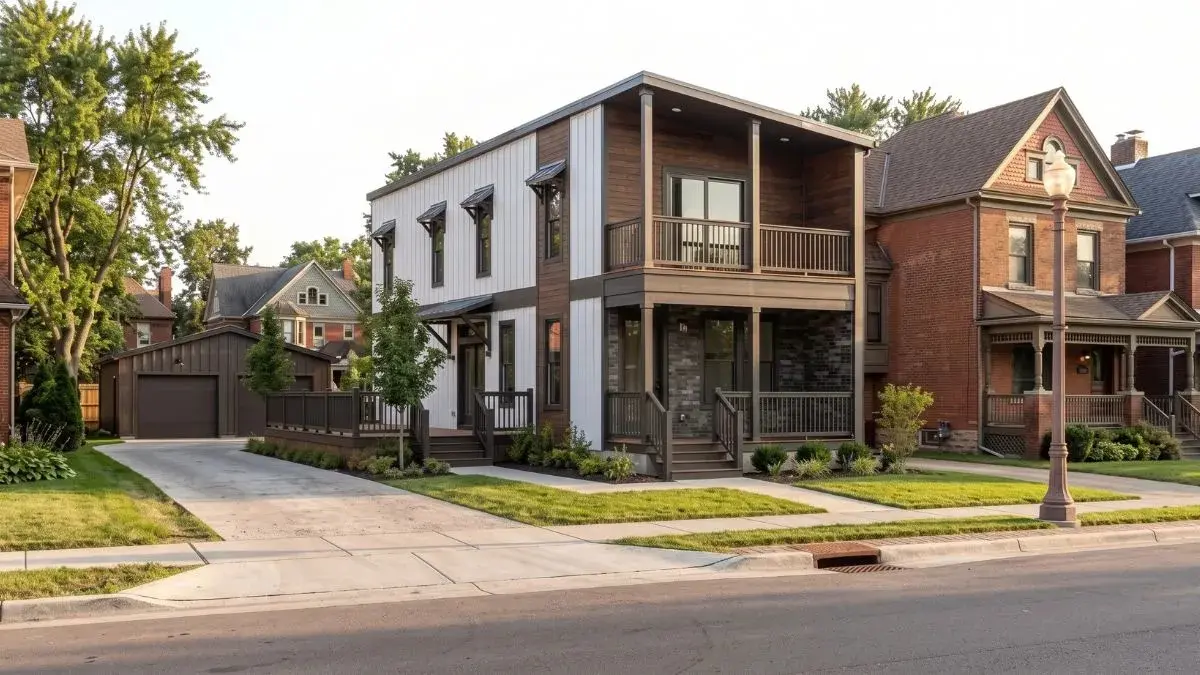
- September: Major players in the factory-built housing sector wasted no time demonstrating what the future could look like. At the 2026 Innovative Housing Showcase in Washington, D.C., industry heavyweights rolled out pioneering prototypes. Champion Homes debuted two-story, chassis-free models tailored for urban infill sites, while Cavco Industries showcased the “Grande Arbor,” its flagship manufactured home engineered entirely without a permanent steel undercarriage.
- Wednesday: HUD issued its “Next Generation Manufactured Housing Action Plan,” providing the industry with its first concrete look at how the federal agency plans to adapt existing code structures to support innovative, modern building methodologies.
The Seven Pillars of HUD’s Action Plan
HUD’s newly released blueprint details seven strategic initiatives aimed at modernizing federal construction standards while maintaining the safety, durability, and affordability that have long defined factory-built housing.
According to the agency, the overarching objective is to preserve the intrinsic strengths of the federal manufactured housing system while proactively supporting innovation and next-generation, off-site construction technologies.
1. Updating Energy Efficiency Standards
HUD has committed to formal rulemaking to update the 24 CFR Part 3280 energy efficiency standards. This update brings the manufactured housing sector into direct compliance with modern energy mandates established under the 21st Century ROAD to Housing Act, helping homeowners save on long-term utility costs while meeting contemporary environmental expectations.
2. Redrafting the HUD Code for Chassis-Free Construction
Perhaps the most critical regulatory hurdle is revising the Manufactured Home Construction and Safety Standards under 24 CFR Part 3280. HUD will establish a dual framework that accommodates homes built both with and without a permanent chassis. This involves rewriting standards for structural design, lifting methodologies, transportation logistics, and component connections, granting manufacturers unprecedented flexibility in architectural design.
3. Modernizing Foundations and Installation Standards (24 CFR Part 3285)
To support homes unburdened by a steel frame, HUD will update its Model Manufactured Home Installation Standards. Working alongside the Manufactured Housing Consensus Committee (MHCC), the agency will issue recommendations addressing how chassis-free structures are supported, anchored, and attached to the ground. This transition aims to welcome a diverse array of foundation types and setting procedures without sacrificing structural integrity.
4. Establishing a Multi-Module Construction Pathway
Historically, manufactured homes were constrained by single-section or rigidly joined multi-section limitations tied to transportable frames. HUD’s plan creates flexible regulatory pathways for multi-module construction. The goal is to determine how complex, factory-made sections can be transported, assembled, and finished on-site while maximizing the percentage of work completed safely and efficiently within the controlled environment of a factory.
5. Crafting a Performance-Based Code for 5+ Unit Buildings
Building on previous updates that allowed duplexes, triplexes, and quadplexes, HUD is setting its sights higher. The agency will develop a performance-based federal construction and safety code specifically for residential structures containing five or more units.
Because larger multifamily structures introduce complex architectural challenges—such as common corridors, shared egress, multi-story fire separation, and centralized mechanical systems—a federal performance-based code will establish a standardized national pathway for repeatable multifamily factory construction. To aid this initiative, HUD previously selected the National Institute of Building Sciences (NIBS) to spearhead expansions in factory-built multifamily housing.
6. Documenting Case Studies and Disseminating Lessons Learned
To smooth out market friction, HUD plans to track, document, and publicize early pilot projects utilizing chassis-free construction. These case studies will analyze the entire lifecycle of a project—covering design, transport, foundation engineering, zoning approvals, appraisals, lending availability, insurance underwriting, and consumer market acceptance.
7. Creating a Manufacturer "On-Ramp" to the HUD Regulatory System
To bridge the gap between traditional modular builders and HUD-regulated manufacturers, the agency will develop targeted guidance and resources. This support structure will simplify factory certification, design approvals, quality assurance programs, third-party inspection protocols, and labeling requirements, effectively lowering the barrier to entry for off-site builders wishing to enter the HUD market.
Official Responses and Industry Perspectives
The reception from housing sector leaders has been overwhelmingly positive, though tempered by a realistic understanding of the regulatory timeline.
Lesli Gooch, CEO of the Manufactured Housing Institute, noted in previous statements that the release of the action plan is merely the starting gun for a multi-stage race. Once HUD finalizes its rulemaking and codifies the new standards, manufacturers will still need to submit their innovative designs to HUD-approved third-party inspection agencies for rigorous compliance evaluations. Only after receiving these approvals can companies legally market and sell chassis-free homes to the public.
Speaking during Cavco Industries’ Q1 fiscal earnings call on July 31, CEO William Boor addressed investor expectations regarding the financial and volume impact of the legislative changes.
"We’re not sitting on this end, sitting here doing projections about how much incremental volume this stuff will add over what time period, but directionally, I know it’s going to be helpful," Boor told analysts. He added a pragmatic note that resonates across the sector: "The benefits of this law will show themselves over time."
Similarly, representatives from Champion Homes underscored that while prototypes like their two-story urban infill models prove the technical feasibility of chassis-free building, widespread commercialization will depend heavily on the speed and precision of HUD’s upcoming rulemaking phases.
Market Implications: Unlocking Density and Affordability
The economic and social implications of HUD’s action plan cannot be overstated. For decades, the requirement for a permanent steel chassis functionally relegated manufactured homes to rural areas, specific manufactured home communities, or jurisdictions with loose zoning constraints. The visual and structural reliance on a steel undercarriage made it exceedingly difficult to place factory-built homes on standard residential suburban lots or integrate them into high-density urban infill developments.
By eliminating the chassis and establishing clear regulatory pathways for multi-story and multi-unit developments (ranging from duplexes to large multifamily complexes), HUD’s initiative promises to:
- Expand Geographic Footprints: Allow factory-built homes to blend seamlessly into traditional suburban neighborhoods, bypassing archaic aesthetic restrictions that historically barred manufactured housing.
- Lower Construction Costs: Leverage the inherent efficiencies of factory-based assembly to slash labor waste, shorten build timelines, and deliver high-quality housing at price points significantly lower than traditional stick-built construction.
- Alleviate the National Housing Shortage: By opening doors to multi-family and multi-story configurations, developers can maximize urban land use, directly addressing the chronic shortage of attainable housing inventory across the United States.
As HUD moves forward with its seven-step action plan, the manufactured housing industry is transitioning from a period of defensive advocacy to an era of aggressive innovation. While regulatory implementation will require patience over the coming months, the foundation has officially been laid for a transformed American housing landscape.
