

By Anthony Capkun
Published: October 1, 2026
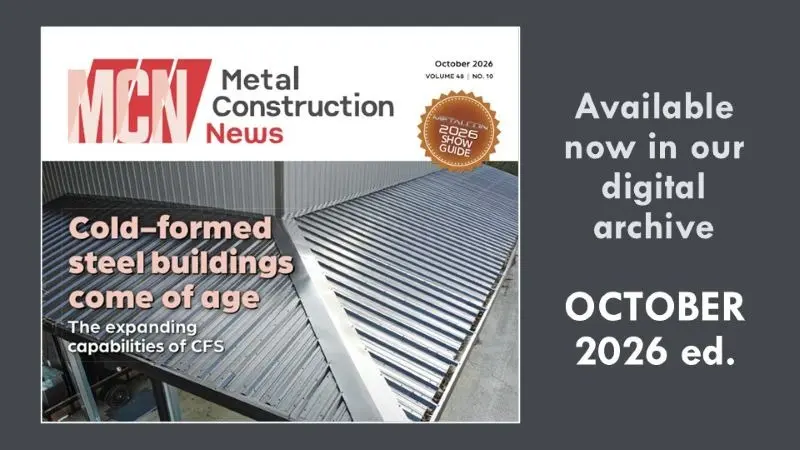
The metal construction industry stands at a critical technological, regulatory, and logistical crossroads. As building codes tighten, labor markets evolve, and climate-induced weather extremes challenge conventional architectural designs, project stakeholders face unprecedented demands for efficiency and resilience. Addressing these shifting landscapes head-on, Metal Construction News (MCN) has officially released its highly anticipated October 2026 digital edition.
Packed with deep-dive technical features, critical regulatory updates, and essential event previews—including the comprehensive METALCON 2026 Show Guide—this month’s publication serves as a vital resource for contractors, architects, engineers, and facility managers navigating modern construction challenges.
Main Facts: What’s Inside the October 2026 Issue
The latest edition of MCN tackles some of the most pressing conversations happening on job sites and in boardrooms across North America. Rather than focusing solely on aesthetic trends, the October issue hones in on performance metrics, technological integration, operational risk management, and regulatory compliance.
Key features and core focus areas highlighted in the October 2026 edition include:
- The Maturation of Cold-Formed Steel (CFS): Engineering leaps, advanced modeling software, and prefabrication capabilities are pushing CFS systems into structural domains once dominated by heavy hot-rolled steel and concrete.
- The Official METALCON 2026 Show Guide: An exhaustive roadmap for the industry’s premier annual event, detailing the exhibition floor plan, major vendors, specialized masterclasses, hands-on workshops, and educational tracks.
- Thermal Dynamics and Ice Damming: Reframing ice damming in large-scale distribution centers not as a mere waterproofing failure, but as a critical, systemic thermal envelope failure.
- Labor Tracking Complexities in Multisite Operations: Addressing the administrative blind spots of modern contracting—specifically, how untracked transit time and misallocated project hours distort profit margins and skew future project bids.
- The 2026 Safety Gear Evolution: Highlighting the widening gap between baseline OSHA compliance and next-generation personal protective equipment (PPE) that leverages ergonomics, smart-sensors, and advanced materials.
- Wind-Driven Rain and Hurricane-Resistant Architecture: Emphasizing the necessity of AMCA 550-certified louvers for commercial and industrial structures along vulnerable Atlantic and Gulf coastlines.
Chronology: The Evolution Leading to the October 2026 Standards
To understand the weight of the topics covered in this month’s MCN edition, it is necessary to examine the timeline of industry pressures that shaped the current state of metal construction.
2023–2024: Post-Pandemic Labor Pressures and Supply Chain Realignment
Following the global disruptions of the early 2020s, commercial construction contractors faced severe labor shortages paired with unpredictable material costs. During this period, multisite operations expanded rapidly as companies chased decentralized warehousing and distribution center projects. However, legacy project management software struggled to accurately track mobile workforces, laying the groundwork for the modern labor-tracking crises explored in MCN’s latest reporting.
2025: The Push for Net-Zero and Building Envelope Integrity
As municipal and federal energy codes grew increasingly stringent throughout 2025, building envelope failures came under intense scrutiny. Thermal bridging, insulation degradation, and seasonal weather anomalies—such as severe freeze-thaw cycles that trigger extensive ice damming—demonstrated that traditional insulation methods were failing large-scale steel structures. Concurrently, climate volatility intensified coastal vulnerabilities, driving a regulatory push toward more rigorous wind and rain testing protocols for architectural louvers.
October 2026: Convergence of Innovation and Regulation
Today, the industry finds itself managing all these friction points simultaneously. The release of the October 2026 edition of Metal Construction News captures this exact historical moment, offering practical solutions for professionals who must balance technological innovation with strict safety and compliance mandates.
Supporting Data and Technical Analysis
The insights published in the October 2026 issue are underpinned by shifting metrics across engineering, safety, and logistics.
1. Cold-Formed Steel (CFS) Load-Bearing Capacities
Driven by improvements in Computer-Aided Engineering (CAE) and Building Information Modeling (BIM), modern CFS framing systems are now regularly utilized in mid-rise commercial structures reaching up to 10 stories. Prefabricated panelization has reduced on-site framing labor hours by an estimated 20% to 30% compared to traditional stick-built or heavy-framing methods, according to recent structural engineering data referenced in trade analyses.
2. The True Cost of Multisite Labor Inefficiencies
In modern commercial metal construction, contractors frequently manage multiple crews across geographically dispersed project sites. Industry data indicates that unbilled driving time and inaccurate field-to-office hour reporting can erode net project profit margins by 3% to 7%. The operational insights featured in MCN this month underscore why real-time, digital workforce tracking has shifted from a luxury to an absolute necessity for competitive bidding.
3. Thermal Envelope Failures in Distribution Centers
Large-scale metal distribution centers—often spanning hundreds of thousands of square feet—are uniquely susceptible to complex thermal gradients. When heat escapes through poorly detailed roof and wall assemblies, it melts accumulated rooftop snow, which subsequently refreezes at the eaves, forming ice dams. Maintenance teams historically treated this as a localized drainage issue. However, MCN’s thermal analysis reveals that repairing the resulting water damage without addressing the underlying insulation gaps and thermal bridging guarantees recurrent structural degradation.
4. Coastal Resilience: AMCA 550 Certification Standards
With the frequency and intensity of Atlantic and Gulf Coast severe weather events remaining elevated, architectural specifications for exterior building components have tightened. Louvers that fail to prevent water infiltration during high-velocity, wind-driven rain scenarios can lead to catastrophic internal pressure differentials and equipment ruin. AMCA 550 (Standard Test Method for High Velocity Wind-Driven Rain Resistant Louvers) has consequently become the baseline benchmark for projects located in hurricane-prone jurisdictions.
Industry and Expert Responses
The release of the October 2026 edition has already drawn positive commentary from various sectors of the metal construction ecosystem, who view MCN’s reporting as a timely roadmap for operational improvement.
- On Cold-Formed Steel Advancements: Structural engineers point out that the material’s recyclability and speed of erection align directly with corporate sustainability goals. An executive from a leading CFS engineering firm noted, "We are no longer just replacing wood or light framing; we are engineering primary structural systems that challenge conventional construction timelines while drastically reducing carbon footprints."
- On Safety Equipment Standards: Safety directors across major metal erection firms have praised MCN for highlighting the disparity between standard regulatory compliance and modern safety gear. “Meeting OSHA minimums keeps you legal, but utilizing ergonomic, technologically advanced PPE is what keeps workers safe, productive, and returning home without chronic strain injuries,” stated a regional safety coordinator in a recent industry symposium.
- On METALCON 2026 Anticipation: With the annual trade show rapidly approaching, event organizers have emphasized the value of MCN’s official METALCON 2026 Show Guide. Attendees are encouraged to utilize the digital edition to map out their educational schedules, noting a significant expansion in workshops dedicated to robotic fabrication, advanced coating technologies, and digital project management software.
Implications for the Future of Metal Construction
The challenges and innovations outlined in the October 2026 issue of Metal Construction News point toward several undeniable long-term trajectories for the industry:
- Software Integration as a Core Competency: Contractors who fail to adopt sophisticated, real-time labor tracking and mobile project management tools will likely struggle to submit competitive, profitable bids in an increasingly tight margin market.
- Holistic Building Envelope Engineering: The traditional silo between structural framing and thermal insulation design is rapidly dissolving. Future metal buildings must be engineered as holistic thermal and structural systems to prevent costly envelope failures like ice damming and condensation rot.
- Proactive Regulatory Compliance: As building codes adapt to localized climate risks—exemplified by strict coastal louver standards—architects and contractors must integrate compliance certifications into the earliest schematic design phases rather than treating them as late-stage approvals.
- The Rise of Specialized Education: Events like METALCON 2026, supported by comprehensive trade publications, will continue to play a pivotal role in upskilling the workforce to safely handle advanced materials like cold-formed steel and complex machinery.
Accessing the October 2026 Edition
Industry professionals, architects, engineers, and construction managers can access the complete October 2026 edition of Metal Construction News directly through the official MCN Digital Publications Portal.
For those looking to research historical trends or revisit past technical guides, the complete catalog of back issues remains fully accessible within the Digital Edition Archive.
Metal Construction News extends its sincere gratitude to all contributing writers, engineering partners, and industry advertisers who made this landmark issue possible.
