

By CNET Technology Desk
Published: October
In a monumental shift for its hardware ecosystem, Amazon has announced a completely reimagined generation of slate devices: the Amazon Alexa Tablet lineup. Billed as versatile, on-the-go entertainment and productivity hubs, these new devices mark the definitive end of the road for the long-running Fire Tablet and Fire Kids brands.
More than a simple iterative hardware refresh, the new lineup represents a fundamental philosophical pivot for Amazon. By bidding farewell to Fire OS and the restricted Amazon Appstore in favor of full Google Play Store integration, while weaving generative artificial intelligence deeply into the user experience, Amazon is positioning its hardware to aggressively challenge dominant players in the consumer tech space like Apple, Samsung, and TCL.

The first wave of devices—spanning professional-grade work tools, media-centric slates, pocket-friendly e-readers, and kid-safe variants—is available for preorder now, with shipments slated to begin across the United States on October 14.
Main Facts: What You Need to Know About the Alexa Tablets
The transition from Fire to Alexa Tablets brings massive, structural changes to Amazon’s hardware portfolio. The core specifications, software updates, and overarching ecosystem changes include:
- Abandoning Fire OS for Android: In a move that will thrill app developers and power users alike, the custom, forked operating system that defined Amazon tablets for over a decade is being retired. The new Alexa Tablets will launch running Android 16 and are guaranteed an upgrade to Android 17 in early 2027.
- Full Google Play Store Access: Dropping Fire OS means native, uninhibited access to the Google Play Store. Users can now download millions of applications, games, and productivity tools that were previously incompatible or required complex sideloading workarounds on older Amazon hardware.
- Unified Media Ecosystem: The devices feature cloud-based syncing across all Amazon ecosystems. If you pause a movie, show, book, or game on your TV, smartphone, or PC, a dynamic home-screen tab lets you instantly pick up right where you left off.
- Alexa Plus AI Integration: Every model features deep integration with Amazon’s conversational AI assistant, Alexa Plus. The system can pull information from the Silk browser on the fly and utilize on-screen intelligence to answer queries about displayed images or social media feeds.
- The End of the Fire Brand: Amazon confirmed it will completely phase out Fire Tablets and Fire Kids devices. Remaining stock will sell out over the coming months, followed by a corporate commitment to four years of standard software and security support.
Chronology: The Evolution from Fire to Alexa
To understand the magnitude of this week’s announcement, it is helpful to look at how Amazon reached this juncture and the timeline moving forward:

- 2011–2023 (The Fire Era): Amazon built its massive tablet market share on the back of cheap, highly accessible Fire OS devices. While successful in terms of sheer volume, the closed ecosystem—reliant on the Amazon Appstore—frequently faced criticism for lacking crucial mainstream apps and suffering from a bloated, ad-supported user interface.
- Late 2024–Early 2025 (The Pivotal Shift): Recognizing the plateau of traditional media consumption tablets and the explosive rise of on-device generative AI, Amazon’s device leadership greenlit a complete architectural overhaul. Development began on a unified, high-performance operating system framework paired with advanced multimodal AI.
- October 2025 (The Unveiling): Amazon officially debuts the Alexa Tablet lineup at an exclusive press event in New York City, introducing the 12 Pro, 11, and 8-inch models alongside revamped Kids variants.
- October 14, 2025 (US Launch): Preorders go live immediately, with the first wave of retail units officially shipping to customers across the United States.
- Early 2027 (Future-Proofing): Amazon has committed to pushing an immediate upgrade to Android 17 for all Alexa Tablet models, ensuring long-term software viability.
Supporting Data: Breaking Down the Lineup
While unified by cloud syncing, Kindle modes, and conversational AI, the three base models cater to vastly different consumer segments, price points, and use cases. Every device features a slim, premium aluminum chassis.
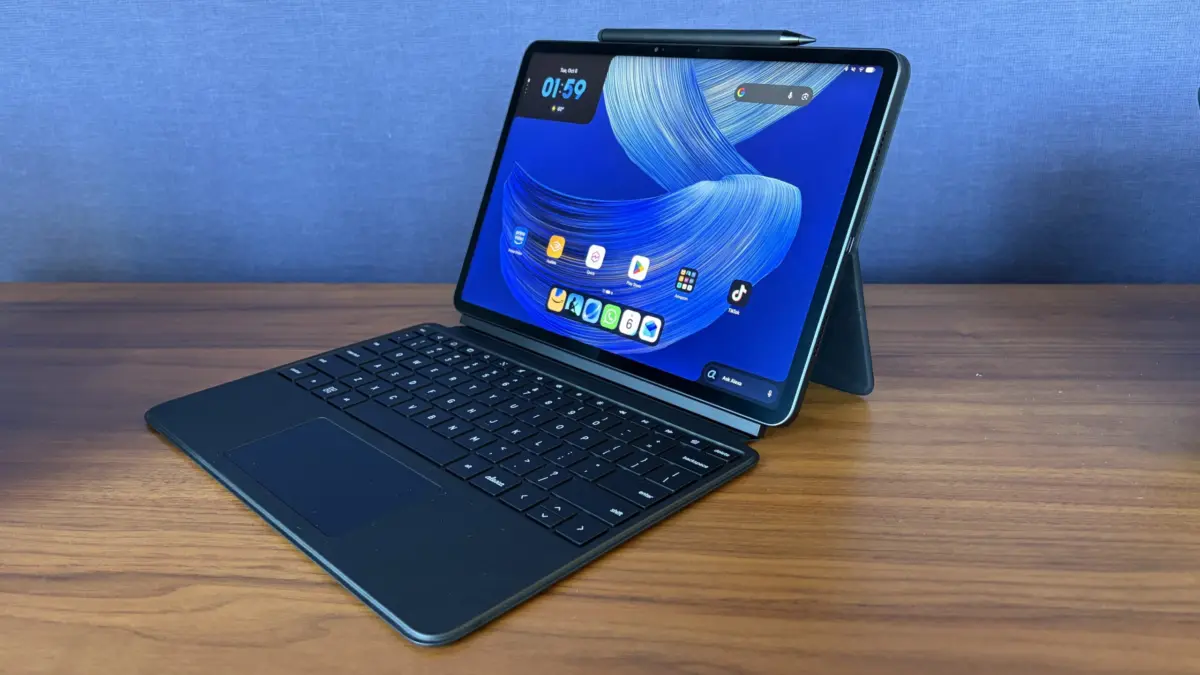
Amazon Alexa Tablet 12 Pro: The Flagship Hybrid
Positioned as the crown jewel of the new lineup, the 12 Pro is a true "jack of all trades" that bridges the gap between entertainment hub and portable workstation.
- Performance: The most premium configuration packs an impressive 16GB of RAM, allowing users to leverage advanced multiwindowing capabilities and run resource-heavy Play Store applications without stuttering.
- Productivity: Supported by magnetic keyboard attachments via pogo pins and kickstand peripherals, the 12 Pro transforms into a lightweight productivity machine.
- Pricing: Despite laptop-tier performance and robust multitasking chops, Amazon is pricing the flagship model aggressively below traditional budget laptop territory.
Amazon Alexa Tablet 11: The Sweet Spot for Media Consumers
The 11-inch model acts as the ideal middle ground for consumers who want the sprawling entertainment real estate of the Pro model without paying for elite workstation specs.

- Hardware Compromises: While it supports stylus input for drawing and note-taking, it sacrifices the physical pogo pin connector for keyboards, opting instead for standard Bluetooth connectivity. Storage options are also more conservative than the 12 Pro.
- Value Proposition: With high-resolution visuals and seamless aggregation of all Amazon media libraries, the Alexa Tablet 11 is tailor-made as a high-value, "fun-first" household media consumption device.
Amazon Alexa Tablet 8: The Pocket-Sized E-Reader
The diminutive 8.7-inch model focuses heavily on portability and reading comfort rather than heavy productivity or expansive gaming.
- Usage Case: Though it retains full Play Store access, its smaller footprint and reduced memory configuration lean heavily into its primary role as a next-generation, pocket-sized e-reader.
- Display Modes: Fully compatible with the redesigned Kindle mode, it provides an exceptional digital book experience on the go.
Redesigned Amazon Kids Tablets
Abandoning the old Fire Kids moniker, Amazon has introduced dedicated 8.7-inch and 11-inch children’s tablets designed to mirror adult hardware sophistication while retaining rigorous safety standards.
- Build Quality: The 8.7-inch model features a tactile, soft foam protective case, while the larger 11-inch model utilizes a sleeker, form-fitting kid-proof shell.
- Creative Tools: Powered by generative AI, the new Storybuilder app allows children to verbalize stories and watch custom visual representations render on-screen in real time. Every device ships with a one-year subscription to Amazon Kids Plus.
Official Responses and Industry Insights
Speaking exclusively with CNET during the New York product showcase, Kevin Keith, vice president of Amazon’s devices team, provided candid context regarding the sweeping strategic pivot.

Addressing the retirement of the iconic Fire tablet branding, Keith emphasized that modern consumers—including younger demographics—demand professional-grade hardware reliability rather than glorified toys.
"We know kids want a tablet, not a toy, so we add the same hardware as the Alexa Tablet," Keith explained regarding the Kids lineup. "We ship it with a bumper, a completely different UI, and software built just for kids."
Keith also addressed the controversial integration of generative AI into children’s products, assuring journalists that tools like Storybuilder are strictly locked behind verifiable parental consent and robust, multi-layered content filtering guardrails.

Journalists on the ground testing the hardware noted distinct operational quirks during demonstrations. While the Alexa Plus AI assistant demonstrated impressive accuracy when processing complex natural language queries—such as managing personal calendars and filtering nearby restaurants by complex dietary restrictions—it occasionally lagged, taking upwards of 30 seconds to resolve heavily layered prompts.
On the hardware front, critics praised the tactile, papery feel of the display during Kindle mode testing, noting that Amazon’s proprietary e-ink and color paper configurations give competing devices—such as TCL’s Nxtpaper line—a formidable run for their money.
Implications: What This Means for the Tablet Market
Amazon’s dramatic overhaul carries profound implications for the broader consumer electronics landscape:

- A Direct Threat to Budget Laptops: By offering up to 16GB of RAM, full Android functionality, multiwindowing, and seamless keyboard conversion at a fraction of the cost of traditional entry-level PCs, the Alexa Tablet 12 Pro threatens to capture a significant share of the budget-conscious remote work and student market.
- The Death of Walled Gardens: Giving up Fire OS signals an acknowledgement by tech giants that consumers increasingly reject closed, restrictive app ecosystems. By embracing the Google Play Store, Amazon has instantly eliminated the single biggest pain point that kept power users away from Fire tablets.
- AI as a Core Utility: By embedding Alexa Plus directly into the display layer—allowing the AI to "see" browser images and social media content to surface relevant product listings or contextual data—Amazon is setting a new benchmark for multimodal, context-aware operating systems.
As the October 14 shipping date approaches, all eyes will be on whether consumers embrace the rebranded, AI-infused future of Amazon hardware, or if the loss of the budget-basement Fire pricing model shifts the entry-level tablet landscape permanently.
