

By Tech & Enterprise News Desk
Published: October 2025
Main Facts
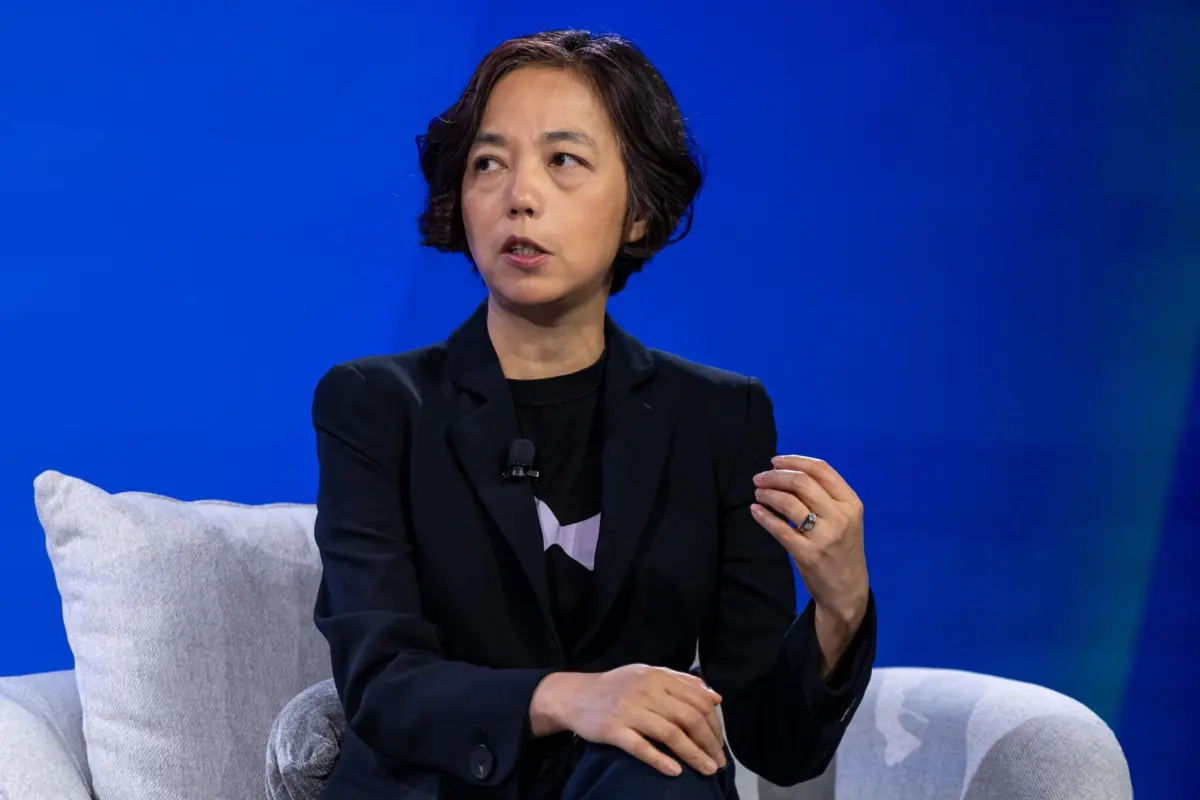
In a massive consolidation move that reshapes the artificial intelligence landscape, semiconductor giant AMD has officially announced its intent to acquire World Labs, the cutting-edge AI research lab co-founded by renowned computer scientist and "Godmother of AI" Dr. Fei-Fei Li. Valued at approximately $8.2 billion, the transaction is structured as an all-stock deal.
Upon the anticipated closure of the acquisition by the end of the year, Dr. Li will step into a powerful dual role at AMD as Executive Vice President (EVP) and Chief Scientist, reporting directly to AMD Chief Executive Officer Lisa Su. Meanwhile, the core World Labs team will transition to AMD intact, maintaining their primary focus on pioneering AI model research.
The acquisition serves as a strategic play for AMD, designed to tighten the feedback loop between advanced spatial intelligence model development and hardware engineering. By absorbing World Labs, AMD aims to directly optimize its next-generation GPUs, software stacks, and system architectures to handle the grueling computational demands of spatial intelligence and world-generation frameworks—a rapidly expanding frontier that moves far beyond traditional Large Language Models (LLMs).
Chronology of World Labs: From Inception to Acquisition
To understand the magnitude of AMD’s acquisition, one must examine the meteoric trajectory of World Labs, which went from a blank conceptual slate to a multi-billion-dollar enterprise in record time.
- Early 2024 (The Launch): World Labs was officially founded by Dr. Fei-Fei Li alongside a roster of elite AI researchers. Dr. Li, celebrated for her monumental work in creating ImageNet—the dataset that catalyzed the modern deep learning revolution—left her academic confines to pursue a singular vision: giving AI the ability to understand, interact with, and generate 3-dimensional physical spaces.
- Mid-2024 (Rapid Valuation): Capitalizing on Dr. Li’s unmatched industry reputation and a compelling thesis on spatial intelligence, World Labs secured heavy backing from premier venture capital heavyweights, including Andreessen Horowitz and Radical Ventures. Within months of its public debut, the startup achieved a staggering $1 billion valuation, bypassing the prolonged early-stage funding hurdles typical of deep-tech startups.
- 2025 (The Commercial Leap): World Labs broke past pure research and entered the commercial sphere with the launch of its flagship product: Marble. Described as a revolutionary world-generation model, Marble allowed users to instantly generate fully interactive, navigable 3D environments from simple text prompts. This technological leap signaled to the broader tech industry that spatial AI was no longer a theoretical pipedream, but a deployable commercial reality.
- Late 2025 (The AMD Acquisition): Propelled by the massive compute requirements needed to scale models like Marble, World Labs found an ideal industrial partner in AMD. The $8.2 billion all-stock agreement was struck to secure the financial runway and massive computing infrastructure required to take spatial AI into its next global phase.
Supporting Data and Market Context
The AMD-World Labs merger does not occur in a vacuum; it is part of a broader, hyper-aggressive wave of industry consolidation where hardware titans and software innovators are locking arms to secure dominance in the generative AI era.
- Deal Valuation: ~$8.2 billion in an all-stock transaction.
- Timeline to Close: Projected for completion by the end of the current calendar year, pending standard regulatory reviews.
- Corporate Hierarchy: Dr. Fei-Fei Li becomes EVP and Chief Scientist of AMD, answering directly to CEO Lisa Su.
- Industry Precedents: This multi-billion-dollar union closely trails other colossal market maneuvers. Notably, earlier this month, rival chipmaker Nvidia announced its acquisition of collaborative AI hub Hugging Face for nearly $13 billion.
These consecutive megadeals underline a definitive shift in the semiconductor industry: chipmakers are no longer satisfied with merely selling hardware to software developers. Instead, they are actively absorbing the vanguard of foundational AI research to ensure their proprietary chips are custom-designed for the specific algorithmic workloads of tomorrow.
Official Responses and Leadership Perspectives
Leadership from both organizations have expressed immense optimism regarding the synergies unlocked by the merger, emphasizing a mutual commitment to openness and scientific rigor.
Dr. Fei-Fei Li on the Transition
In a detailed post shared on her official Substack, Dr. Li addressed the motivations behind the acquisition, noting that the alignment with AMD represents the most logical next step for scaling spatial intelligence.

"Just like I knew it was time to do a startup to jumpstart the work of creating foundation models beyond LLMs and achieve the most impact in AI, it’s again very clear that the right path for myself and World Labs is to continue our mission as a part of AMD," wrote Dr. Li. "Together we’re committed to keep pushing the frontier of AI to solve real problems, and doing so openly with the community and the entire ecosystem."
Lisa Su on Hardware-Software Co-Design
AMD CEO Lisa Su underscored how critical model-level expertise is to designing the silicon chips of the future. During the announcement, Su emphasized that the integration of World Labs will provide AMD with crucial foresight into how AI architectures are evolving.
"Building the compute platforms for the next generation of AI requires a deep understanding of how models are evolving," stated Su. "Fei-Fei and the World Labs team bring exceptional research leadership and model expertise. Together, we can use that insight to develop the hardware, software and systems that will power the next generation of AI and strengthen the open AI ecosystem."
Implications for the AI and Semiconductor Industry
The acquisition of World Labs by AMD carries profound, far-reaching implications across multiple sectors of the technology landscape:
1. The Shift from 2D Language to 3D Spatial Intelligence
For years, the artificial intelligence gold rush was dominated by Large Language Models (LLMs) centered on text processing, translation, and basic 2D image generation. World Labs pioneered the shift toward spatial intelligence—teaching AI systems the physics, geometry, and spatial dynamics of the physical world. By embedding this expertise directly into AMD, the combined entity is positioned to accelerate the deployment of spatial computing, advanced robotics, autonomous systems, and next-generation immersive gaming engines.
2. Deepening the Hardware-Software Co-Design Loop
Historically, chip manufacturers designed hardware based on predictable, standardized compute workloads, leaving software developers to optimize their models for the available silicon. However, the sheer complexity and explosive scale of modern AI models have broken that traditional paradigm. By bringing a premier AI research lab directly in-house, AMD can co-design its silicon chips, interconnects, and software ecosystems specifically around the bleeding-edge requirements of spatial foundation models before they hit the broader market.
3. Escalating Competition with Nvidia
The semiconductor duopoly between AMD and Nvidia has grown increasingly fierce in the wake of the generative AI boom. While Nvidia’s recent move to acquire Hugging Face consolidates its grip over the developer community and model-sharing infrastructure, AMD’s acquisition of World Labs grants it proprietary ownership over a novel, high-value paradigm of AI research. This sets the stage for a dramatic technological arms race where hardware supremacy is inextricably linked to foundational model innovation.
4. Reassurances on Openness
In an era where closed-source, highly proprietary AI ecosystems threaten to lock out smaller developers, both Dr. Li and Lisa Su explicitly emphasized their dedication to the "open AI ecosystem." How this commitment translates into practical offerings—such as open-source spatial models or accessible developer APIs running on AMD infrastructure—will be closely watched by the global tech community in the months and years to follow.
