

Published: September 18, 2026
Author: Susanna Moreira
Series: ArchDaily Topic: The Lure of Escapism in Architecture and Alternative Worlds
Main Facts
- The Core Concept: Grounded in French philosopher Michel Foucault’s framework, heterotopias are defined as tangible, real-world spaces operating under their own internal logic, offering lived alternatives to dominant spatial, social, and cultural paradigms.
- The Role of Temporary Installations: Unlike permanent construction, temporary installations act as agile testing grounds that allow architects to materialize abstract worldviews, provoke perceptual shifts, and challenge conventional design standards.
- Featured Works and Designers: The architectural exploration spans five distinct international installations:
- Room Installation by Tamara Wibowo Architects
- When the Earth Began to Look at Itself (Desert X) by Syn Architects
- The Waterfall that Went Silent by Umeå School of Architecture
- Vessel Installation by Erazo Pugliese
- Under the Same Sun Installation by Stephanie Deumer
- Thematic Focus: Aligned with the 2026 architectural discourse on escapism, these works use temporary interventions to critically reexamine human relationships with nature, technology, resource extraction, and subjective spatial positioning.
Chronology of Spatial Speculation: From Foucault to Modern Installations
The genealogy of the heterotopia traces back to Michel Foucault’s mid-20th-century lectures, notably his 1967 text Of Other Spaces. While utopias present idealized, unreachable non-places, Foucault conceptualized heterotopias as "counter-sites"—real locations that effectively contest, invert, and simultaneously represent the spaces outside of them. Over the decades, architectural theorists adopted this concept to critique urban homogenization and institutional rigidity.
By the early 2020s and into 2026, the urgency of environmental degradation, shifting socio-political structures, and digital saturation prompted a renewed architectural fascination with escapism. Rather than serving as mere flights of fancy, escapism transformed into a critical design tool. Architects began turning away from the slow, carbon-heavy machinery of permanent urban development to embrace temporary installations. These ephemeral structures emerged as rapid, responsive mediums capable of staging alternative realities on a micro-scale, unburdened by the long-term economic and structural compromises of traditional real estate.
Supporting Data: Case Studies in Alternative Realities
The temporary installations highlighted in this exploration demonstrate how diverse geographies and material strategies can manifest distinct theoretical worldviews.
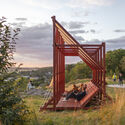
1. Tamara Wibowo Architects: Room Installation
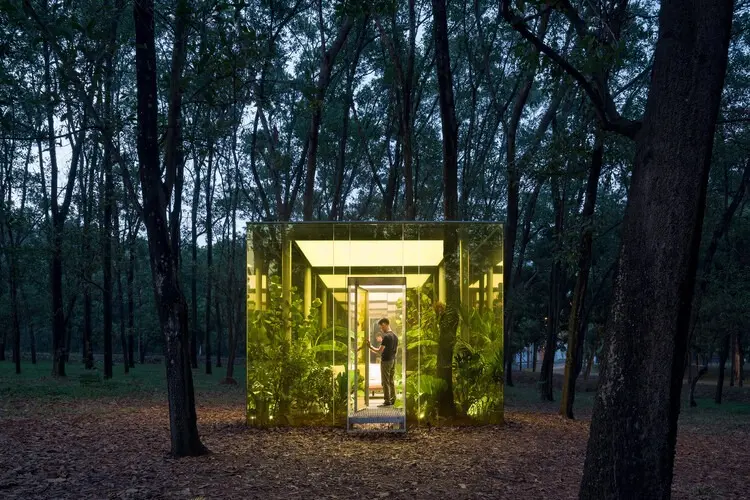
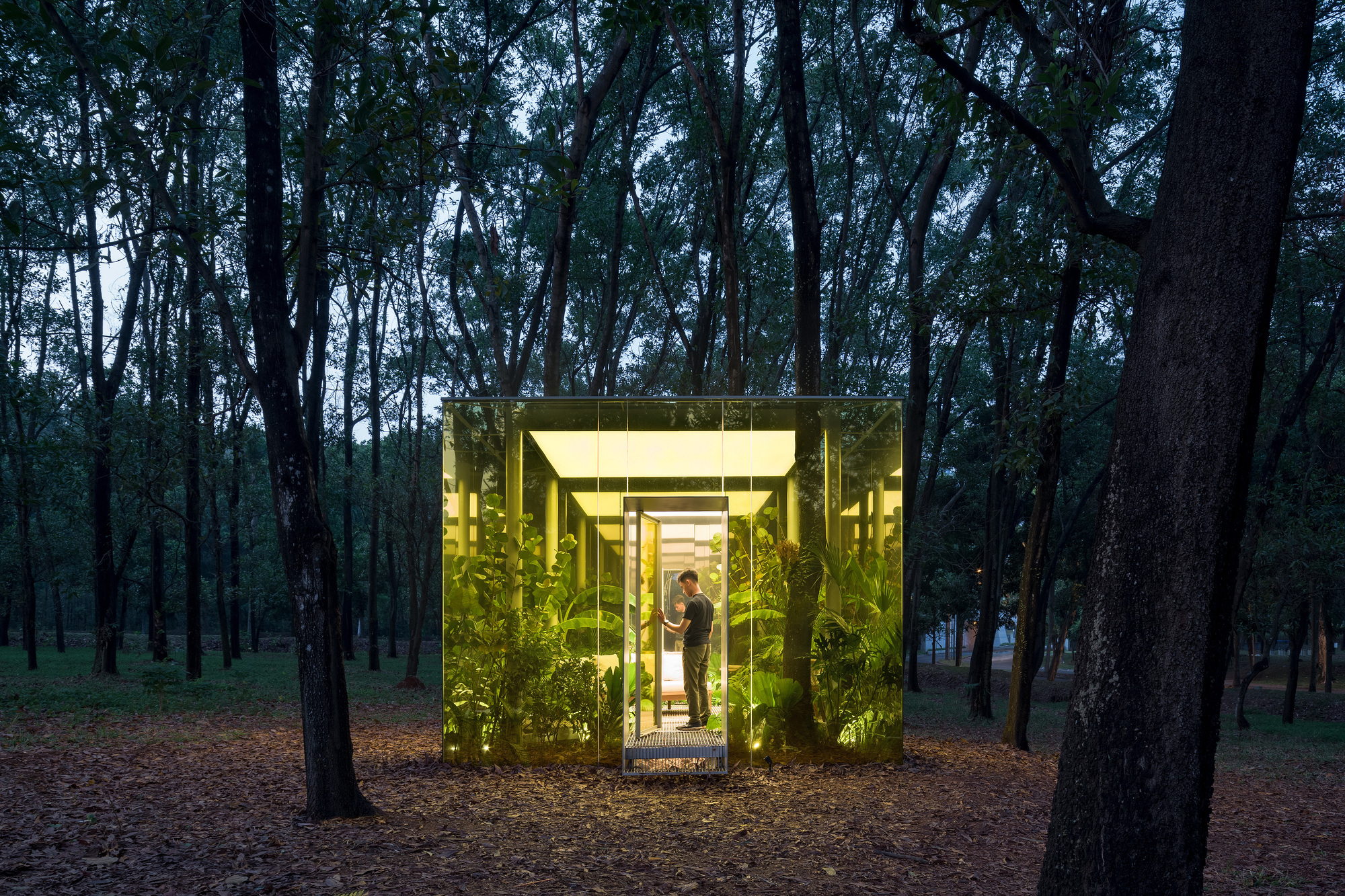
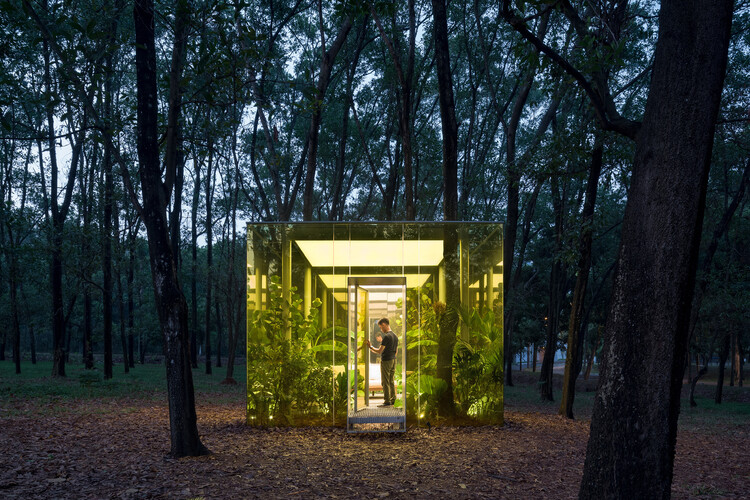
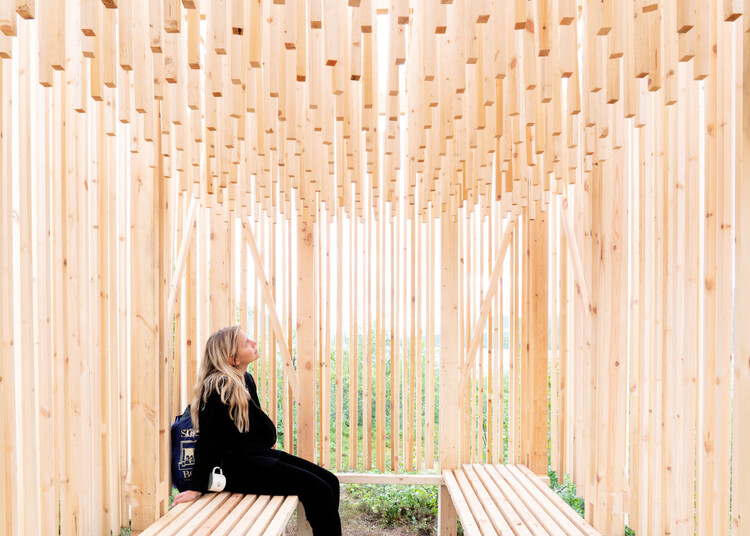
Operating as a spatial meditation on duality, Room functions as an architectural diptych. It explores the delicate, often volatile tensions between opposing realities. By confronting binary understandings of space, materiality, and human perception, the installation prompts visitors to question the precise boundary lines separating the built environment from the natural world.
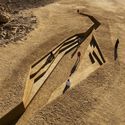
2. Syn Architects: When the Earth Began to Look at Itself (Desert X)
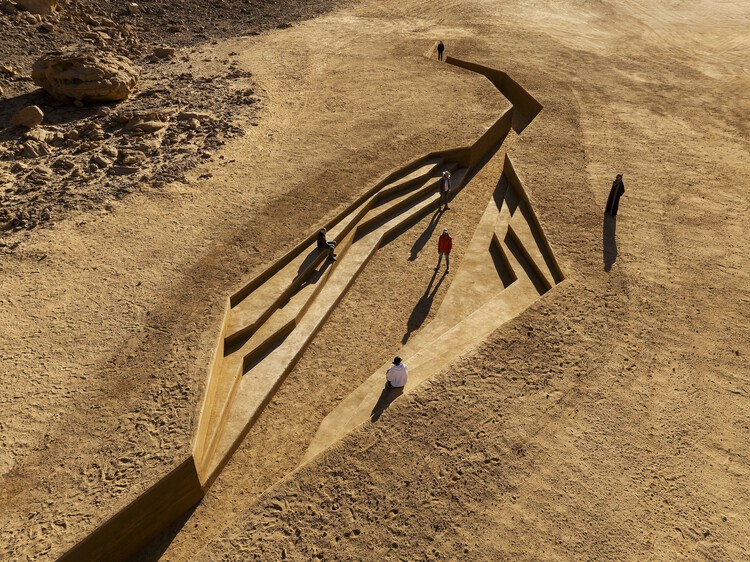
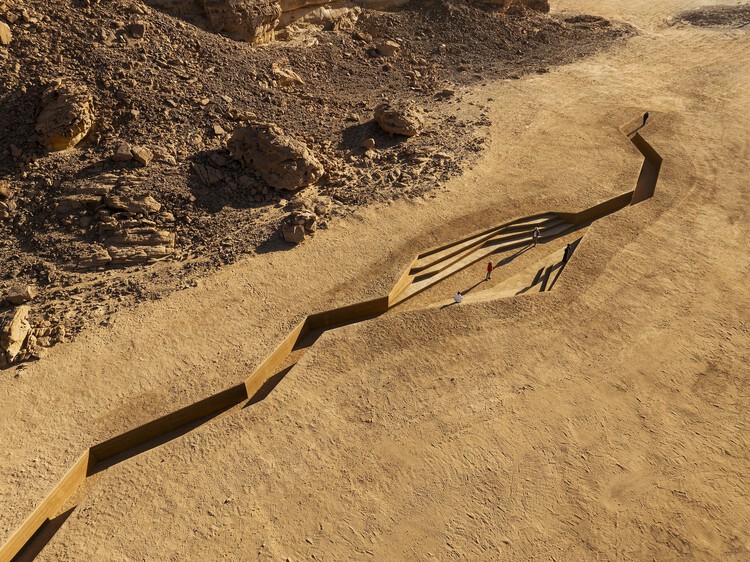
Drawing upon theorist Rosi Braidotti’s concept of the "nomadic subject"—an epistemological condition that refuses fixity and embraces "knowingness and unknowingness"—this desert installation redefines subjectivity in relation to site positioning. The intervention acts as a physical pathway, encouraging visitors to experience the landscape "as if" through an alternative lens, shifting the traditional hierarchy between observer (subject) and observed (object).
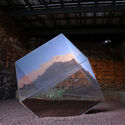
3. Umeå School of Architecture: The Waterfall that Went Silent
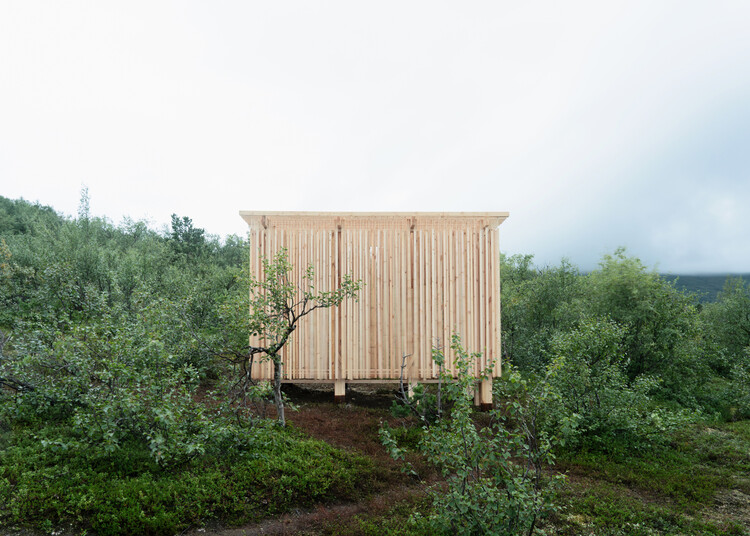
Sited within the UNESCO World Heritage area of Laponia, this temporary sound installation serves as a poignant monument to ecological loss. It resurrects the phantom roar of the Stora Sjöfallet / Stuormuorkkegårttje waterfall on the Lule River, which was drastically diminished by early 20th-century hydropower developments. The project critiques humanity’s relentless drive for technological progress, energy extraction, and resource consumption at the expense of indigenous lands and natural ecosystems.
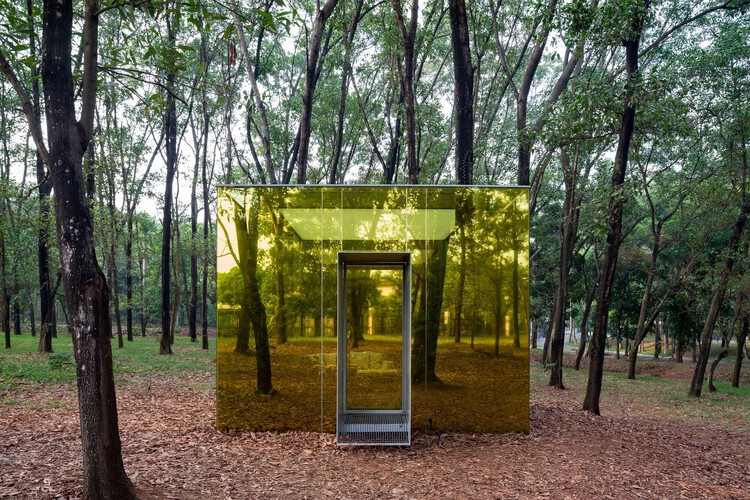
4. Erazo Pugliese: Vessel
Reclining upon rugged coastal rocks, the asymmetrical timber-and-fabric frame of Vessel reestablishes a direct, bodily connection between the human form and the terrestrial horizon. Partially fixed fabrics react dynamically to the shifting wind, registering atmospheric changes audibly and visually. In moments of calm, the installation invites visitors to lie down or sit, evoking deep contemplative and existential feelings rooted in raw ecological exposure.
5. Stephanie Deumer: Under the Same Sun
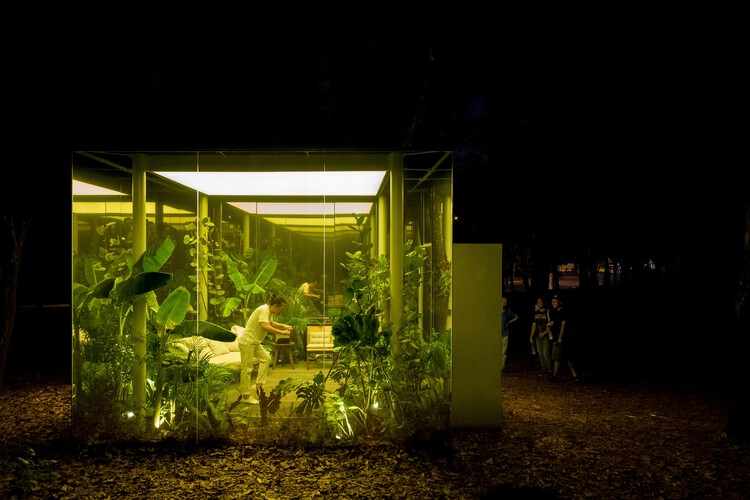
Blending simulacra with biological systems, this subterranean greenhouse installation utilizes technological means to showcase the spectacle of plant reproduction. Powered entirely by flush, pool-like solar panels that double as a desert-level roof, the installation captures live-feed footage of the scorching aboveground landscape. This captured sunlight is projected below to sustain photosynthesis, creating an ambiguous mirage between high-tech intervention and subterranean sanctuary.
Official Perspectives and Theoretical Frameworks
Architectural critics and creators increasingly view temporary installations not as trivial exercises, but as vital laboratories for spatial philosophy.
According to contemporary discourse surrounding the ArchDaily 2026 theme The Lure of Escapism in Architecture, the value of these installations lies in their transience. Because they are not bound by zoning laws, long-term economic returns, or structural permanence, designers can test radical propositions regarding ecology, perception, and community.
Philosophically, projects like those by Syn Architects and the Umeå School of Architecture rely on "spatial storytelling" to force institutional and public reckoning. By placing visitors into constructed heterotopias—such as a silent waterfall or a nomadic desert pathway—creators bypass purely intellectual debates, forcing users to feel the friction between modern civilization and ecological consequence. Similarly, material explorations by practices like Erazo Pugliese and Tamara Wibowo challenge the ocularcentric nature of modern design, prioritizing acoustic, tactile, and atmospheric engagement over static visual consumption.
Implications for the Future of Architectural Practice
The rise of architectural heterotopias through temporary installations signals a broader paradigm shift in how the discipline values permanence, scale, and utility.
- Redefining Success: Traditionally, architectural success has been measured by the longevity, scale, and economic efficiency of permanent buildings. Ephemeral heterotopias prove that high-impact conceptual design can exist on compressed timelines and minimal material footprints, pointing toward a more sustainable, ideas-driven future.
- Environmental Consciousness: As demonstrated by The Waterfall that Went Silent and Under the Same Sun, temporary works are uniquely positioned to address ecological grief and climate realities without imposing further permanent infrastructure onto fragile landscapes.
- Expanding the Architect’s Role: By integrating philosophy (Foucault, Braidotti), sociology, and sensory-driven spatial design, architects transcend the role of mere shelter-builders. They become curators of alternative worlds, offering society necessary spaces for reflection, critique, and psychological refuge in an increasingly complex and standardized global environment.
