Published: August 14, 2026 Author: Antonia Piñeiro (Enriched and Adapted from ArchDaily) Location: Global / International Community Submission
Main Facts: The Evolution of the All-Inclusive Architectural Escape
In an era defined by critical scrutiny of global tourism, the escalating climate costs of long-haul travel, and urban housing crises driven by the proliferation of short-term rentals, the traditional hotel typology is undergoing a profound identity crisis. No longer merely a temporary bed for the weary traveler, the modern hotel is increasingly conceptualized as an all-inclusive micro-ecosystem—a space where entertainment, wellness, gastronomy, and even remote labor seamlessly converge under one roof.
This shifting paradigm forms the core of a newly released architectural compilation by the ArchDaily community, published on August 14, 2026. Titled "All-Inclusive Escapes: 7 Unbuilt Hotel Projects," the feature highlights visionary, unbuilt hotel concepts submitted by architects and designers worldwide. Spanning seven countries—Madagascar, China, the United States, Slovenia, Malta, Brazil, and Cameroon—these visionary designs utilize striking organic geometries, immersive lighting, sensory textures, and hybrid materials to stand apart from their everyday urban or natural surroundings.
While three of these projects root their designs deeply in dialogue with their surrounding landscapes, the remaining four construct their identities around hyper-programmed activities, transforming hospitality into a multidisciplinary theater of leisure.
Chronology: The Journey from Travel Fantasy to Unbuilt Reality
The conceptualization of these seven visionary properties traces an evolutionary timeline deeply tied to contemporary socio-economic shifts in post-pandemic mobility and real estate pressures:
Pre-2025 (The Ideation Phase): Amid mounting regulations and public backlash against short-term vacation rentals in major global cities—such as European municipal caps and North American zoning laws—architects begin rethinking the temporary lodging typology. The demand for centralized, controlled, resort-style environments surges.
Late 2025: Regional proposals begin to crystallize. Projects like the Rimski Vrelec Spa Hotel in Slovenia by AVCa+ Architects are finalized on paper, focusing heavily on localized wellness and historical thermal landscapes.
Early to Mid-2026: Cutting-edge international concepts emerge from the drawing boards of the ArchDaily global community. Designs such as ORSI’s Baobab Waterfall in Madagascar (visualized alongside digital artist Ahmad Eghtesad) and rãkkhaus’s Atari Hotels in Phoenix, Arizona, push the boundaries of themed and environmental architecture.
August 14, 2026:ArchDaily officially publishes the curated collection of seven unbuilt hotel projects, igniting global discourse on the future of sustainable, highly programmed, and immersive hospitality design.
Supporting Data & Typological Breakdown: The Seven Visions
To understand the scope of these unbuilt masterworks, the collection can be categorized into two primary design philosophies: landscape-driven integration and activity-driven programming.
1. Landscape-Driven Sanctuaries
These projects take their primary cues from topography, climate, and native ecology, utilizing architecture as an extension of the natural world rather than an imposition upon it.
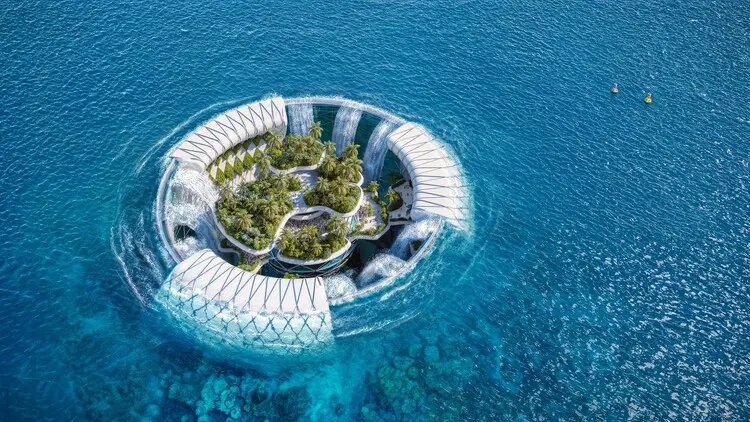
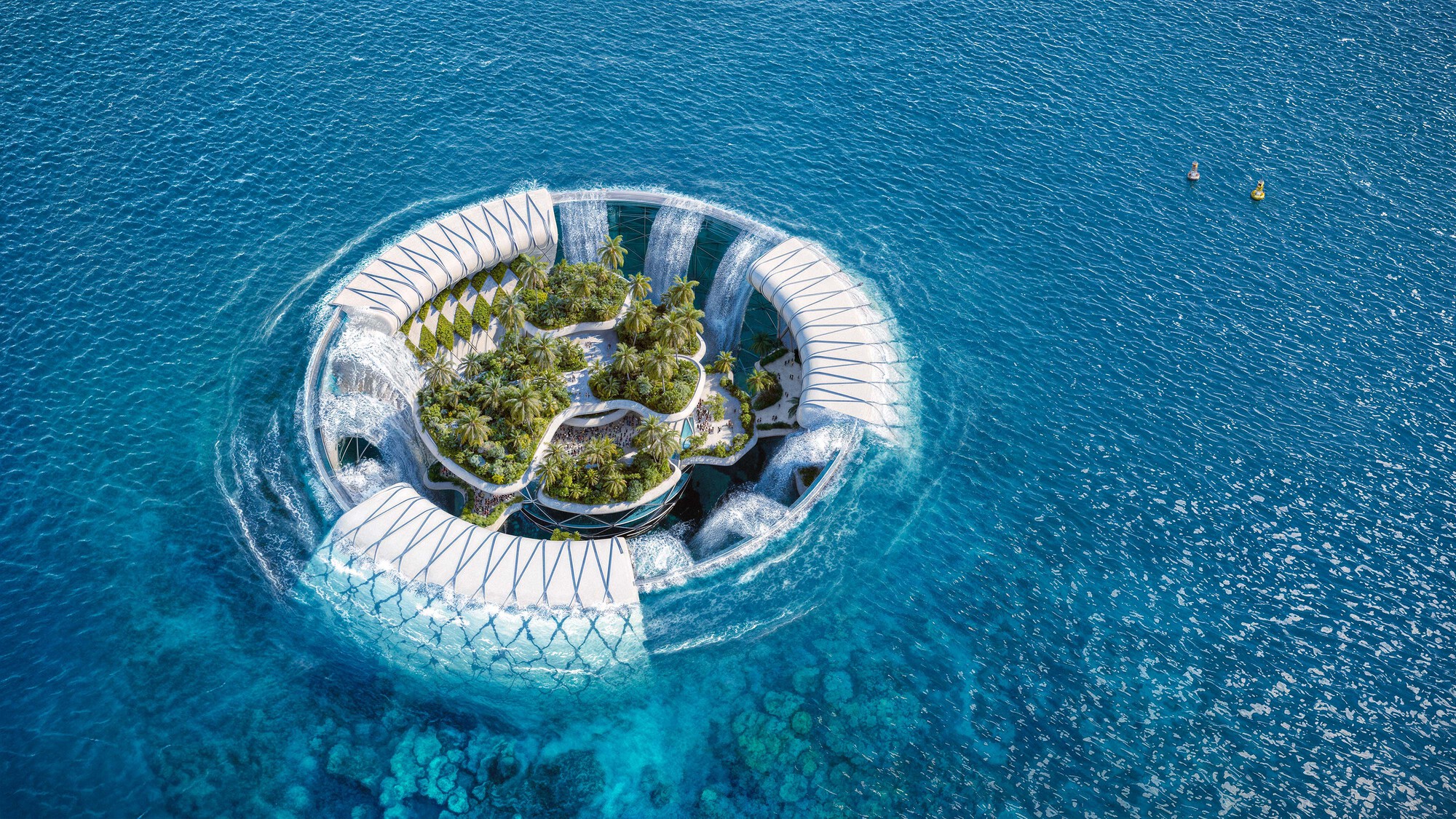
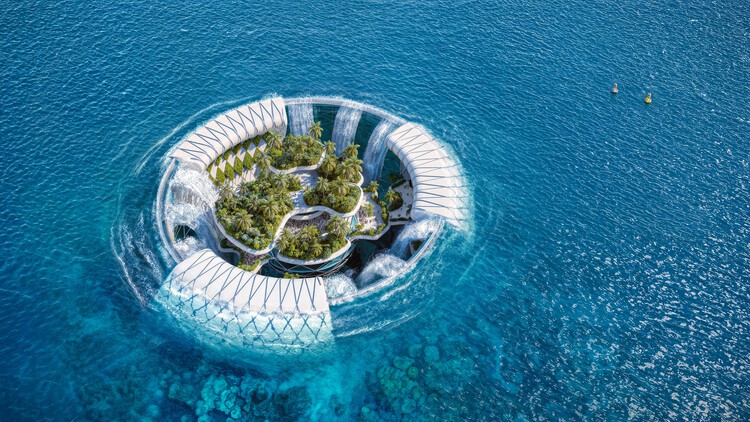
Baobab Waterfall (Madagascar, 2026 – ORSI / Ahmad Eghtesad): Drawing inspiration from the iconic silhouette of Madagascar’s baobab trees, this project merges biomorphic structural forms with cascading water features, aiming to anchor visitors directly within the island’s distinct topography.
Rimski Vrelec Spa Hotel (Slovenia, 2025 – AVCã+ Architects): A masterclass in thermal architecture, this European spa retreat revitalizes a historic mineral water site, blending quiet, low-impact materiality with the soothing rhythms of the Slovenian forest.
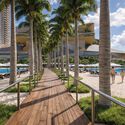
Maldivas Resort (Brazil, 2026 – Studio Marchesin Arquitetura): Designed for the tropical coastline of Brazil, this resort leverages open-air corridors, indigenous woods, and passive cooling strategies to offer an immersive, beachside ecological escape.
2. Activity-Driven Destinations
These urban and semi-urban projects prioritize hyper-programmed environments, transforming the hotel stay into an interactive adventure, entertainment hub, or wellness marathon.
Atari Hotels (Phoenix, United States, 2026 – rãkkhaus): Merging hospitality with immersive gaming culture, this urban concept introduces retro-futuristic aesthetics, interactive entertainment zones, and state-of-the-art digital infrastructure tailored for a digitally native demographic.
Noru Hotel (Malta, 2026 – DAAA Haus / Diana Iskander): Situated in the heart of the Mediterranean, Noru focuses on cultural curation, Mediterranean culinary arts, and high-density social spaces that blur the line between local urban life and guest relaxation.
Additional Global Entries (China and Cameroon): Rounding out the seven-project collection are conceptual masterworks situated in Asia and Central Africa, exploring vertical urban density, modular construction, and community-centric hospitality spaces.
Official Perspectives and Community Insights
The editorial team behind the ArchDaily community showcase emphasizes that the commercialization of residential real estate has fundamentally altered traveler expectations.
"If a place to stay is just a temporary home, a hotel can offer a carefree getaway," notes author Antonia Piñeiro in the feature release. "That is why, given the many options offered by the commercialisation of housing, hotels increasingly resemble resorts: everything in one place."
Architects contributing to the project database have similarly voiced a desire to challenge sterile, corporate hospitality models. By introducing non-Euclidean geometries, biomimicry, and high-tech entertainment ecosystems, these unbuilt blueprints serve as experimental laboratories. They test how physical spaces can psychologically detach a guest from their daily anxieties, even before a single brick is laid.
Implications: What Unbuilt Hotels Tell Us About the Future of Travel
The fascination with unbuilt architecture goes far beyond aesthetic appreciation; it acts as a cultural barometer for our collective anxieties and desires regarding mobility.
1. The Death of the Traditional Hotel Room
As remote work and "bleisure" (business plus leisure) travel become permanent fixtures of the global economy, the hotel room is expanding. The seven unbuilt projects highlighted in the ArchDaily collection demonstrate that tomorrow’s traveler demands functional plurality: a room must double as a creative studio, a wellness retreat, and a digital playground.
2. Navigating the Backlash of Mass Tourism
With cities worldwide implementing strict limitations on short-term rentals to combat housing affordability crises—a trend heavily documented across European and North American urban centers—the hospitality industry faces mounting pressure to absorb displaced travelers without exacerbating urban friction. Large-scale, highly programmed resorts and boutique concept hotels offer a controlled alternative, concentrating tourist foot traffic into dedicated zones designed specifically for high-capacity leisure.
3. Sustainability Versus Fantasy
Perhaps the most complex implication of these unbuilt concepts lies in the tension between ecological fantasy and environmental reality. While projects like Madagascar’s Baobab Waterfall and Slovenia’s Rimski Vrelec utilize organic forms that mimic nature, the energy and resource footprint required to actualize such ambitious designs remains a central challenge for contemporary architects. The visionaries behind these unbuilt works are thus tasked with a dual mandate: dreaming up hyper-escapist worlds while engineering them to meet stringent 21st-century ecological standards.
As these seven projects remain on the drawing board, they serve as powerful testaments to human imagination—reminding us that long before we pack our bags, the journey of escape always begins with a sketch.