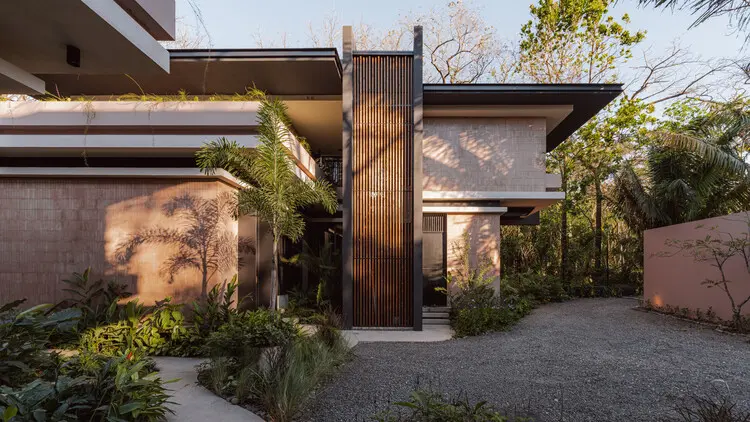
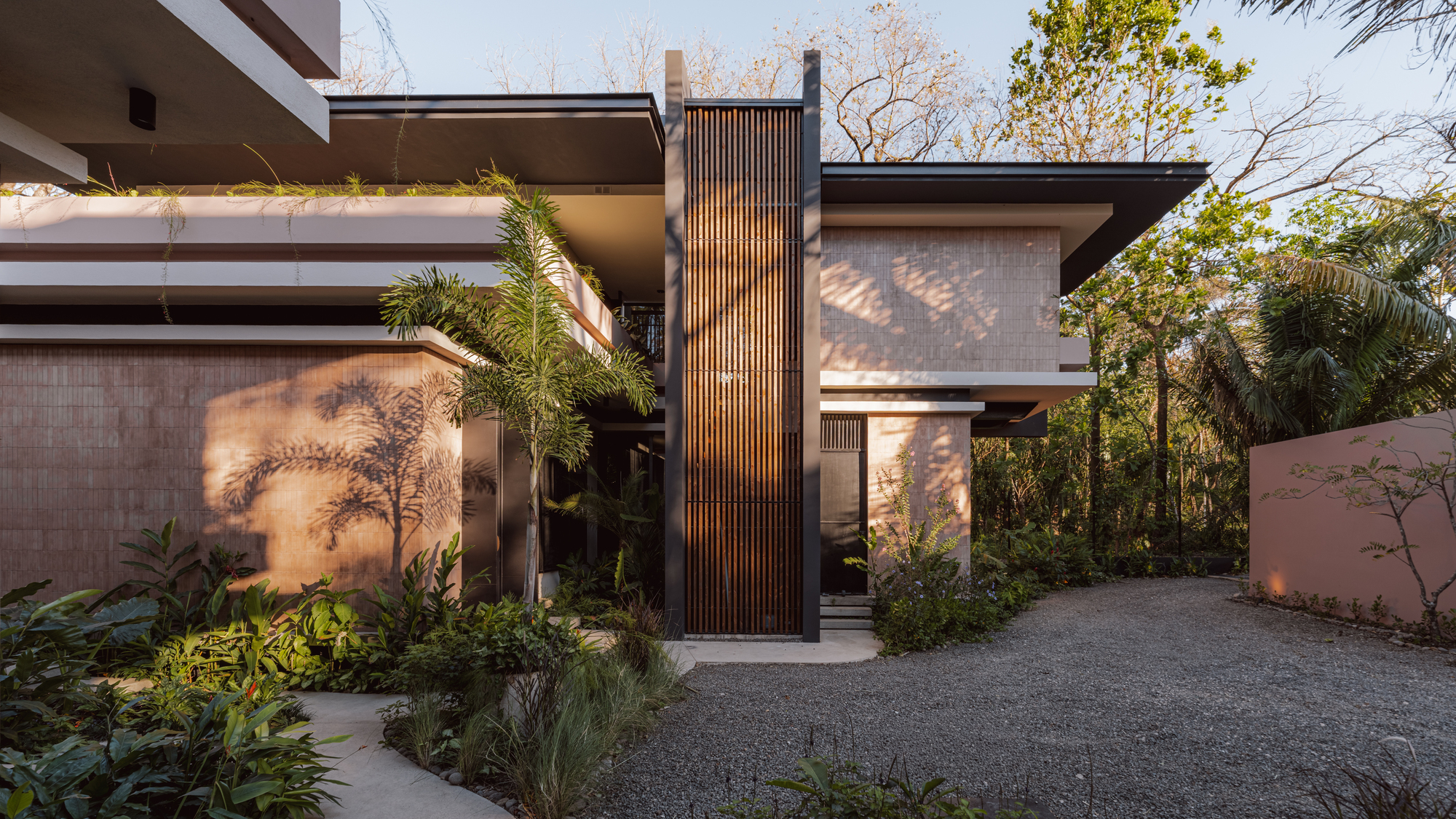
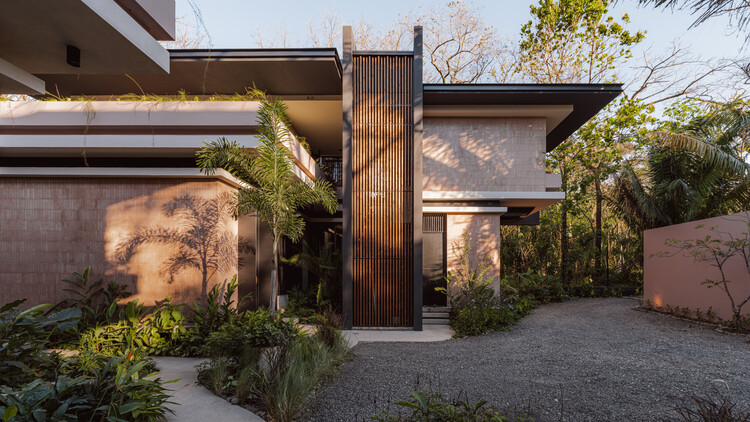
NOSARA, COSTA RICA — Deep within the vibrant, tangled canopy of the Guiones jungle in Nosara, architecture has taken on a poetic yet deeply functional form. Linea House (Casa Línea), a striking residential project crafted by the visionary team at Instinto Estudio, redefines tropical modernism. Comprising two distinct tropical dwellings, the project utilizes architecture as a deliberate series of linear gestures—framing the untamed surrounding landscape, optimizing natural ventilation, and curating intimate spaces for gathering that place inhabitants in profound, uninterrupted contact with nature.
Photographed by Alvaro Fonseca of Depth Lens, Linea House stands as a testament to the harmonious coexistence of contemporary structural design and sensitive ecological stewardship.
Main Facts: Architecture as a Linear Dialogue
At its core, Linea House is a masterclass in contextual design. Situated in one of Costa Rica’s most ecologically coveted coastal and jungle regions, the project responds directly to the intense tropical climate, rich biodiversity, and topography of Nosara.
Project Name: Linea House (Casa Línea)
Architectural Firm: Instinto Estudio
Location: Guiones Jungle, Nosara, Costa Rica
Curated by: Valentina Díaz
Photography: Alvaro Fonseca (Depth Lens)
Primary Materials: Concrete, exposed woodwork, structural beams, and expansive glazing designed to dissolve boundaries.
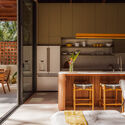
Key Features: Intentional framing of external views, optimized cross-ventilation corridors, seamless indoor-outdoor living spaces, private courtyards, and signature elements such as an aerial outdoor shower.
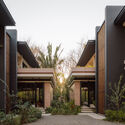
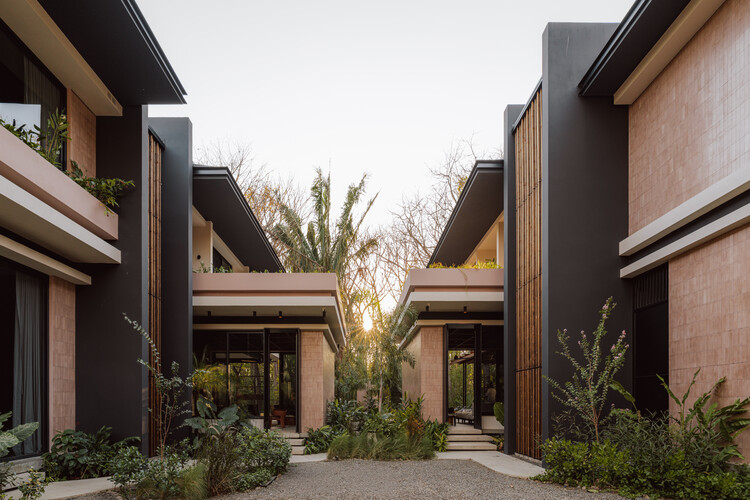
Rather than imposing a heavy footprint upon the jungle floor, Instinto Estudio approached the site with restraint. The design relies on clean, horizontal lines that slice through the organic chaos of the tropical foliage, creating a striking visual contrast between the human-made geometry and the wild, flowing forms of the rainforest.
Chronology: The Evolution of Linea House
The realization of Linea House represents a meticulous journey from initial site analysis to final structural completion. While exact internal milestones remain closely held by Instinto Estudio, the life cycle of such a tropical architectural marvel follows a rigorous trajectory:
Phase 1: Site Acquisition and Ecological Mapping (Early Development): The design team spent months studying the specific microclimate of the Guiones jungle, tracking sun paths, prevailing wind patterns (crucial for natural cooling), and existing mature trees to ensure zero unnecessary deforestation.
Phase 2: Conceptualization and Linear Drafting: Instinto Estudio developed the foundational concept of "the line"—using architectural planes to capture, frame, and filter views of the surrounding canopy. Initial iterations focused heavily on passive climate control strategies.
Phase 3: Material Sourcing and Engineering: Given Nosara’s high humidity, heavy seasonal rainfall, and intense sun exposure, material selection was paramount. Concrete and sustainably harvested structural woods were chosen for their durability, thermal mass, and ability to age gracefully alongside the jungle.
Phase 4: Construction and Courtyard Integration: Building within a dense jungle required precision engineering to protect root systems. The structural skeleton went up, carving out interior courtyards and open-air transition zones that anchor the homes to the earth.
Phase 5: Interior Curation and Completion (August 2026): The final touches, including custom millwork, open-plan living arrangements, and exterior water features like the aerial outdoor shower, were finalized, culminating in the public unveiling of the project in August 2026.
Supporting Data: Tropical Design Metrics and Environmental Integration
Designing for the tropics requires rigorous data-driven decisions regarding thermal comfort, lighting, and spatial flow. Linea House incorporates several technical parameters that make it uniquely suited to the Costa Rican environment:
Climate Responsiveness
Cross-Ventilation Efficiency: By orienting the primary living volumes along the prevailing breeze axes, Instinto Estudio eliminated the absolute need for artificial climate control in common areas, significantly reducing the homes’ operational carbon footprint.
Solar Heat Gain Mitigation: Deep overhangs and linear concrete profiles shade floor-to-ceiling glass panels during the hottest hours of the day, keeping interior temperatures stable without relying on mechanical cooling.
Materiality and Spatial Allocation
Concrete and Wood Synergy: The dual-material palette balances the cool, solid thermal mass of board-formed concrete with the warmth of tactile timber beams and cabinetry. This combination absorbs daytime heat and releases it slowly during cooler jungle nights.
Indoor-Outdoor Ratio: Approximately 40% of the daily living experience at Linea House occurs in semi-covered transition spaces—verandas, open-air kitchens, and courtyard showers—blurming the line between domestic shelter and the great outdoors.
Official Perspectives: The Philosophy of Instinto Estudio
While brief, the official design statement provided by Instinto Estudio underscores a philosophy rooted in experiential architecture:
"In the heart of the Guiones jungle in Nosara, Instinto Estudio designed two tropical houses that use architecture as a series of lines to frame the landscape, encourage natural ventilation, and create spaces to gather in close contact with nature."
This sentiment reflects a growing architectural movement in Central America—one that rejects the sealed, hermetic box in favor of permeable, breathing structures. By treating the jungle not as an obstacle to be cleared, but as an active participant in the daily domestic routine, the architects have crafted spaces where the rustle of leaves, shifting shadows, and tropical downpours become integral components of the interior atmosphere.
Valentina Díaz, who curated the project for ArchDaily, notes that the success of Linea House lies in its editorial approach to nature. Instead of overwhelming the senses with a chaotic open-plan layout, the linear frames act as lenses, directing the inhabitants’ gaze toward specific, curated vignettes of the rainforest.
Implications: The Future of Jungle Modernism in Nosara
The completion of Linea House arrives at a critical juncture for Nosara, a burgeoning global hub for eco-tourism, surfing, and sustainable living. As development pressures mount in Costa Rica’s Nicoya Peninsula, projects like Linea House set a vital precedent for how architects can build responsibly within delicate ecosystems.
1. Redefining Luxury in the Tropics
For decades, high-end tropical architecture often meant sprawling air-conditioned compounds that turned their backs on the local climate. Linea House redefines luxury through environmental attunement. True comfort here is found in the caress of a cross-breeze, the dappled sunlight filtering through concrete eaves, and the sensory richness of an outdoor shower suspended in the canopy.
2. Ecological Preservation Through Design
By demonstrating that modern aesthetic standards can be met while respecting native topography, Instinto Estudio provides a blueprint for low-impact density. The project proves that modern architectural rigor does not need to bulldoze nature; rather, it can elevate and protect it.
3. A Benchmark for Regional Architects
As architectural publications and global design communities turn their attention toward Central America, Linea House solidifies Costa Rica’s reputation as an epicenter of innovative, climate-conscious design. It challenges future developers in Nosara and beyond to prioritize passive ventilation, contextual materiality, and spatial poetry over conventional suburban blueprints.
Linea House stands not merely as a pair of residences, but as a living dialogue between human habitation and the ancient, breathing expanse of the Costa Rican jungle.