

By Global Energy & Technology Desk
Published: September 2026
Main Facts
The modern electric vehicle (EV) revolution is built upon the promise of next-generation energy storage. For years, researchers, automakers, and consumers have chased the holy grail of battery technology: the solid-state battery. It promises faster charging times, superior safety profiles, and dramatically higher energy densities than traditional liquid-electrolyte lithium-ion cells.
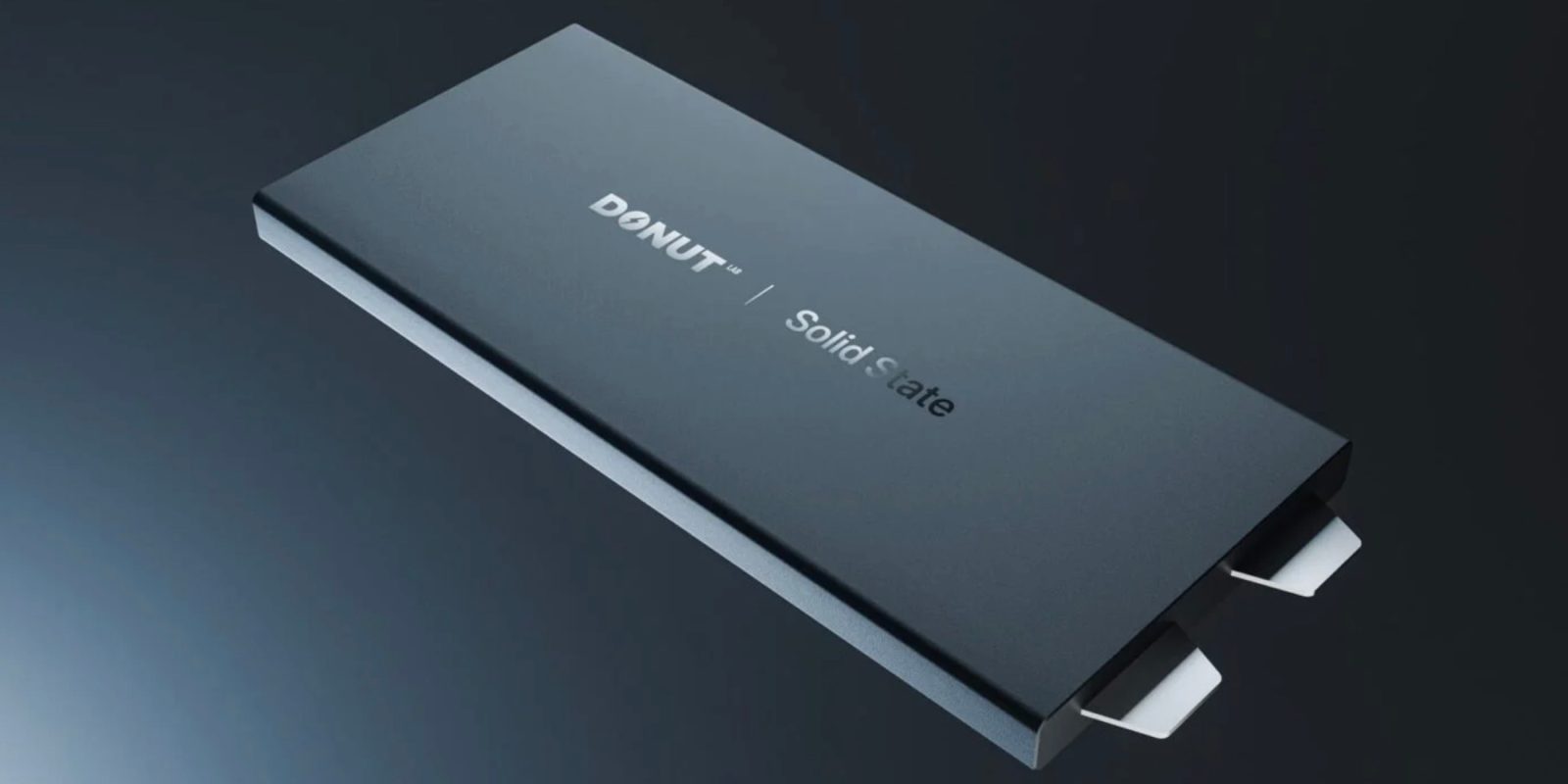
Enter Donut Lab, a Finnish technology startup that captured global headlines at CES earlier this year by claiming it had solved the puzzle. The company asserted it possessed the world’s first market-ready solid-state battery tailored for original equipment manufacturer (OEM) vehicle production.
However, the path from trade show floor to commercial reality is fraught with scrutiny. Donut Lab’s claims have faced intense skepticism from independent researchers, culminating in a recent, highly narrow laboratory test conducted by Intertek in the United Kingdom.
According to an Intertek lab report, a sample provided by Donut Lab yielded a meager concentration of just 3.4 parts per million (ppm) of lithium. Armed with these findings, Donut Lab has launched a PR counter-offensive, arguing that its proprietary cell is fundamentally neither a lithium-ion nor a sodium-ion battery.
Yet, a closer examination of the Intertek report—and the broader context surrounding the company—reveals significant red flags. The analysis measured only two elements on a pre-disassembled cell provided directly by the startup, leaving critical gaps in verification. More importantly, nearly nine months after Donut Lab’s grand CES debut, no production vehicle utilizing this revolutionary battery has reached a customer’s driveway.
Chronology of Events
To understand how Donut Lab arrived at its current defensive posture, it is necessary to trace the timeline of events that have defined the startup’s meteoric rise and subsequent scientific scrutiny.
- January 2026 (CES): Donut Lab takes the tech and automotive worlds by storm. Company executives, including CEO Marko Lehtimäki, announce that they have developed the world’s first solid-state battery ready for mass production. They point to upcoming integrations, such as Verge motorcycles, slated for customer deliveries in the first quarter of 2026, claiming the technology is "already in production."
- Q1 2026: The self-imposed deadline for commercial delivery arrives. Instead of mass-market production vehicles, consumers receive pre-production units. Questions begin to swirl regarding the readiness and actual nature of the battery technology.
- June 2026: Independent battery research firm Ziroth, alongside a collective of more than 20 electrochemical experts, publishes a scathing analysis. Based on voltage curves and thermal/swelling data from a cell sent to Finland’s VTT Technical Research Centre, the experts conclude that Donut Lab’s cell behaves identically to a high-nickel lithium-ion cell utilizing a graphite anode.
- Early September 2026: VTT tests a Donut "V1.5" cell, recording an impressive energy density of 409.3 Wh/kg across a voltage window of 2.3V to 4.25V. However, CEO Marko Lehtimäki complicates the narrative by admitting that this specific 409 Wh/kg cell is not the actual unit destined for commercial customer shipments.
- September 17–22, 2026: Intertek issues a laboratory report from Wilton, UK, analyzing material pieces delivered by Donut Lab. The report undergoes three distinct revisions within five days—updating sample descriptions and experimental wording—before settling on a final finding of 3.4 ppm lithium and 632 ppm sodium. Donut Lab immediately uses this report to claim its battery uses neither lithium nor sodium.
- Late September 2026: Industry analysts and automotive journalists point out the glaring methodological limitations of the Intertek report, noting that the absence of production vehicles, shifting executive statements, and restricted testing scopes deepen the mystery rather than resolve it.
Supporting Data: What the Intertek Report Shows (and Hides)
The core of Donut Lab’s defense rests on analytical chemistry performed by Intertek in Wilton, UK. To evaluate the validity of the startup’s claims, it is crucial to analyze the precise parameters of this testing.
The Methodology and Results
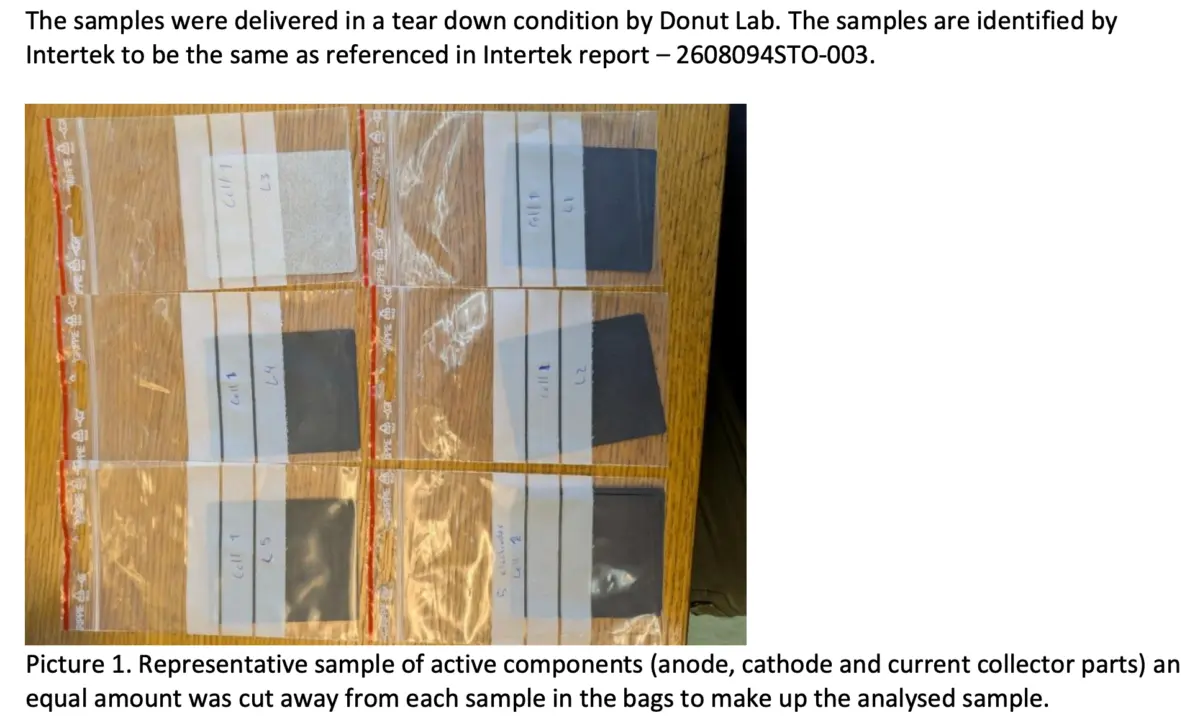
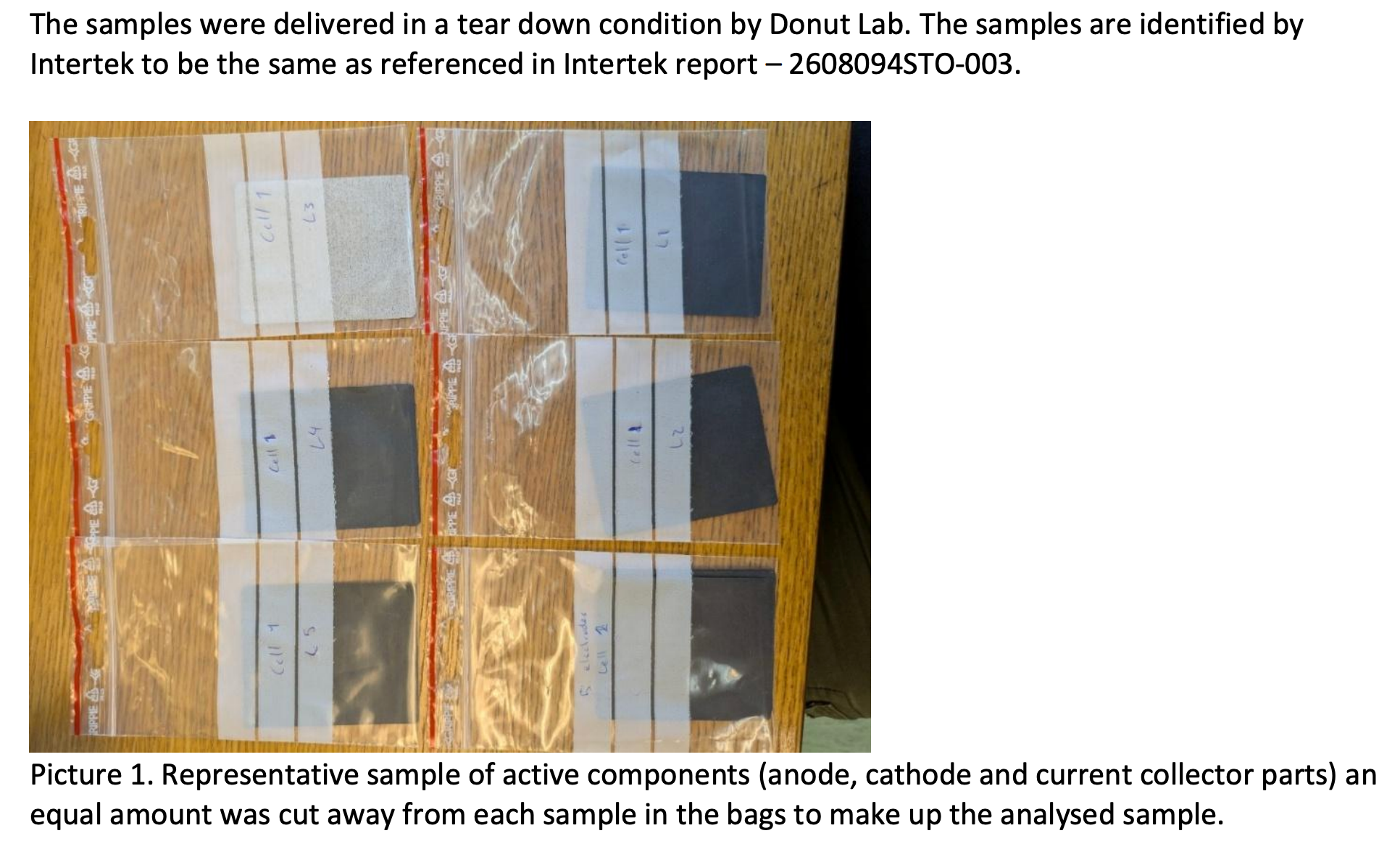
Analysts at Intertek took approximately 0.5 grams of material sourced from anode, cathode, and current collector pieces. These samples were digested in nitric acid, diluted to a 50-milliliter solution, and subsequently run through an Inductively Coupled Plasma Optical Emission Spectrometry (ICP-OES) instrument.
The results returned:
- Lithium: 3.4 ppm
- Sodium: 632 ppm (by weight)
In standard industrial chemistry, a commercial lithium-ion cell carries lithium concentrations residing in the percentage range (tens of thousands of ppm). Therefore, if the tested sample accurately represents Donut Lab’s commercial chemistry, it contains virtually no lithium.
Critical Shortcomings of the Report
While the laboratory work itself adheres to standard analytical procedures, the framework surrounding the testing severely limits its utility as definitive proof of a groundbreaking battery chemistry:
- Extremely Narrow Scope: The explicit directive ordered by Donut Lab was restricted to the "Quantification of Li and Na by ICP-OES." No other elements were measured. Common active battery metals such as potassium, magnesium, zinc, and aluminum were entirely ignored. Donut Lab continues to shield its core intellectual property, describing its materials merely as "widely available, affordable, and geopolitically secure."
- Chain of Custody and Sample Origin: Intertek did not receive an intact battery cell to dismantle. The report explicitly states that "the samples were delivered in a tear down condition by Donut Lab." The analyzed material was labeled simply as "Pouchcell – Cell 1," and the name "Donut Battery" appears nowhere in the official documentation. There is no verifiable chain of custody linking this specific sample to the V1.5 cell previously tested by VTT for energy density.
- The Electrolyte Discrepancy: Donut Lab’s promotional press releases claimed that the tested samples included "the electrolyte situated between" the anode and cathode. Conversely, Intertek’s formal report states three separate times that only the anode, cathode, and current collector parts were analyzed. In any solid-state battery architecture, the solid electrolyte layer is arguably the most critical zone to inspect for elemental composition.
- Excessive Revisions: A standard, objective laboratory report should rarely require multiple revisions in a matter of days. Yet, Intertek’s report was re-issued on September 21 to update the sample description and origin, followed by another revision on September 22 to alter wording within the experimental notes.
- Lack of Accreditation and Professional Disclaimers: Intertek explicitly noted that the "opinions and interpretations contained herein are outside the scope of UKAS accreditation." Assertions such as "it is not even possible to build a functional battery with such small amounts of active materials" originated from Donut CTO Ville Piippo, rather than the testing laboratory itself.
Official Responses and Industry Reactions
The scientific and industrial community has met Donut Lab’s PR blitz with a mixture of academic skepticism and exhaustion.
When independent researchers at Ziroth and VTT originally analyzed Donut Lab’s hardware, they highlighted that the electrochemical performance—specifically the voltage curves, swelling characteristics, and energy density metrics—mimicked advanced silicon-anode lithium-ion cells.
Donut Lab’s leadership has consistently pushed back against these assessments. By commissioning the Intertek test, the company attempted to definitively close the door on accusations that it was merely repackaging standard lithium-ion technology. CEO Marko Lehtimäki stated in a corporate announcement: "We wanted to put this speculation to rest with an independent test demonstrating that it is neither a lithium-ion nor a sodium battery."

However, established players in the solid-state sector have remained largely quiet, viewing Donut Lab as an outlier operating outside normal validation channels. Industry heavyweights like QuantumScape, Factorial Energy, Samsung SDI, and Toyota have spent billions of dollars over decades developing verifiable solid-state technologies. These legacy players subject their prototypes to rigorous, peer-reviewed, multi-element testing before making sweeping commercial announcements. For them, a startup leaping straight from unverified trade show demonstrations to defensive chemical spot-checks represents a concerning departure from standard engineering rigor.
Implications for the EV and Energy Storage Market
The saga surrounding Donut Lab carries significant implications for the broader electric vehicle ecosystem, investors, and consumers alike.
1. The Danger of "Vaporware" in Clean Tech
The green transition relies heavily on public trust and venture capital investment. When startups make extraordinary claims regarding breakthroughs in energy density, charging speed, and cost reduction without transparent, end-to-end third-party verification, it damages the credibility of the entire sector. Investors burnt by unverified "miracle battery" claims become increasingly hesitant to fund legitimate scientific advancements.
2. The Physics Paradox: Energy Density vs. Chemistry
The low lithium and sodium readings generated by Intertek invite a compelling technical theory: could Donut Lab’s cell actually be a high-performance supercapacitor or hybrid capacitor utilizing carbon electrodes?
While a capacitor-based design would neatly explain exceptional cycle-life and fast-charging capabilities, it creates an insurmountable physics paradox regarding energy density. VTT recently measured an energy density of 409.3 Wh/kg on a Donut V1.5 cell operating within a 2.3V to 4.25V window. No rechargeable, non-lithium/non-sodium energy storage chemistry in human history has achieved comparable energy density in a functional cell format.

This leaves the industry with two mutually exclusive possibilities:
- Donut Lab has quietly invented a physics-defying chemistry that outperforms every institutional battery laboratory on Earth.
- The high-performing cell tested by VTT and the near-zero-lithium pieces analyzed by Intertek are entirely different objects.
3. Commercial Realities in 2026
By the closing months of 2026, the novelty of solid-state prototypes has worn off. Automakers and consumers no longer care simply about laboratory press releases; they care about scalable manufacturing, supply chain security, and vehicles on the road.
Donut Lab’s initial value proposition rested entirely on its claim of market readiness—that customers could buy vehicles equipped with its solid-state cells now. With those timelines slipping into pre-production purgatory, and with executive admissions that headline-grabbing cells won’t even make it to customer hands, the company’s technical defense mechanisms feel increasingly disconnected from commercial reality.
Ultimately, vague and surgically limited laboratory tests do little to salvage corporate credibility. Until Donut Lab opens its entire manufacturing process to independent, comprehensive audits and places verified, production-ready vehicles into the hands of paying customers, the battery world will continue to view its claims with warranted caution.
