

By Architectural News Desk
Published September 4, 2026
Main Facts
In the contemporary urban landscapes of Mexico, the traditional municipal water grid is no longer a silent, reliable infrastructure. Instead, it has fractured into a sprawling, hyper-localized "economy of substitution." For millions of urban residents, the simple act of turning on a tap for drinking water is an obsolete luxury.
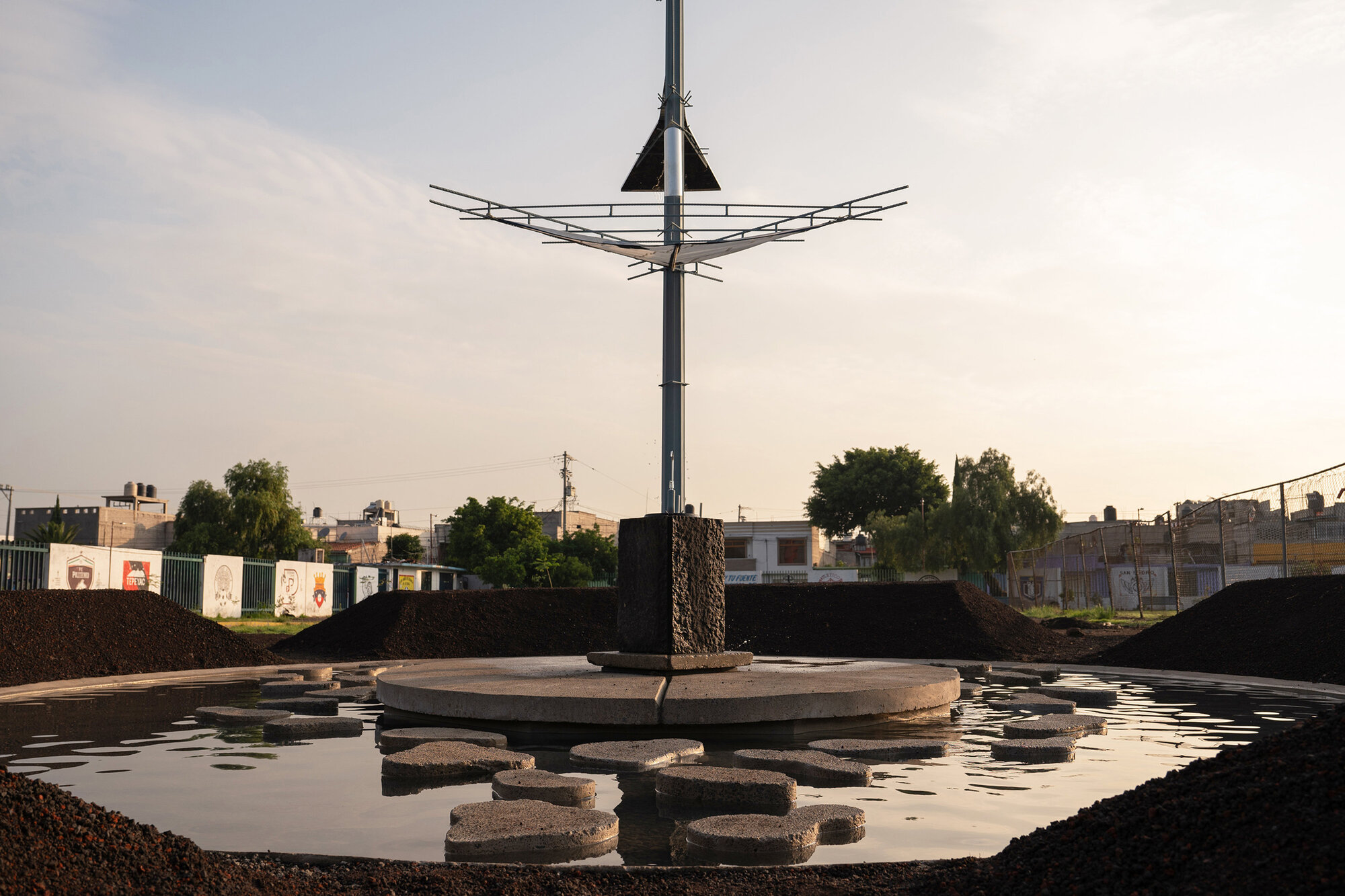
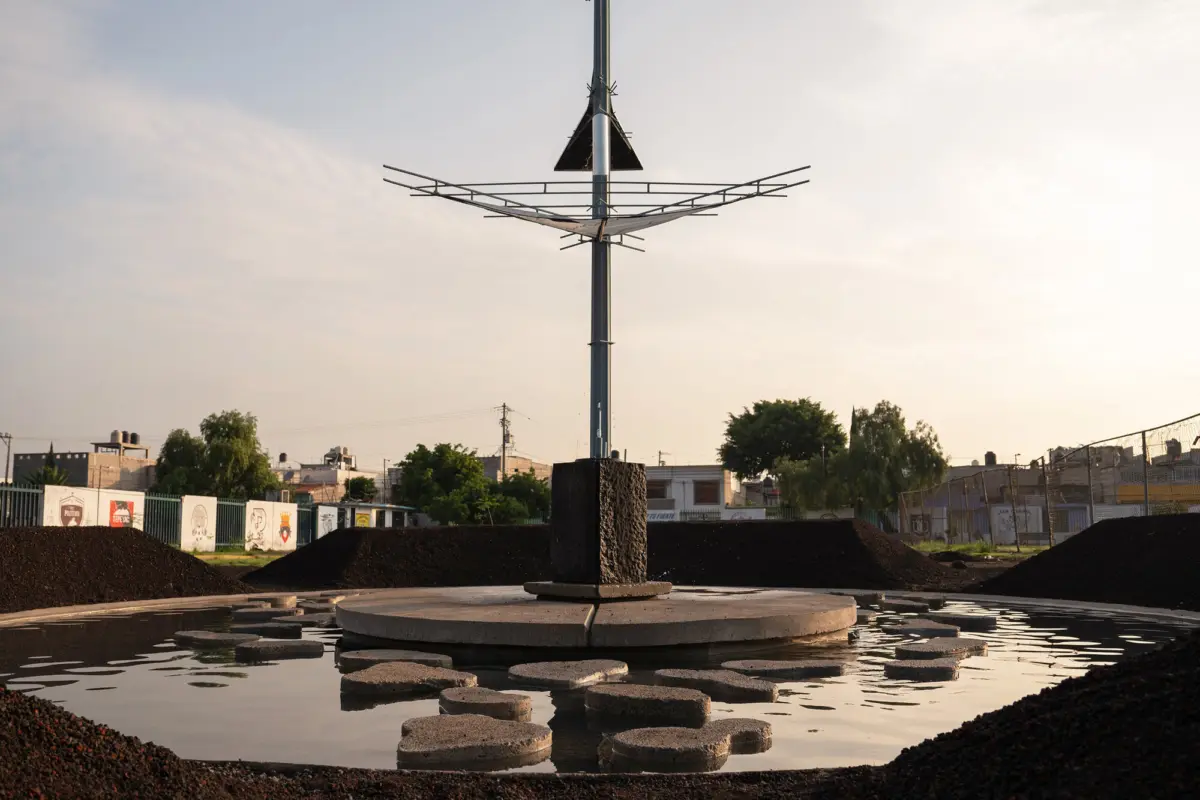
Enter Rain Rhizome (Rizoma de Lluvia), a groundbreaking architectural and systemic intervention designed by TANAT in collaboration with Rizoma del Agua. Captured through the lens of architectural photographer Diego Rivero Borrell, this project confronts the complex realities of water scarcity and management head-on. Rather than treating water infrastructure as a centralized, out-of-sight utility, Rain Rhizome addresses the daily choreography of survival that defines modern Mexican households: water arriving via tanker trucks (pipas), endless stacks of plastic bottles, twenty-liter garrafones, rooftop storage tanks (tinacos), domestic filters, neighborhood purification shops, and informal delivery networks.
By shifting the focus from scarcity to systemic harvesting and spatial integration, Rain Rhizome proposes a radical alternative. It critiques how the failure of public infrastructure has historically transferred the burden of resource management directly onto households—and disproportionately onto the bodies of women and domestic workers who routinely carry, clean, buy, and manage water.
Chronology: The Evolution of Mexico’s Water Crisis to the Rise of Decentralized Interventions
To understand the necessity of a project like Rain Rhizome, one must trace the timeline of how water infrastructure in Mexico evolved from centralized promises to decentralized improvisations.
- Pre-2000s — The Reliance on Centralized Networks: For much of the 20th century, rapid urbanization in major Mexican hubs like Mexico City relied on expanding municipal pipelines, drawing increasingly from distant aquifers and river basins. Over-extraction led to severe land subsidence and declining water tables.
- The 2000s to 2010s — The Rise of the Bottled Water Economy: As confidence in public tap water deteriorated due to aging infrastructure and contamination concerns, Mexico emerged as one of the world’s leading consumers of bottled water. The twenty-liter garrafón became a ubiquitous household artifact, embedding a recurring private expense into family budgets.
- The 2010s to 2020s — Institutional Strains and the Pipa Economy: Municipal networks grew increasingly intermittent. Neighborhoods began experiencing scheduled dry periods, forcing reliance on private water trucks (pipas). Rooftop tinacos and domestic booster pumps became mandatory architectural components for any habitable structure.
- The Mid-2020s — Paradigm Shift toward Decentralization: Architects, urban planners, and environmental collectives began recognizing that centralized municipal grids cannot sustainably meet urban demands under changing climate conditions. Initiatives like Rain Rhizome emerged to transition water management from an emergency response into an integrated, regenerative architectural typology.
Supporting Data: The Hidden Costs of Urban Water Scarcity
The context surrounding Rain Rhizome is underscored by staggering socioeconomic and environmental data regarding water consumption and distribution in Mexico:

- Consumption Anomalies: Mexico routinely ranks among the highest per capita consumers of bottled water globally, with households spending a disproportionate percentage of their disposable income on safe drinking water alternatives.
- Infrastructure Loss: Municipalities across the country often lose between 40% and 50% of treated water through leaks in antiquated, poorly maintained subterranean pipe networks.
- The Labor Burden: Studies on domestic labor reveal that managing alternative water supplies—monitoring tinacos, coordinating pipa deliveries, lifting heavy garrafones, and maintaining filters—adds hours of unpaid, physically demanding labor to domestic routines every week.
- Rainfall Potential: Despite experiencing severe dry seasons, many urban centers in Mexico receive substantial seasonal rainfall. Traditional urban design historically rushed to pipe this water away to prevent flooding, missing a massive opportunity for capture and reuse. Rain Rhizome leverages this untapped hydrological potential.
Architectural Philosophy and Official Responses
Curated by Valentina Díaz, the presentation of Rain Rhizome at ArchDaily has sparked widespread discourse within architectural and urban planning circles. The design philosophy refuses to view architecture as an isolated object, treating it instead as an active node within a decentralized network—hence the biological metaphor of the "rhizome."
The Spatial Culture of Survival
In their technical briefs, the design teams from TANAT and Rizoma del Agua emphasize that water scarcity is not merely a technical glitch, but a spatial condition. When municipal water fails, the home expands its boundaries to incorporate filters, pumps, valves, and storage drums. Rain Rhizome acknowledges this domestic machinery and reorganizes it aesthetically and functionally.

"In many Mexican cities, drinking water has not simply disappeared from public life; it has been reorganized through a dense economy of substitution," note the architects. By making the collection, filtration, and distribution visible and harmonious, the project transforms a site of domestic stress into an educational and ecological amenity.
Industry Reception
Urban planners have lauded the project for its socio-political commentary. Unlike luxury sustainable designs that cater exclusively to elite demographics, the underlying principles of Rain Rhizome speak directly to the vernacular adaptations already taking place in working- and middle-class neighborhoods.

Official municipal responses to such decentralized models have begun to shift. While city governments historically viewed independent rainwater harvesting with skepticism, growing infrastructural strain has prompted urban authorities to look toward community-scale and building-scale harvesting as vital components of urban resilience frameworks.
Implications: Re-weaving the Urban Fabric
The implications of Rain Rhizome extend far beyond the property lines of a single building. As urban centers worldwide face intensifying climate volatility, the model pioneered by TANAT and Rizoma del Agua offers several critical takeaways for the future of cities:

1. Decentralization as Resilience
Relying on a single, monolithic municipal water pipe is an increasingly fragile strategy. By decentralizing water capture through a rhizomatic network of buildings that harvest, filter, and manage their own rainfall, cities can drastically reduce the load on municipal aquifers and aging distribution pipelines.
2. Alleviating Domestic Labor
By integrating automated, efficient rainwater harvesting and purification systems directly into the architectural typology, projects like Rain Rhizome alleviate the physical and economic burdens traditionally shouldered by households. The hours spent coordinating water deliveries or lugging heavy containers can be reclaimed, shifting the domestic experience toward greater equity.
3. Re-establishing a Cultural Connection to Water
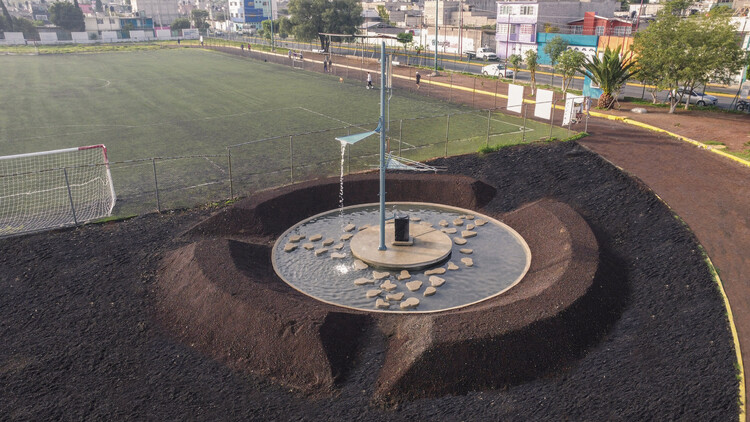
In modern metropolises, water is abstract—it flows invisibly from a tap or appears sealed inside sterile plastic. Rain Rhizome brings water back into the sensory and visual life of the inhabitants. Watching rain collect, move through filtration pathways, and pool into storage systems reconnects urban dwellers with natural cycles, fostering a deeper culture of conservation and environmental stewardship.
Conclusion
Rain Rhizome / TANAT + Rizoma del Agua is more than an aesthetic achievement; it is a critical manifesto for a thirsty world. By confronting the improvisational, often burdensome economy of water substitution in Mexico, the project offers a visionary blueprint. It proves that architecture can do more than provide shelter—it can heal fragmented urban infrastructures, empower communities, and restore dignity to the most fundamental of human resources.
