

By Architectural Review Desk
Published: August 21, 2026
Main Facts
Nestled deep within the dramatic and rugged terrain of Southwestern Norway, the newly completed JUVO Resting Area and Viewpoint stands as a testament to contemporary landscape architecture and infrastructure design. Situated along National Road 13 within the breathtaking Brattlandsdalen gorge, the project was designed by architecture studio ATSITE in collaboration with Statens Vegvesen (the Norwegian Public Roads Administration).
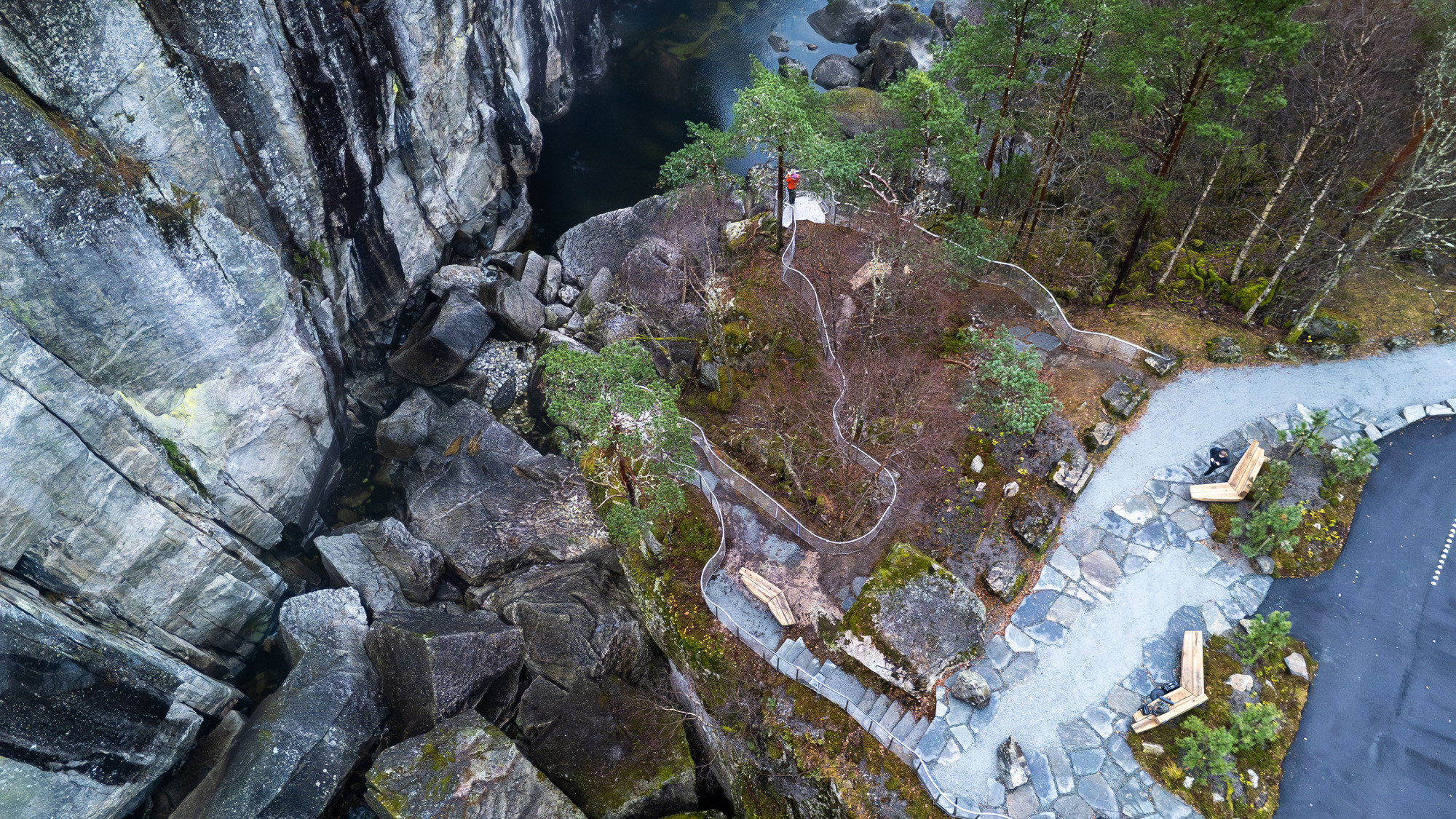
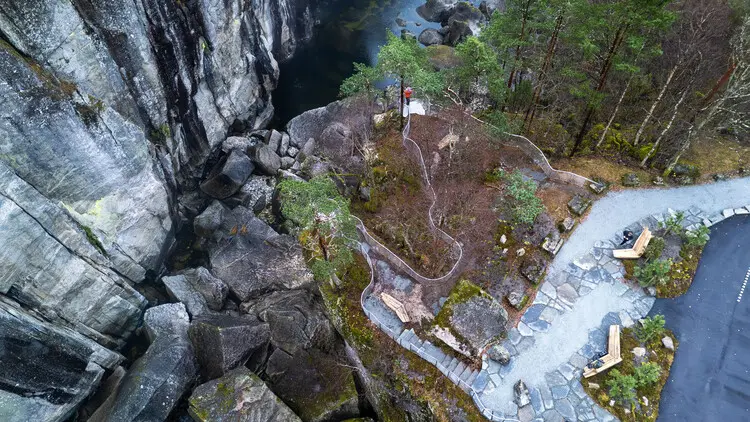
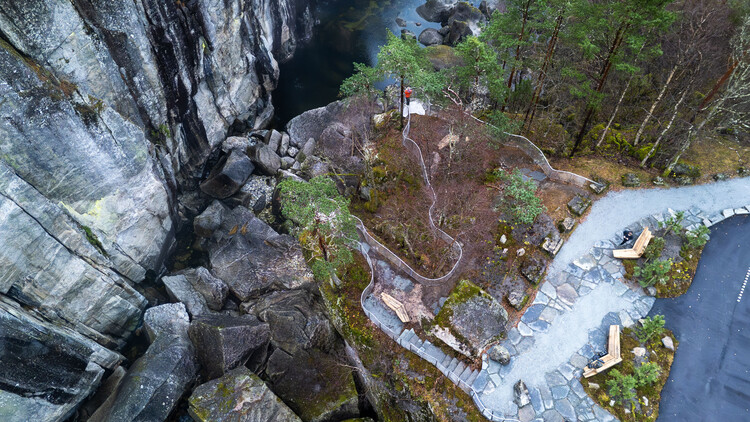
JUVO is much more than a simple place to pull over; it is a meticulously crafted intervention that bridges the gap between raw natural geography, rare geological history, and the evolution of Norwegian road engineering. Brattlandsdalen is characterized by steep, imposing mountainsides carved out by glacial forces and the relentless movement of water. The gorge contains unique geological phenomena, including rare glacial potholes, and holds a cherished place in the annals of Norway’s historic infrastructure networks.
The site seamlessly integrates contemporary wooden and steel architectural elements with historic markers—such as traditional stone posts, hand-crafted steel railings, and the entrance to the historic Kvelven Tunnel. These features once served as the primary veins of transit for early motorists and local travelers navigating the challenging western fjords. Today, JUVO provides travelers with a safe, reflective, and visually stunning space to pause, absorb the arresting landscape, and engage directly with the environmental and cultural heritage of the region.
Chronology of the Project
The realization of the JUVO Resting Area and Viewpoint is the result of a multi-year planning, design, and construction process aimed at upgrading Norway’s scenic routes without compromising their historic and ecological integrity.
- Early Conceptualization and Site Analysis: Recognizing the unique geological and historical significance of Brattlandsdalen along National Road 13, Statens Vegvesen initiated plans to develop a modernized resting area that could safely accommodate contemporary traffic while honoring the legacy of early Norwegian roadbuilding.
- Commissioning ATSITE: Architecture studio ATSITE was brought onto the project to spearhead the design. Their mandate was to create a harmonious intervention that respects the scale of the gorge, protects fragile geological formations like glacial potholes, and highlights historic elements such as the Kvelven Tunnel.
- Design and Engineering Phase: ATSITE developed a series of sensitive architectural proposals. The design focused on minimal ground disturbance, utilizing durable, locally resonant materials like wood and treated steel to anchor the structures against the harsh weather of Southwestern Norway.
- Construction and Material Integration: Building within a narrow, steep gorge presented distinct logistical challenges. Construction teams carefully integrated new viewing platforms, seating, and pathways around existing historic infrastructure—including the traditional stone posts and protective railings—ensuring that the past and present coexisted seamlessly.
- Completion and Opening: The project officially opened to the public, instantly drawing praise from architectural critics, travelers, and environmentalists alike for its respectful yet bold approach to infrastructure tourism.
Supporting Data and Context
To understand the magnitude and significance of the JUVO project, it is essential to examine the broader context of Norwegian civil design, geography, and tourism initiatives:
- Location: Brattlandsdalen gorge, along National Road 13 (Rv13), Southwestern Norway.
- Client and Stakeholder: Statens Vegvesen (Norwegian Public Roads Administration), renowned globally for commissioning cutting-edge architectural interventions along the country’s National Tourist Routes.
- Design Firm: ATSITE.
- Key Architectural Elements:
- Cantilevered and ground-level viewing platforms offering panoramic vistas of the deep gorge and cascading waters.
- Rest areas featuring custom wooden benches and integration with surrounding forest and rock formations.
- Preservation and framing of historical infrastructure, including stone road markers, vintage railings, and the mouth of the Kvelven Tunnel.
- Geological Context: The site features rare glacial potholes—smooth, cylindrical holes carved into solid rock by swirling pebbles and glacial meltwater over millennia.
- Photography Credit: Official documentation provided by Frid-Jorunn Stabell (Statens Vegvesen).
Official Responses and Perspectives
The unveiling of JUVO has generated significant interest within the architectural and civil engineering communities, particularly regarding how modern public projects can respect historical landscapes.
Representatives from Statens Vegvesen emphasized that the project aligns with Norway’s long-standing vision to combine functional road infrastructure with world-class design. By transforming mandatory transit stops into cultural and visual destinations, the Public Roads Administration continues to elevate the travel experience across the country’s most scenic corridors.
The architects at ATSITE noted that their primary objective was to step back and let the landscape dictate the design language. In statements accompanying the project release, the team explained that Brattlandsdalen commands a powerful, almost overwhelming presence. Rather than competing with the sheer scale of the vertical rock faces and rushing water, the architecture acts as a delicate framework—a series of pauses, lenses, and safe harbors that guide the visitor’s eye and body through an ancient geological theater.
Cultural heritage preservationists have also lauded the project for its careful treatment of early 20th-century road elements. By incorporating the historic Kvelven Tunnel and original stone guard posts into the fabric of the new resting area, JUVO serves as an open-air museum chronicling the heroic era of Norwegian road construction.
Broader Implications for Landscape Architecture and Tourism
The completion of the JUVO Resting Area and Viewpoint carries several important implications for future infrastructure projects, both in Scandinavia and globally:
1. Elevating Infrastructure as Cultural Tourism
JUVO exemplifies the growing global shift toward experiential infrastructure. Roadways are no longer viewed merely as utilitarian paths to get from point A to point B; they are recognized as cultural corridors. By investing in high-design viewpoints and resting areas, regions like Southwestern Norway successfully transform transit routes into destinations that attract international architectural tourism, thereby boosting local economies.

2. The Delicate Balance of Intervention and Conservation
Building within ecologically sensitive and geologically unique zones like Brattlandsdalen requires profound sensitivity. ATSITE’s approach demonstrates that modern architecture can successfully inhabit fragile landscapes without causing irreversible damage. The use of reversible construction methods, sensitive placement, and local materials sets a benchmark for sustainable development in extreme topographies.
3. Dialogues Between Past and Present
Architecture often struggles with how to treat historical remnants. JUVO offers a masterclass in contextual layering. Instead of replacing old guardrails and tunnels with modern equivalents, the design frames them, inviting travelers to contemplate the immense physical labor required to carve early roads through Norway’s formidable mountains. This narrative depth transforms a simple rest stop into an educational and emotional journey.
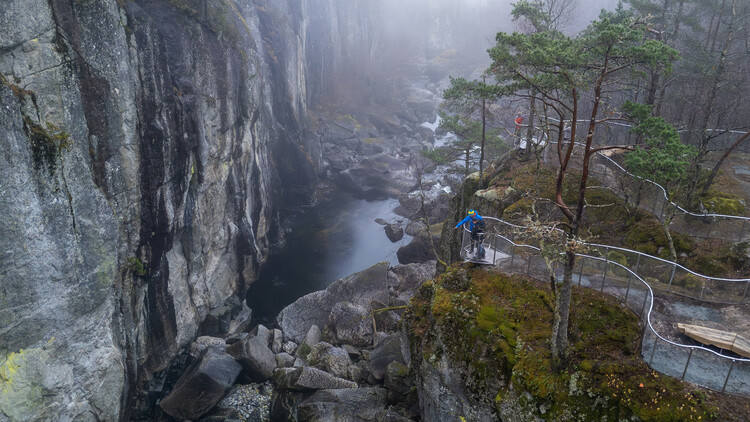
As travelers continue to traverse National Road 13, JUVO stands ready to offer them not just a place to park their cars, but a profound moment of connection with the untamed spirit of Southwestern Norway.
