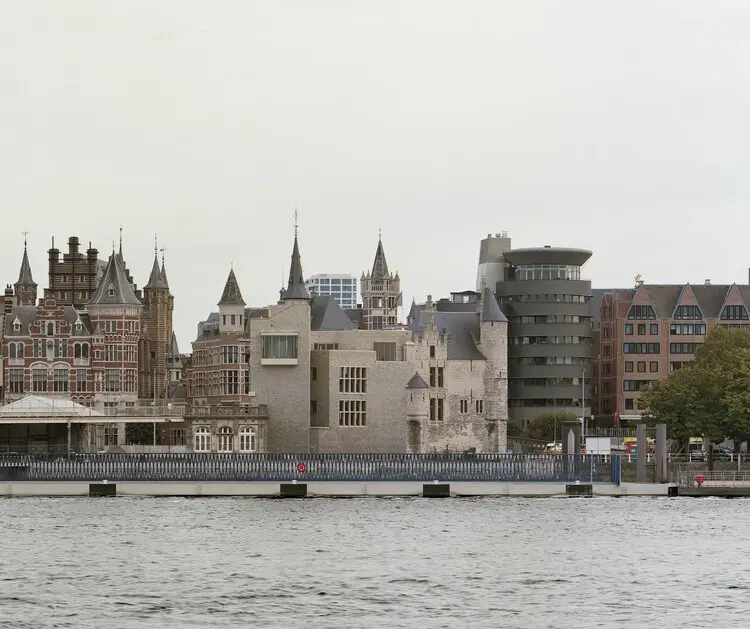
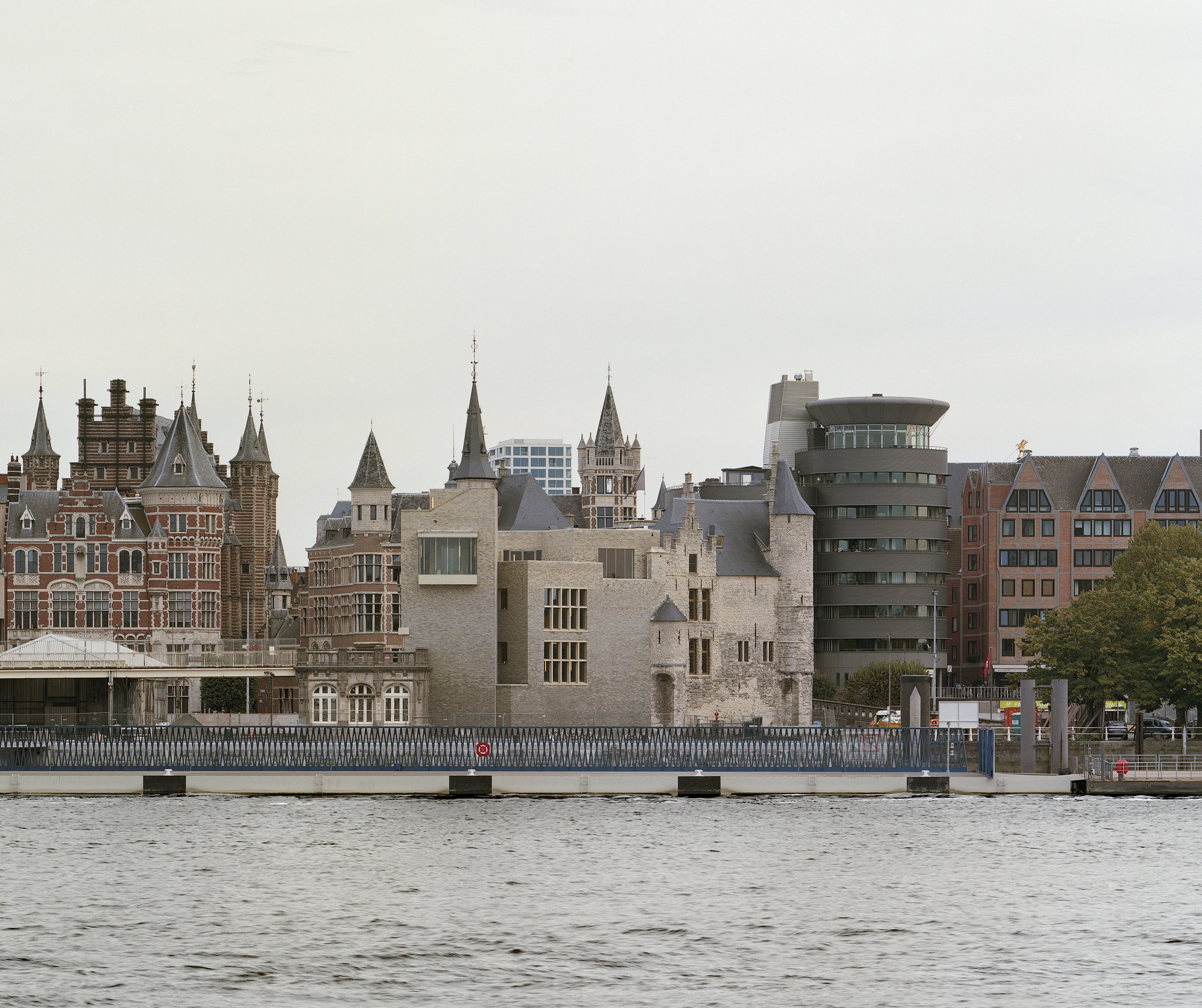
In the heart of Antwerp, where the historic pulse of Belgium beats against the flowing waters of the River Scheldt, stands Het Steen—the city’s oldest preserved architectural monument. For centuries, this medieval fortress has witnessed the transformation of a modest settlement into a bustling European trade hub. Today, following a sweeping and meticulously executed intervention by renowned architecture practice noAarchitecten, Het Steen has embarked on a new chapter. No longer just a relic of the past, the ancient castle now serves as a vibrant, contemporary visitor center and tourist reception hub.
Balancing the demands of modern tourism with the rigorous conservation requirements of a centuries-old heritage site, noAarchitecten has breathed new life into the structure. The resulting project weaves the complex, multi-layered construction history of Het Steen with bold, modern additions, creating a dynamic public landmark that honors its medieval origins while firmly facing the future.
Main Facts: The Het Steen Regeneration Project
Project Name: Het Steen – Visitor Center and Tourist Reception
Architectural Practice: noAarchitecten
Location: Antwerp, Belgium
Primary Function: Visitor center, tourist reception, cruise terminal gateway, and public exhibition space
Key Materials: Historic stone masonry, contemporary brick, cast concrete, and glass
Photographers: Kim Zwarts, Stijn Bollaert, Tim Fisher
Completion & Launch Context: Designed to revitalize Antwerp’s historic waterfront, integrating modern municipal functions with heritage preservation.
The transformation of Het Steen was conceived not merely as a restoration, but as a functional adaptation. The building now houses the main tourist information office for Antwerp, ticketing facilities for city tours and river cruises, an interactive exhibition space detailing the rich history of the castle and the city, and a panoramic rooftop terrace overlooking the Scheldt.
Chronology: A History Carved in Stone
To understand the architectural significance of noAarchitecten’s intervention, one must trace the winding, eventful construction history of Het Steen itself.
1. The Medieval Origins (c. 1200–1220)
Originally constructed as a fortified gateway and the core of a larger defensive castle complex known as the Antwerp Castle (Antwerpen Burg), Het Steen was built along the banks of the River Scheldt. It served as a stronghold for the Dukes of Brabant and played a pivotal role in securing the settlement against maritime invasions and rival territories. For its earliest centuries, the fortress was intimately connected to an extensive network of city walls, functioning primarily as a military and defensive outpost.
2. Centuries of Adaptations and Penal Use
Over the succeeding centuries, Het Steen underwent numerous alterations. As the city expanded and military tactics evolved, parts of the castle were repurposed. Between the 16th and 19th centuries, the complex notably served as a prison, a function that left physical scars and spatial divisions within its thick stone walls. Various additions, extensions, and partial demolitions altered its footprint, creating a hodgepodge of architectural styles reflecting different eras of Antwerp’s governance.
3. The 1890 Scheldt Realignment and Isolation
A monumental turning point in the building’s history occurred around 1890. During major municipal engineering works to straighten and widen the banks of the River Scheldt, a vast portion of Antwerp’s old fortifications—and many surrounding historic buildings—were demolished.
Isolated from its historical urban context, Het Steen lost its connection to the medieval city walls and acquired a singular, freestanding character. It stood as a lonely island of stone along the newly engineered quays, eventually housing a maritime museum for much of the 20th century.
4. The Contemporary Intervention by noAarchitecten (21st Century)
Recognizing the potential to reconnect the historic monument with the modern city, the City of Antwerp commissioned noAarchitecten to redesign Het Steen as the ultimate gateway for visitors. The design brief called for an architectural solution that would respect the building’s layered history while adding a contemporary wing capable of handling modern visitor volumes. The completed project successfully merges the fragmented historical fabric with a cohesive, forward-looking structure.
Supporting Data and Architectural Approach
The architectural philosophy of noAarchitecten on this project centers on the concept of "continuing construction"—treating history not as a glass-case museum piece, but as a living process.
Materiality and Dialogue Between Eras
One of the most striking aspects of the noAarchitecten design is the deliberate juxtaposition of old and new.
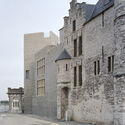
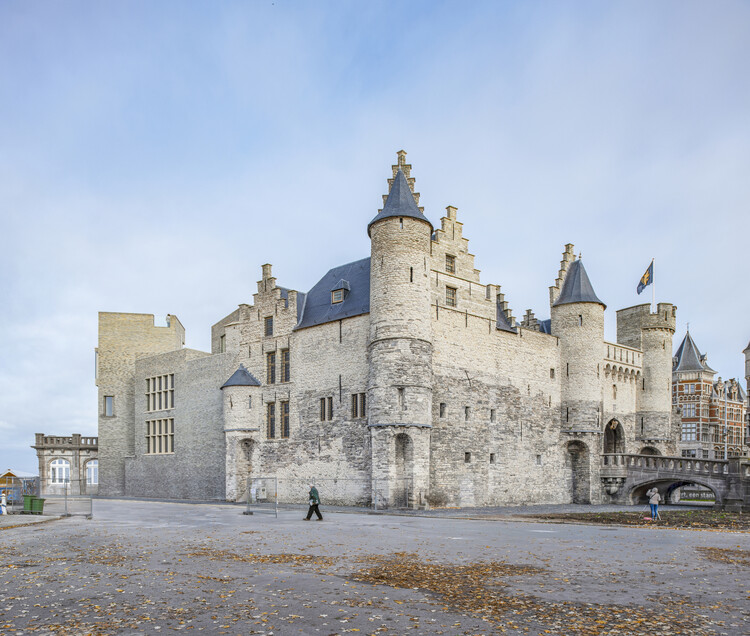
The Historic Core: The original medieval stonework, characterized by irregular sandstone blocks and centuries of weathering, has been carefully cleaned, structurally stabilized, and preserved.
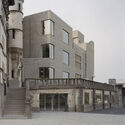
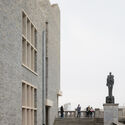
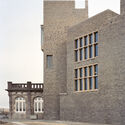
The Contemporary Extension: To accommodate modern programmatic requirements (such as elevators, spacious reception halls, and service infrastructure), the architects added a new volumetric wing. This addition utilizes a contemporary palette of brick and cast concrete.
Texture and Color Harmonization: Rather than mimicking the medieval stone, the new brickwork and concrete elements reference the historic hues and textures of Antwerp’s traditional architecture, establishing a respectful yet unmistakable visual dialogue between the 13th century and the 21st.
Spatial Flow and Accessibility
Historically, Het Steen was a fortress designed to keep people out. Transforming it into a welcoming public visitor center required a complete inversion of its spatial logic.
Circulation: noAarchitecten introduced intuitive circulation paths, seamlessly connecting the historic maze of rooms with open, light-filled reception areas.
Universal Access: Modern interventions, including discreetly integrated elevators and ramps, ensure that visitors of all physical abilities can navigate the multi-level castle.
The Rooftop Addition: The extension culminates in an accessible rooftop area, offering sweeping, unobstructed views of the Scheldt River and the sprawling Antwerp skyline—a vantage point previously inaccessible to the general public in such an open format.
Official Responses and Stakeholder Perspectives
The realization of a project as sensitive as the modernization of a medieval national monument inevitably draws intense public, political, and professional scrutiny.
The City of Antwerp and Tourism Authorities
Local municipal leaders have championed the Het Steen project as a cornerstone of Antwerp’s tourism strategy. Speaking on the integration of the visitor center, city officials emphasized that Antwerp needed a welcoming "front door" that matches the city’s international status.
"Het Steen is where Antwerp was born," municipal representatives noted during the opening phases. "By transforming it into an open, accessible visitor center, we are not only preserving our past but inviting the world to participate in our ongoing story. noAarchitecten has given us a structure that bridges centuries without erasing the scars or the triumphs of time."
The Architectural Community and noAarchitecten
For noAarchitecten, the project represents a masterclass in heritage adaptation. The firm approached the commission with a deep respect for archaeological stratification. In interviews discussing their design methodology, the architects explained that every phase of Het Steen’s physical evolution—from medieval fortress and Renaissance adaptations to 19th-century urban clearances—was treated as a legitimate layer of heritage.
Rather than attempting to "restore" the building to a singular hypothetical medieval moment (a practice largely discredited in modern conservation), noAarchitecten chose to embrace the collage-like nature of the building. The new architectural layer is clearly legible as a product of our time, ensuring that future historians will be able to read the 2020s just as clearly as they can read the 1300s or the 1890s.
Implications: A New Benchmark for Heritage Regeneration
The successful completion and reception of the Het Steen visitor center carry significant implications for urban planning, heritage conservation, and tourism management across Europe.
1. Redefining Heritage Interaction
In many historic European cities, historic monuments are treated as static objects—untouchable, fragile, and ultimately detached from daily civic life. Het Steen demonstrates an alternative model: active integration. By housing vital municipal services, cruise receptions, and public interactive exhibits within a medieval castle, Antwerp ensures that the monument remains economically viable, culturally relevant, and physically integrated into the rhythm of the modern city.
2. Urban Revitalization of the Scheldt Quays
The project acts as a vital anchor for the broader redevelopment of Antwerp’s Scheldt quays. By drawing foot traffic directly to the water’s edge, Het Steen helps mend the historical psychological divide between the city center and its riverfront, encouraging continuous public engagement with the port environment that defined Antwerp’s rise to global prominence.
3. Sustainable Preservation Through Adaptive Reuse
From an environmental and cultural standpoint, the adaptive reuse of Het Steen champions sustainability. Retaining the massive embodied carbon of a centuries-old stone structure while injecting modern energy-efficient systems, insulation, and programmatic flexibility proves that heritage conservation and contemporary architecture can—and must—coexist.
Conclusion
noAarchitecten’s transformation of Het Steen stands as a triumph of architectural tact and ambition. By honoring the turbulent, fascinating construction history of Antwerp’s oldest building while boldly introducing contemporary elements of brick, concrete, and glass, the architects have secured the castle’s legacy for generations to come. Today, Het Steen is much more than a tourist reception desk; it is a physical testament to Antwerp’s resilience, creativity, and enduring connection to the River Scheldt.