

By: [Staff Journalist]
Published: November 2024
Main Facts
The United States construction industry faces an ongoing crisis regarding traumatic brain injuries (TBIs), with approximately 200 construction workers losing their lives to such injuries annually. In response to this persistent hazard, safety advocates, academic researchers, and industry leaders are stepping up efforts to modernize jobsite personal protective equipment (PPE).
At the center of this movement is the Job Safety Institute (JSI), a nonprofit organization that has awarded $1.13 million in research and education grants to partners addressing critical safety challenges across the construction sector. Recently, JSI has funneled vital funding into North Carolina State University (N.C. State) to study and facilitate the industry-wide transition from traditional hard hats to advanced Type II safety helmets.
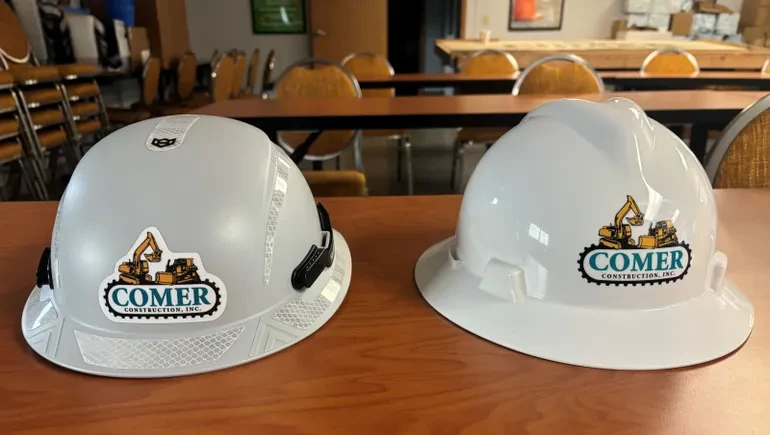
While commercial construction sectors have made significant strides in adopting modern safety headwear, residential contractors and smaller firms lag behind. The primary barrier to entry is not a lack of concern for worker safety, but rather a stark disparity in cost and awareness. Traditional Type I hard hats can be purchased at local hardware stores for roughly $15, whereas comprehensive Type II safety helmets—equipped with chin straps and multi-directional impact protection—frequently exceed $100.
Through targeted research grants, educational initiatives, and collaborative pilot programs, organizations like JSI and academic partners at N.C. State are working to demonstrate that the steep upfront investment in advanced head protection is an invaluable safeguard for American workers.
Chronology
2014: The Birth of the Job Safety Institute
The foundation of modern construction safety initiatives often traces back to proactive industry leaders recognizing persistent vulnerabilities. In 2014, leadership from Raleigh, North Carolina-based Builders Mutual Insurance established the Job Safety Institute. The initiative stemmed from a fundamental desire to ensure that companies of all sizes possessed the tools, knowledge, and resources necessary to keep workers safe.
"People are still getting injured on jobsites," Jodi Vedelli, chief strategy officer at Builders Mutual, noted. "There was this feeling of, ‘What more can we do?’"
The Decade of Grantmaking (2014–Present)
Since its inception, JSI has systematically distributed over $1.1 million in targeted grants. These funds have empowered various research institutions and safety advocates to investigate root causes of jobsite accidents, evaluate the efficacy of existing safety gear, and develop scalable training programs for contractors.
Recent N.C. State Research Phase I: Assessing PPE Awareness
As part of JSI’s ongoing funding cycle, researchers at N.C. State University launched an exhaustive study investigating construction workers’ general awareness of personal protective equipment, specifically focusing on headwear. Led by Alex Albert, an associate professor in the department of civil, construction, and environmental engineering, the research team sought to understand whether workers could distinguish between various classes of protective helmets.
The findings revealed a critical educational gap: construction workers were largely unaware of the distinct engineering and protective differences between Type I and Type II safety helmets.
Recent N.C. State Research Phase II: The Transition Challenge
Following the baseline awareness study, N.C. State researchers began examining the logistical, financial, and cultural hurdles associated with upgrading jobsite headwear. By engaging directly with workers and company leadership, the university aims to establish a clear, repeatable roadmap for contractors transitioning away from traditional hard hats toward advanced safety helmets.
Supporting Data
To understand the urgency driving JSI and N.C. State’s collaborative efforts, one must examine the hard data surrounding construction fatalities and head trauma:
- 200 Fatalities Annually: According to industry safety releases, approximately 200 construction workers in the United States die from traumatic brain injuries every year. These incidents often result from slips, trips, falls, and struck-by accidents involving heavy machinery, tools, or falling materials.
- Type I vs. Type II Protection:
- Type I Hard Hats: Traditional hard hats feature no chin straps and are engineered strictly to protect a worker from impacts directed at the top of the head.
- Type II Safety Helmets: Type II helmets come equipped with secure chin straps and specialized internal suspension systems designed to protect workers from falls or struck-by hazards contacting both the top and the sides of the head.
- The Virginia Tech Advantage: Research from Virginia Tech’s helmet evaluation laboratory has repeatedly indicated that Type II helmets provide substantially better protection against severe, life-altering head injuries compared to traditional hard hats.
- The Cost Disparity:
- Traditional Type I hard hats: ~$15 per unit (widely available at standard hardware stores).
- Advanced Type II safety helmets: $100+ per unit.
- Grant Impact: JSI has successfully deployed $1.13 million in cumulative grant funding toward safety research and education partnerships since 2014.
Official Responses
Industry stakeholders, academic researchers, and insurance executives have offered critical insights into the challenges and triumphs of modernizing jobsite safety gear.
Jodi Vedelli, Chief Strategy Officer, Builders Mutual Insurance
Reflecting on the mission of the Job Safety Institute, Vedelli emphasized that the nonprofit’s ultimate objective is reaching smaller firms that traditionally operate with fewer resources for comprehensive safety practices.
"People are still getting injured on jobsites," Vedelli reiterated, explaining the ethos that drives ongoing grant allocations. By targeting academic institutions like N.C. State, JSI hopes to generate empirical data that makes safety upgrades justifiable and achievable for everyday contractors.
Alex Albert, Associate Professor, N.C. State University
Albert highlighted the surprising lack of baseline knowledge among laborers regarding protective headwear.
"The finding was that workers were largely not aware of the distinction between Type I and Type II safety helmets," Albert explained. However, he noted an encouraging shift in attitude once workers were properly educated. "In the N.C. State study, workers were on board with making the switch to Type II, once they understood how it could keep more parts of their brain safe."
Looking forward, Albert believes the university’s partnership with JSI will establish vital industry precedents. "Ideally, this partnership will bridge the gap," he said. "We hope to create an authentic industry example of what it takes to move from hard hats to Type II safety helmets."
Erik Anderson, Vice President, Anderson Moore Kitchen & Bath
Speaking from the perspective of residential renovation, Anderson—who also serves as the board chair of JSI—pointed out the vast cultural and economic differences between commercial and residential construction sectors.
While commercial construction has largely embraced modern safety helmets, residential adoption remains frustratingly slow. "I wish it were that way in residential," Anderson remarked. He underscored the immense financial hurdle faced by smaller contractors, noting that buying equipment at over $100 per helmet represents a significant line-item strain compared to $15 traditional options.
Susie Comer, President, Comer Construction
Comer addressed the financial reality head-on, acknowledging that outfitting a crew with advanced headwear creates an immediate budgetary challenge.
"That was a hit," Comer admitted regarding the transition costs. However, after weighing the financial expense against the immeasurable value of human life and reduced injury liability, her conclusion was unequivocal. She described the ultimate decision to adopt Type II helmets as "almost a no-brainer."
Implications
The concerted push by the Job Safety Institute and N.C. State University carries profound implications for the future of American construction labor, insurance markets, and small business operations.
Closing the Sector Divide
A major implication of this ongoing research is the urgent need to parity-level safety standards across different construction sectors. While large commercial contractors enjoy economies of scale, safety culture budgets, and corporate backing that make adopting $100+ helmets feasible, residential builders and independent trade contractors operate on razor-thin margins. Initiatives funded by JSI are vital for identifying how smaller enterprises can integrate these life-saving technologies without jeopardizing their financial viability.
Transforming Worker Culture and Acceptance
Historically, construction workers have shown resistance to new PPE mandates due to comfort, habit, or aesthetic concerns. However, the N.C. State study proves that resistance is primarily rooted in a lack of awareness rather than stubbornness. When workers are educated on the biomechanics of traumatic brain injuries and the specific lateral protection offered by Type II chin-strapped helmets, their willingness to adopt new gear increases exponentially. This finding implies that future safety campaigns must focus heavily on worker-centric education rather than top-down mandates alone.
Insurance, Liability, and the Bottom Line
As empirical evidence from institutions like Virginia Tech and N.C. State continues to mount, insurance providers and risk-management firms are taking notice. Companies that proactively upgrade their protective equipment may soon see favorable adjustments in workers’ compensation insurance premiums, litigation defense costs, and lost-time injury rates.
Ultimately, the transition from traditional hard hats to advanced Type II safety helmets represents more than just a regulatory or equipment upgrade—it is a cultural evolution. Through sustained financial backing from organizations like the Job Safety Institute and rigorous academic inquiry from institutions like North Carolina State University, the construction industry is inching closer to a day where preventable traumatic brain injuries on jobsites become a relic of the past.
