

Published: September 10, 2026
Author: Jonathan Yeung
Series: Part of the ArchDaily Topic: The Lure of Escapism in Architecture and Alternative Worlds
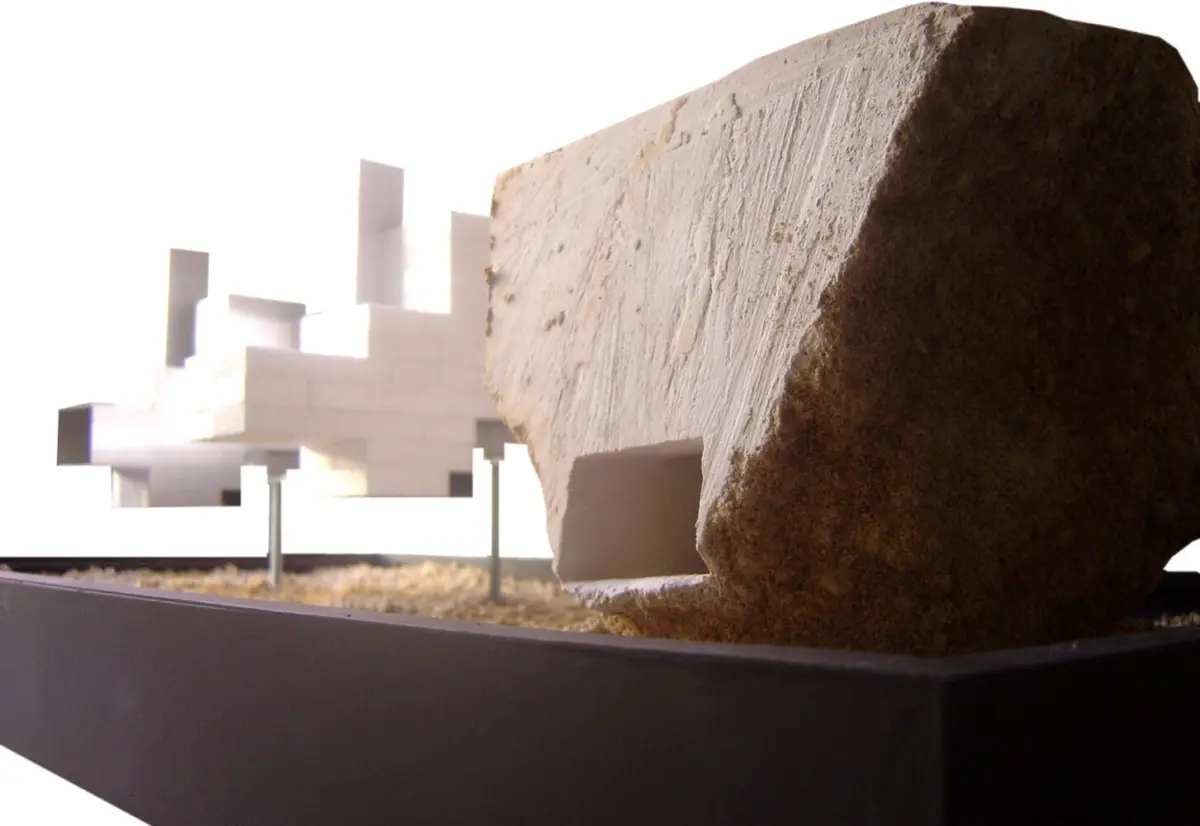
Main Facts: The Intersection of Digital Abstraction and Physical Reality
Architecture has long operated at the intersection of imagination and material reality. Historically, the evolution of design was tethered to the constraints of the physical world—bound by the limits of paper size, drafting tools, physical testing, trial-and-error mock-ups, and structural mechanics.
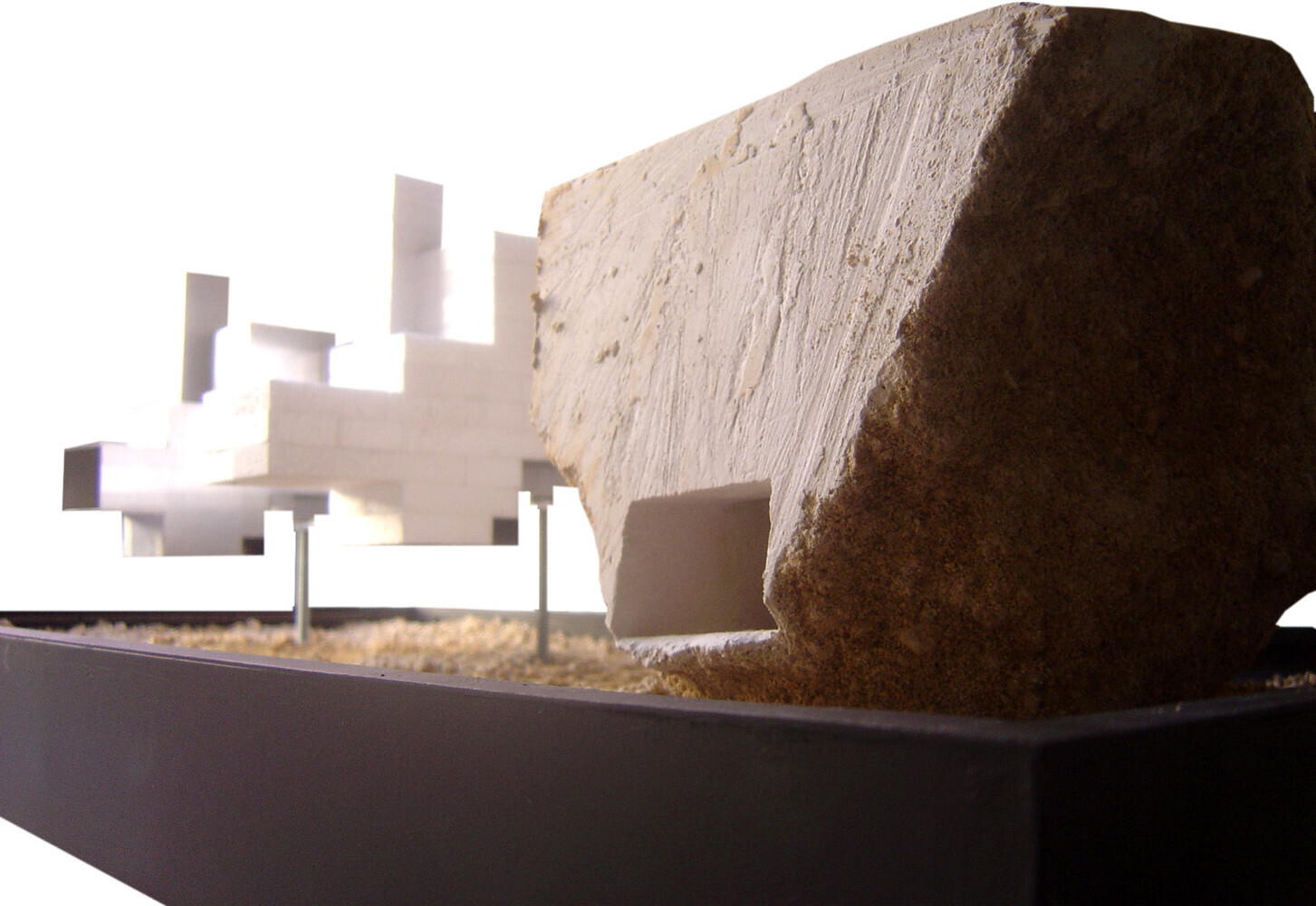
However, the proliferation of Computer-Aided Design (CAD), Building Information Modeling (BIM), real-time rendering engines, and AI-generated spatial environments has fundamentally altered this dynamic.
While digital tools have democratized complex geometries and accelerated the speed of design, they have also introduced a pervasive design bias: frictionless space.
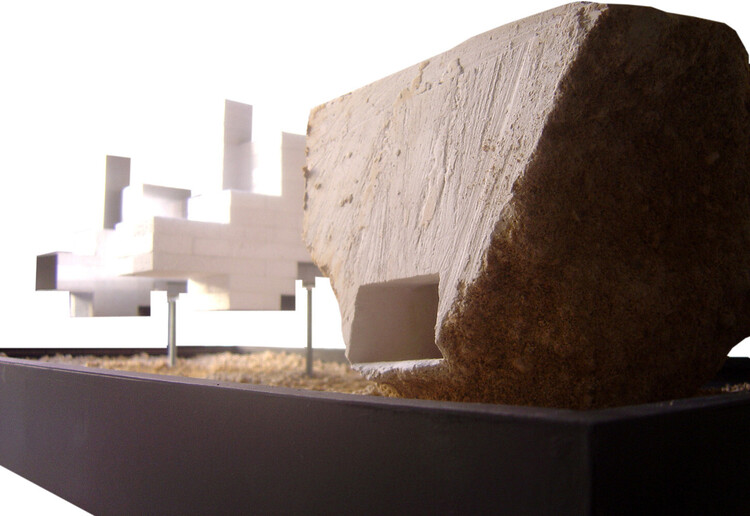
By eliminating the physical resistance of scale, weight, and materiality, digital environments risk distancing architects from the very sensory and tectonic conditions that give built environments their enduring cultural and human meaning.
Chronology: The Evolution of Architectural Abstraction
To understand how contemporary digital tools have reshaped the architectural psyche, it is necessary to trace the historical lineage of architectural representation.
- The Era of Analog Drafting and Physical Models: For centuries, architectural design advanced through a succession of physical abstractions. Orthographic projections—plans, sections, and elevations—flattened and sliced space, but they remained disciplined by the reality of eventual construction. A drawn wall represented a masonry assembly, concrete pour, or timber frame that had to withstand gravity and environmental forces. Physical models introduced a tactile register, where the grain of cardboard, the stiffness of wire, and the mass of plaster imposed limits on formal invention.
- The Introduction of CAD (Late 20th Century): When computer-aided design first entered the studio, it was primarily understood as a tool for precision drafting. Computers streamlined construction documents, replacing ink and mylar with vector lines. Yet, the foundational logic of the drawing—its scale, its relationship to the sheet of paper—initially remained intact.
- The Turn to Digital Modeling and the Infinite Screen (2000s–2010s): As rendering software and 3D modeling environments matured, tools shifted upstream into the earliest conceptual phases of design. The digital canvas replaced sketching and physical prototyping. With the advent of infinite zoom and floating cameras, architects could navigate spaces unrestricted by bodily scale or paper boundaries.
- The Contemporary Era of Immersive and AI-Generated Worlds (Present Day): Today, spatial design is increasingly influenced by gaming engines, virtual reality (VR), and generative AI. These platforms offer an unprecedented degree of design freedom, allowing creators to manipulate geometry across any scale—from a micro-detail to an entire planetary landscape—instantly and without physical consequence.
Supporting Data and Spatial Mechanics: The Loss of Measure and Tactility
The shift from physical media to frictionless digital environments has introduced critical transformations in how architects conceptualize scale and materiality.
1. The Erosion of Relational Measure
Scale is not merely a numerical ratio printed in a title block; it is an internalized bodily relationship to dimension. A corridor feels narrow because human shoulders brush its walls; a ceiling feels oppressive because the body senses overhead mass; a monumental hall relies on the relative smallness of the occupant to make vastness legible.
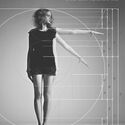
In digital space, relational measure breaks down.
- Effortless Navigation: The virtual camera glides through space weightlessly, bypassing the physical exertion of walking, climbing, or reaching.
- Infinite Elasticity: Walls can become infinitely thin, rooms can expand into the horizon without structural support, and columns can be deleted with a keystroke if they obstruct a perspective rendering.
While this spatial liberation enables visionary forms, it creates a persistent paradox: digital environments often produce spaces that are visually breathtaking yet spatially unconvincing. Scale is reduced to a visual effect rather than an embodied experience.
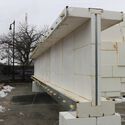
2. The Reduction of Materiality to Surface Texture
In the physical world, materials carry history, labor, and resistance. Timber exhibits grain direction and response to humidity; concrete records formwork joints, aggregate distribution, and the hydrostatic pressure of the pour; metals reveal the marks of cutting, welding, and weathering.
In digital environments, materiality frequently degrades into surface mapping:
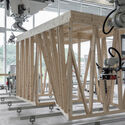
- Wood becomes a repeating bitmap image.
- Concrete becomes a procedural bump map.
- Glass becomes a variable slider controlling transparency and index of refraction.
While these simulations achieve astonishing visual fidelity, they divorce materials from their physical consequences. A digital surface can simulate age without weathering and roughness without friction. Consequently, clients and designers risk treating materials purely as aesthetic preferences, ignoring their structural performance, thermal mass, maintenance requirements, and life-cycle impacts.
Official Perspectives and Industry Responses
Architectural theorists, computational researchers, and material-focused practices are increasingly pushing back against the frictionless hegemony of the screen, advocating for a hybrid approach that reconciles digital speculation with physical reality.

- Ensamble Studio (Antón García-Abril and Débora Mesa): Known for projects like The Truffle and Cyclopean House, Ensamble Studio continuously bridges digital design with raw, heavy materiality. By utilizing earth, unrefined concrete, and robotic subtractive fabrication, their work insists that spatial experimentation must remain grounded in the extreme physical reality of weight and gravity.
- Gramazio Kohler Research: As pioneers in robotic fabrication and digital stonemasonry, their academic investigations demonstrate that digital tools do not need to be frictionless. Instead, algorithms can be programmed to respond directly to the unique physical tolerances of individual bricks, timber nodes, and spatial constraints.
- Alsar Atelier + Henry Guadrón (Invisible Architecture): These practices explore how ephemeral and immaterial interventions can still provoke deep bodily awareness, proving that conceptual or virtual spaces must anchor themselves in human phenomenological experience.
Implications: Rebuilding the Bridge Between the Virtual and the Real
As virtual environments, gaming platforms, and AI-generated metaverses become ubiquitous in architectural workflows, the profession faces a profound existential question: What distinguishes architecture from mere digital scenery?
The Rise of "Implied Physicality"
Digital worlds do not need to mimic traditional construction methods literally. Virtual architecture possesses the unique privilege of testing spatial paradigms that physical physics cannot support. However, to remain architecturally meaningful, these spaces must retain implied physicality.

- A digital wall may not hold up a physical roof, but it can still suggest mass, thickness, and resistance.
- A virtual floor can communicate structural depth and inhabitation, confirmed through physical modeling or material testing, rather than existing as an assembly of weightless planes.
Re-establishing Disciplinary Rigor
When design tools prioritize the frictionless image, architecture risks losing its capacity to communicate slower, more durable forms of knowledge. The future of architectural education and practice relies on balancing digital freedom with material accountability.
Designers must recognize that virtual environments are not inherently weightless; they only become weightless when they lose touch with how architecture meets the ground. By embedding structural logic, bodily scale, and material consequences back into the digital workflow, the profession can harness the limitless imaginative capacity of computers without losing the tectonic intelligence that defines the built environment.

This article is part of the ArchDaily Topic: The Lure of Escapism in Architecture and Alternative Worlds.
