

Published: August 18, 2026
Source: ArchDaily / Graham Foundation for Advanced Studies in the Fine Arts
Author: Antonia Piñeiro (Enriched and Adapted for Professional Journalistic Distribution)
Main Facts
Since its inception in 1956, the Chicago-based Graham Foundation for Advanced Studies in the Fine Arts has operated as a foundational engine for the development, funding, and cross-pollination of architectural ideas. By supporting both individual practitioners and cultural institutions, the Foundation bridges the gap between architecture and broader realms of art, culture, and society.
Following its June announcement of the 2026 Grants to Individuals—which supported 54 independent researchers, filmmakers, and creators—the Foundation has now unveiled its second major funding cycle of the year. This latest iteration allocates a total of $451,000 across 45 organizational grants.
The targeted funding supports a wide spectrum of public-facing initiatives, including exhibitions, site-specific installations, academic publications, podcasts, student-led journals, and international events. Spanning diverse geographies from Buenos Aires to Nairobi, the selected grantees represent a powerful cross-section of cultural producers—ranging from grassroots community initiatives and independent non-profits to premier global institutions and academic presses. Through these varied media, the 2026 organizational grants aim to provoke critical dialogue, uplift historically underrepresented voices, and interrogate the multi-faceted roles that the built environment plays in contemporary social and ecological landscapes.
Chronology
The Graham Foundation’s funding trajectory for the 2026 operating cycle reflects a deliberate, phased approach to supporting architectural innovation at both micro and macro levels:
- June 2026: The Foundation announces the recipients of its Grants to Individuals program, providing project-based funding to 54 independent practitioners exploring architecture through creative practice, research, film, and publishing.
- August 18, 2026: The organization releases its companion slate of 45 organizational grants, committing $451,000 to public programs, exhibitions, media projects, and publications scheduled to roll out through late 2026, 2027, and 2028.
- Fall 2026 – Summer 2027: Major funded exhibitions and events open worldwide, including the Serpentine Pavilion 2026 by LANZA atelier in London, Raimund Abraham: Earthquake of Silence at The Cooper Union in New York, and the inaugural Pan-African Biennale documentation in Nairobi.
- 2027–2028: Landmark monographs, archives updates, and digital series—such as the Wladimiro Acosta Archive publication by Universidad Torcuato Di Tella and Kurt W. Forster’s completed manuscript published by Lars Müller Publishers—are slated for public release.
Supporting Data & Comprehensive Grantees Overview
The $451,000 investment is distributed across several key categories designed to maximize public engagement and cross-disciplinary impact. Below is a detailed breakdown of the organizations and projects receiving backing in the 2026 organizational funding cycle:
1. Exhibitions
- A83 Exhibition Program (New York, 2026–27): Produced in collaboration with Barkow Leibinger, PIN–UP, modem, Smout Allen, MOS, and SO–IL, focusing on spatial representation and contemporary image-making.
- Citygroup Exhibition and Debate Program (New York, 2027): Organized by AJ Artemel, Michael Robinson Cohen, and Violette de la Selle, examining the political and social agency of architects in the urban sphere.
- Cooper Hewitt, Smithsonian Design Museum (New York, Fall 2027): Regenerative Futures: Landscape and Design, curated by Julie Pastor and Cynthia E. Smith, featuring immersive installations by Turenscape, Practice Landscape, Yerrabingin + AKIN, Unit15X, and SWA Group.
- The Cooper Union—Irwin S. Chanin School of Architecture (New York, Fall 2026): Raimund Abraham: Earthquake of Silence, showcasing original drawings, models, and documents chronicling the visionary Austrian-American architect.
- Counterpublic (St. Louis, Fall 2026): Counterpublic 2026: Coyote Time, a triennial presenting 50 new artistic and architectural commissions addressing climate, migration, and public futures.
- Hyde Park Art Center (Chicago, Spring 2027): Stories from Within: Home, Here and There, a research installation by Leticia Pardo and curated by Mariela Acuña, capturing oral histories and life-size casts from Chicago’s Mexican diaspora.
- LIGA—Space for Architecture (Mexico City, Spring 2027): The Feathered Whale and Other Works by Enrique Murillo, documenting the vernacular-rooted yet modern work of architect Enrique Murillo (1933–2021).
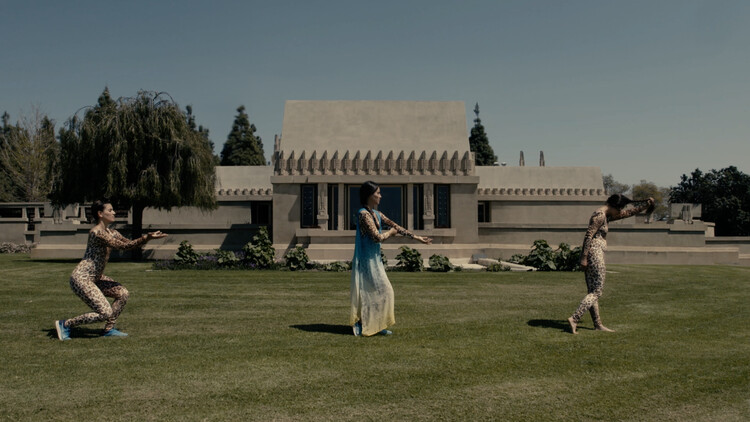
- Los Angeles Contemporary Exhibitions / LACE (Los Angeles, Fall 2027): Women Dancing Down the Side of a Building, curated by Selene Preciado, spotlighting international women artists—including Kubra Khademi, Tarrah Krajnak, Eiko Otake, and Clarissa Tossin—subverting modernist architectural histories.
- Los Angeles County Museum of Art / LACMA (Los Angeles, Fall 2026): Paul R. Williams: Architect for Living, a major survey celebrating the wide-ranging civic, commercial, and residential contributions of pioneering 20th-century Black architect Paul R. Williams (1894–1980).
- Los Angeles Nomadic Division (Santa Monica, Spring 2027): Jody Pinto: B.I.G., curated by Christopher Mangum-James and Oscar Peña, revisiting artist Jody Pinto’s overlooked role in designing the iconic Santa Monica beach improvements.
- Museum of Contemporary Art Chicago (Chicago, Spring 2027): MCA 60: Amanda Williams, the first career survey tracing two decades of work by artist and trained architect Amanda Williams.
- Museum of Photography at Columbia College Chicago (Chicago, Fall 2027): A solo exhibition by Folded Map founder Tonika Lewis Johnson, examining discriminatory housing policies in Englewood.
- National Building Arts Center (Sauget, IL & St. Louis, MO, Fall 2026): Preservation Station 777, an off-site field station exhibition curated by Eric Ellingsen with Erika Allen, D. Graham Burnett, Jen Colten, Kevin Harris, and Lynne Smith.
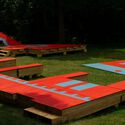
- Ragdale (Lake Forest, IL, Summers 2026 & 2027): Front of House (2026 winner Gluten) and Stage Prop (2027 winners Patrick Geske and Cody Miner), celebrating the annual Ragdale Ring Design-Build competition.
- Serpentine Galleries (London, through Oct 2026): a serpentine, the 25th Serpentine Pavilion designed by Mexico City-based LANZA atelier (Isabel Abascal and Alessandro Arienzo).
- Storefront for Art and Architecture (New York, Spring 2027): Homelands: Alia Farid, closing the Homelands series with new diaspora-focused works, a two-day summit, and a research fellowship.
- Tamalpa Institute (San Francisco, Spring 2027): The Artist Within Us All: The Halprins and their Circle of Influence, examining Anna and Lawrence Halprin’s interdisciplinary impact during the Further Triennial.
- Van Alen Institute (New York, Fall 2026): Open Access: Exploring 130 Years of American Design, reinterpreting materials from Van Alen’s historic archive.
2. Film, Video, and New Media
- KoozArch (Varese, Italy, Spring 2027): Space Between, Season Three, hosted by Shumi Bose and Federica Zambeletti.
- Wandering Eye Studios (Milford, MA, Summer 2027): Vanishing Point: An Architect’s Journey, a feature documentary written and directed by Alastair Gordon about the life and mysterious disappearance of Norman Jaffe.
3. Public Programs & Convenings
- The Architectural League of New York: The newly renamed Anne Rieselbach Architectural League Prize for Young Architects + Designers.
- Deem Journal (Los Angeles/New York, Oct 2026): Design for Dignity 04: A Convening of Possibilities at MCA Chicago.
- Lampo (Chicago, Oct 2026–Jun 2027): Experimental music concert series hosted at the Graham Foundation.
- MIT Press (Cambridge, MA): Launch of the Publication Award in Contemporary Architecture (PACA) in partnership with Storefront for Art and Architecture and the Graham Foundation.
- Space.City (Seattle, Spring 2027): Latin Catalyst: CDMX Mexico Works, fostering dialogue between Seattle and Mexico City designers.
- The World Around (New York, May 2027): The annual international summit led by Beatrice Galilee focusing on equity and climate-responsive design.
4. Publications & Research Monographs
- Canadian Centre for Architecture (Montreal, 2027): CCA Oral Histories, edited by Albert Ferré and Martien de Vletter.
- Carnegie Mellon University—Remaking Cities Institute (Pittsburgh, 2027): Making Alive! Reworlding Cities, edited by Sarosh Anklesaria, Stefan Gruber, and Tuliza Sindi.
- Chicago Architecture Biennial (Park Books, 2026): SHIFT: Architecture in Times of Radical Change, edited by Florencia Rodriguez, Santiago Bogani, Igo Kommers Wender, and Isabella Moretti.
- The Cosmic House (London, 2026): Madelon Vriesendorp: Too Late to Die Young, celebrating the artist’s five-decade career.
- LA ESCUELA___ (Brooklyn / Set Margins’, 2027): LA ESCUELA___: The School as Practice and Place, a bilingual toolkit on Latin American collaborative learning.
- ETH Zurich—gta (Lars Müller Publishers, 2028): Wait a Minute: How the History of the Earth Impinges on Architecture, completing the unfinished manuscript of Kurt W. Forster, edited by Philip Ursprung, Nicholas Adams, and Tairan An.
- mumok (Vienna / Walther König, 2027): Diane Simpson: Dressing Up, documenting five decades of Simpson’s architectural sculptures.
- Museum MMK für Moderne Kunst (Frankfurt / Walther König, 2026): Michael Asher, exploring the artist’s institutional interventions.
- National Academy of Design (New York, 2027): Architecture and the National Academy of Design: An Untold History, edited by Gregory Wessner and Julian Rose.
- Pan-African Biennale (Nairobi, 2027): The Centre in Motion: Stories from the First Pan-African Biennale, edited by Omar Degan and Meriam Sehimi.
- PRAXIS (Boston / Lars Müller Publishers, 2027): ANY Book: Reading Architecture of the 90s Through the Lens of ANY Magazine, edited by Zachariah A. Michielli, Cathelijne Nuijsink, Ashley Schafer, and Aaron Tobey.
- Salmon Creek Arts (Albion, CA / Timber Press, 2027): COMMUNAL, by Fritz Haeg and Stacy Wakefield Forted, documenting cabin restoration and countercultural land practices.
- Universidad Torcuato Di Tella (Buenos Aires, 2028): The Wladimiro Acosta Archive. An Update on Climate Responsive Design, edited by Isabella Moretti and Fernando Schapochnik.
- Urban Design Forum & Architectural League of New York (2027): New City Critics, supporting emerging urban writers in Urban Omnibus.
5. Student-Led Journals
- Marywood University (Dunmore, PA, 2026): Anthracite Journal, Vol. 1: Inheritance.
- Yale University (New Haven, CT, 2026): Paprika! Magazine, Volume XV.
- University of California, Los Angeles / UCLA (Los Angeles, 2027): POOL, Issue No. 12.
- University of Florida (Gainesville, FL, 2026): VORKURS XI: AFTERIMAGE.
- University of Oklahoma (Norman, OK, 2026–27): Telesis, Volume IX: Pause and Volume X: React.
Official Responses and Institutional Context
The announcement underscores a broader, international movement toward preserving architectural memory while radically questioning the futures of urban and natural ecologies. By dispersing funds to initiatives like the Pan-African Biennale in Nairobi and the Wladimiro Acosta archive in Buenos Aires, the Graham Foundation deliberately de-centers Eurocentric narratives, championing localized architectural epistemologies.
This institutional commitment mirrors parallel preservation efforts worldwide. Recently, the Getty Foundation launched its Conserving Black Modernism initiative to safeguard mid-century modernist landmarks by Black architects across the United States. Concurrently, the World Monuments Fund highlighted ten endangered American heritage sites ahead of the U.S. Semiquincentennial, while the Charles & Ray Eames Foundation expanded public access to the historic Eames House following wildfire restoration efforts. Together, these funding bodies form an interconnected defensive and generative network safeguarding the physical and conceptual artifacts of human shelter and spatial culture.

Implications
The allocation of the 2026 organizational grants carries profound implications for the future of architectural theory, education, and practice:
- Decentralization of Discourse: By funding projects originating in cities across the Global South and North alike—from Nairobi to Mexico City, St. Louis to London—the Graham Foundation validates regional narratives and vernacular techniques as vital to global climate and housing conversations.
- Interdisciplinary Expansion: The integration of dance (Tamalpa Institute), sculpture (mumok / Diane Simpson), documentary film (Wandering Eye Studios), and community oral histories (Hyde Park Art Center) signals that contemporary architectural discourse can no longer be contained within traditional blueprints and built structures. Architecture is increasingly understood as a social, political, and ecological practice.
- Empowering Emerging Voices: Through robust support for student-led publications (UCLA, Yale, Marywood, University of Florida, University of Oklahoma) and fellowships for young critics (New City Critics), the Foundation ensures that the next generation of spatial practitioners possesses the institutional platforms necessary to challenge existing paradigms.
As these exhibitions open, films premiere, and monographs hit shelves through 2026, 2027, and 2028, the impact of the Graham Foundation’s $451,000 investment will resonate far beyond academic halls, actively shaping how societies imagine, build, and inhabit a rapidly changing world.
