

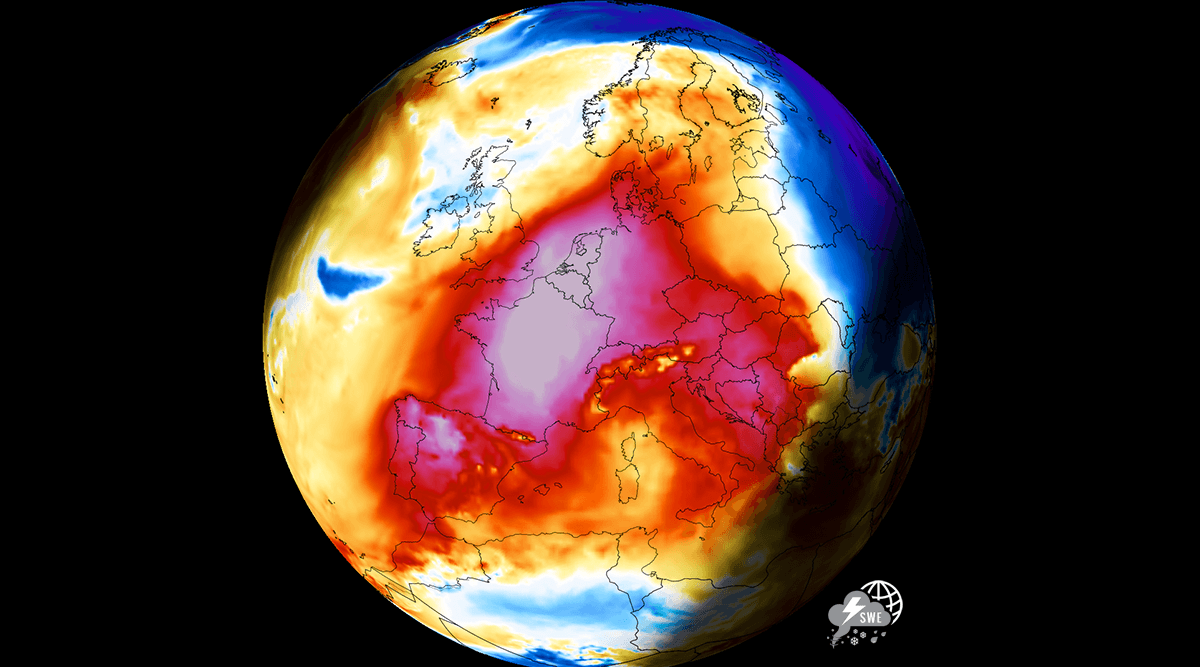
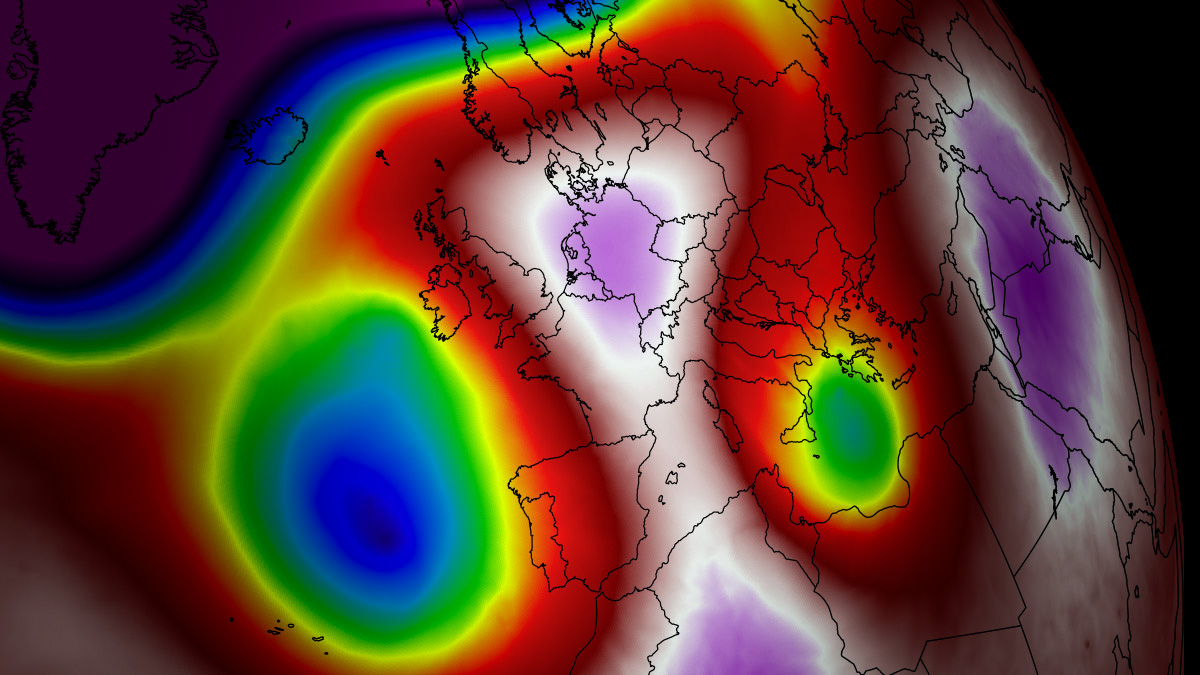
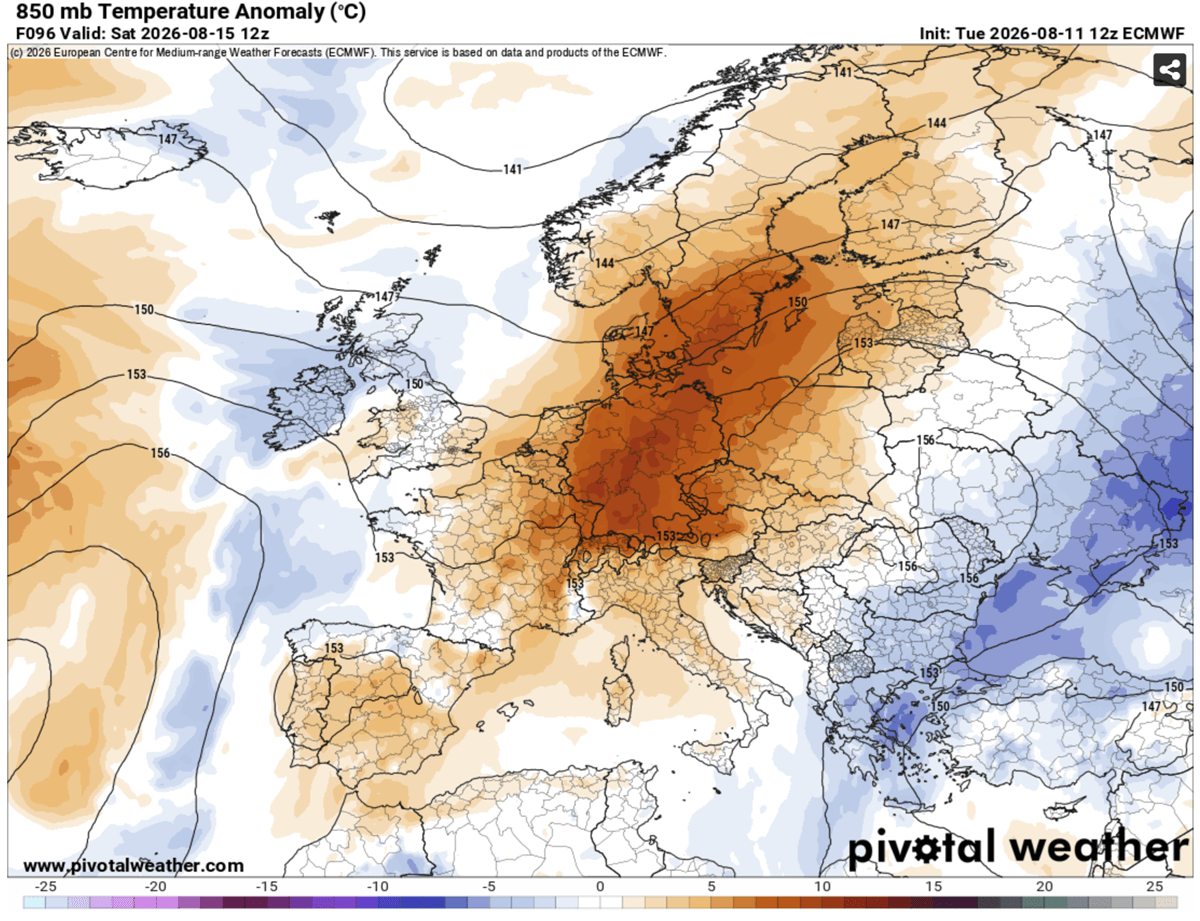
CONTITENTAL EUROPE — As mid-August sets in, a high-amplitude upper-level atmospheric ridge has locked the fifth major Heat Dome of the season over continental Europe. Pushing widespread afternoon temperatures past 40°C, the system represents an extraordinary thermal anomaly. Driven by a powerful northward warm surge, upper-air thermal anomalies are climbing once again into the 99th percentile, bringing severe excessive heat across France, the United Kingdom, Italy, Central Europe, and the Balkan Peninsula.
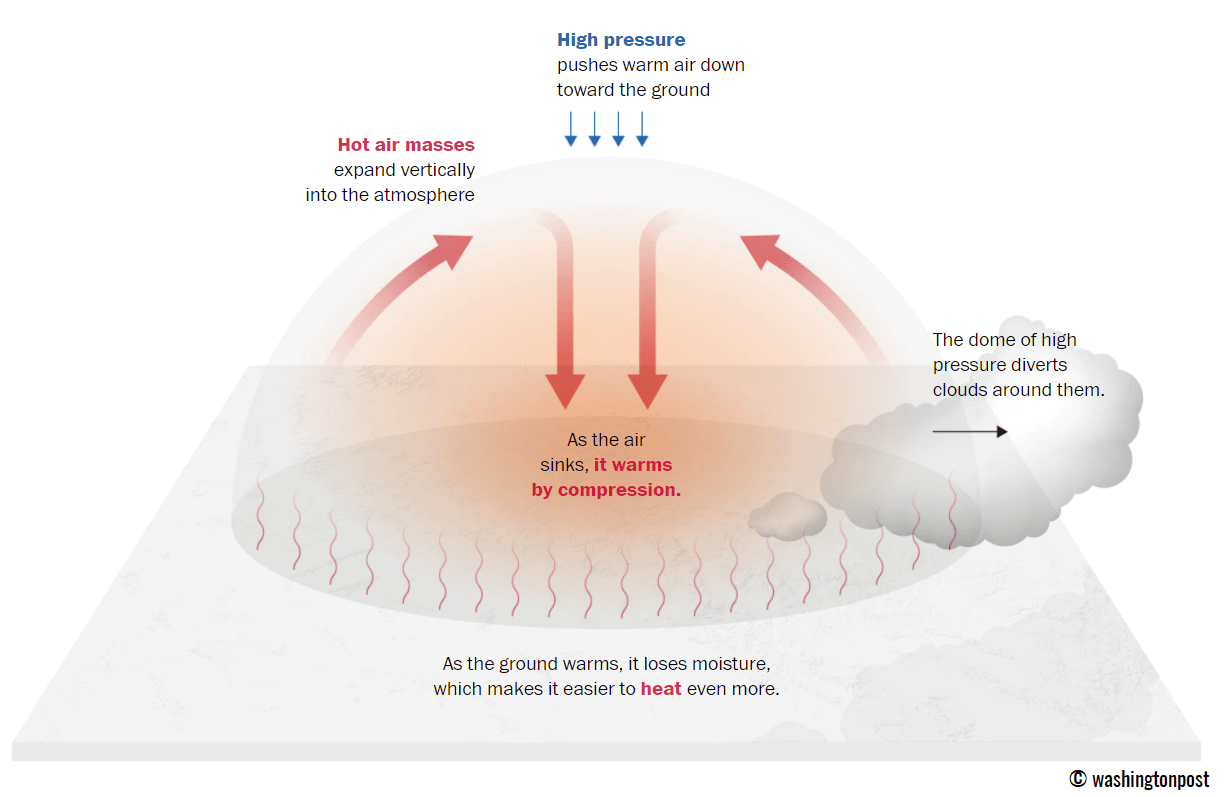
The primary atmospheric engine behind this fifth thermal wave is a stubborn high-pressure ridge parked over the heart of the continent. As sinking air adiabatically compresses and warms the lower troposphere, peak surface temperatures across low-lying basins and plains are forecasted to reach 40°C to 43°C. Simultaneously, dry continental winds are keeping humidity low while rapidly depleting vital soil moisture.
Meteorological agencies note that this renewed thermal surge offers minimal nocturnal relief. Overnight low temperatures are refusing to drop below 22°C to 26°C across major urban corridors. This persistent lack of nighttime cooling compounds physiological stress for millions of residents, skyrockets energy grid demand, and maintains extreme wildfire conditions across southwestern and central Europe.
Main Facts and Meteorological Overview
The current meteorological setup features a classic, highly stable blocking pattern often referred to as an "omega block" or upper-level high-pressure system.
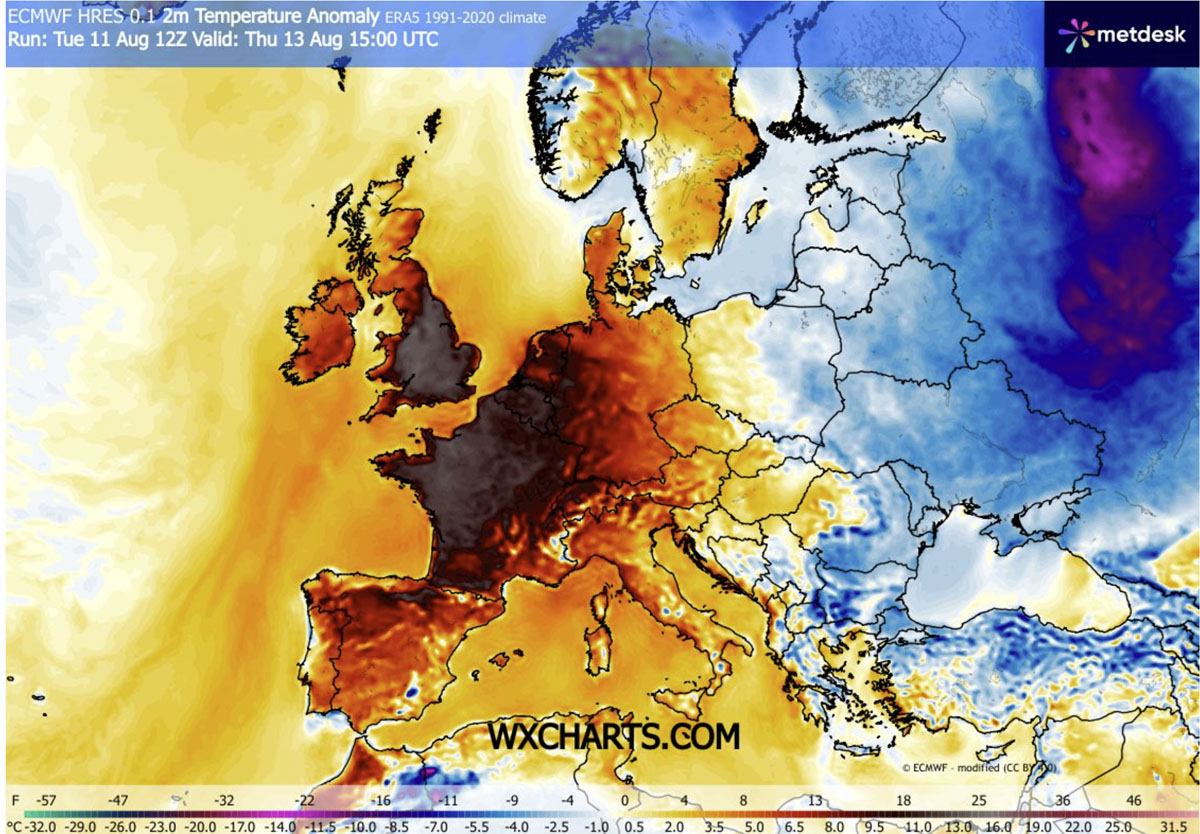
- Intensity and Scale: The fifth Heat Dome of the 2026 summer season is driving temperatures 12°C to 16°C above the long-term historical norms for mid-August.
- Affected Regions: The excessive heat spans from the Iberian Peninsula across France, the UK, the Benelux union, Germany, the Alpine region, Italy, and into the northern Balkans.
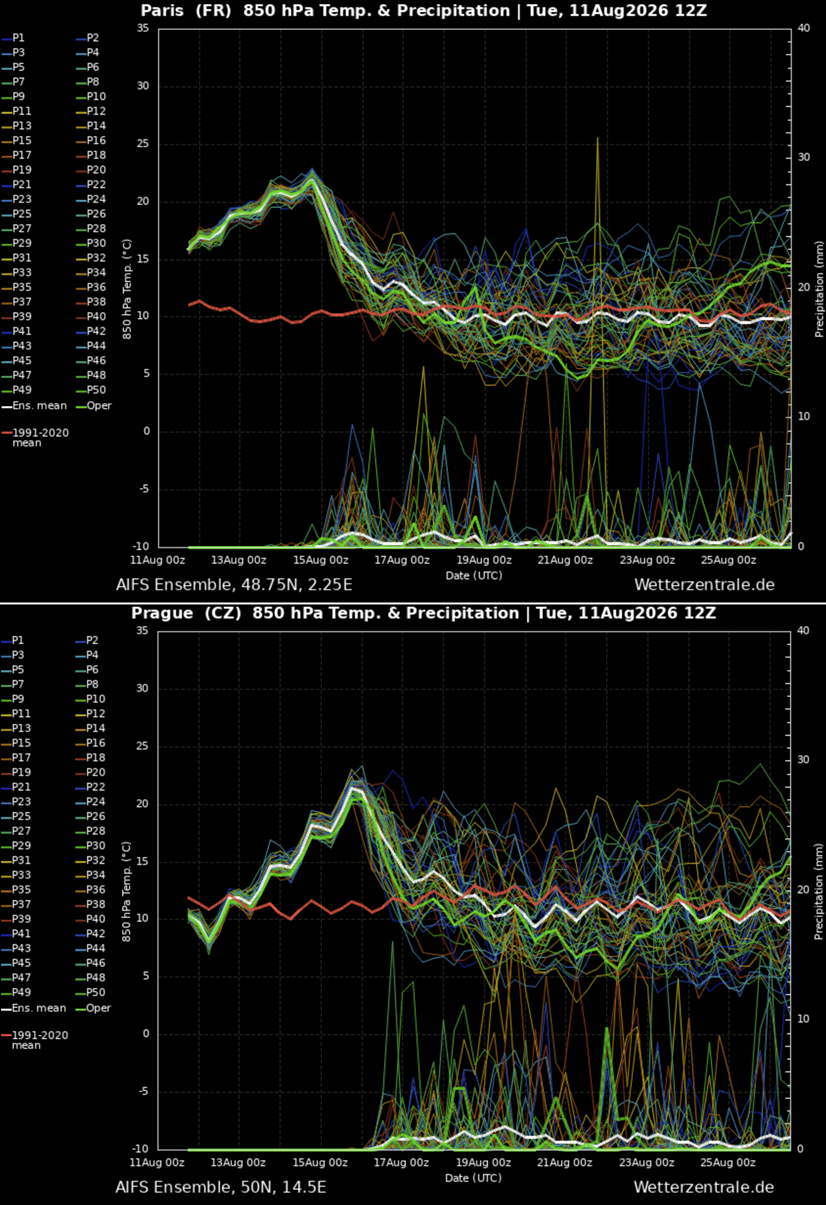
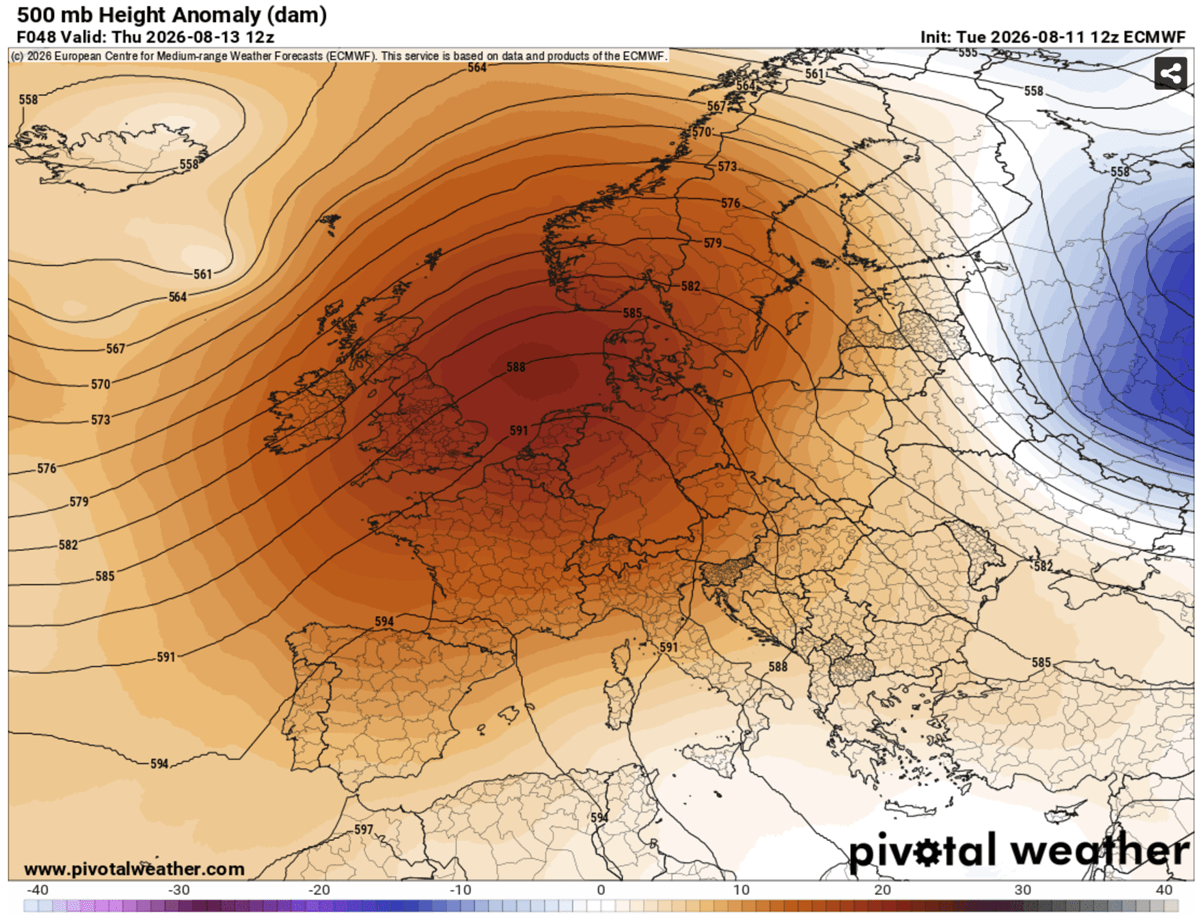
- Thermal Anomalies: Upper-air thermal anomalies at the 850 hPa level are sitting in the 99th percentile. Low-elevation surface temperatures are peaking between 40°C and 44°C in the most severely impacted basins.
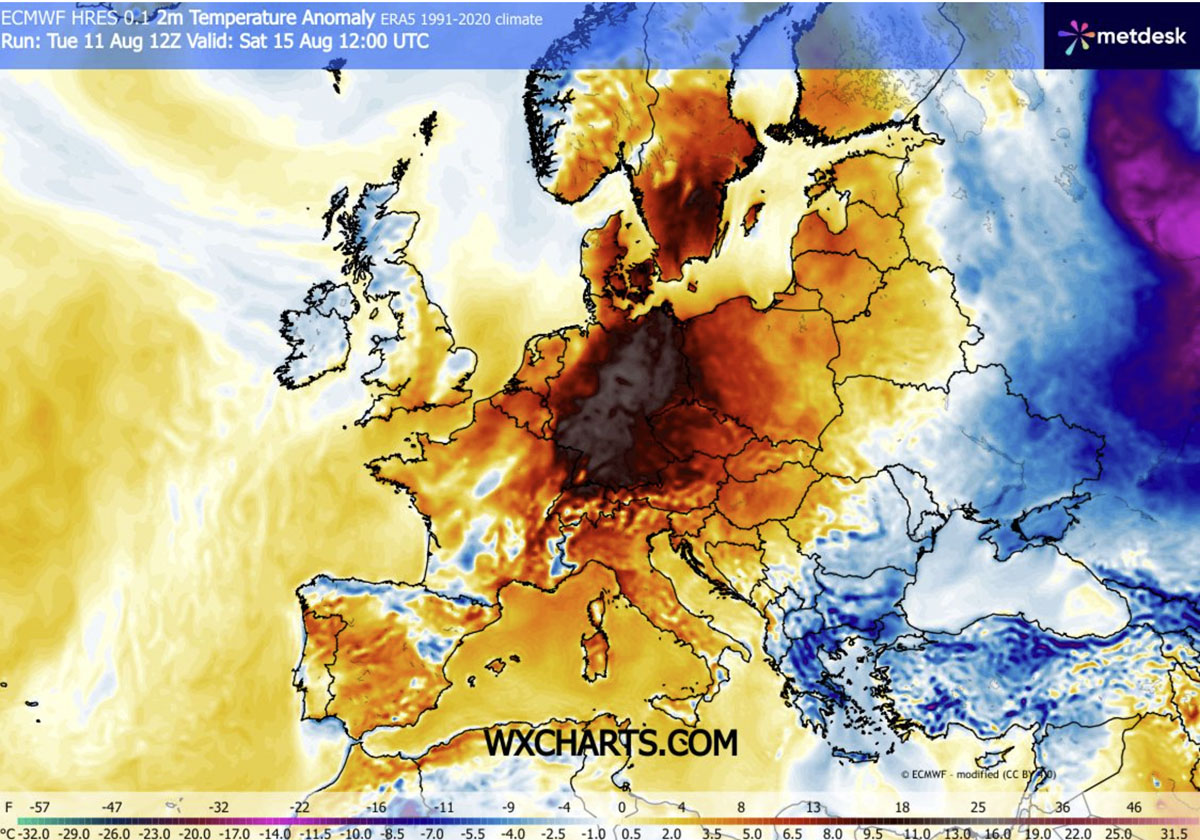
- Duration: The strongest temperature anomalies will dominate Western and Central Europe throughout the week, before gradually shifting from west to east late this weekend and into the following week.
The phenomenon operates much like a lid on a boiling pot. The extensive dome traps warm air at all levels underneath it, with layers continuously sinking toward the ground. This compression heats the air mass extensively at lower elevations and produces searing heat at the surface.
Chronology of the Thermal Wave: A Week-by-Week Progression
Mid-Week: The Western European Peak
The heatwave established its foothold over Western Europe mid-week. Portugal, Spain, France, the United Kingdom, and the Benelux region fell under the core of the heat dome aloft by Wednesday and Thursday.
On Thursday, England experienced some of its most intense heat of the season, with afternoon temperatures climbing into the 38°C–39°C range across southern and central districts. Wales saw low-to-mid 30s, while Ireland approached the upper 20s.
Concurrently, France recorded temperatures between 40°C and 43°C, particularly across western, central, and southwestern departments. The Iberian Peninsula witnessed extreme readings as well, with valley regions in southern Spain hitting 42°C to 44°C, and south-central Portugal hovering near 37°C to 40°C.
Friday: Benelux and Western Germany
Friday marked the pinnacle of the heatwave for the Benelux nations and western Germany. Peak temperatures climbed into the 36°C–40°C range across Belgium, Luxembourg, and the southern Netherlands, while western German industrial corridors faced stifling heat indices.
The Weekend: Eastward Migration into Central Europe and the Balkans
As the upper-level ridge elongates and shifts eastward over the weekend, the axis of the heatwave moves with it. Germany, western Poland, the Czech Republic, and the Alpine region will experience significantly higher temperatures on Saturday and Sunday.
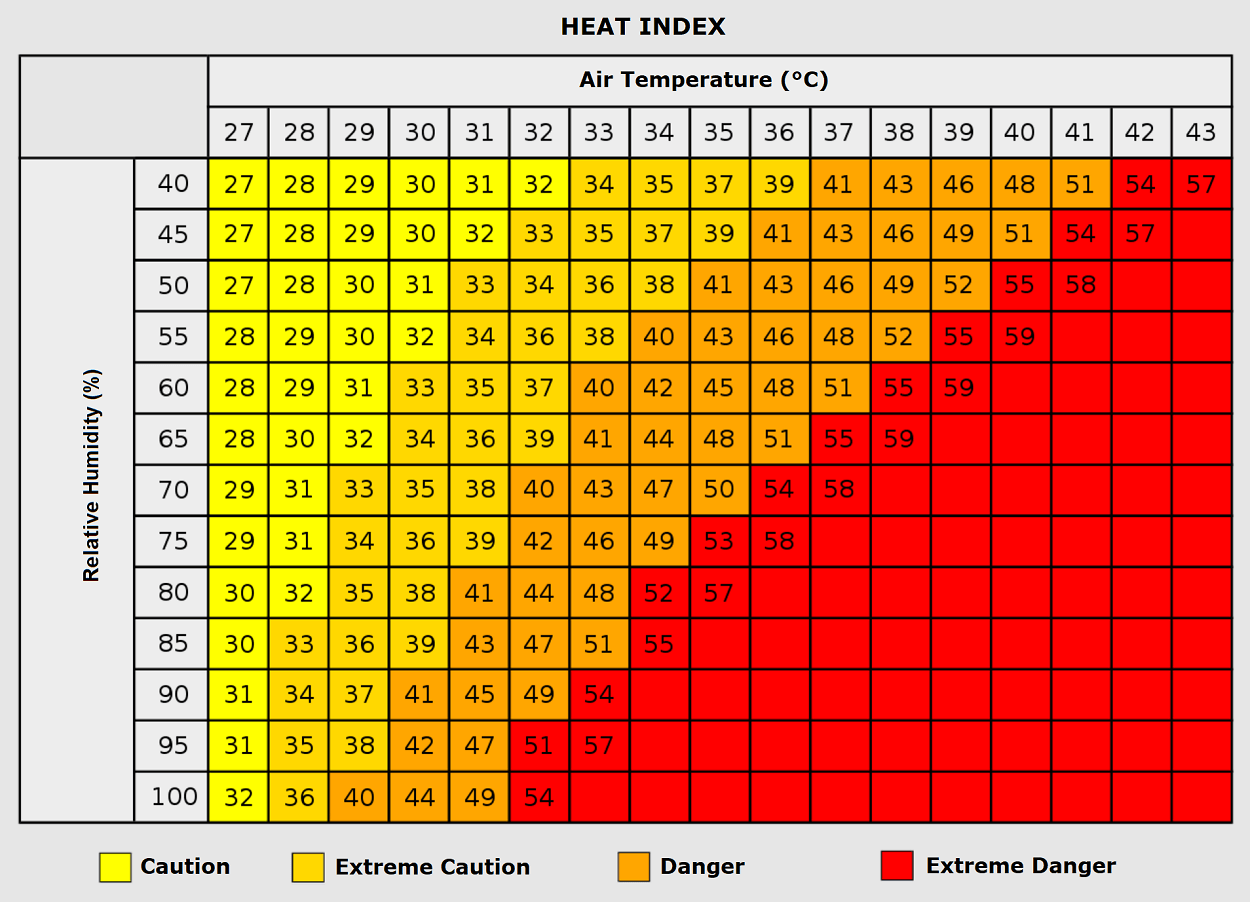
Simultaneously, Italy and the northern Balkans are bracing for a return of 38°C–40°C weather. The Po Valley and Tuscany in Italy, alongside the Pannonian plains of eastern Croatia, Hungary, and northern Serbia, are expected to bear the brunt of this weekend spike.
By late Sunday into early next week, a maritime air mass originating from an Atlantic low-pressure system is projected to push into Western Europe, eventually bringing much-needed refreshment to Ireland, the UK, France, and the Iberian Peninsula.
Supporting Data and Atmospheric Dynamics
Understanding why these heat domes become so lethal requires a closer look at the interaction between temperature, humidity, and atmospheric pressure.
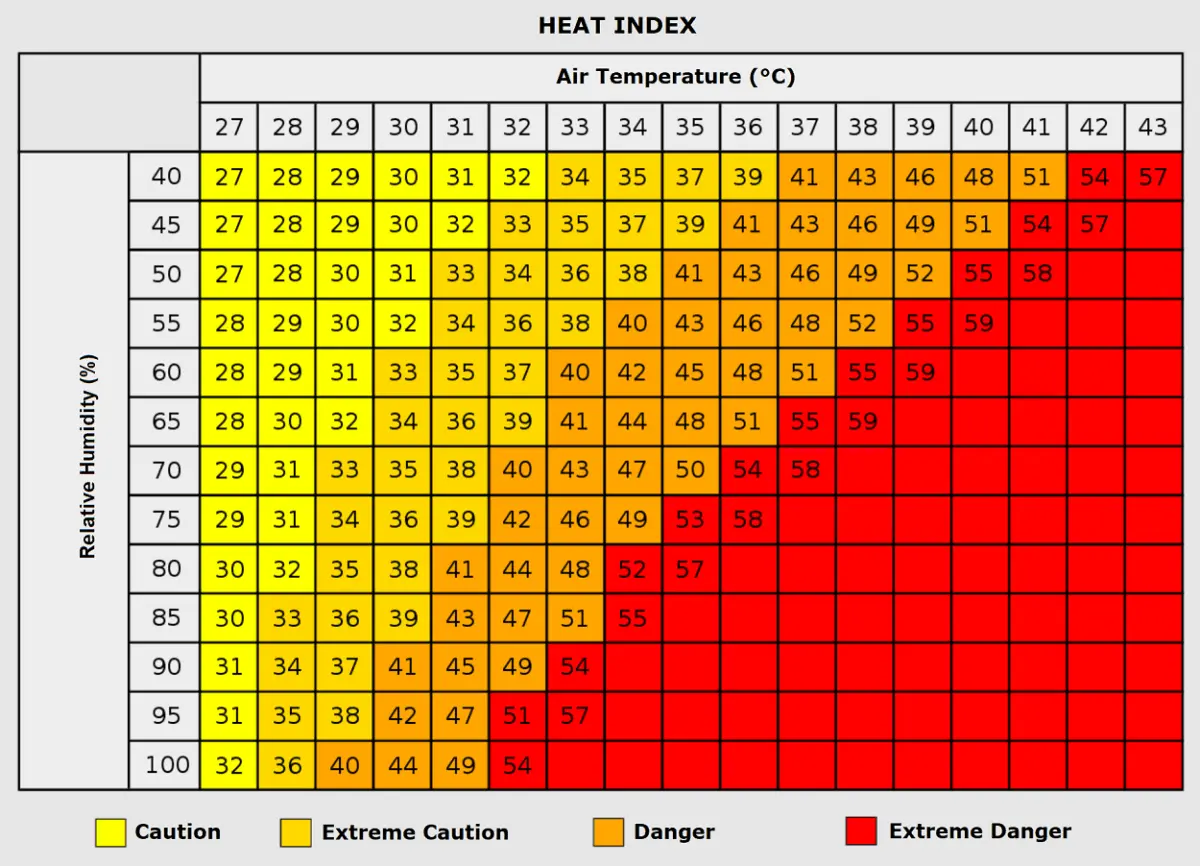
The Heat Index and Humidity Factor
While dry heat is hazardous, high relative humidity drastically exacerbates physiological stress. Meteorologists utilize the Heat Index to quantify how hot the air feels to the human body by combining ambient temperature and relative humidity.
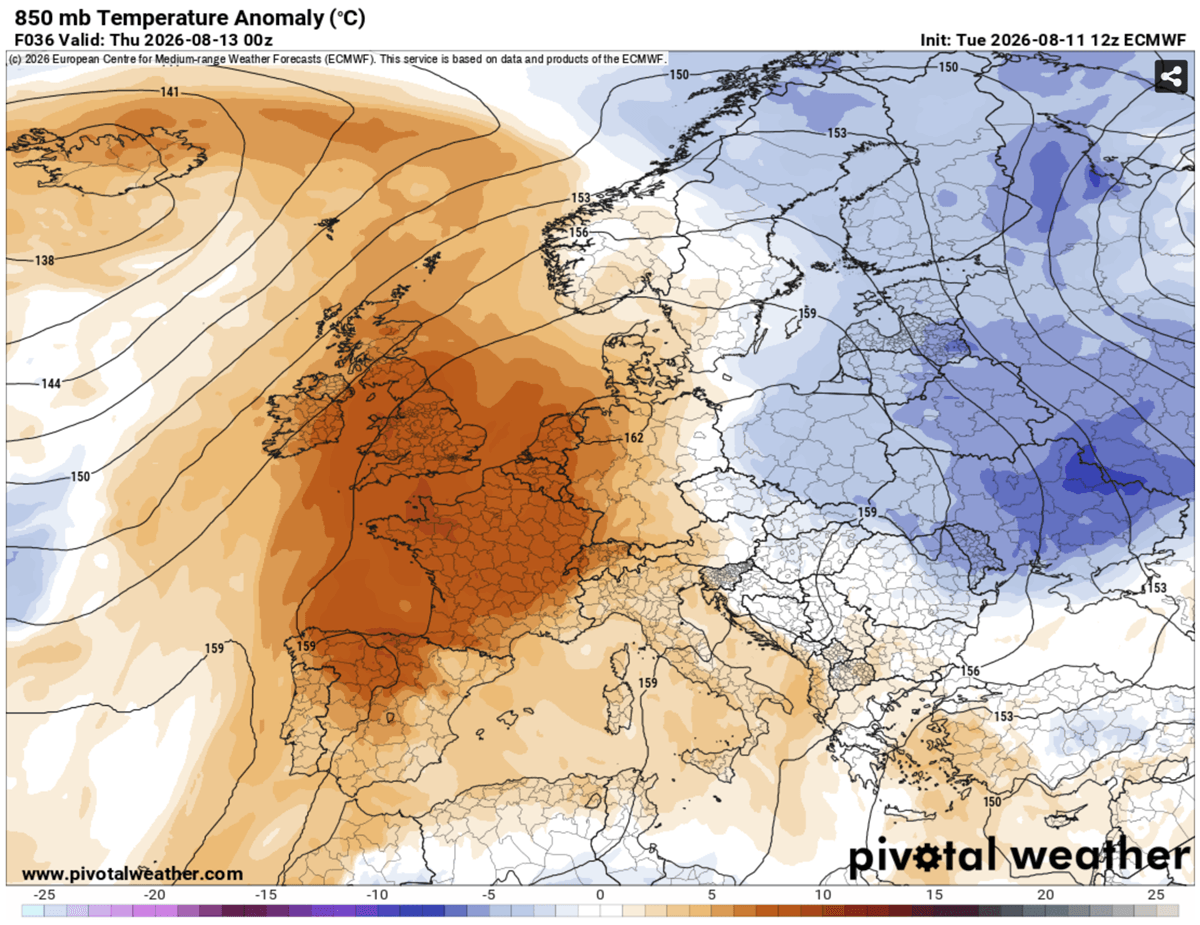
For instance, when an air mass registers a dry-bulb temperature of +35°C with a relative humidity below 60 percent, the human body can still cool itself effectively through perspiration. However, if the humidity climbs above 80 percent under the same ambient temperature, the perceived "feels-like" temperature skyrockets toward 50°C.
During the current event, persistent atmospheric stagnation has prevented the dispersion of moisture and heat, creating localized pockets of high heat indices in river valleys and urban heat islands.
"Tropical Nights" and Nocturnal Heat Stress
Beneath the meteorological data lies a more insidious threat: suffocating "tropical nights." When overnight temperatures refuse to drop below 24°C to 26°C, the human body is denied its vital biological window to cool down and recover. Continuous heat exposure over multiple days places immense strain on the cardiovascular and respiratory systems, leading to spikes in heart attacks, strokes, and heat-related exhaustion.
Official Responses and Public Health Advisories
Governments, meteorological agencies, and municipal authorities across Europe have ramped up emergency protocols in response to the fifth heat dome.
- Red and Orange Weather Warnings: National weather services in France (Météo-France), Spain (AEMET), the UK (Met Office), and Germany (DWD) have issued widespread orange and red extreme heat warnings, advising citizens to limit outdoor physical exertion during peak afternoon hours.
- Urban Cooling Measures: Major cities including Paris, London, Rome, and Berlin have activated municipal heat action plans. These include opening air-conditioned public cooling centers, extending park operating hours, setting up temporary misting stations, and distributing water to vulnerable populations.
- Labor and Occupational Safety: Labor ministries across affected nations have reminded employers of mandatory safety regulations regarding outdoor work. Construction workers, agricultural laborers, and delivery personnel are mandated to receive frequent hydration breaks and adjusted shift hours to avoid heat stroke.
- Energy Grid Management: Grid operators are closely monitoring surging electricity demand driven by residential and commercial air conditioning usage. While supplies have largely held steady, authorities have urged conservation during late-afternoon peak hours to prevent localized brownouts.
Broader Implications: Agriculture, Infrastructure, and Climate Trends
The recurrence of five distinct heat domes over a single summer season highlights an alarming intensification of European climate extremes.
Agricultural Strain and Soil Depletion
The combination of record-breaking afternoon temperatures and prolonged dryness has severely depleted soil moisture across continental Europe. Agriculture in the Pannonian basin, parts of France, and the Iberian Peninsula faces acute stress, threatening crop yields for corn, sunflowers, and vineyards. Livestock farming is similarly impacted, requiring emergency cooling interventions for dairy and poultry farms.
Infrastructure Vulnerability
Infrastructure originally designed for temperate conditions continues to face severe stress. Rail networks across the UK, France, and Germany are susceptible to buckling steel tracks under extreme solar radiation. Furthermore, asphalt roadways softening under prolonged high temperatures require continuous maintenance.
Looking Ahead
As long-term meteorological models hint at a potential pattern flip and breakdown of the blocking high-pressure ridge by next week, scientists and civil protection agencies remain on high alert. The frequency and persistence of these multi-week heat domes underscore an accelerating shift in European summer climatology, demanding long-term adaptation strategies across public health, urban planning, and civil infrastructure.
