

Global industrial equipment markets are undergoing a seismic shift. While heavy-duty fleet operators in North America continue to deliberate, stall, and heavily rely on traditional combustion engines or transitional distractions, the rest of the world is accelerating rapidly toward full electrification.
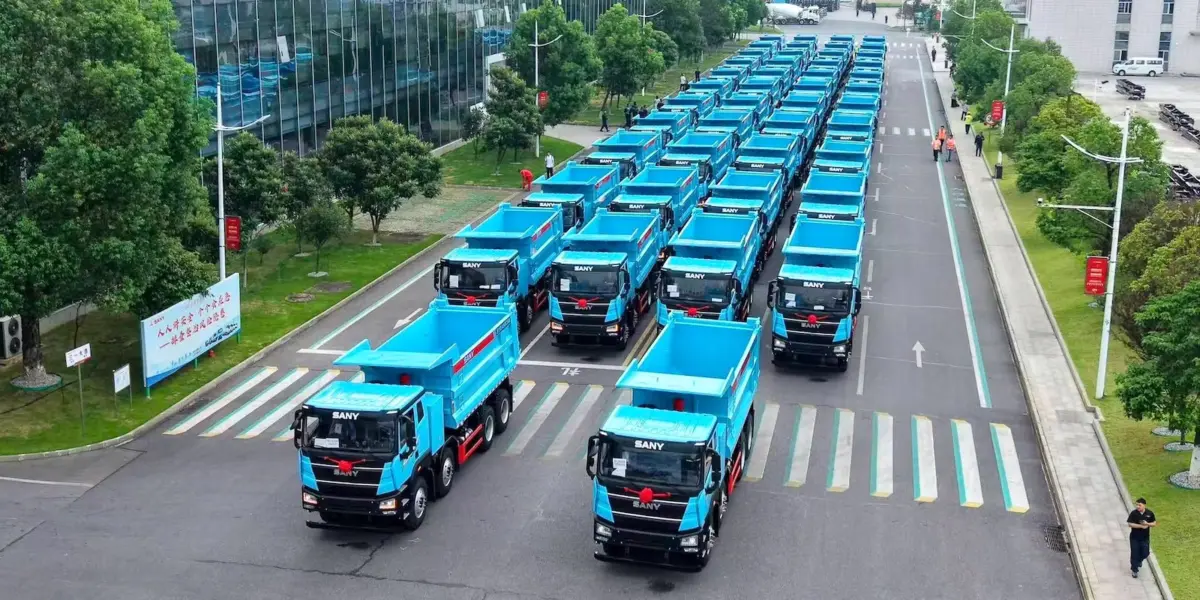
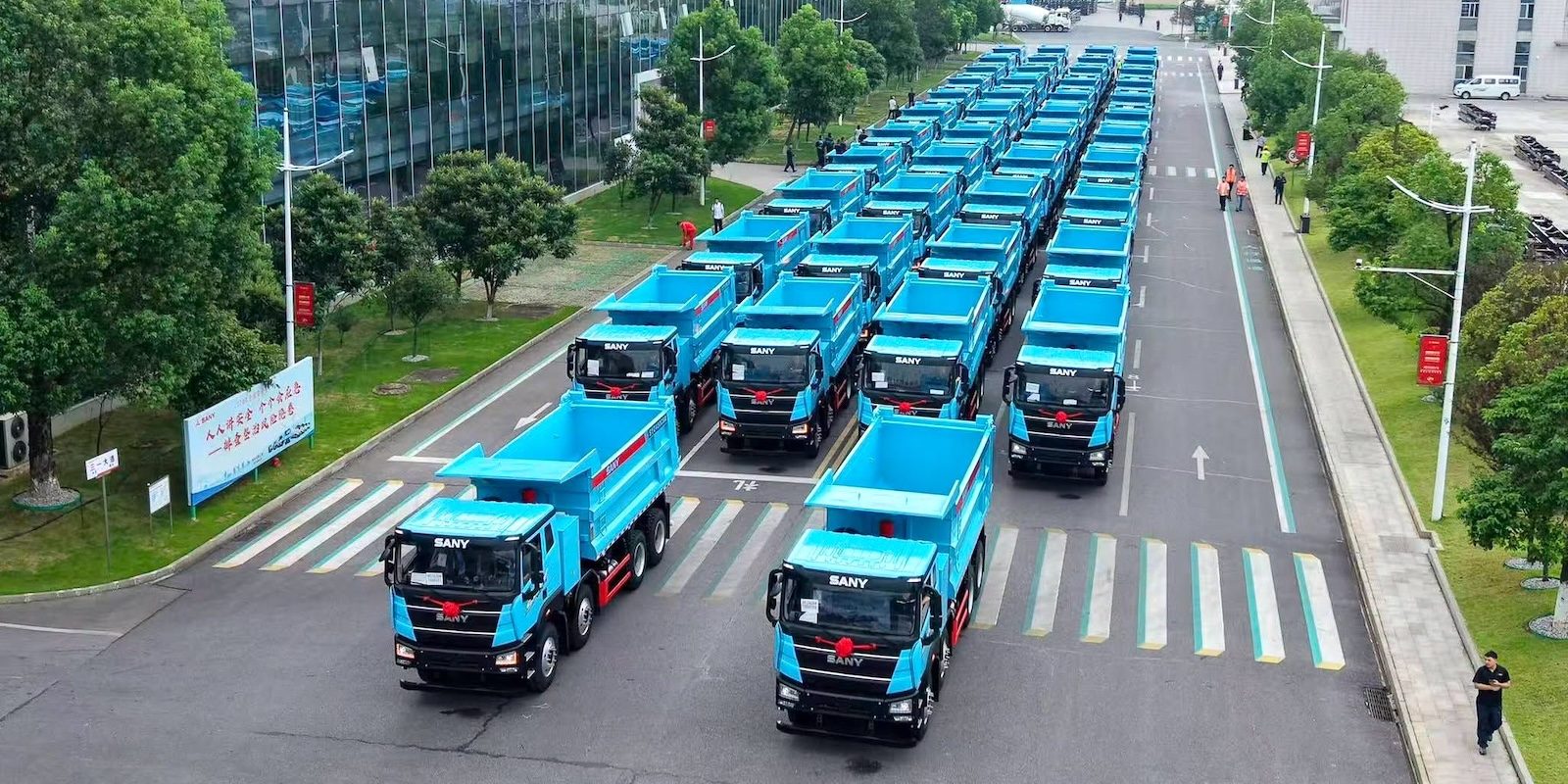
Providing unmistakable proof of this shifting global landscape, Chinese heavy equipment manufacturing titan SANY recently announced a staggering milestone: in a single month, the company successfully delivered 200 heavy-duty electric haul trucks and 403 electric wheel loaders to industrial customers across the globe.
This remarkable volume underscores a broader industrial reality. Far from being conceptual prototypes or experimental niche products, heavy-duty commercial electric vehicles (EVs) are now being manufactured, shipped, and deployed at scale. SANY’s recent delivery figures do not even account for the company’s expanding portfolio of specialized machinery, which includes electric reach-stackers, commercial electric semi-trucks, and massive battery-powered excavators.
As global demand for sustainable infrastructure surges, industry analysts suggest that traditional Western markets risk falling dangerously behind if they fail to accelerate their commercial fleet electrification strategies.
Main Facts
The core narrative centers on SANY’s unprecedented delivery volume achieved during a single operational month. According to official disclosures shared by the company via LinkedIn, global industrial sites received 200 heavy-duty electric dump trucks and 403 electric wheel loaders in August alone.
These machines are engineered to tackle some of the most grueling operational environments on Earth, including open-pit mines, massive civil engineering projects, and high-throughput industrial ports. SANY’s robust export numbers highlight a rapidly growing international appetite for zero-emission industrial machinery capable of replacing fossil-fuel-guzzling diesel equipment without sacrificing raw performance or uptime.
Key components of SANY’s commercial EV strategy include:
- Massive Production Scale: Delivering over 600 heavy-duty electric construction vehicles in a 30-day window.
- Diversified Product Ecosystem: Expanding far beyond dump trucks and loaders to include excavators, semi-trucks, and port logistics equipment.
- Advanced Energy Storage: Utilizing high-capacity, swappable battery systems designed for continuous, round-the-clock industrial operations.
- Autonomous Integration: Developing cab-less autonomous haul trucks and partnering with technology firms to deploy vast fleets of self-driving electric commercial vehicles.
Chronology of SANY’s Electric Evolution
SANY’s ascent from a traditional diesel-focused machinery manufacturer to a global leader in heavy-duty electrification has been swift and methodical. Understanding the trajectory of the company helps contextualize its recent record-breaking delivery numbers.

2025: Expanding the European Footprint and Specialized Niches
- March 2025: SANY officially launched its heavy-duty electric excavator line in Europe, introducing models equipped with massive 422 kWh battery packs designed to compete directly with diesel equivalents in demanding European construction markets.
- August 2025: The company unveiled a heavy-duty 50-ton electric reach-stacker designed for port logistics, integrating advanced thermal management and high-torque electric powertrains derived from high-performance automotive engineering.
2026: Scaling Autonomy and Record Deliveries
- January 2026: SANY expanded its presence in the on-road commercial sector by showcasing its advanced electric semi-truck lineup, which pairs long-range battery technology with human-centric and autonomous driving capabilities.
- July 2026: At the Global Mining Key Customer Summit in Xi’an, SANY debuted the SKT145Ei—a fully cab-less, autonomous electric heavy haul truck built specifically for next-generation mining operations.
- August 2026: SANY achieved its benchmark production and delivery milestone, shipping 200 electric dump trucks and 403 electric wheel loaders to international clients in a single month.
- August 2026 (Partnership Announcement): Alongside its manufacturing milestones, SANY and autonomous driving leader Pony.ai announced an ambitious collaborative roadmap aiming to put 100,000 autonomous electric trucks on the road by 2030.
Supporting Data and Technological Innovation
The sheer engineering required to electrify heavy construction and mining equipment is vastly different from passenger vehicle manufacturing. Industrial machinery demands continuous high torque, resistance to extreme temperatures, and resilience against severe physical shock and vibration.
To meet these demands, SANY has pioneered the integration of large-scale, swappable energy storage solutions. Many of the company’s electric haul trucks and wheel loaders are powered by massive 550 kWh battery packs.
The Advantage of Swappable Energy Infrastructure
- Continuous Operation: Traditional electric vehicle charging can result in costly operational downtime. SANY’s swappable battery architecture allows depleted packs to be physically exchanged for fully charged units in a matter of minutes, ensuring round-the-clock fleet utilization.
- Grid Stabilization: Beyond powering individual machines, these large-scale mobile battery assets possess the potential to interact with regional microgrids, serving as localized energy storage buffers in remote mining or construction sites.
- Total Cost of Ownership (TCO): While the upfront capital expenditure of heavy electric machinery remains higher than diesel alternatives, significantly lower maintenance costs, reduced fluid replacements, and the elimination of diesel fuel price volatility offer a compelling long-term financial return for fleet operators.
Official Responses and Industry Perspectives
SANY has been vocal about its corporate mission to pivot toward sustainable manufacturing without alienating customers who still require traditional internal combustion engine (ICE) options during the transition phase.
In an official statement published on its corporate channels, SANY noted:

"Our electric range continues to grow as more customers look for ways to reduce emissions and operate more sustainably. We’re proud to offer a growing selection of high-quality machinery across both electric and diesel, giving our customers more options to find the right machine for their needs."
Industry analysts point out that this pragmatic dual-track approach—scaling up zero-emission production while maintaining reliable legacy options—has allowed SANY to capture immense market share across Asia, Europe, and emerging industrial economies.
However, the contrast between global adoption rates and North American hesitation has sparked heated debates among logistics and supply-chain experts. While international operators are rapidly integrating electric fleets to meet stringent corporate environmental, social, and governance (ESG) targets and local emissions regulations, many North American fleet managers remain hesitant. Critics argue that regional over-reliance on transitional distractions—such as hydrogen fuel cell prototypes that lack widespread fueling infrastructure—has slowed down practical, immediate decarbonization efforts.
Global Implications for Commercial Fleets
The rapid acceleration of heavy-duty vehicle electrification led by manufacturers like SANY carries profound implications for the global economy and heavy industries.

1. The Death Knell for Diesel Dominance in Niche Sectors
For decades, heavy mining trucks and construction loaders were considered impossible to electrify effectively due to their immense energy requirements. SANY’s delivery of over 600 units in a single month proves that battery-electric technology has matured past the experimental phase. As charging networks expand and battery energy density improves, the economic case for diesel in localized, heavy-duty industrial applications is rapidly evaporating.
2. The Convergence of Electrification and Autonomy
Electrified heavy equipment naturally pairs with autonomous operation. Because electric powertrains feature fewer moving parts, require less intensive mechanical maintenance, and rely on precise digital control units, they serve as the ideal platform for autonomous driving software. Vehicles like SANY’s cab-less SKT145Ei haul truck demonstrate that the future of mining will likely be both electric and driverless, radically reducing operational hazards for human workers.
3. A Wake-Up Call for Western Manufacturers
The aggressive scaling of electric commercial vehicles in international markets serves as a stark warning to North American and European industrial brands. As foreign competitors establish dominant supply chains, software ecosystems, and customer loyalty in the heavy-duty EV space, legacy Western manufacturers risk being left behind. Experts emphasize that if North America hopes to maintain industrial competitiveness, policymakers and fleet operators must move past speculative side-quests like hydrogen and commit decisively to large-scale commercial fleet electrification.
