

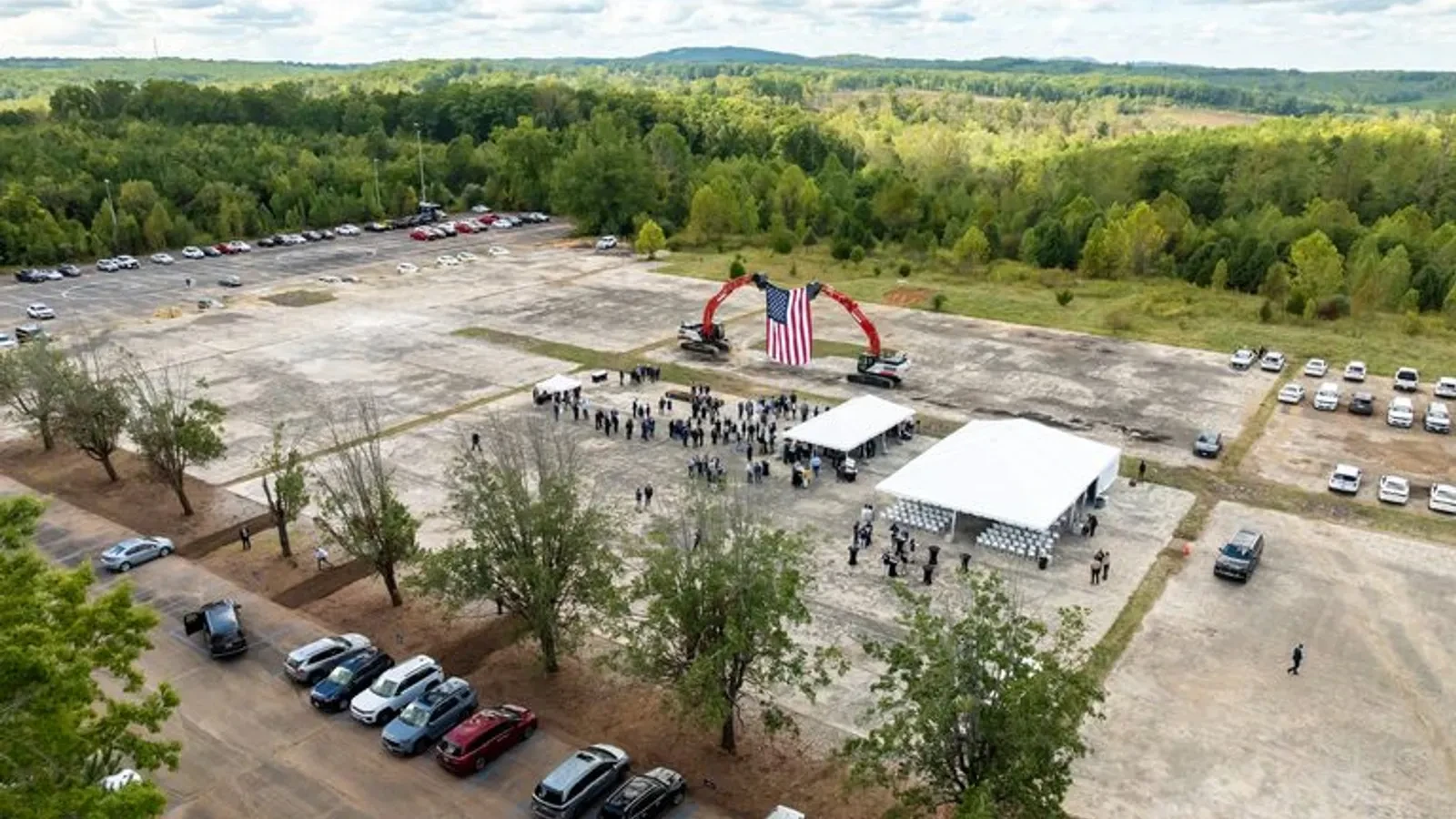
HURT, Va. — In a milestone development for America’s defense industrial base, construction is officially underway on a sprawling, 900,000-square-foot solid rocket motor manufacturing plant in Hurt, Virginia. Backed by a landmark $500 million investment from Avio USA—a subsidiary of the renowned Italian aerospace and propulsion giant Avio S.p.A.—the facility is poised to become a critical production hub for next-generation U.S. tactical missile programs.
HITT Contracting, ranked as the eighth-largest commercial contractor in the United States by revenue, is serving as the general contractor for the massive undertaking. The project brings together international aerospace expertise, elite American construction capabilities, and crucial defense manufacturing infrastructure at a time when national security demands unprecedented scaling of munitions production.
Once operational, the facility will churn out thousands of solid rocket motors annually, directly supporting Tier-1 defense prime contractors such as Lockheed Martin and Raytheon.
1. Main Facts
The Avio USA manufacturing plant represents one of the most substantial foreign direct investments in U.S. defense infrastructure in recent years. Key highlights of the project include:
- Location: Hurt, Virginia (Pittsylvania County).
- Investment Value: Approximately $500 million.
- Facility Size: 900,000 square feet spanning a complex topography.
- Core Output: Thousands of solid rocket motors per year for tactical missile systems.
- Key Defense Partners: Lockheed Martin, Raytheon, and other major U.S. defense primes.
- General Contractor: HITT Contracting (National ENR Top 10 contractor).
- Site Layout: Comprises more than 35 specialized structures engineered for protective construction, strict environmental controls, and administrative functions.
- Timeline: Ground broke on September 29, 2026; construction scheduled for completion in 2028; manufacturing operations projected to commence in early 2029.
2. Chronology of the Project
The journey toward establishing Avio USA’s Virginia footprint has moved at a rapid pace, reflecting the urgency of modern defense supply chain demands.
- Late 2025 – Early 2026: Planning and site selection phases take shape. Avio S.p.A. evaluates regional logistics, workforce availability, and topographical suitability in Virginia, ultimately selecting the Hurt location for its strategic advantages and security profile.
- May 2026: Industry analysts note an unprecedented nationwide surge in defense manufacturing construction. Observers estimate the cumulative wave of solid rocket motor facility projects across the U.S. has surpassed $3 billion—marking the most concentrated defense manufacturing expansion since World War II.
- September 30, 2026: Rep. John McGuire (R-Va.) formally announces and celebrates the $500 million investment, highlighting its transformative economic and strategic impact on the Commonwealth of Virginia.
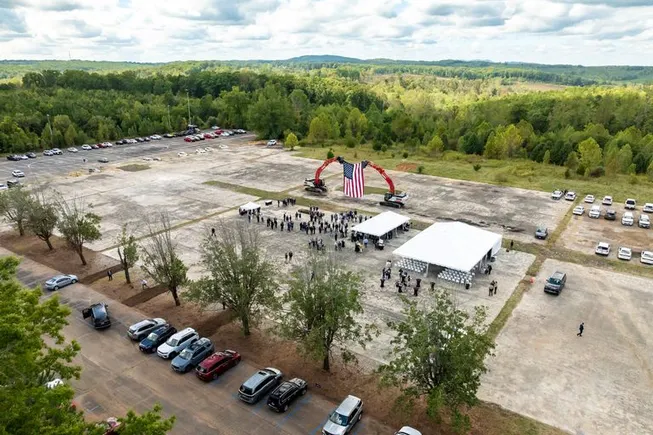
- September 29, 2026: A high-profile groundbreaking ceremony is held on-site in Hurt, Virginia. Dignitaries, local leaders, and executives from HITT Contracting and Avio USA gather on a large plot of cleared earth, featuring ceremonial cranes hoisting a massive American flag.
- October 2026: HITT Contracting officially publicizes its role as the lead builder, outlining the engineering hurdles and structural blueprints for the 35+ specialized buildings that will make up the compound.
- 2028 (Projected): Physical construction and facility fit-out reach completion, initiating rigorous safety, environmental, and operational testing.
- Early 2029 (Projected): The plant achieves full operational status, rolling out its first batches of solid rocket motors for U.S. tactical missile programs.
3. Supporting Data and Industry Context
The construction of Avio USA’s plant does not occur in a vacuum. It is part of a broader, systemic overhaul of the United States defense supply chain driven by shifting geopolitical landscapes and critical inventory shortfalls.
The Munitions Shortfall Crisis
Recent reports from the Department of Defense’s Inspector General have underscored a growing vulnerability in American military readiness. Ongoing global conflicts—including prolonged tensions and military engagements in regions like the Middle East—have severely strained existing stockpiles. According to findings highlighted by NBC News, the conflict involving Iran has accelerated the depletion of critical U.S. munitions, exposing bottlenecks in legacy manufacturing pipelines.
A Historic Surge in Defense Construction
To counter these vulnerabilities, the federal government and private defense contractors have injected billions of capital into domestic production infrastructure. According to assessments by Westside Construction Group, the current nationwide boom in solid rocket motor manufacturing projects exceeds $3 billion.
Industry experts frequently compare the scale and urgency of this infrastructure wave to the industrial mobilization seen during World War II. Companies such as L3Harris, Castelion, and now Avio USA are racing to build out advanced, highly secure facilities capable of meeting surging Pentagon orders.
4. Official Responses and Engineering Challenges
Navigating Complex Logistics and Protective Construction
Building a facility capable of manufacturing sensitive energetic materials and propulsion systems requires hyper-specialized construction techniques. Josh Foreso, Executive Vice President at HITT Contracting, emphasized the meticulous planning required to bring the blueprint to life.

"The site’s complex topography poses construction challenges for logistics, but works well for the final layout of the facility and its long-term functionality," Foreso explained in an email to Construction Dive.
Foreso noted that the layout is intentionally decentralized. Rather than relying on a single mega-structure, the Avio USA campus will feature more than 35 separate structures. This modular approach is vital for protective construction—ensuring that hazardous operations are compartmentalized—while maintaining strict environmental controls and functional administrative spaces.
Congressional and Local Acclaim
The project has received enthusiastic backing from federal and state lawmakers who view the investment as a win-win for regional economic development and national security.
In a statement celebrating the milestone, U.S. Representative John McGuire (R-Va.) lauded the project as a monumental achievement for the local community. The $500 million infusion is expected to create hundreds of high-paying engineering, manufacturing, and administrative jobs in Pittsylvania County, transforming Hurt into a vital node in the American defense apparatus.
5. Strategic Implications for U.S. Defense
The long-term implications of the Avio USA facility extend far beyond the borders of Virginia. For decades, the U.S. solid rocket motor industrial base suffered from severe market consolidation, leaving the military vulnerable when just one or two primary suppliers faced production bottlenecks.

By bringing Avio S.p.A.’s deep European propulsion heritage and cutting-edge manufacturing processes into the domestic supply chain, the U.S. defense ecosystem gains crucial redundancy and technological diversity.
Empowering Prime Contractors
Lockheed Martin and Raytheon—two of the world’s largest aerospace and defense contractors—rely heavily on reliable deliveries of solid rocket motors to power everything from air-to-air missiles to advanced precision strike munitions and air defense systems. The local production capacity in Hurt will directly alleviate delivery delays, ensuring that U.S. armed forces and allied nations can replenish their tactical inventories more rapidly.
Strengthening the Industrial Base
As geopolitical rivalries intensify and the demand for high-tech munitions remains at a historic high, projects like the Avio USA plant serve as a stress test—and a triumph—for modern American construction and defense collaboration. With HITT Contracting steering the build through 2028 and production slated for 2029, Hurt, Virginia, is firmly establishing itself on the frontline of national security manufacturing.
