

Introduction: The Hidden Battleground of Indoor Humidity
For more than a decade, the conversation around home electrification and decarbonization has largely focused on heating capacity. Can a heat pump keep a house warm when the temperature plummets far below zero? According to seasoned home performance contractor Nate Adams, who has been executing electrification projects in Cleveland, Ohio, since 2014, the answer is a definitive yes. Not once has a client’s home slid below its set point, even during deep winter freezes dipping 20 to 25 degrees below the design threshold of 5°F. On the coldest nights, simple resistance backup steps in to bridge the gap, and the house holds firm.
However, keeping a home warm is only half the battle. Between 2016 and 2019, Adams deployed a network of indoor air quality (IAQ) monitors—utilizing three Foobot sensors per house across different floors—to track temperature, humidity, total volatile organic compounds (tVOCs), and PM2.5 in real time. What he discovered fundamentally shifted his approach to HVAC design. While temperature control was straightforward, mastering indoor humidity proved to be a formidable, highly complex challenge.
This is the comprehensive story of how a single 1,200-square-foot century home in Cleveland became a living laboratory, exposing the hidden mechanics of moisture migration, envelope tightening, and the urgent need for advanced humidity control in modern HVAC design.

Chronology of an Experiment: Paul’s House
The Canvas: A Century-Old Survivor
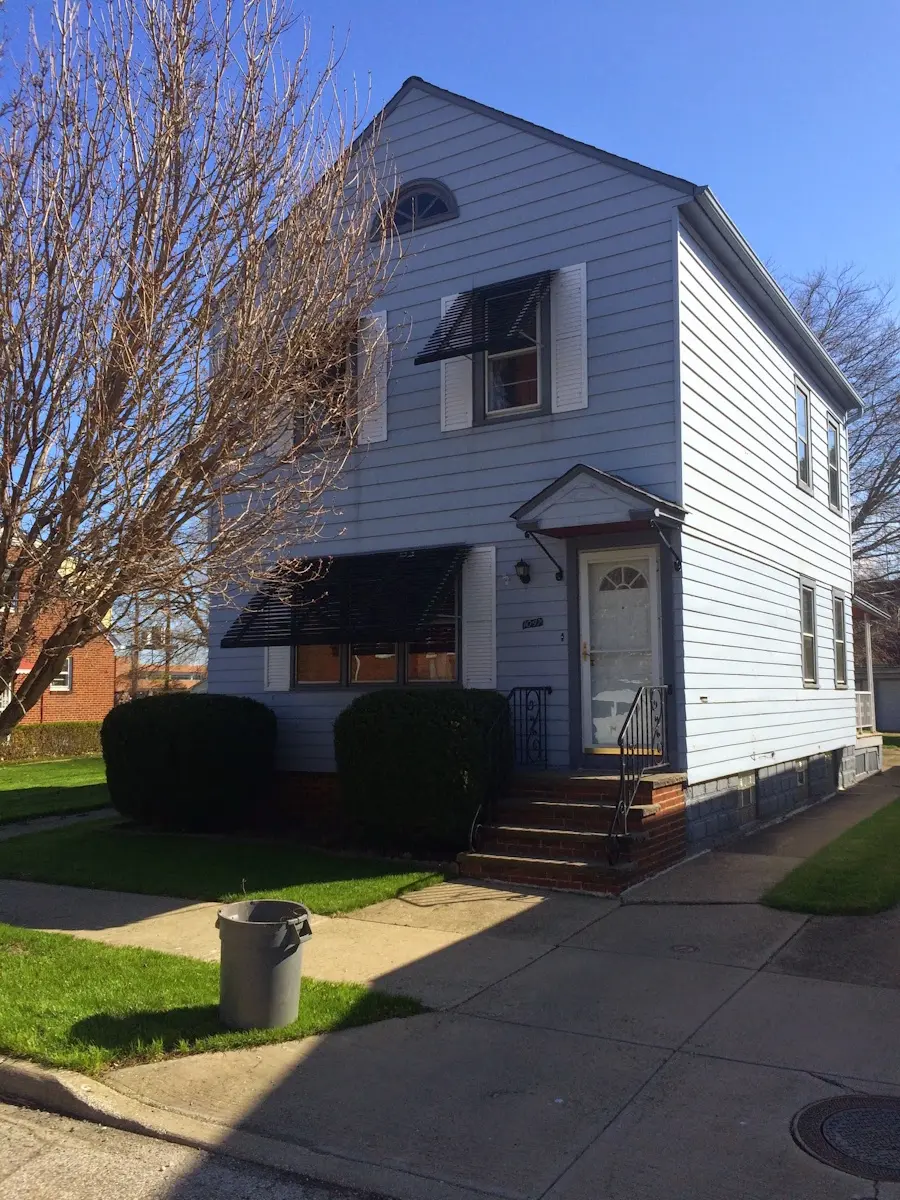
The pivotal project in Adams’ career was the home of Paul and Tammy, a charming 1,200-square-foot house on the east side of Cleveland built around 1900. The property possessed a unique history: its attic still retained roughly a quarter-inch of coal dust from a nearby power plant roughly half a mile away, and the structure had miraculously survived a massive, devastating gas explosion in 1944 thanks to the structural shielding of its neighboring brick homes.
When Paul purchased the home as a retirement project, he engaged Adams—then operating primarily as an insulation contractor—to perform a comprehensive, top-to-bottom air sealing and insulation overhaul covering the attic, walls, and basement. Uniquely, Paul was the rare client willing to execute the complete scope, establishing a baseline of trust that enabled deeper HVAC experiments down the line.
Furthermore, Paul had ripped out the existing boiler, pipes, and radiators, opting to transition the home to a forced-air distribution system. Because the previous setup lacked air conditioning, integrating cooling was a top priority alongside maintaining low operating costs and high comfort.

Engineering the Loads and Equipment Selection
With the envelope tightened, Adams and his business partner ran a comprehensive energy model using TREAT software to calculate the home’s thermal loads. The post-upgrade heat load calculation came out to a remarkably low 20,000 BTUs.
Faced with such a minimal load, traditional fossil-fuel infrastructure made little sense. Even a fully variable-speed gas furnace rated at 60,000 BTUs typically only modulates down to about 20,000 BTUs, meaning it would heavily short-cycle in mild weather. A variable-speed heat pump emerged as the superior solution.
Paul agreed to the proposal, clearing the path for the installation of a two-ton Carrier Infinity Greenspeed heat pump. In 2015, it stood out as one of the few unitary products offering robust cold-temperature performance while matching the right-sized load of a compact home. In theory, the project was a textbook success. In practice, reality intervened via the basement.

The Basement Moisture Crisis
The home featured a notoriously damp basement—so damp that before work commenced, the floor joists had developed mold growth while the property sat vacant, requiring immediate remediation.
To mitigate moisture entering through the masonry, Adams applied two inches of closed-cell spray foam directly to the basement walls. While this helped immensely, a secondary, unyielding source of moisture remained: water vapor continuously migrating upward through the unsealed basement slab, a common reality in homes constructed around 1900.
To provide fresh air, Adams installed an Energy Recovery Ventilator (ERV) running continuously at 70 CFM. Believing he had adhered strictly to contemporary building science best practices, Adams assumed the house was fully protected. He was wrong.

Supporting Data: The Warning Signs on the Dashboard
Remote Monitoring and the Humidity Trap
Adams monitored the home’s microclimate remotely through his Foobot IAQ dashboard. The data quickly signaled trouble.
Despite utilizing the smallest variable-speed unitary heat pump available at the time, the equipment was still too large for the shoulder-season cooling loads. On the home’s first floor, relative humidity levels consistently hovered above 60%—well outside the ideal target range of 40% to 50% relative humidity, or a dew point under 50°F.
The basement, conversely, ran in the low 40s because a dedicated dehumidifier operated continuously down there. However, without a return duct to pull that dry air upward into the living space, the basement functioned as an isolated humidity zone, leaving the first and second floors trapped in moist, stagnant air. Knowing that lingering moisture risks biological growth, wood rot, and compromised indoor air quality, Adams recognized he needed an immediate intervention.

The Three-Fix Solution at a Housewarming Party
Rather than tearing out expensive equipment, Adams utilized the flexibility engineered into the communicating system. During Paul’s housewarming party, Adams executed three targeted adjustments in less than an hour, with a material cost of roughly $10:
- The Return Air Hack: Armed with tin snips and a $10 grille, Adams cut a large return vent directly into the basement return trunk. Because the home lacked a basement door, the open stairwell served as the return air pathway, allowing the dry air generated in the basement to circulate into the main living areas. (Note: This practice is safe in all-electric homes, but introduces severe carbon monoxide backdrafting risks in homes with natural-draft combustion equipment).
- Enabling Electric Reheat Dehumidification: Adams programmed the Carrier Infinity system to utilize electric reheat dehumidification. The heat pump runs the compressor to chill the indoor coil and strip moisture from the air, and then engages internal resistance strips to gently reheat the air before delivering it to the rooms. This keeps the home at a stable temperature while aggressively extracting humidity.
- Calibrating the ERV: Adams throttled the ERV down from 70 CFM to 20 CFM. At 70 CFM, the unit was importing too much outdoor moisture for the system to overcome. Reducing the flow rate gave the heat pump a fighting chance to maintain control.
Industry Implications and Building Science Lessons
The Stack Effect and Tightened Envelopes
The overarching lesson from Paul’s house—confirmed across dozens of subsequent electrification projects—lies in understanding how building envelopes process moisture. In older, leaky homes, moisture migrating upward from the ground via capillary action and ground vapor pressure naturally escapes out the top of the house through the stack effect.
When contractors seal the attic, walls, and basement without accounting for sub-slab vapor drive, that moisture becomes trapped. Newer construction avoids this via mandatory under-slab vapor barriers, but century homes require explicit moisture mitigation strategies.

The Limits of Variable-Speed Equipment
Adams’ data illuminated a critical blind spot in modern HVAC manufacturing: the relationship between compressor turndown and sensible heat ratio (SHR).
During shoulder seasons, cooling loads often plummet to between 2,000 and 3,000 BTUs per hour—falling well below the minimum output threshold of even advanced variable-speed equipment. For instance, while a 2-ton heat pump may modulate down to roughly 6,000 BTUs, that slight excess capacity means the system runs too briefly or keeps the indoor coil too warm to effectively condense moisture.
Adams advocates for manufacturers to publish SHRs at minimum compressor output and suggests that utilizing smaller indoor coils can keep the system colder at low speeds, vastly improving shoulder-season dehumidification.

Official Responses and Broader Industry Trends
The challenges observed in Cleveland mirror national climate trends. According to data from Climate Central, average dew points across most of the United States have risen significantly since 1950. In Cleveland alone, the average dew point has climbed 4°F to 5°F, with nighttime temperatures—a primary driver of ambient humidity—rising faster than daytime highs.
Simultaneously, mainstream HVAC equipment engineering often prioritizes sensible cooling capacity over latent moisture removal. This mismatch has fueled a wave of construction and installation lawsuits, particularly in humid southern climates where oversized systems short-cycle and leave homes damp and mold-prone.
Industry experts increasingly agree on several key takeaways for modern HVAC design:

- Communicating Controls are Essential: Advanced, fully communicating thermostats and variable-speed systems are no longer luxury upgrades; they are necessary tools to manage complex indoor microclimates.
- Standalone Dehumidification: In tight, high-performance homes located in humid regions, relying solely on a heat pump for dehumidification is risky. Incorporating a whole-home standalone dehumidifier provides a reliable safety net for low sensible load conditions.
- Equipment Sizing Shifts: Designers are urged to calculate cooling loads with extreme precision and weigh dehumidification capabilities heavily alongside winter heating performance.
Conclusion: A Lasting Legacy
Nate Adams’ decade-long journey of monitoring, measuring, and refining HVAC electrification practices underscores the delicate balance required when modernizing older housing stock. What started as an experimental fix at Paul’s housewarming party transformed into a foundational design philosophy: prioritize dehumidification above all else, engineer systems with operational flexibility, and respect the complex physics of building moisture.
Paul passed away a few years ago, but his willingness to let an ambitious contractor experiment on his retirement home helped shape the modern playbook for resilient, healthy, and fully electrified residential architecture. As summers grow hotter and more humid nationwide, the lessons learned in that 1,200-square-foot Cleveland home remain more relevant than ever.
