

The electric vehicle (EV) revolution has always promised a seamless, friction-free future. From zero tailpipe emissions to instant torque, the transition away from internal combustion engines was supposed to usher in a sleek, modernized era of transportation and energy consumption. Yet, for all the technological leaps made in battery chemistry and autonomous driving, the everyday consumer experience often remains bogged down by digital bureaucracy—clunky smartphone applications, a fragmented web of charging networks, and endless waiting games for long-promised halo vehicles.
In the latest episode of Quick Charge, the automotive and clean-tech landscape highlights this dichotomy perfectly. General Motors is making genuine strides to clean up the public charging headache with its new "Energy Pass" and "Plug and Charge" technologies, aiming to return the refueling experience to its simple, card-free roots. Meanwhile, the broader tech and automotive sectors continue to grapple with contradictions: SpaceX is leaning on fossil fuels to power a cutting-edge mega chip factory, and Tesla’s long-delayed Roadster is once again being promised as arriving “real soon”—marking what is effectively the tenth consecutive year of similar assurances.
Below is an in-depth exploration of these developments, tracing the timeline of today’s biggest transportation and clean energy headlines, analyzing the supporting data, reviewing official responses, and breaking down the broader implications for the industry.
Main Facts
The automotive and clean-energy sectors are currently experiencing a flurry of contradictory milestones, highlighting both incredible innovation and persistent logistical hurdles.
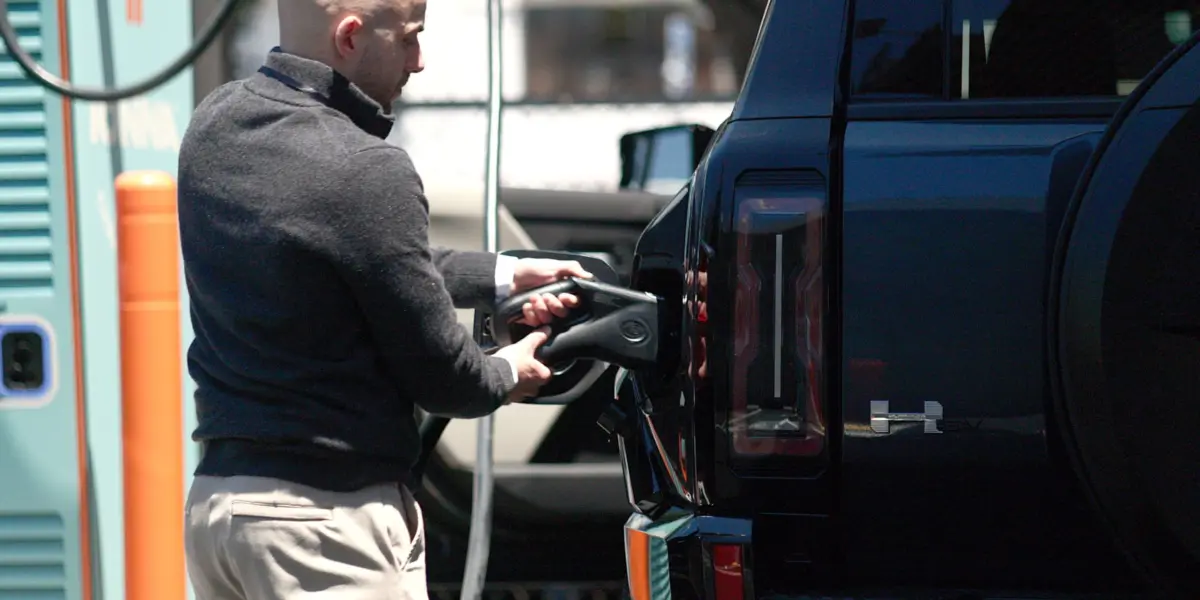
First, General Motors is rolling out a dual-pronged infrastructure solution aimed squarely at alleviating range anxiety and software fatigue for drivers of electric Cadillacs, Chevrolets, and GMCs. Dubbed the Energy Pass and Plug and Charge, this integrated system eliminates the frustrating requirement to juggle multiple third-party apps, membership accounts, and payment methods. When a GM EV driver arrives at a participating public charging station, they simply plug the charger into the vehicle. Authentication and billing happen automatically in the background, mirroring the effortless plug-and-go convenience popularized by Tesla’s Supercharger network.

Second, aerospace giant SpaceX has made a controversial pivot in its infrastructure planning, opting to power its newest mega chip factory primarily with fossil fuels. While the company pushes the boundaries of rocket reusability and satellite internet deployment, the reliance on traditional energy grids and fossil-fuel generation for high-density computing highlights the sheer energy demands of modern artificial intelligence and semiconductor manufacturing—demands that green energy infrastructure has struggled to meet instantaneously.
Finally, the automotive rumor mill continues to churn around the Tesla Roadster. During a recent promotional push, Tesla’s chief designer attempted to convince automotive icon Jay Leno that the perpetually delayed second-generation Roadster is actually, genuinely coming "soon." For industry watchers and loyal reservation holders, this latest reassurance feels like déjà vu, marking nearly a decade of missed production targets since the vehicle was first unveiled to the public in late 2017.
Chronology: How We Got Here
To fully understand the gravity of these announcements, it is helpful to place them within the broader timeline of EV adoption, infrastructure development, and corporate promises.
The Fragmented Early Days of Public Charging (2015–2020)
For the first decade of modern mass-market EV adoption, public charging was notoriously disjointed. Unlike traditional gasoline stations—where any car could pull up to any pump and pay with a credit card—EV drivers were forced to download a dozen different apps, apply for various Radio-Frequency Identification (RFID) cards, and navigate mismatched pricing structures across networks like ChargePoint, Electrify America, EVgo, and regional providers.
The Tesla Supercharger Monopoly and the NACS Pivot (2020–2023)
During this period, Tesla’s proprietary Supercharger network remained the gold standard, largely because of its "Plug & Charge" capability. Owners simply plugged in, and the car communicated directly with the charger, billing the user’s account automatically. Realizing that a closed ecosystem hindered mass adoption, major automakers—led by Ford and GM in mid-2023—began striking deals to adopt Tesla’s North American Charging Standard (NACS) and open up access, laying the groundwork for software-level interoperability like GM’s new Energy Pass.

The Endless Roadster Saga (2017–Present)
Unveiled with jaw-dropping specs in November 2017—including a 0–60 mph time of 1.9 seconds and a 620-mile range—Tesla promised the next-gen Roadster would hit roads by 2020. That deadline came and went, pushed back successively by supply chain crises, the COVID-19 pandemic, priority shifts toward the Cybertruck and Semi, and continuous engineering refinements. Now, years past its original due date, executives continue to tease its impending arrival, testing the patience of enthusiasts who put down hefty deposits nearly a decade ago.
The AI and Chip Energy Boom (2023–Present)
As the generative AI boom took off, tech companies and aerospace manufacturers alike began constructing massive semiconductor and chip-manufacturing facilities. The staggering electricity demands of these plants quickly outpaced local clean energy generation capacity, forcing companies like SpaceX to make pragmatic, albeit environmentally controversial, choices to rely on conventional fossil fuel energy sources to meet tight operational deadlines.
Supporting Data & Technical Breakdown
To appreciate the impact of GM’s latest software integration and the broader energy landscape, we must examine the metrics driving these decisions.
- GM Energy Pass Integration: By cutting out the intermediary step of opening an app or swiping a credit card, the Energy Pass slashes average charging initiation times from roughly 2–3 minutes down to mere seconds. While seemingly minor, at scale this frictionless experience eliminates one of the primary psychological barriers for new EV adopters who fear public charging complexity.
- The Charging Fragmentation Burden: According to recent consumer surveys by automotive analytics firms, over 40% of prospective EV buyers cite "charging inconvenience" as a top deterrent. Multi-app fatigue is consistently ranked as a primary friction point among current owners using mixed public networks.
- Tesla Roadster Specifications (Promised):
- 0–60 mph: 1.9 seconds
- Top Speed: 250+ mph
- Battery Capacity: 200 kWh
- Range: 620 miles
- Original Target Release: 2020
- Current Status: "Real soon" (Entering nearly its tenth year of developmental limbo)
- Semiconductor Energy Consumption: Modern mega chip factories can consume anywhere from 50 to over 200 megawatts of continuous power—equivalent to the electricity consumption of tens of thousands of homes. This staggering baseload requirement explains why projects like SpaceX’s chip facility often turn to reliable, traditional fossil fuel power sources when green energy availability falls short.
Official Responses and Industry Reactions
The latest developments have elicited strong reactions from industry analysts, consumer advocates, and corporate insiders alike.
General Motors has positioned its rollout of Energy Pass and Plug and Charge as a major milestone in customer-centric design. In official statements regarding the ecosystem, GM representatives emphasized that the goal is to make driving an electric Chevrolet, Cadillac, or GMC feel entirely natural. "You shouldn’t need a degree in digital logistics just to refuel your car," a company spokesperson noted. By streamlining authentication directly through the vehicle’s onboard software and GM’s energy network, the automaker hopes to build greater consumer confidence in public infrastructure.

On the tech and manufacturing side, SpaceX has faced criticism from environmental groups regarding its decision to power its new mega chip factory with fossil fuels. Climate advocates point out the inherent irony of an aerospace company pioneering sustainable rocket propellants and electric vehicles (via sister-company Tesla) leaning on carbon-emitting energy sources for ground-based computing. However, industry insiders defend the move as an unavoidable economic and logistical reality, arguing that the blistering pace of technological competition leaves little room to wait for localized green grid upgrades.
Meanwhile, the ongoing saga of the Tesla Roadster continues to draw both amusement and skepticism. When Tesla’s design chief recently reassured Jay Leno about the vehicle’s imminent arrival, it underscored a unique corporate communication strategy: keeping enthusiasts hooked with the carrot of a hyper-car of the future while prioritizing high-volume vehicles like the Model Y, Model 3, and Cybertruck. While die-hard fans remain hopeful, financial analysts largely view the Roadster as a halo marketing project rather than a near-term financial driver.
Implications for the Future
What do these converging storylines mean for the future of transportation, energy, and consumer technology?
1. The Death of the Charging App
GM’s implementation of Plug and Charge signals an inevitable industry-wide shift. The era of downloading an app for every regional charging network is drawing to a close. As legacy automakers and EV startups alike integrate universal auto-charge protocols, the public charging experience is finally beginning to match the simplicity of traditional gas stations. This reduction in friction will be vital for capturing the mainstream, risk-averse consumer market.
2. The Hard Realities of the Clean Energy Transition
SpaceX’s reliance on fossil fuels for semiconductor manufacturing underscores a brutal truth about the modern tech boom: our digital ambitions are outstripping our green energy capacity. As artificial intelligence, data centers, and advanced manufacturing expand exponentially, society faces a massive challenge in scaling renewable energy fast enough to meet baseload demands. Without accelerated investments in clean grid infrastructure, we may see more high-tech clean energy companies leaning on fossil fuels out of sheer operational necessity.

3. Managing Consumer Expectations
The endless delays of the Tesla Roadster serve as a cautionary tale about over-promising in the automotive sector. While visionary hype can successfully drive stock prices, pre-order deposits, and media buzz, it ultimately tests consumer loyalty when deadlines slip by years—or decades. As competition heats up from legacy luxury brands and nimble EV startups, automakers will need to balance visionary marketing with transparent, reliable delivery timelines.
Conclusion
The road to a fully electrified, sustainable future is rarely a straight line. As demonstrated by this week’s developments, progress often coexists with frustrating delays and pragmatic compromises. GM’s Energy Pass proves that the user experience is steadily improving, stripping away the digital clutter that has long plagued public charging. At the same time, SpaceX’s fossil-fuel energy choices and Tesla’s perpetual Roadster timeline remind us that engineering grand visions in the real world requires navigating stubborn infrastructure limits and logistical roadblocks.
As the clean-tech sector continues to mature, consumers and industry observers alike will be watching closely to see which promises materialize into tangible reality—and which ones remain permanently parked just around the corner.
