

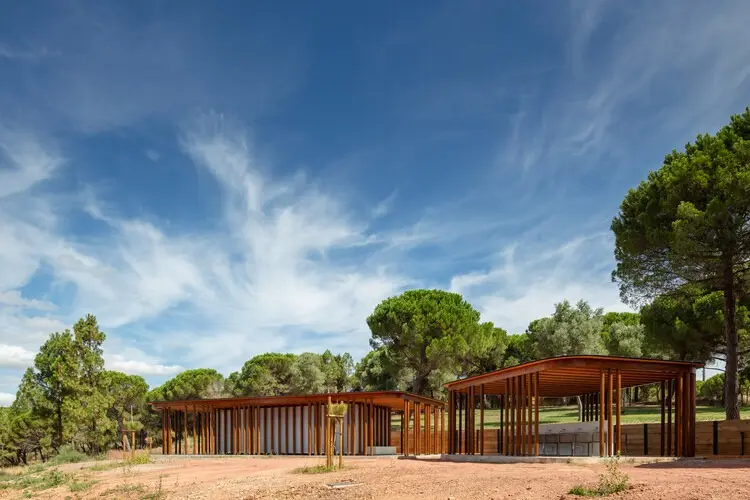
VILA FRANCA DE XIRA, PORTUGAL — In an era where modern youth spend an unprecedented amount of time indoors and digitally connected, municipal leaders and visionary architects are pushing back. The Municipality of Vila Franca de Xira, in a strategic partnership with acclaimed studio Plano Humano Arquitectos, has officially completed the Mata do Paraíso Scout Park (Parque Escu(o)tista da Mata do Paraíso). Curated by Susanna Moreira, this striking development stands as a testament to what happens when civic investment meets thoughtful, landscape-sensitive design.
Captured through the lens of architectural photographer João Morgado, the project spans an extensive visual and spatial vocabulary across a 27-image portfolio. Designed to bridge the historical deficit of dedicated scouting infrastructure within the region, the park provides a much-needed haven for youth development, outdoor education, and community engagement. Co-financed by Portugal’s post-pandemic Recovery and Resilience Plan (PRR), the Mata do Paraíso Scout Park represents a progressive model for civic architecture, marrying environmental stewardship with functional, human-centric design.
Main Facts: A Holistic Sanctuary for Scouting
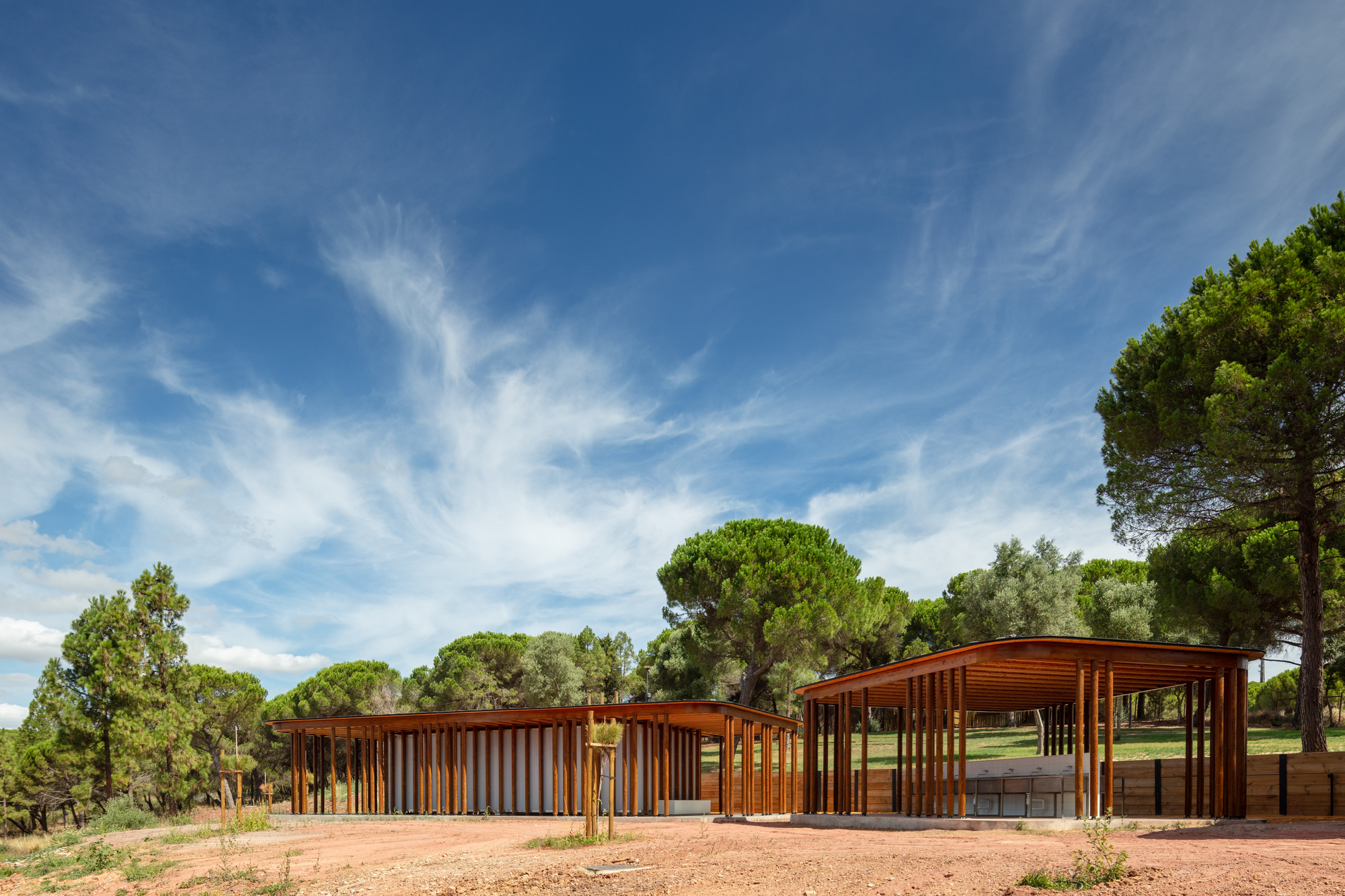
The Mata do Paraíso Scout Park is not merely a collection of cabins and open fields; it is a masterclass in integrating built structures into a sensitive ecological context. Located within the lush, verdant terrain of Mata do Paraíso, the project was conceptualized to address a chronic shortfall in local facilities capable of hosting scouting groups, leadership camps, and outdoor educational initiatives.
- Project Name: Mata do Paraíso Scout Park (Parque Escu(o)tista da Mata do Paraíso)
- Architecture Firm: Plano Humano Arquitectos
- Location: Vila Franca de Xira, Portugal
- Promoting Authority: Municipality of Vila Franca de Xira
- Funding: Co-financed by the Recovery and Resilience Plan (PRR)
- Curator: Susanna Moreira
- Photographer: João Morgado
- Completion/Publication Date: September 15, 2026
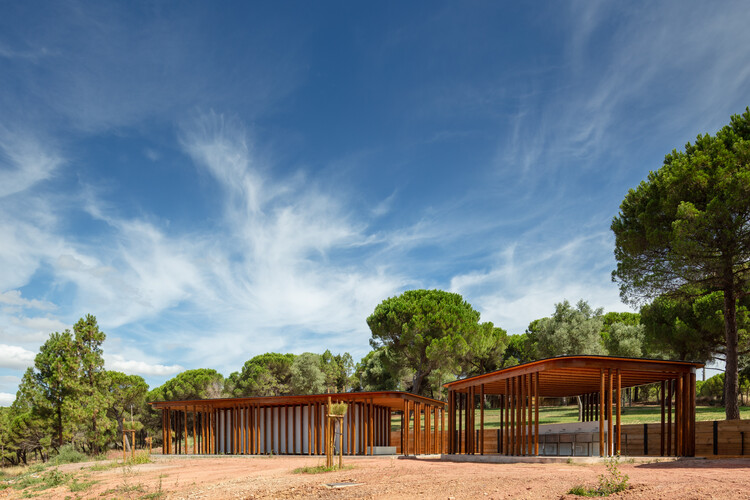
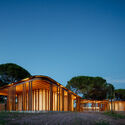
The design philosophy spearheaded by Plano Humano Arquitectos revolves around minimalism, sustainability, and respect for the natural topography. By utilizing timber frames, elevated boardwalks, and low-impact foundations, the architecture steps lightly upon the earth, ensuring that the surrounding woodland remains the primary protagonist of the site. The structures function seamlessly as gathering spaces, operational hubs for camp leaders, and weather-resistant shelters, enabling year-round programming regardless of Portugal’s seasonal shifts.
Chronology: From Concept to Completion
The realization of the Mata do Paraíso Scout Park is the culmination of years of municipal lobbying, architectural planning, and strategic funding allocation.
- Phase 1: Identifying the Need (Pre-2023): For decades, local scouting groups in Vila Franca de Xira struggled with fragmented, outdated, or outright missing infrastructure. While the region boasted rich natural landscapes like Mata do Paraíso, the lack of sanitary facilities, secure storage, and permanent gathering shelters severely limited the scale and duration of youth camps.
- Phase 2: Securing Funding and Commissioning (2023–2024): Recognizing the socio-educational value of scouting, the Municipality of Vila Franca de Xira prioritized the project. Leveraging capital from the national Recovery and Resilience Plan (PRR)—a financial injection designed to modernize public infrastructure and boost resilience following global economic disruptions—the city launched an official commission. Plano Humano Arquitectos was selected to lead the design due to their reputation for contextual sensitivity and clean material expression.
- Phase 3: Design and Environmental Integration (2024–2025): Plano Humano Arquitectos engaged in extensive site mapping to ensure construction would not disrupt local flora and fauna. The architectural team drafted master plans that favored modular, prefabricated timber components to reduce construction waste and site disturbance.
- Phase 4: Construction and Finalization (2025–Late 2026): Physical construction progressed rapidly thanks to the efficient timber-framing techniques employed. Following rigorous safety checks, accessibility audits, and environmental compliance reviews, the park reached completion, culminating in its official public showcase in September 2026.
Supporting Data: Funding, Metrics, and Materiality
Understanding the scope of the Mata do Paraíso Scout Park requires looking closely at the logistical and financial data underpinning the development.
- Economic Catalyst: The injection of funds from the Recovery and Resilience Plan (PRR) underscores a broader European trend of utilizing recovery funds not just for roads and bridges, but for social infrastructure that enhances community well-being and mental health.
- Material Palettes: The project heavily features sustainably sourced regional timber, minimizing the carbon footprint traditionally associated with civic construction projects. Steel connectors and concrete footings are kept to a strict minimum, ensuring reversibility—a core tenet of modern sustainable architecture.
- Spatial Capacity: Designed to accommodate multiple scouting troops simultaneously, the park features segregated yet interconnected zones for camping, communal dining, educational seminars, and administrative command posts.
Official Responses and Civic Perspectives
The unveiling of the Mata do Paraíso Scout Park has drawn praise from municipal leaders, architectural critics, and youth organizations alike.
Representatives from the Municipality of Vila Franca de Xira emphasized the long-term vision behind the investment. In municipal statements regarding the PRR-funded initiatives, local officials highlighted that empowering youth through structured outdoor activities is a direct investment in the region’s social fabric. "We are not just building wooden shelters; we are building the future leaders of our community," municipal stakeholders noted during early planning phases. "Infrastructure must serve human development, and there is no better place to foster resilience, teamwork, and environmental consciousness than in the heart of nature."
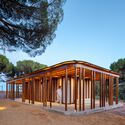
Architectural critics have similarly lauded Plano Humano Arquitectos for resisting the temptation to over-engineer the site. Instead of imposing an urban aesthetic onto a rural landscape, the firm allowed the architecture to dissolve into the forest canopy. Susanna Moreira’s curation of the project highlights how the clean lines of the pavilions contrast yet harmonize with the organic, chaotic beauty of the surrounding trees.
Local scouting chapters have expressed immense relief and excitement over the new facilities. For years, troop leaders had to pack down equipment daily or rely on temporary tents that offered little protection against harsh weather. The new park provides a secure, permanent basecamp that validates scouting as an essential pillar of extracurricular education.
Implications: A Blueprint for Regional Youth Architecture
The completion of the Mata do Paraíso Scout Park carries significant implications for future civic projects across Portugal and the broader European Union.
- Redefining Civic Infrastructure: For too long, municipal budgets have favored hard urban spaces—concrete plazas, parking garages, and administrative offices. The success of this project proves that soft infrastructure (parks, environmental education centers, and youth camps) deserves equal prioritization, especially when backed by macro-economic tools like the PRR.
- A New Standard for Sustainable Forestry Integration: By demonstrating that large-scale community spaces can be built within protected woodlands without degrading the ecosystem, Plano Humano Arquitectos has set a high benchmark for eco-architecture. Future developers looking to build in natural reserves will likely look to Mata do Paraíso as a case study in low-impact construction.
- Revitalizing the Scouting Movement: In an era marked by digital fatigue and rising rates of sedentary behavior among youth, physical infrastructure that entices children and teenagers back into the outdoors is invaluable. By providing high-quality, dignified spaces for scouting, Vila Franca de Xira has created a thriving template for youth engagement that other municipalities would do well to replicate.
Ultimately, the Mata do Paraíso Scout Park transcends its physical boundaries. It stands as a physical manifestation of trust in the younger generation—a quiet, beautifully crafted sanctuary where future generations can learn, explore, and grow under the canopy of the Portuguese forest.
