

Main Facts: The Next Evolution in Cordless Lawn Care
For homeowners struggling to maintain a vibrant, lush, and deeply green lawn, the secret often lies beneath the surface. Over time, dead grass, moss, and roots—collectively known as thatch—accumulate between your green turf and the underlying soil. Left unmanaged, this dense mat acts as a barrier, choking out essential water, sunlight, and nutrients. To combat this, homeowners have traditionally relied on back-breaking manual rakes or loud, messy, gas-powered dethatchers.
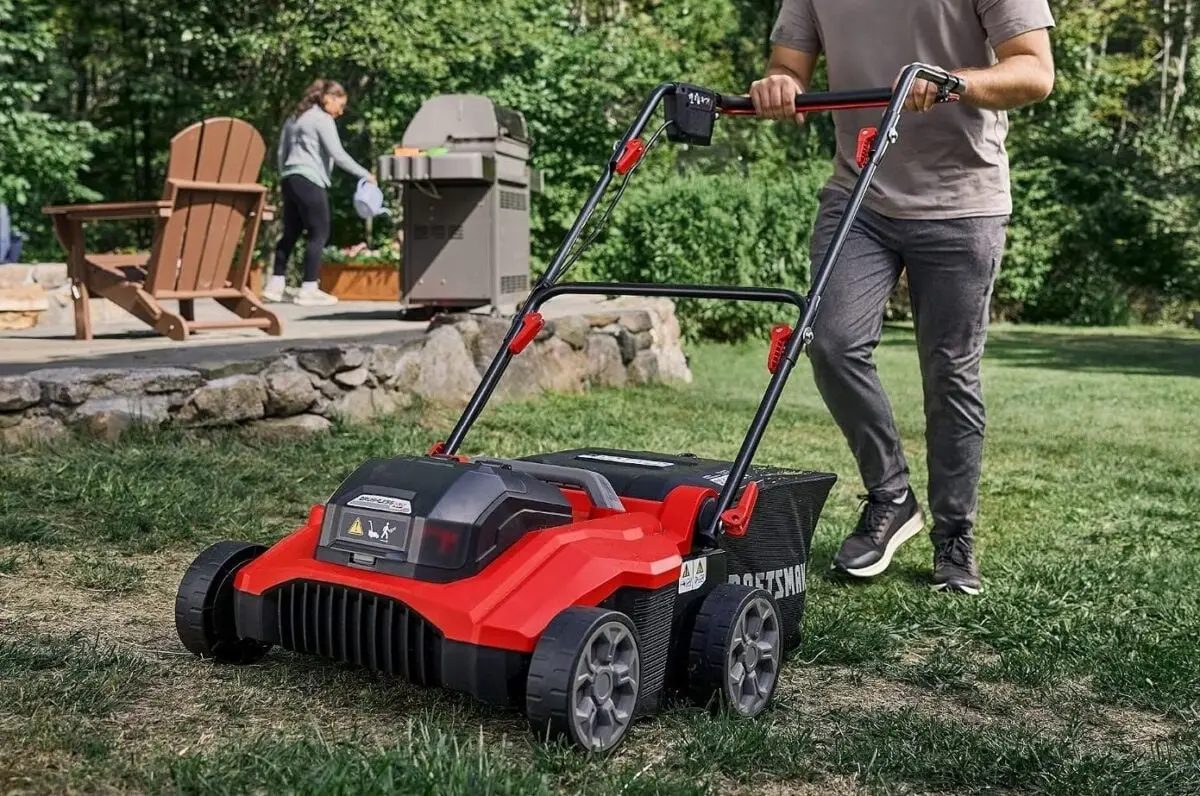
Enter the modern era of battery-powered yard maintenance. The Craftsman V20 Cordless Dethatcher and Scarifier (Model: CMCOE210P2) steps into the market as a versatile, dual-function, DIY-friendly solution designed to restore lawns to their former glory without the hassles of gas, oil, cords, or emissions.
As part of the expanding Craftsman V20 ecosystem, this walk-behind machine combines a dethatching roller and a scarifying blade into a single unit. Utilizing a tool-free attachment system, it allows users to effortlessly switch between gentle surface-level debris removal and deeper soil-penetrating aeration. Powered by a dual-battery setup yielding 40 volts of total output from two V20 packs, the unit promises up to 45 minutes of continuous runtime—making it an optimal choice for small-to-medium residential properties up to a quarter-acre in size.
Priced at $399 for the complete kit (which includes the tool, two 5.0Ah batteries, dual chargers, both attachments, a 50L collection bag, and a robust 3-year warranty), the Craftsman V20 Dethatcher aims to bridge the gap between heavy-duty commercial equipment and accessible homeowner solutions.
Chronology: The Seasonal Routine of Lawn Revival
Understanding when and how to use a dethatcher is crucial for maximizing its benefits without damaging your grass. The lifecycle of a lawn maintenance routine dictates specific windows for seasonal interventions like dethatching and scarifying.
Spring and Fall: The Prime Windows
Agronomists and turf management experts generally recommend dethatching and scarifying once a year, typically in the spring or early fall when the grass is in its peak growing season.
- Early Spring: As winter thaws, your lawn emerges from dormancy. This is an ideal time to clear away winter-killed turf and debris, allowing the emerging grass shoots to absorb spring rains and fertilizers efficiently.
- Early Fall: Alternatively, early autumn offers warm soil temperatures combined with cooler air and regular rainfall—ideal conditions for grass recovery. Dethatching during this window prepares the turf for overseeding, helping new grass roots establish before winter sets in.
The Operation Timeline
When deployed during these optimal seasonal windows, the Craftsman V20 Dethatcher operates on a straightforward timeline:
- Preparation: Mow your lawn to a slightly lower height than normal and ensure the grass is dry to prevent clumping.
- The Pass (Dethatching or Scarifying): Depending on thatch buildup, the user selects either the spring-tine dethatcher for surface cleaning or the steel-bladed scarifier for deeper soil slicing. Making uniform, overlapping passes across the lawn clears out decades of trapped organic matter.
- Collection: Debris is automatically swept up into the integrated 50-litre collection bag or discharged out the rear chute for subsequent raking and composting.
- Post-Treatment Recovery: Because dethatching can temporarily leave a lawn looking sparse or torn up, this phase involves immediate overseeding, fertilizing, and watering. Within two to three weeks, fueled by improved airflow and nutrient absorption, the lawn bounces back thicker, greener, and healthier than before.
- Storage: Once the seasonal task is complete, the user folds down the handlebar mechanism, tucks the unit into a compact corner of the shed, and slides the V20 batteries back into regular rotation for mowers, trimmers, or drills.
Supporting Data: Specifications and Performance Metrics
When evaluating yard care tools, performance data dictates whether a machine is a worthwhile investment. The Craftsman V20 Dethatcher/Scarifier brings a robust set of specifications to the table, tailored specifically for suburban and urban residential lots.
Technical Specifications Breakdown
- Power Source: Craftsman V20 Lithium-Ion Battery Platform (requires two active batteries simultaneously for 40V performance).
- Included Power Kit: Two 5.0Ah V20 batteries and dual chargers.
- Maximum Runtime: Up to 45 minutes per charge (dependent on load, turf density, and attachment used).
- Working Width (Swath): 14 inches, balancing maneuverability in tight garden corners with efficient coverage over open turf.
- Dethatching Depth (Spring Tines): Reaches between 3mm and 6mm deep to gently tease out surface thatch, moss, and dead clippings.
- Scarifying Depth (Steel Blades): Reaches between 6mm and 12mm deep to slice into the upper layer of compacted soil, prune lateral grass roots, and clear pathways for water and seed penetration.
- Debris Management: 50-liter semi-rigid collection bag included; rear-discharge capability available when operating bagless.
- Storage Dimensions: Features a quick-release folding handle mechanism for vertical or compact horizontal storage.
- Warranty: 3-year limited manufacturer warranty.
Analyzing the Dual-Attachment Mechanics
The true value proposition of the Craftsman V20 unit lies in its versatility. Many entry-level machines force consumers to choose between a light dethatcher (which only scratches the surface) and a heavy scarifier (which can excessively stress a delicate lawn).
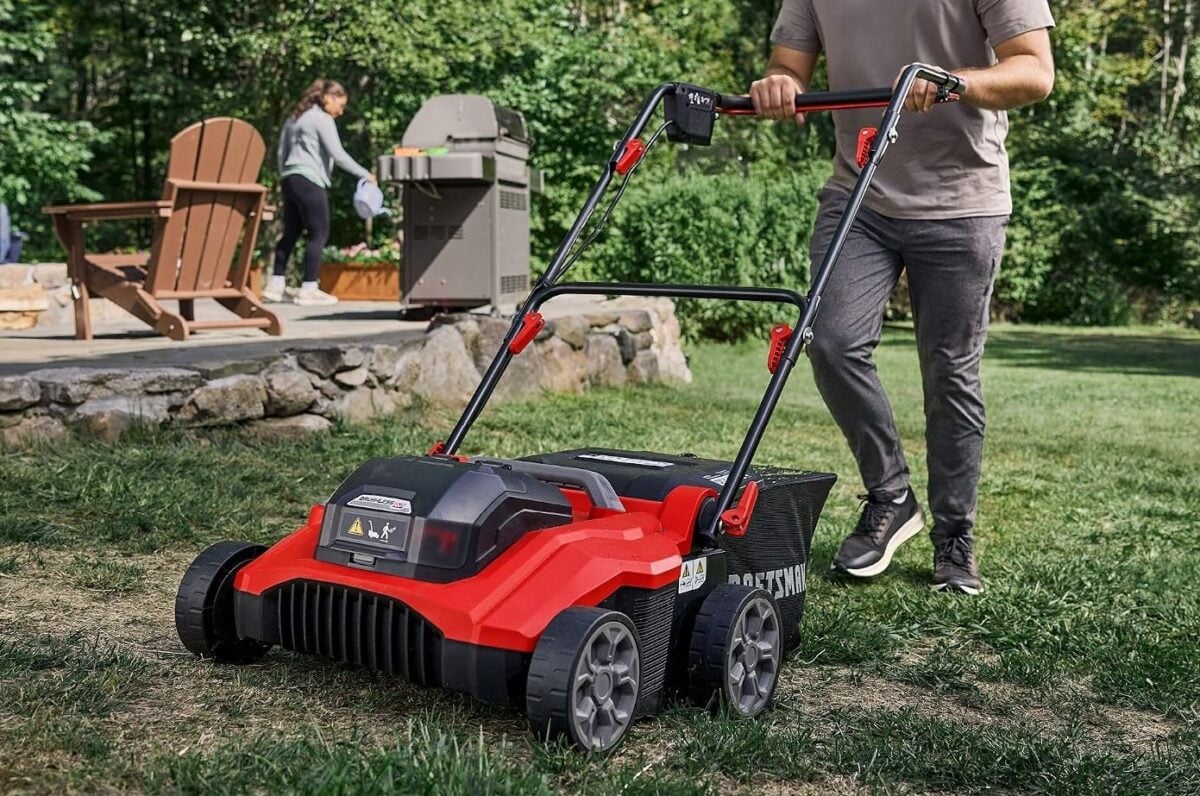
- The Dethatcher Roller: Utilizes flexible steel spring tines. These tines flick through the canopy, lifting dead debris without tearing live root systems. It is best deployed when thatch layers exceed 1/2 inch in thickness.
- The Scarifier Roller: Employs rigid steel blades that rotate to cut vertically into the soil. This process, often called vertical mowing, breaks up surface crusts, combats soil compaction caused by heavy foot traffic or pets, and naturally divides thick turf clumps to encourage spreading.
By utilizing a tool-free changing mechanism, operators can transition from a gentle spring clean to a robust soil aeration process in under two minutes.
Official Responses and Industry Context
Lawn care industry analysts and tool reviewers have closely monitored the shift toward battery-powered outdoor power equipment (OPE). For years, gas engines dominated the dethatching category due to the sheer torque required to drag tines through dense turf. However, recent advancements in brushless motor technology and high-capacity lithium-ion battery cells (such as Craftsman’s V20 line) have closed the performance gap.
The Manufacturer’s Perspective
Craftsman positions its V20 Dethatcher as an essential lifestyle tool rather than an everyday gadget. Company representatives emphasize that seasonal property maintenance should not require the maintenance headaches associated with small gas engines—no mixing fuel, no fouled spark plugs, and no pull-cords that refuse to cooperate after sitting idle through the winter.
Furthermore, Craftsman has heavily leaned into cross-compatibility. By designing the dethatcher to run on the exact same V20 batteries that power their drills, leaf blowers, hedge trimmers, and lawnmowers, the brand addresses a common consumer complaint: the financial burden of accumulating brand-specific batteries and chargers for single-use seasonal tools. If the dethatcher is stored for ten months out of the year, its power sources remain in active weekly use around the house.
Expert and Consumer Feedback
Professional landscape reviewers note that while a 14-inch cutting width is appropriately sized for yards up to 0.25 acres, owners of sprawling multi-acre properties will likely find the runtime and capacity limiting. However, for the target demographic—suburban homeowners with standard suburban lot sizes—the machine hits a sweet spot.
Users praise the quiet operation relative to gas units, the absence of exhaust fumes, and the ease of storage. The inclusion of the 50-liter collection bag is also frequently cited as a major time-saver, reducing the immense manual labor of raking up windrows of pulled thatch by hand.
Implications: Is the Craftsman V20 Dethatcher Right for Your Yard?
Investing in lawn care equipment requires balancing financial costs against long-term property value and curb appeal. At a retail price point of $399, the Craftsman V20 Dethatcher/Scarifier is an investment that warrants careful consideration.
Financial and Practical Implications
- Cost vs. Professional Services: Hiring a local landscaping crew to aerate and dethatch a standard yard typically costs between $150 and $300 per visit. Purchasing a $399 unit means the tool pays for itself within two to three seasons of self-performed maintenance, assuming basic property upkeep.
- Ecosystem Synergy: For consumers already invested in the Craftsman V20 platform, the barrier to entry is exceptionally low. Even if purchased as a bare tool (if available) or as a kit, the shared battery utility prevents hardware from sitting as dead capital in your garage.
- Property Health Transformation: The broader implication of regular dethatching is a dramatic reduction in chemical fertilizer and water waste. When thatch is removed, water penetrates directly to the root zone rather than evaporating or running off the surface. Consequently, lawns require less frequent irrigation and respond much more efficiently to granular fertilizers.
Potential Drawbacks to Consider
- Storage Limitations for Non-Users: If you do not currently own Craftsman V20 tools, buying into a new battery platform solely for a tool used once or twice a year requires a deliberate commitment.
- Physical Effort Required: While cordless electric power eliminates engine weight and vibration, walking behind a utility machine across an entire lawn still requires physical exertion, particularly when the 50L collection bag fills rapidly with dense, wet thatch.
- Lawn Recovery Period: Homeowners must be mentally prepared for how their lawn looks immediately after a deep scarification pass. The yard will often look worse before it looks better, requiring patience, watering, and sometimes overseeding to restore uniform green coverage.
Final Verdict
For the dedicated homeowner taking pride in a pristine green lawn, the Craftsman V20 Cordless Dethatcher and Scarifier represents a compelling, eco-friendly, and highly functional addition to the garden shed. By combining dual-attachment versatility, cross-compatible battery power, and a thoughtfully designed walk-behind chassis, it transforms what was once a grueling seasonal chore into a manageable, straightforward weekend project.
