

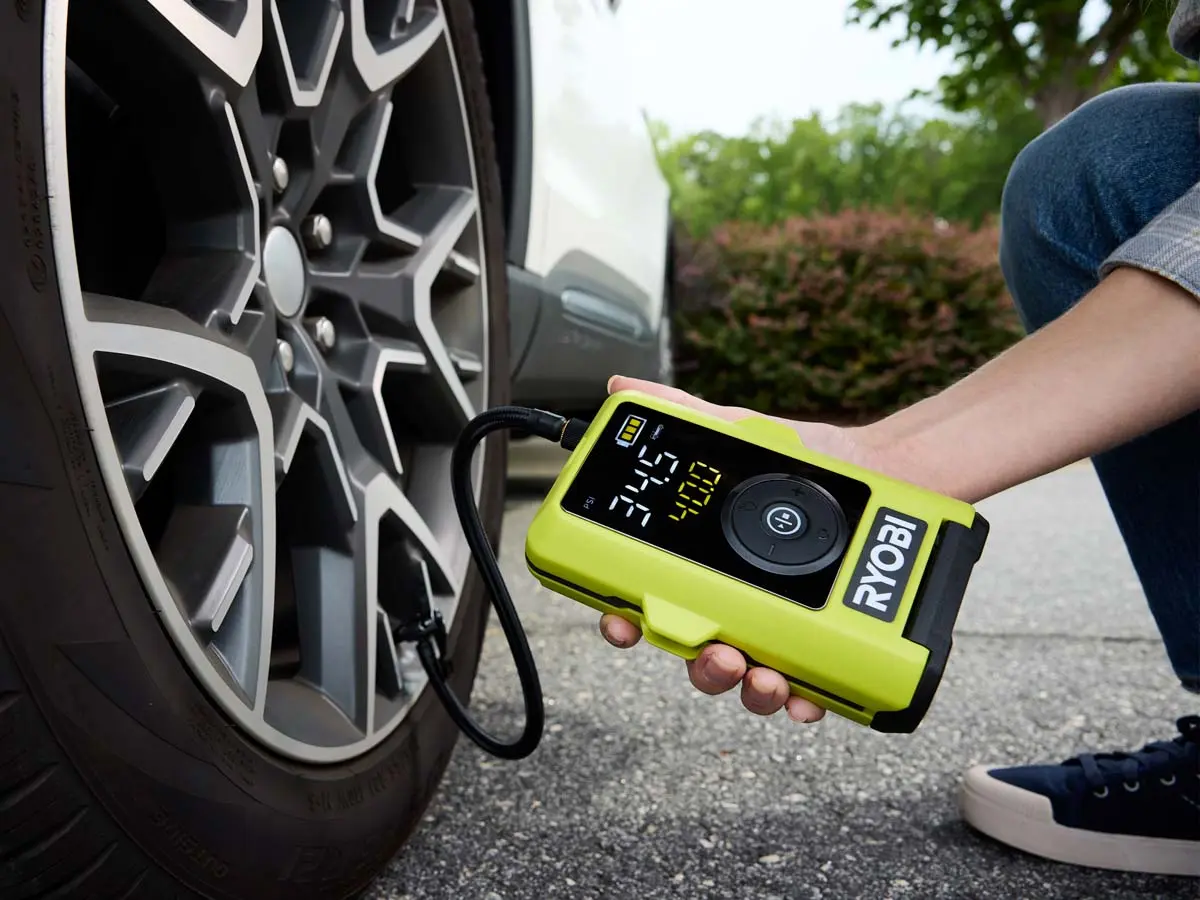
ORANGE COUNTY, Calif. — For years, portable air compressors have been a staple of roadside emergency kits, garage workbenches, and truck beds. Among the most trusted names in the consumer tool space, Ryobi has consistently innovated in this category, offering everything from heavy-duty 18V ONE+ shop inflators to ultra-portable USB solutions.
Just in time for the bustling fall recreation and travel season, Ryobi has announced the upcoming release of two new compact inflators designed to bridge the gap between heavy-duty workshop tools and pocket-sized convenience. Officially slated to hit Home Depot shelves in October, these new additions—the Ryobi USB Lithium Smart Tire Inflator (FVIF52K) and the Ryobi Rechargeable Tire Inflator (FVIF01K)—promise high-pressure performance in a remarkably small footprint.
While both units share a maximum pressure ceiling of 150 PSI and identical speed benchmarks, they cater to slightly different consumer needs through distinct power delivery systems. Here is an exhaustive breakdown of what to expect from Ryobi’s latest portable air solutions, including performance metrics, standout features, and ideal use cases.
Main Facts: What You Need to Know
Ryobi’s two new fall releases are designed to target outdoor enthusiasts, commuters, and weekend warriors who require precise inflation capabilities without the bulk of traditional air compressors.
- High-Pressure Capability: Both models boast a maximum pressure of 150 PSI, marking a significant 50 PSI performance increase over Ryobi’s preceding USB Lithium inflator model (FVIF51K).
- Rapid Inflation Speed: Engineered for quick top-offs, both units can transition a standard car tire from 30 to 35 PSI in approximately 90 seconds.
- Runtime: Users can expect up to eight tire top-offs on a single charge.
- Smart Technology: Both inflators are equipped with intelligent memory presets tailored for cars, bicycles, motorcycles, and sports equipment.
- Availability: The units are scheduled for retail release at Home Depot beginning in October.
Chronology and Product Evolution: The Road to the Fall Launch
Ryobi’s journey into compact, battery-powered inflation has been steady. For long-time users of the brand, inflators have shifted from corded 12V automotive plugs that drain car batteries to flexible, cordless 18V systems. However, the rise of the Ryobi USB Lithium platform signaled a shift toward true pocket- and glovebox-sized engineering.
- Early Generations: Ryobi first established dominance in the segment with its versatile 18V ONE+ inflators, prized for heavy-duty volume and high-pressure tasks alike, though they remained too bulky for cyclists or minimalist travelers.
- The USB Lithium Shift: The introduction of the modular USB Lithium battery platform allowed Ryobi to scale down tool sizes significantly, leading to earlier iterations like the FVIF51K.
- August 2026: Ryobi officially unveiled the next evolutionary step: two compact units featuring boosted 150 PSI capabilities, digital smart memory, and enhanced travel-friendly designs.
- October 2026 (Upcoming): The official retail launch at Home Depot stores nationwide, introducing models FVIF52K and FVIF01K to the consumer market.
Supporting Data & Model Breakdown
While the two new inflators share identical pneumatic guts, their hardware ecosystems and pricing structures set them apart.
1. Ryobi USB Lithium Smart Tire Inflator (Model FVIF52K)
- Price: $79.97
- Warranty: 2-Year Manufacturer’s Warranty
- Power Source: Swappable Ryobi USB Lithium batteries (Kit includes two batteries).
- Key Advantage: Modular battery ecosystem. Because the kit includes two swappable USB Lithium batteries, users effectively double their field runtime to 16 tire top-offs right out of the box. Furthermore, these batteries can be used to power other devices in the Ryobi USB Lithium lineup.
2. Ryobi Rechargeable Tire Inflator (Model FVIF01K)
- Price: $49.97 (A $30 savings compared to the lithium kit)
- Warranty: 1-Year Manufacturer’s Warranty
- Power Source: Integrated, built-in rechargeable battery.
- Bonus Features: Includes a pinch valve adapter (absent in the USB model) and features dual USB ports, allowing the unit to double as a power bank to charge mobile devices like smartphones on the go.
- Limitation: Once the integrated battery is depleted, users must wait for the unit to recharge before continuing work, as batteries cannot be swapped out in the field.
Shared Performance Metrics
- Car Tire Top-Off (30–35 PSI): 90 seconds.
- Max Pressure: 150 PSI.
- Standard Charge Capacity: Up to 8 tire top-offs per charge cycle.
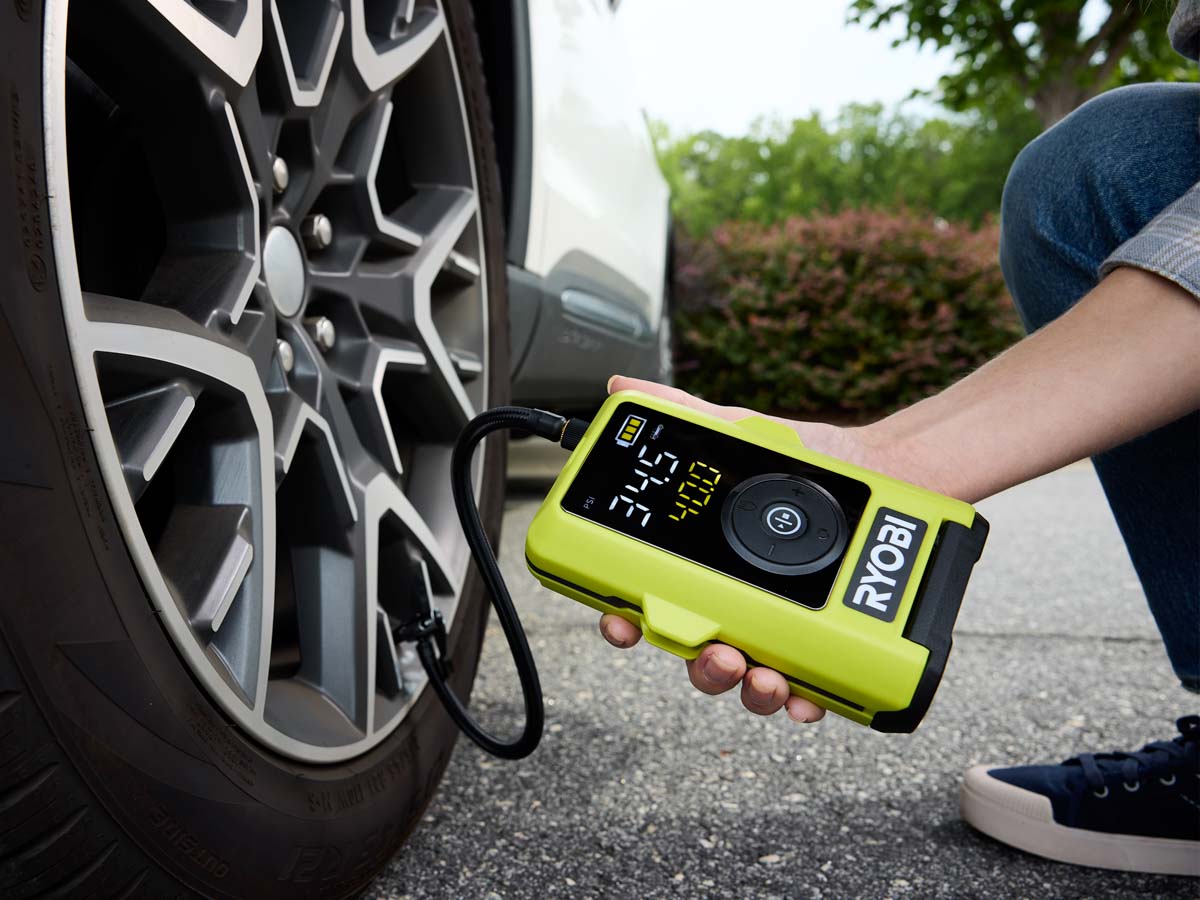
- Shared Features: Auto shut-off technology, oversized easy-to-read digital display, integrated LED work light for roadside emergencies, and onboard accessory storage.
Official Perspectives and User Ergonomics
According to initial field evaluations and manufacturer notes, Ryobi is marketing these devices as "ultimate travel necessities." While that moniker might be subjective depending on individual travel habits, the practical design choices embedded in both units speak directly to common pain points in tire maintenance.
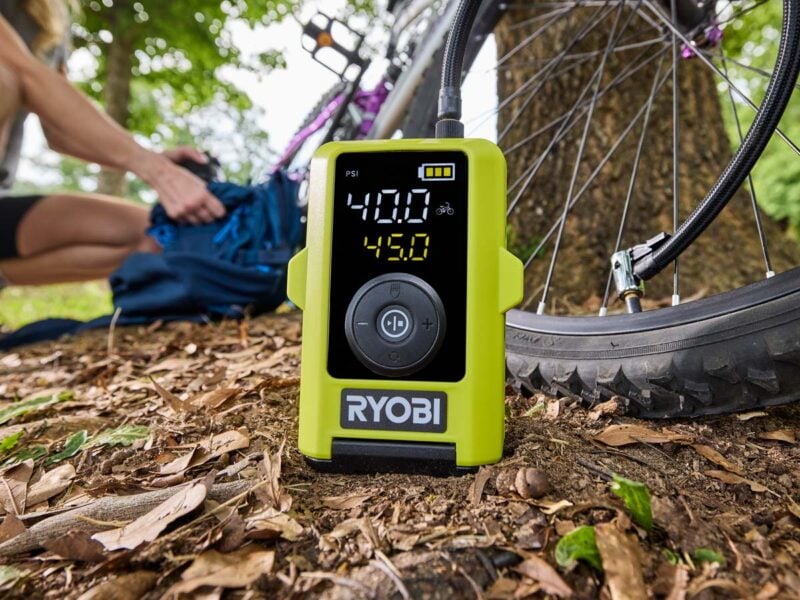
The standout inclusion on both models is the smart memory preset system. For commuters, cyclists, or parents constantly inflating sports balls, cycling through pressure targets can be tedious. The ability to program and recall preferred PSI levels for cars, bicycles, motorcycles, and balls with the touch of a button dramatically streamlines the workflow.
Additionally, the incorporation of bright LED work lights ensures that nighttime roadside top-offs or early morning trail preparations are conducted safely and efficiently, eliminating the dangerous juggle of holding a smartphone flashlight while attaching a valve chuck.
Implications and Market Analysis: Who Should Buy One?
With the flood of portable air pumps currently on the consumer market—ranging from cheap online mystery brands to premium automotive tool systems—where do Ryobi’s new offerings land, and who stands to benefit the most?
The Ideal User: Cyclists, Commuters, and Sports Enthusiasts
For road warriors, motorcyclists, and cyclists, these inflators hit a sweet spot. While traditional floor pumps remain king in the garage, keeping a compact unit in a car’s glovebox or a bikepacking/gravel-biking backpack provides immense peace of mind. Mountain bikers and gravel riders who already carry frame packs or hydration backpacks will find the size negligible compared to the utility of effortless, precise inflation at the trailhead.
The Limitation: Full Tire Inflations and Heavy Vehicles
Buyers must manage expectations regarding physical limitations. These are designed fundamentally as top-off tools, not heavy-duty recovery compressors.
- Trucks and SUVs: While owners of larger vehicles can certainly use these units, larger tire volumes demand more air. Truck owners eyeing these models should lean toward the USB Lithium Smart Tire Inflator (FVIF52K) specifically because its swappable dual-battery system allows users to swap power sources on the fly if a large tire demands extended runtime.
- Off-Road Recovery: If you are overlanding, rock crawling, or driving deep into remote areas where a complete tire blowout or unseating could leave a tire completely flat, a compact USB inflator is not the right tool. For catastrophic air loss or heavy off-road reinflation, Ryobi’s heavier-duty 18V ONE+ inflator lineup remains the superior choice due to its massive thermal capacity and robust battery reserves.
Final Verdict
Ryobi’s upcoming October release proves that good things come in small packages. Priced competitively at $49.97 for the integrated model and $79.97 for the modular lithium kit, these inflators deliver a potent blend of speed, smart digital control, and pocket-sized portability that will undoubtedly find a permanent home in thousands of vehicles, backpacks, and garages this fall.
