

By Global Tech & Audio Desk
Published: September 2026
Main Facts
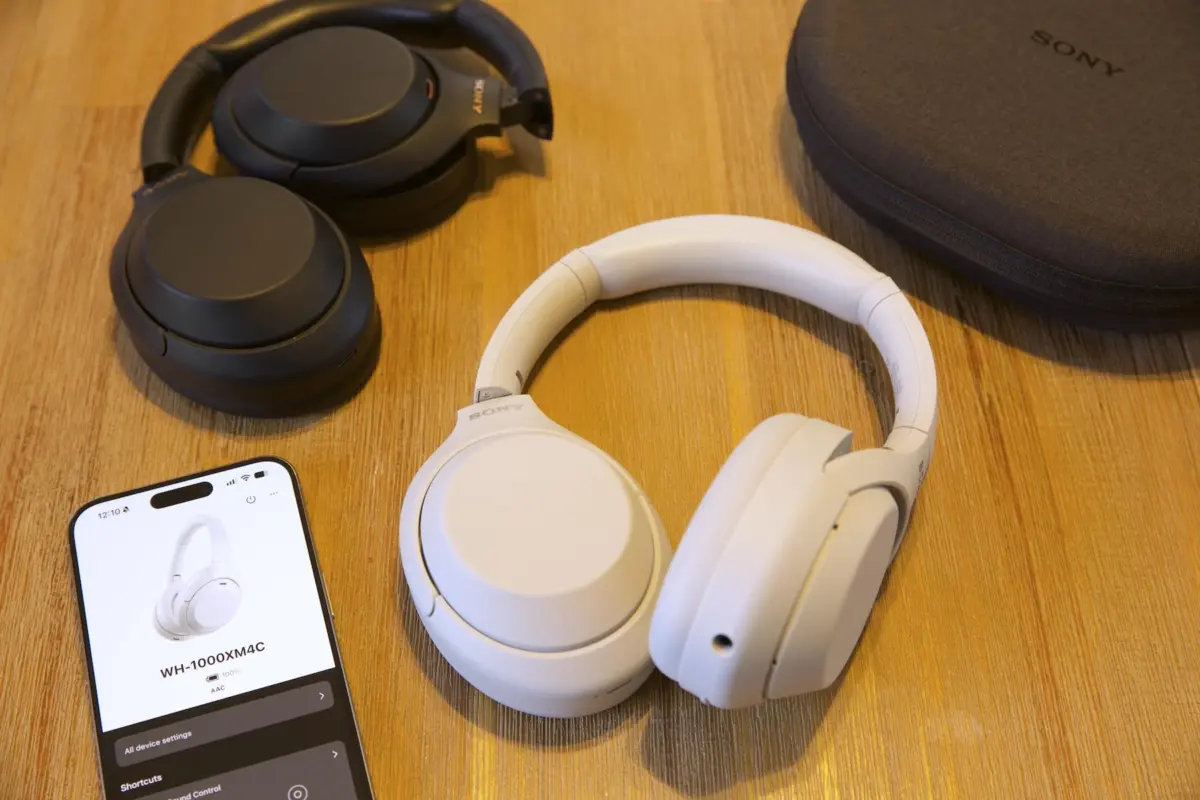
In a move that has surprised the consumer audio industry, Sony has officially brought back one of its most celebrated and enduring audio products: the over-ear noise-canceling headphones originally launched in the fall of 2020. Rechristened as the Sony WH-1000XM4C, this refreshed classic retains the much-loved compact, foldable design and core hardware of its predecessor while incorporating minor modernizations to its software, Bluetooth standard, and color palette—most notably introducing a striking new lavender option.
Priced at $300 and slated for release later this fall, the XM4C sits awkwardly in Sony’s modern lineup. It arrives years after newer iterations like the XM5 (released in 2022) and last year’s cutting-edge XM6. While the original XM4 famously dominated "best headphones" lists for years due to its stellar active noise cancellation (ANC), great sound profile, and travel-friendly folding hinges, the re-release forces audiophiles and tech enthusiasts alike to question whether looking backward is a viable strategy in a fast-evolving portable audio market.

Simultaneously, Sony announced refreshes to its budget-friendly and midrange lineups with the WH-CH730N and WH-CH530 headphones. These entry-level entries bring software upgrades, extended battery life, and—in the case of the CH730N—a return to a foldable form factor. To top off the hardware announcements, Sony revealed an unexpected, limited-edition Hello Kitty partnership bundle, pairing select headphones with custom-shaped carrying pouches and branded bags available exclusively through Sony’s web store later this year.
Chronology: The Evolution of Sony’s Flagship Over-Ears
To understand the context of the WH-1000XM4C’s resurrection, it is helpful to look back at the historical trajectory of Sony’s premium wireless headphone portfolio over the past six years:
- Fall 2020: Sony launches the WH-1000XM4 during the height of the consumer noise-canceling wars with Bose. Featuring the QN1 chip, dual-noise sensor technology, and a heavily requested collapsible hinge design, it instantly captures market share and sets a new industry standard.
- 2022: Sony breaks with tradition by releasing the WH-1000XM5. While it introduces an upgraded microphone array (eight mics compared to the XM4’s four) and an improved aesthetic, it drops the iconic folding hinge, drawing mixed reactions from commuters and travelers who valued portability.
- Last Year (2025): Sony debuts the WH-1000XM6, featuring 12 microphones, the advanced QN3 processor, and a slightly more compact chassis that partially restores the portability lost with the XM5.
- Present Day (September 2026): Sony officially announces the WH-1000XM4C, reviving the discontinued XM4 body style with minor internal tweaks, Bluetooth 6 support, and a $300 launch price point. Alongside this, the WH-CH730N, WH-CH530, and Hello Kitty bundles are unveiled.
Supporting Data & Technical Specifications
While the exterior silhouette of the WH-1000XM4C is virtually indistinguishable from the 2020 original—save for the fresh lavender colorway—its internal components bridge a gap between legacy hardware and current software ecosystems.

WH-1000XM4C Technical Breakdown
- Processor & ANC Hardware: Utilizes the legacy QN1 processing chip paired with a four-microphone system. By modern standards, this hardware is dated; the XM5 utilized eight microphones with the same chip, while the current XM6 relies on 12 microphones and the modern QN3 chip.
- Connectivity: Upgraded to Bluetooth 6, ensuring a more stable, lower-latency wireless connection compared to earlier standards.
- Audio Tuning & Software: Updated to match Sony’s contemporary sound profile. The companion Sony Headphones app now features a 10-band EQ (replacing the older 5-band configuration found on the original XM4) and includes a dedicated gaming EQ preset.
- Battery Performance: Surprisingly, battery longevity has seen a minor regression. Sony rates the XM4C for up to 27 hours of continuous playback with ANC enabled, down slightly from the 30-hour rating of the original XM4.
- Pricing: Set at $300, which positions it $50 lower than the launch price of the original XM4 in 2020, but significantly higher than the clearance pricing the original units commanded right before they were discontinued. It also undercuts the flagship XM6 by $100.
Midrange and Entry-Level Updates (WH-CH730N & WH-CH530)
- WH-CH730N ($180): Features active noise cancellation, a newly redesigned foldable hinge for compact storage, a 10-band EQ, a gaming preset, and a massive battery life boost of up to 50 hours with ANC. Available in black, blue, oat, white, and pink.
- WH-CH530 ($70): An entry-level, non-ANC option boasting up to 55 hours of battery life, a 10-band EQ, and a vibrant color lineup including black, cobalt, mint green, white, pink, and coral.
- Parental Safety Feature: Both budget-friendly models introduce a new "safe mode" within the app, allowing users to cap the maximum volume output—an ideal feature for safeguarding children’s hearing, though notably lacking a passcode lock once set.
Official Responses and Industry Context
Sony’s decision to resurrect a six-year-old headphone design has sparked widespread discussion across audio engineering circles and consumer tech forums. Industry analysts suggest that the move is a tactical response to persistent consumer demand for comfortable, foldable over-ear headphones at a sub-flagship price point.
When the XM5 abandoned the folding mechanism in favor of a rigid, swiveling ear-cup design, a vocal segment of Sony’s user base expressed disappointment, arguing that the trade-off in portability outweighed the ergonomic gains. By bringing back the XM4 chassis as the "XM4C," Sony appears to be catering directly to travelers and commuters who refuse to carry oversized hard cases.
However, audio reviewers and tech journalists have raised valid concerns regarding value proposition. With flagship-tier discounts frequently pushing newer models down in price—and with the XM5 currently retailing on promotion for around $200 as retailers clear inventory—asking $300 for a device running the aging QN1 processor and a 4-microphone ANC array is a bold gamble.

Sony’s representatives have defended the release as an opportunity to reintroduce a beloved classic tuned to modern acoustic standards, emphasizing that the addition of Bluetooth 6, a 10-band EQ, and fresh colorways make the XM4C a compelling choice for buyers who prioritize classic ergonomics over bleeding-edge noise cancellation.
Implications for Consumers and the Audio Market
The launch of the WH-1000XM4C carries several significant implications for the portable audio landscape:
- The Resurgence of Retro Ergonomics: The pivot back to foldable designs across both the flagship XM4C and the midrange CH730N signals that manufacturers are listening to user complaints about bulky modern carrying cases. Portability is once again taking center stage.
- Product Line Saturation: With the XM4C priced at $300, the XM5 hovering around discounted rates, and the XM6 commanding top dollar, Sony’s over-ear portfolio is more crowded than ever. Consumers face an increasingly complex matrix of price-to-performance choices.
- The Niche Appeal of Lifestyle Bundles: The limited-edition Hello Kitty collaboration—spanning the XM6, CH730N, and CH530—highlights Sony’s ongoing strategy to leverage pop-culture cross-branding to capture younger, lifestyle-driven demographic segments who view audio gear as a fashion accessory as much as a technical tool.
As review units land in the hands of critics, the ultimate verdict on the WH-1000XM4C will depend on whether its software tuning and nostalgic charm can compensate for hardware that, structurally and computationally, hails from a different era of consumer technology.
