

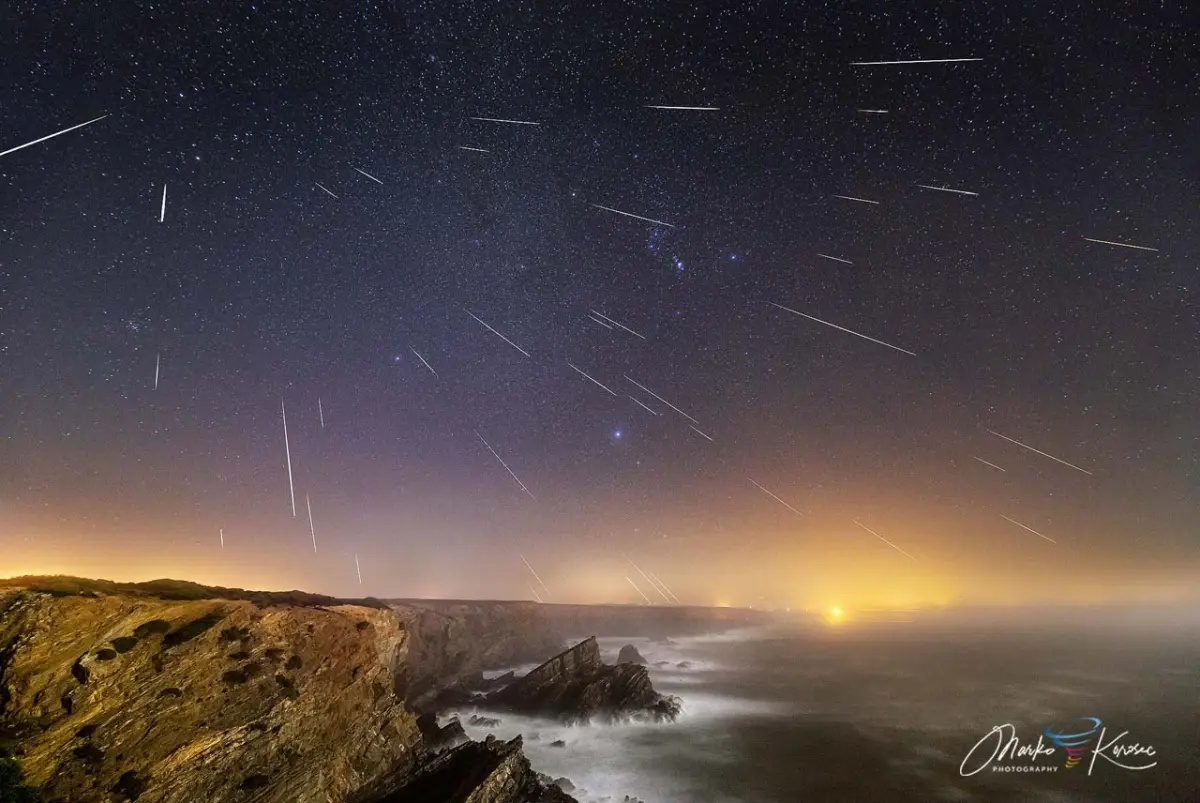
GLOBAL ASTROPHYSICS DESK — As summer reaches its zenith, stargazers, professional astronomers, and astrophotographers worldwide are preparing for one of the most anticipated celestial spectacles of the decade. The annual Perseid meteor shower is set to achieve its magnificent peak on the night of August 12 into the early hours of August 13, 2026.
Promising an astounding rate of up to 100 to 120 shooting stars per hour under ideal conditions, this year’s display is elevated to historic status. The peak coincides directly with the rare August 12 total solar eclipse sweeping across Greenland, Iceland, and Spain, creating a monumental 48-hour window of premier astronomical phenomena. Bolstered by a completely moonless night sky due to a perfectly timed New Moon phase, the 2026 Perseids offer optimal viewing conditions across Europe, North America, and beyond.

1. Main Facts: The Anatomy of the 2026 Perseids
The Perseids are more than just a passing astronomical curiosity; they are a finely tuned cosmic clockwork.
- The Parent Body: The meteors are actually microscopic dust particles—cosmic crumbs shed by the periodic comet 109P/Swift-Tuttle.
- Velocity and Altitude: As Earth plows along its orbit, these debris particles slam into our upper atmosphere at an astonishing speed of roughly 59 kilometers per second (about 132,000 mph). The friction vaporizes the particles at an altitude of approximately 100 kilometers, right at the edge of space.
- Hourly Rates (ZHR): Under pristine, dark-sky conditions, observers can anticipate a Zenithal Hourly Rate (ZHR) exceeding 100 meteors per hour. (The ZHR measures how many meteors a single observer would see in an hour if the radiant were directly overhead under skies showing stars down to magnitude 6.5).
- The New Moon Advantage: Unlike previous years where lunar glare washed out fainter streaks of light, the 2026 peak occurs precisely during a New Moon. This guarantees zero moonlight interference from dusk until dawn, allowing suburban and rural observers alike to capture fainter meteors that are usually invisible.
2. Chronology of the Event: When and How to Watch
While the Perseid meteor shower is active for weeks—ramping up steadily from mid-July through late August—its crescendo is concentrated into a tightly defined window.
The Timeline of the Peak
- Early August: Activity intensifies nightly, with increasing numbers of meteors streak across the northeastern sky as the constellation Perseus climbs higher.
- August 11–12 (Pre-Peak Nights): Elevated meteor counts begin to reward early observers, particularly during the post-midnight hours when Earth’s rotation turns into the oncoming stream of debris.
- August 12 (Daytime Spectacle): While Europe experiences the rare daytime total solar eclipse, nightfall heralds the true beginning of the meteor shower’s apex.
- August 13, 02:00 UTC (The Main Apex): The theoretical peak occurs at 2:00 UTC on August 13. This timing offers near-perfect conditions for European observers, who will witness the radiant climbing high into the sky during the dead of night. For North American stargazers, the peak occurs roughly six hours before local midnight, meaning the best rates will be observed during the pre-dawn hours of August 13 as the radiant ascends.
3. Supporting Data and Scientific Insights
To fully appreciate the Perseids, scientists look at both the physical mechanics of the debris stream and the optical physics of human observation.
Fireballs and Persistent Trails
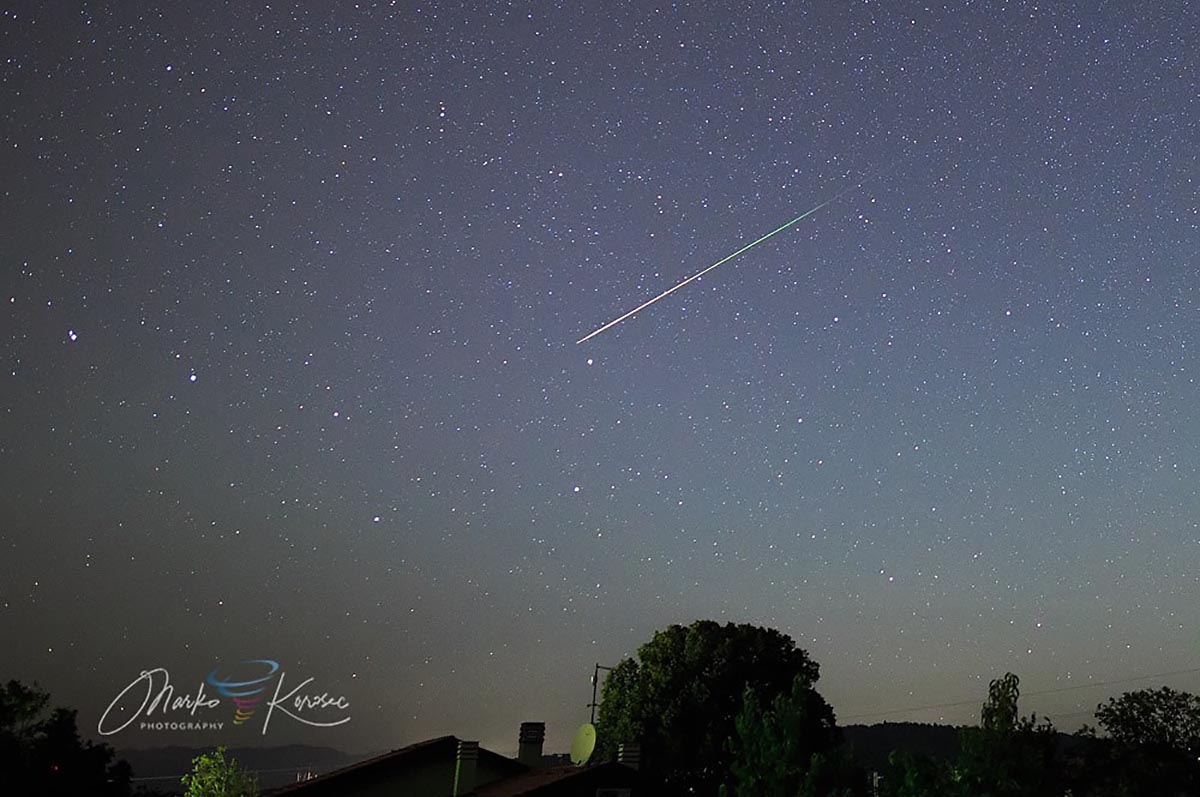
The Perseid shower is famously rich in bright, colorful meteors and dramatic fireballs—exceptionally bright meteors that outshine planets like Venus. These are typically generated by slightly larger meteoroids measuring several millimeters across.
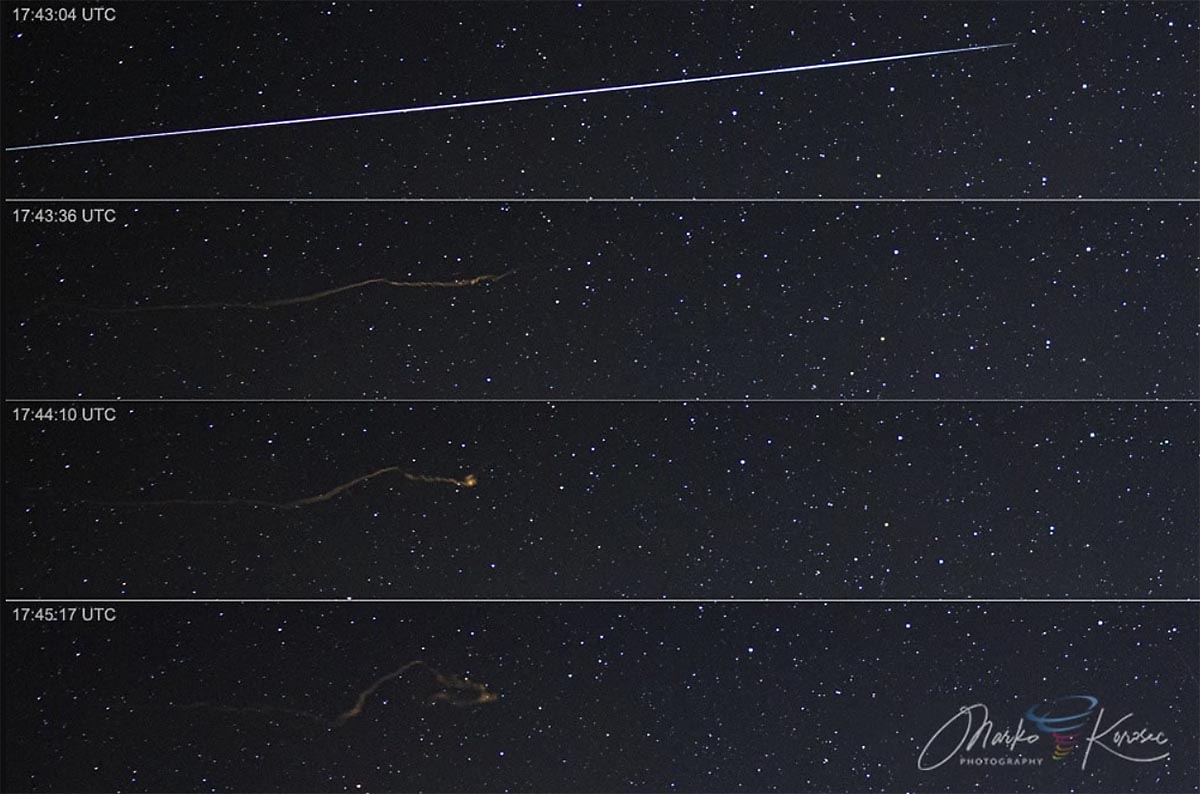
When a massive fireball disintegrates, it often leaves behind a persistent dust trail. These glowing ion trails can linger in the upper atmosphere for tens of seconds to the naked eye, and up to several minutes when viewed through binoculars, slowly twisted and contorted by powerful stratospheric winds.
Locating the Radiant
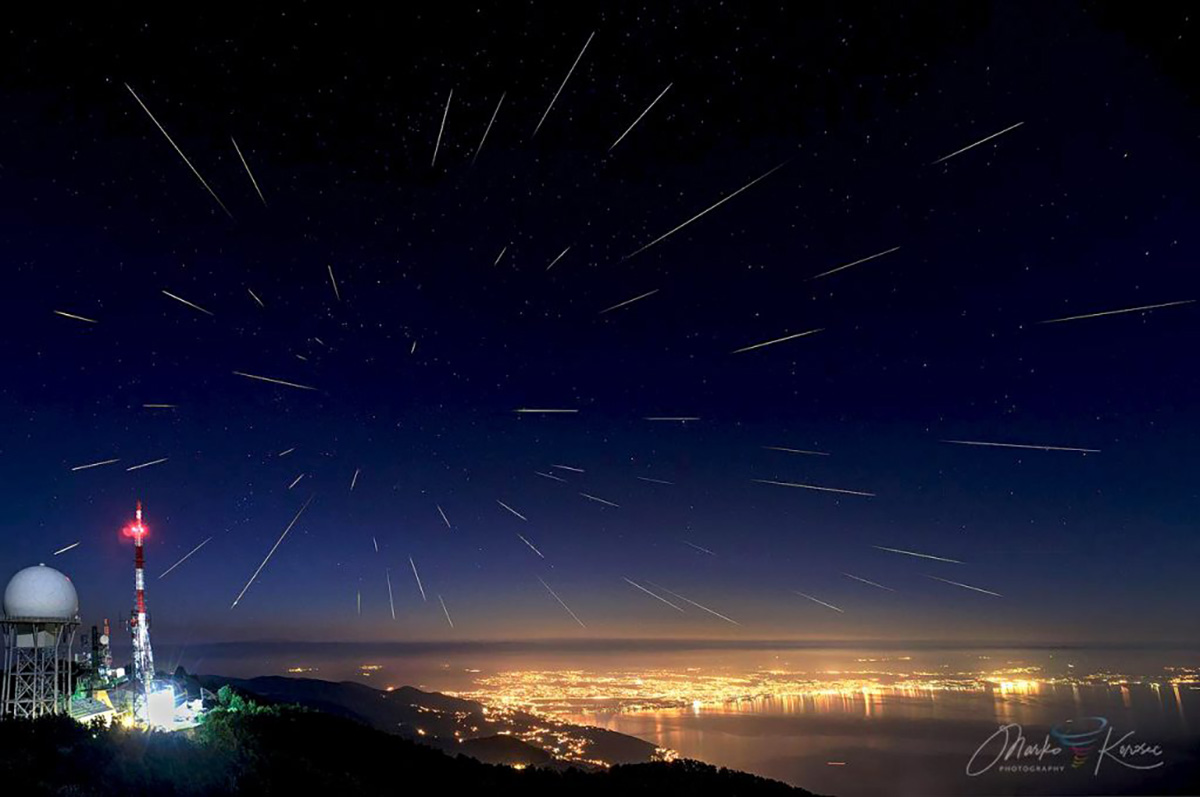
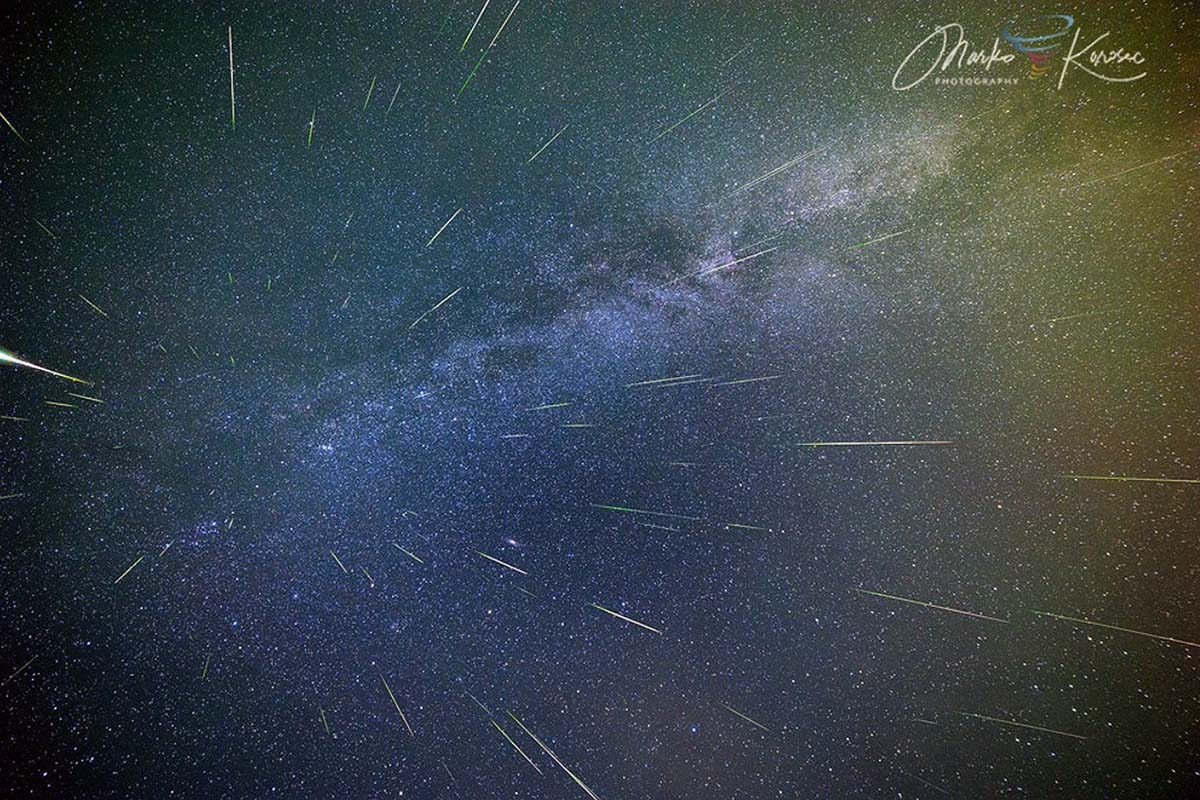
Finding the source of the Perseids is straightforward. If you trace the paths of the meteors backward, they all appear to diverge from a single point in the sky known as the radiant. This radiant lies within the northern constellation Perseus, near the famous Double Cluster.
- Rule of thumb: The higher the constellation Perseus rises in the northeastern sky, the greater the volume of meteors you will see. While the radiant is visible all night, the second half of the night—from 1:00 AM local time until dawn—consistently yields the highest numbers.
4. Astrophotography and Field Strategies
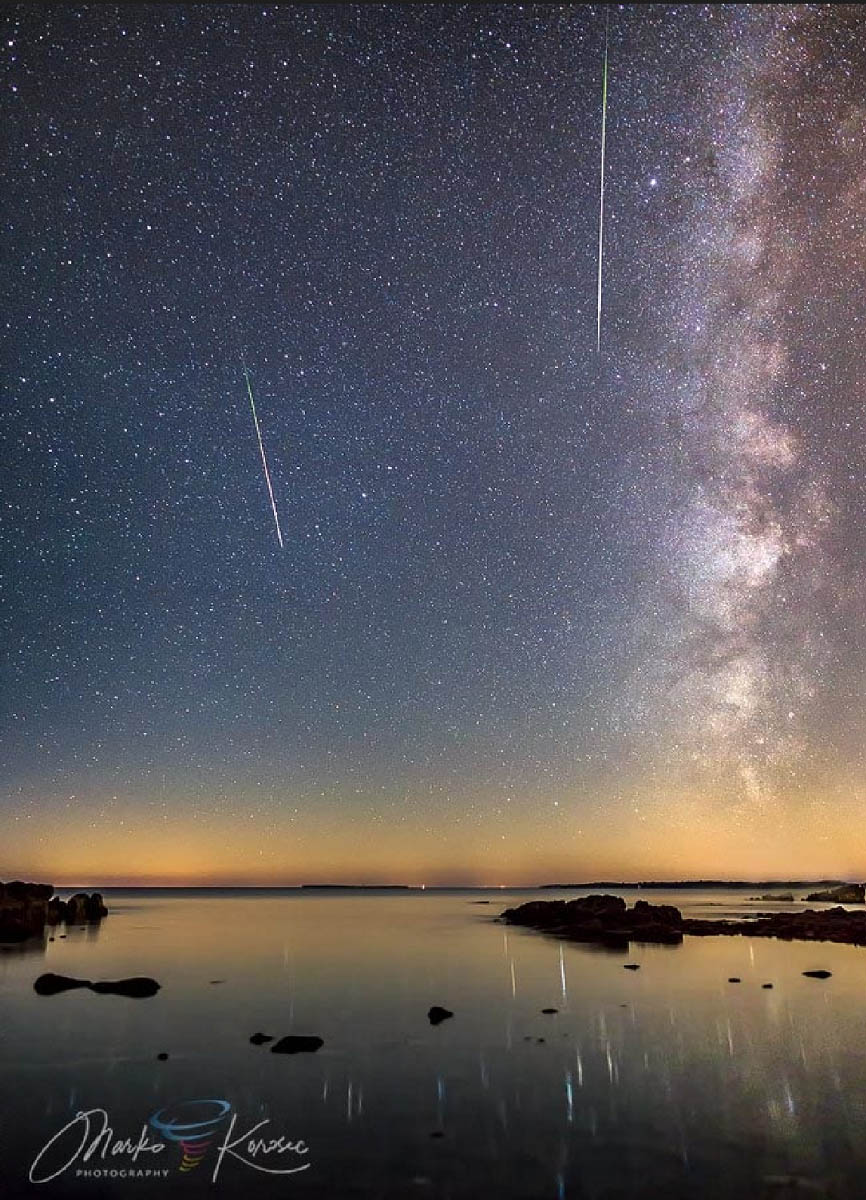
For those looking to capture the event on camera, preparation is paramount. Astrophotographer Marko Korošec, whose stunning captures illustrate the reliable nature of these showers, emphasizes patience and proper equipment.
Essential Equipment Checklist
- A Sturdy Tripod: Essential for keeping the camera completely still during long exposures.
- A DSLR or Mirrorless Camera: Capable of manual settings and high ISO performance.
- A Fast, Wide-Angle Lens: Lenses with a wide aperture (f/1.4 to f/2.8) and a focal length between 14mm and 35mm allow you to capture a vast expanse of the Milky Way alongside the meteors.
- An Intervalometer or Remote Shutter: To automate continuous shooting without introducing camera shake.
Field Tips for Observers
- Escape Light Pollution: Drive away from city lights into dark-sky reserves, national parks, or elevated mountain locations where atmospheric clarity is highest.
- Give Your Eyes Time: It takes roughly 20 to 30 minutes for human eyes to fully dark-adapt. Avoid looking at smartphone screens during this time.
- Play the Numbers Game: Expect to take hundreds—or even thousands—of exposures over an hour or two. Meteor photography is a game of patience; capturing an exploding fireball makes hours of waiting worthwhile.
5. Implications and Weather Challenges
While the celestial alignment for 2026 is nearly faultless, terrestrial weather remains the ultimate wildcard for astronomers.
Meteorological Obstacles
The primary challenge during mid-August stems from summer convective weather patterns. Daytime heating frequently triggers afternoon thunderstorm activity, and leftover clouds can occasionally linger into the evening hours, obscuring the night sky. However, meteorologists note that stable high-pressure systems can break these patterns, bringing crystal-clear skies right in time for the peak.
Community and Citizen Science
The convergence of the August 12 total solar eclipse and the Perseid meteor shower highlights a golden era for public engagement in astronomy. Professional institutions and amateur networks are encouraging skywatchers to report their findings. Organizations like the Severe Weather Europe report groups provide platforms for enthusiasts to share their captures, contributing to a global community record of the event.
As the nights of August 11–13 approach, make your plans, pack your gear, and look up. With no Moon to dim the cosmic stage, the 2026 Perseids promise a breathtaking reminder of our place in the universe.
