

As the commercial building and industrial contracting sectors navigate an evolving economic landscape marked by a massive data center boom, strategic vertical expansions, and persistent labor shortages, stakeholders continue to adapt. This week’s developments in the construction and infrastructure space highlight a blend of high-tech jobsite integration, major corporate investments, craftsmanship competitions, and federal initiatives aimed at overcoming systemic housing bottlenecks.
From Hollywood spotlights on advanced robotics to multi-million-dollar philanthropic pushes for trade education, the industry is actively shaping its future through innovation and targeted workforce development. Below is a comprehensive look at the major building and contracting headlines from across the United States.
Main Facts: Key Industry Milestones This Week
The past week has brought several noteworthy updates across various sectors of the built environment, showcasing how major contractors, material suppliers, and federal agencies are driving the industry forward:
- Bechtel’s National TV Spotlight: Reston, Virginia-based engineering and construction giant Bechtel was featured on Bloomberg Television’s Advancements with Ted Danson, demonstrating its cutting-edge jobsite technologies. The segment highlighted automated welding, autonomous equipment, and four-legged robotic inspectors deployed at the Louisiana LNG project.
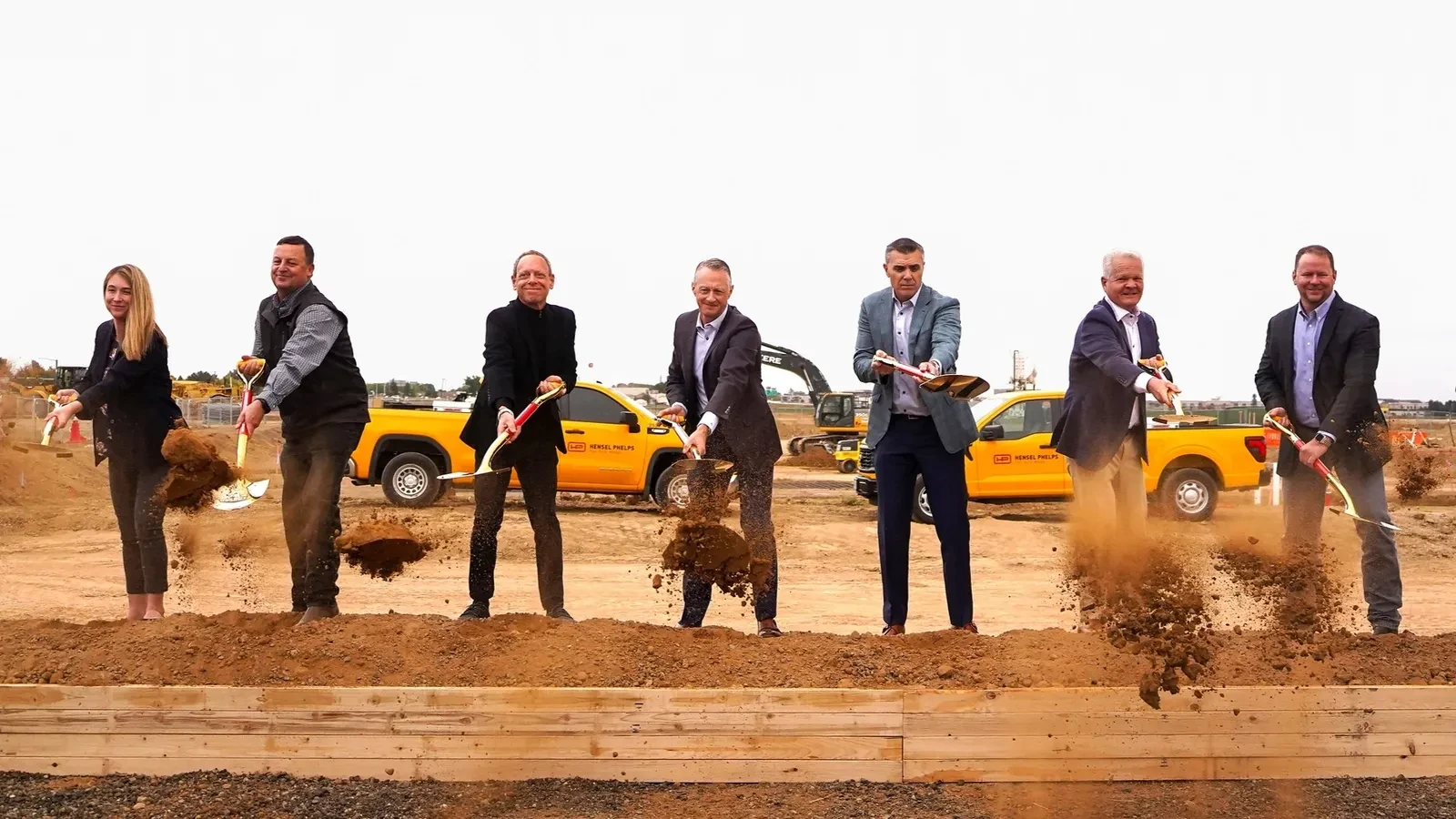
- Hensel Phelps Breaks Ground on New Headquarters: Longtime Greeley, Colorado-based contractor Hensel Phelps officially broke ground on its new 143,000-square-foot corporate headquarters in Loveland, Colorado. Designed by Gensler, the four-story facility will anchor a mixed-use development near Interstate 25.
- Sakrete’s "Concrete Combat" Returns: Concrete mix manufacturer Sakrete relaunched its digital craftsmanship competition, shifting from a studio format to an online video challenge. Contractors are invited to submit jobsite footage utilizing Sakrete products for a chance to win $10,000, equipment packages, and a trip to the World of Concrete.
- McCarthy Strengthens Nevada Presence: McCarthy Building Cos. appointed Jack Madrid to its Southern Pacific Region business development team to spearhead client acquisition and growth throughout Nevada, allowing Vice President Nate Jacobs to focus on the firm’s expanding national aviation portfolio.
- HUD and NIBS Partner on Modular Multifamily Housing: The Department of Housing and Urban Development (HUD) tapped the National Institute of Building Sciences (NIBS) and modular advisory firm MOD X for a yearlong initiative to accelerate the adoption of factory-built multifamily housing.
- The Rosendin Foundation Invests $2.86 Million: The philanthropic arm of Rosendin Electric distributed $2.86 million in grants to 157 nonprofits across 12 states, prioritizing workforce development pipelines, first responders, veterans, and health initiatives.
Chronology: A Week of Strategic Moves
To understand how these events unfolded throughout the business week, a sequential look reveals a steady stream of announcements impacting everything from corporate positioning to national policy:
- Monday: Construction Dive officially launched its comprehensive trade show and conference tracker for the upcoming year, offering building professionals an essential planning tool for networking and expo schedules. Meanwhile, Suffolk Construction announced the formation of a dedicated sports stadium construction division, and consulting firm Bain released a report dissecting the $6 trillion revenue questions surrounding the data center construction boom.
- Tuesday: The pace quickened with a flurry of corporate updates. Hensel Phelps broke ground on its new Loveland headquarters, marking a significant milestone in the employee-owned contractor’s regional footprint. Concurrently, Sakrete officially opened submissions for its revived Concrete Combat competition, and McCarthy Building Cos. announced the strategic realignment of its business development team in Nevada and its national aviation unit.
- Wednesday: Federal and philanthropic updates took center stage. HUD announced its partnership with NIBS to tackle the regulatory, financial, and building-code hurdles facing factory-built multifamily housing. Simultaneously, The Rosendin Foundation released details of its staggering $2.86 million community investment, directing vital funds toward pre-apprenticeship electrical training and youth building trades programs.
Supporting Data and Financial Metrics
Behind this week’s headlines lie significant financial investments, physical dimensions, and operational metrics that quantify the scale of these developments:
- $6 Trillion: The estimated revenue question surrounding the data center construction boom, as analyzed by global management consulting firm Bain, highlighting the massive capital flowing into digital infrastructure.
- 143,000 Square Feet: The total size of Hensel Phelps’ new four-story corporate headquarters being constructed in Loveland, Colorado, designed to feature mass timber framing, a central atrium, and panoramic views of the Rocky Mountain Foothills.
- $10,000 Grand Prize: The cash award being offered to the winner of Sakrete’s Concrete Combat competition, complemented by professional-grade equipment packages from Marshall Town Co., Collomix, and Mud Mixer, alongside an all-expenses-paid trip to the World of Concrete trade show.
- $2.86 Million: The total capital distributed by The Rosendin Foundation across 157 distinct nonprofit organizations in 12 states, with individual grants ranging widely from $5,000 up to $100,000.
- $75,000 and $49,660: Specific grant allocations distributed by the Rosendin Foundation to organizations like the Austin-based Skillpoint Alliance (for pre-apprenticeship electrical training) and the Heavy Metal Summer Experience (for nationwide teen trade outreach), respectively.
- One Year: The designated timeframe for the HUD-NIBS modular multifamily housing initiative, aimed at establishing a technical and regulatory foundation for factory-built housing.
Official Responses and Industry Perspectives
Leadership and organizational representatives weighed in on several of this week’s key announcements, shedding light on the motivations driving these strategic decisions.
Regarding Bechtel’s appearance on Advancements with Ted Danson, the engineering leader emphasized the importance of storytelling in modern construction. By showcasing tools like four-legged robotic laser scanners that capture data in hazardous areas—such as the Louisiana LNG facility being built for Woodside Energy—Bechtel aims to demystify complex industrial construction for the general public while highlighting the evolution of safety and efficiency on the modern jobsite.
On the housing front, federal officials underscored the urgency of integrating modern manufacturing techniques into standard construction practices. By selecting NIBS and MOD X for the modular multifamily housing initiative, HUD aims to directly address the frictions that slow down factory-built solutions. According to agency statements, although offsite manufacturing drastically reduces build times, the industry continues to struggle against fragmented building codes, rigid local financing structures, insurance barriers, and complex regulatory approval processes. The yearlong experiment is designed to provide manufacturers with greater operational flexibility while establishing a reliable technical baseline for future federal policy considerations.
In the philanthropic sector, representatives from The Rosendin Foundation emphasized the critical nature of sustained investment in the workforce pipeline. By funneling millions into targeted programs—ranging from electrical pre-apprenticeships to youth summer camps—the foundation continues to combat the well-documented labor shortage by actively engaging the next generation of builders, electricians, and craft professionals.
Implications for the Construction Industry
The convergence of high-tech jobsite integration, corporate real estate investments, and federal modernization efforts carries profound implications for contractors, developers, and trade professionals alike:
1. Technology is No Longer Optional
As demonstrated by Bechtel’s national television feature, the integration of autonomous machinery, robotic site assessment tools, and automated fabrication is shifting from a futuristic novelty to a baseline operational standard. Contractors who successfully adopt and scale these technologies—particularly in hazardous environments like liquefied natural gas facilities—will secure a distinct competitive advantage in bidding and execution speed.
2. The Workforce Pipeline Remains a Top Priority
The substantial capital injections seen this week—from Sakrete incentivizing jobsite craftsmanship to the Rosendin Foundation’s $2.86 million grassroots distribution—reinforce the industry’s collective realization that workforce development must be locally nurtured and financially supported. Pre-apprenticeship programs and youth outreach are proving vital to bridging the generational gap in skilled trades.
3. Regulatory Reform is Critical for Housing Innovation
The HUD-NIBS initiative highlights a broader truth about modern construction methods: innovation in manufacturing cannot scale without parallel innovation in regulation. If the initiative successfully identifies pathways around restrictive building codes and insurance hurdles for factory-built multifamily housing, it could unlock a new era of rapid, cost-effective residential development across the United States.
As the industry looks ahead toward upcoming trade shows, conferences, and the conclusion of the fourth quarter, contractors must remain agile, technologically forward-looking, and deeply committed to workforce empowerment to thrive in a rapidly shifting economic landscape.
