

The construction industry continues to navigate a complex and rapidly changing landscape marked by shifting spending trends, significant capital project completions, executive leadership overhauls, and pressing workforce safety initiatives. In a week characterized by high-profile developments, general contractors and industry executives had to digest critical updates spanning macroeconomic data center reliance, high-stakes municipal projects, crucial substance abuse interventions, and strategic organizational appointments.
As the summer season winds down and the back-to-school period shifts the focus of municipal builders, corporate restructuring and regulatory compliance take center stage. Below is a comprehensive look at the major building and construction headlines that shaped the industry over the week, broken down by economic impact, chronologies, executive shifts, and the broader implications for the sector.
1. Main Facts: Key Industry Developments of the Week
The construction sector experienced a flurry of strategic updates over the past week, highlighted by macroeconomic shifts in spending, major educational facility openings, regulatory safety enforcement, and high-level executive movements across multiple top-tier general contractors.
- Macroeconomic Realities: Monthly construction spending data revealed that the broader nonresidential construction sector’s growth is heavily dependent on a single asset class. Without the massive capital outlays pouring into data centers, nonresidential construction spending would have registered a decline.
- JE Dunn Expands Tech Focus: JE Dunn Construction announced the expansion of its advanced technology group through the creation of a specialized power generation unit, placing an internal leader at the helm to capture booming energy demands driven by tech infrastructure.
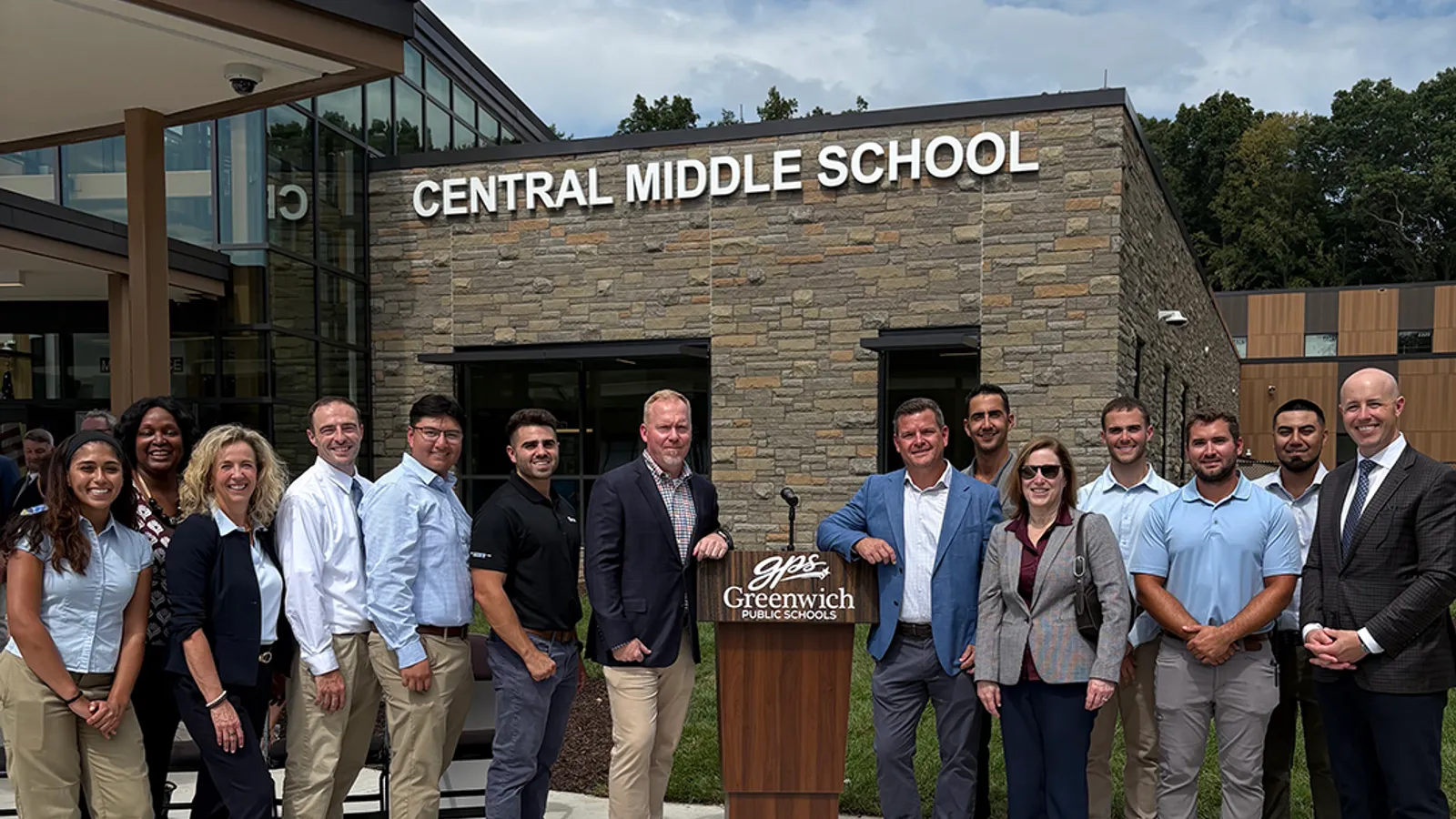
- Turner Construction Completes Landmark School: Turner Construction wrapped up construction on the $112 million Central Middle School in Greenwich, Connecticut, just in time for the start of the academic year.
- New York City Combats Overdose Crisis: In observation of International Overdose Awareness Day, the New York City Department of Buildings (DOB) and NYC Health + Hospitals spearheaded targeted on-site outreach to address historically high rates of fatal drug overdoses among construction workers.
- ABC Appoints New Leadership: Associated Builders and Contractors (ABC) named former Maryland Secretary of Labor Tiffany Robinson as its new vice president of workforce and safety policy.
- Major Contractor Leadership Overhauls: McCarthy Building Cos. and Caddell Construction both announced prominent executive promotions, strategically aligning their leadership teams to capitalize on surging markets in renewable energy, data centers, and federal construction.
2. Chronology of the Week’s Events
To fully understand the cadence of developments impacting contractors and executives, the week’s announcements unfolded through a steady stream of corporate milestones, regulatory actions, and policy appointments:
- Monday:
- The New York City Department of Buildings and NYC Health + Hospitals launched extensive on-site overdose prevention outreach, coinciding with International Overdose Awareness Day, distributing free naloxone kits and training.
- Associated Builders and Contractors formally announced the hiring of Tiffany Robinson as vice president of workforce and safety policy.
- Caddell Construction released details regarding a series of internal promotions, naming Ike Keene senior vice president of commercial and Nathan Raycroft senior vice president of governmental, alongside regional appointments in Atlanta.
- Tuesday:
- Turner Construction issued a formal news release celebrating the successful delivery of the newly constructed, $112 million Central Middle School in Greenwich, Connecticut, which subsequently welcomed its first cohort of students.
- Late August / Mid-Week:
- JE Dunn Construction publicly detailed its strategic expansion of its advanced technology group, establishing a dedicated power generation unit led by an internal promotion.
- McCarthy Building Cos. announced the promotion of Nayan Bhakta to president of its national renewable energy group, following the elevation of Dhruv Patel to chief operating officer of McCarthy Holdings.
- Ongoing:
- Industry analysts continued to dissect the monthly construction spending reports, highlighting the immense weight that data center investments carry in keeping nonresidential construction metrics in positive territory.
3. Supporting Data and Financial Metrics
The health of the construction sector is increasingly measured by stark contrasts across different asset classes. While traditional commercial and institutional builds face headwinds, specialized sectors are experiencing unprecedented booms.
The Data Center Dependency
According to the latest monthly construction spending report, overall nonresidential construction figures remain afloat largely due to unprecedented capital investments in digital infrastructure. Industry analysts point out that if data center outlays were extracted from the equation, nonresidential spending growth for July would have slipped into negative territory. This reliance underscores a structural shift in commercial real estate and construction portfolios, where electrical grid capacity, cooling infrastructure, and hyperscale data storage facilities are effectively subsidizing broader sector growth.
Capital Investments in Education
At the municipal and regional level, educational infrastructure continues to command significant capital allocations. Turner Construction’s newly completed Central Middle School in Greenwich, Connecticut, represents a $112 million investment spanning 135,000 square feet. Built to replace aging infrastructure, the facility integrates cutting-edge energy-efficient systems, robust plumbing infrastructure, and advanced electrical technologies designed to lower municipal carbon footprints while providing modern learning environments.
The Cost of the Overdose Crisis
According to data cited by the New York City Department of Buildings, the construction sector historically records one of the highest rates of fatal drug overdoses of any profession in the metropolitan area. This sobering statistic has driven regulatory bodies to quantify the human cost of substance misuse, translating into mandatory training programs and safety prerequisites that impact thousands of licensed site safety professionals across the region.
4. Official Responses and Industry Stakeholder Perspectives
As these developments unfold, key leaders from municipal agencies, general contractors, and trade associations have weighed in on what these shifts mean for the built environment.
Turner Construction on Educational Delivery
Reflecting on the successful, on-schedule delivery of the Greenwich Central Middle School ahead of the Labor Day back-to-school rush, Chad McCullough, Turner vice president and general manager, emphasized the collaborative nature of large-scale municipal builds:
"This milestone reflects the collaboration and dedication of Greenwich Public Schools, the Town of Greenwich, our design and trade partners, and the many skilled people who brought this project to life. We are honored to help create a learning environment that will serve students and educators for generations."
New York City DOB on Worker Safety
Addressing the alarming rate of substance misuse and overdoses within the building trades, local regulators are taking direct action. The collaboration between the NYC Department of Buildings and NYC Health + Hospitals brought life-saving tools directly to job sites. Furthermore, under Local Law 10 of 2026—which took effect in May—the DOB has formally integrated mental health, suicide risk prevention, and substance misuse awareness training as an absolute prerequisite for acquiring a Site Safety Training (SST) Card, required for all workers on complex and major construction sites.
ABC on Workforce and Policy Leadership
Associated Builders and Contractors highlighted the extensive public-sector experience of their newly appointed vice president of workforce and safety policy, Tiffany Robinson. Robinson, who previously served as Maryland’s secretary of labor under former Gov. Larry Hogan and later as deputy chief of staff in Virginia, brings a strong track record of championing skills-based hiring initiatives. Her background in dismantling four-year degree requirements for state roles is expected to shape ABC’s national strategy in tackling the persistent labor shortage through alternative credentialing and robust safety paradigms.
5. Strategic Implications for Contractors and Executives
The converging headlines from the past week offer several clear takeaways for construction executives, project managers, and firm owners looking to future-proof their operations:
Pivot Toward Energy and Tech Infrastructure
The simultaneous moves by JE Dunn (expanding its advanced technology group with a power generation unit) and Caddell Construction (elevating leaders specialized in data center growth, such as Ike Keene) highlight a broader industry imperative: construction firms must align their core competencies with the digital and energy revolutions. As artificial intelligence, cloud computing, and advanced manufacturing drive unprecedented demand for power, contractors capable of executing complex electrical, mechanical, and power-generation infrastructure will capture the lion’s share of market growth.
Prioritizing Mental Health and Substance Safety Compliance
Regulatory compliance is expanding far beyond traditional physical safety measures like fall protection and hard hats. With New York City enforcing rigorous mental health and substance misuse training protocols under local safety laws, construction executives across the country should anticipate a nationwide trend toward holistic worker wellness mandates. Investing in on-site medical interventions, such as naloxone distribution and mental health counseling access, is no longer just a corporate social responsibility—it is becoming a regulatory necessity to protect workforces and mitigate operational liabilities.
Navigating Executive Succession and Talent Retention
The leadership shuffles at McCarthy Building Cos. (where Nayan Bhakta stepped up to lead the national renewable energy group) and Caddell Construction underscore the critical importance of internal talent development and strategic succession planning. As the sector faces specialized talent shortages, cultivating internal leaders who understand niche markets—such as utility-scale solar, battery energy storage systems (BESS), and federal contracting—will determine which firms successfully scale through economic uncertainties.
Managing Macroeconomic Vulnerabilities
With nonresidential spending heavily reliant on data center construction, contractors must carefully evaluate their project pipelines. Diversifying portfolios to insulate against potential stagnation in traditional commercial office spaces or retail builds remains paramount. Firms that balance high-growth tech infrastructure with stable public-sector projects, such as educational facilities and government buildings, will be best positioned to weather macroeconomic fluctuations in the quarters ahead.
