

August 12, 2026, is set to be etched into the astronomical history books. On this late summer day, millions across Greenland, Iceland, and Spain will look upward as the Moon sweeps directly between the Earth and the Sun, plunging a narrow corridor of the planet into sudden, eerie daytime darkness.
For Europe, this event carries monumental significance. It marks the first time the path of totality has crossed continental European soil since August 11, 1999—nearly three decades of waiting for skywatchers across the continent. Delivering up to two minutes and 18 seconds of complete totality just as the Sun dips low toward the horizon, the August 12 spectacle promises a twilight-like hush over historic European cities, rugged Arctic wilderness, and sun-drenched Mediterranean islands.

Main Facts: The Celestial Alignment
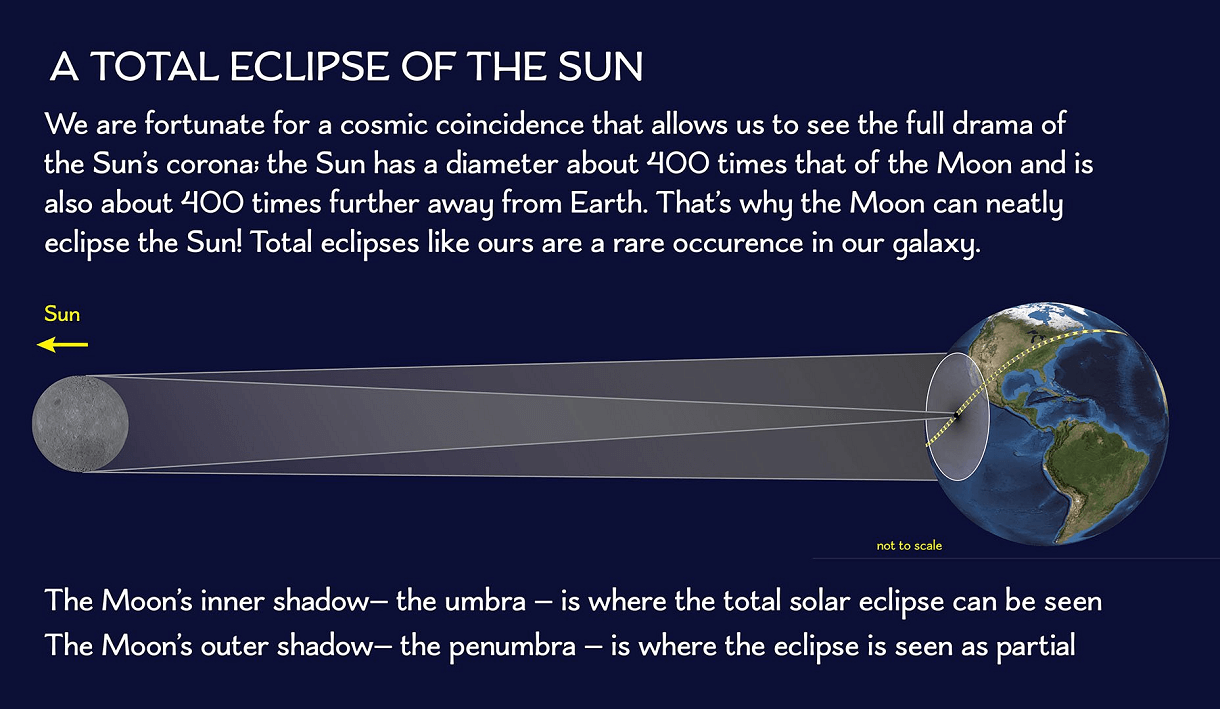
A total solar eclipse is a masterclass in cosmic geometry. It occurs only when the Sun, Moon, and Earth align in a straight line, allowing the Moon to pass directly between our planet and our star. When conditions are just right—meaning the Moon is at the precise distance and size in its elliptical orbit to completely obscure the solar disk—it casts an intense, moving shadow known as the umbra onto the Earth’s surface.
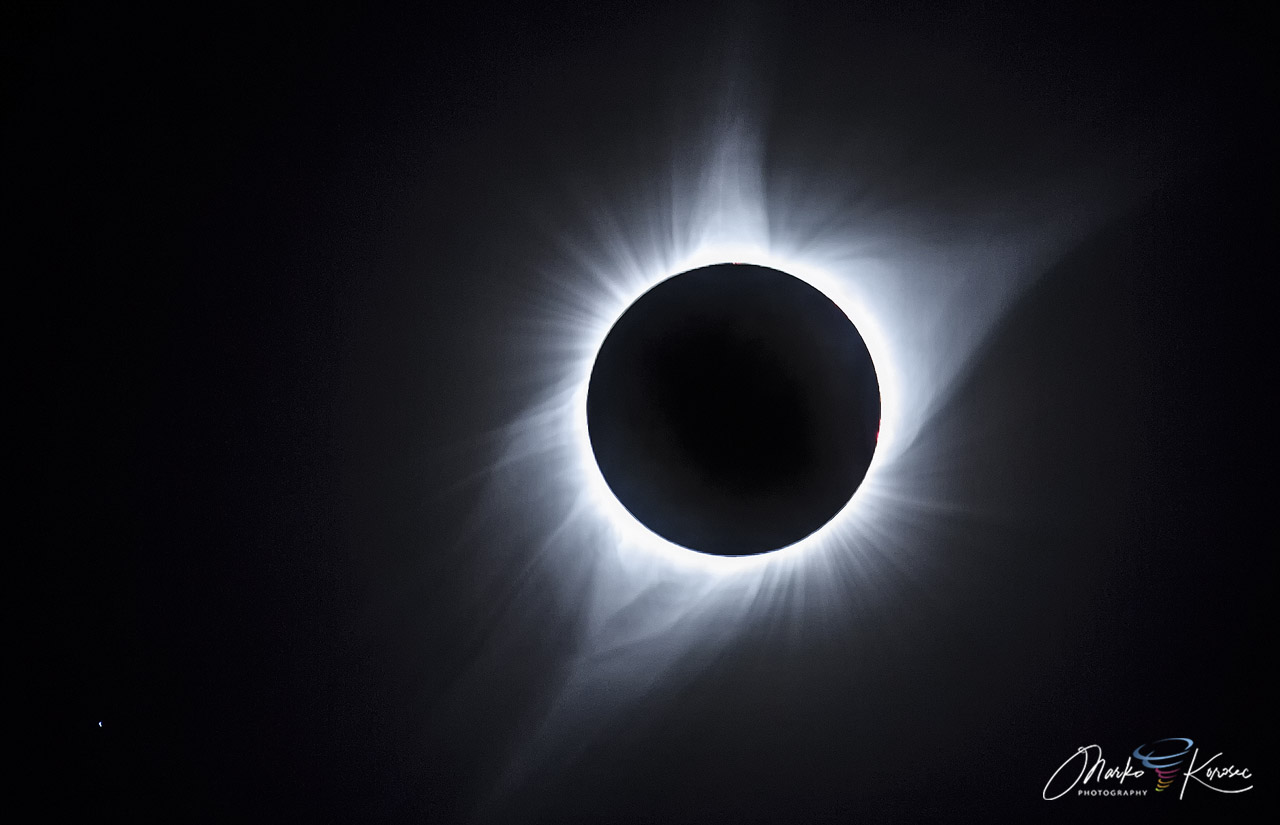
Only observers situated within this narrow corridor—the path of totality, typically stretching a mere 60 to 70 miles wide—will witness the full effect: daytime skies turning midnight-black, a sudden drop in ambient temperatures, and the ghostly, pearl-white tendrils of the Sun’s outer atmosphere, the corona, flashing into view.
Key Highlights of the 2026 Eclipse:
- Date: August 12, 2026.
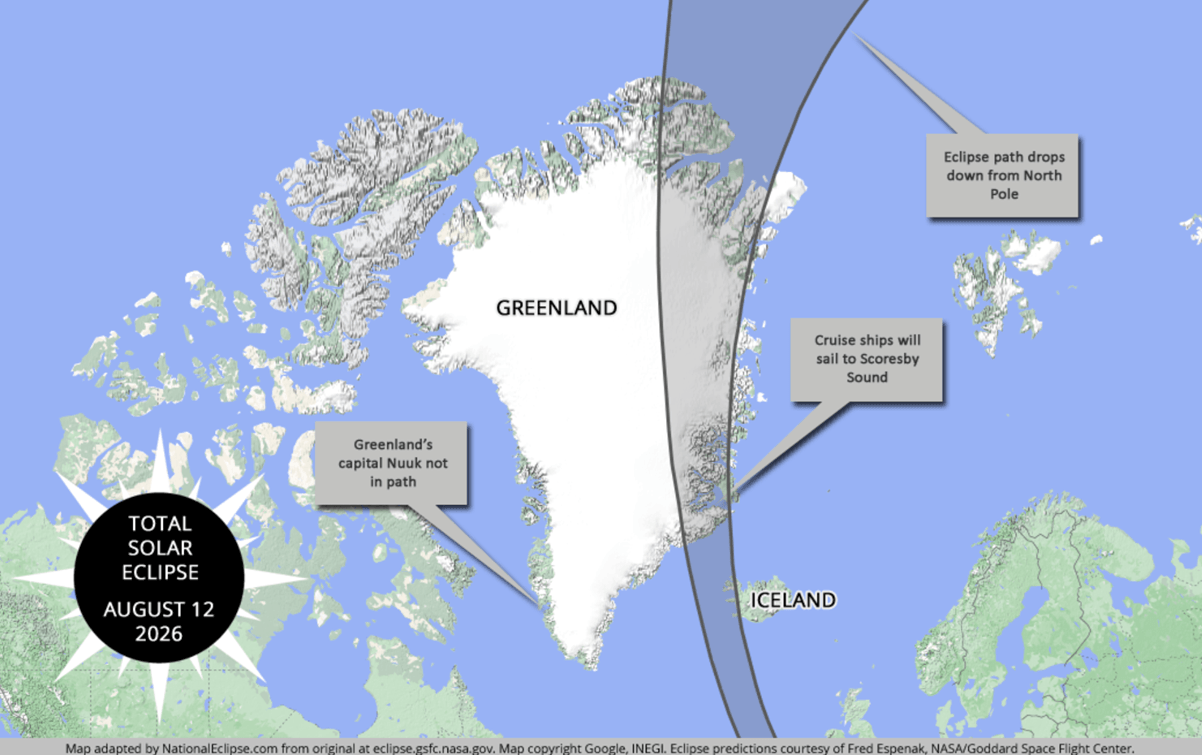
- Path of Totality: Crossing northern Siberia, eastern Greenland, western Iceland, and northern/eastern Spain, ending near the Balearic Islands.
- Maximum Duration of Totality: Up to 2 minutes and 18 seconds.
- A Rare Celestial Bonus: The eclipse coincides precisely with the peak of the annual Perseid meteor shower, offering the extraordinarily rare opportunity to spot shooting stars against the darkened daytime sky during totality.
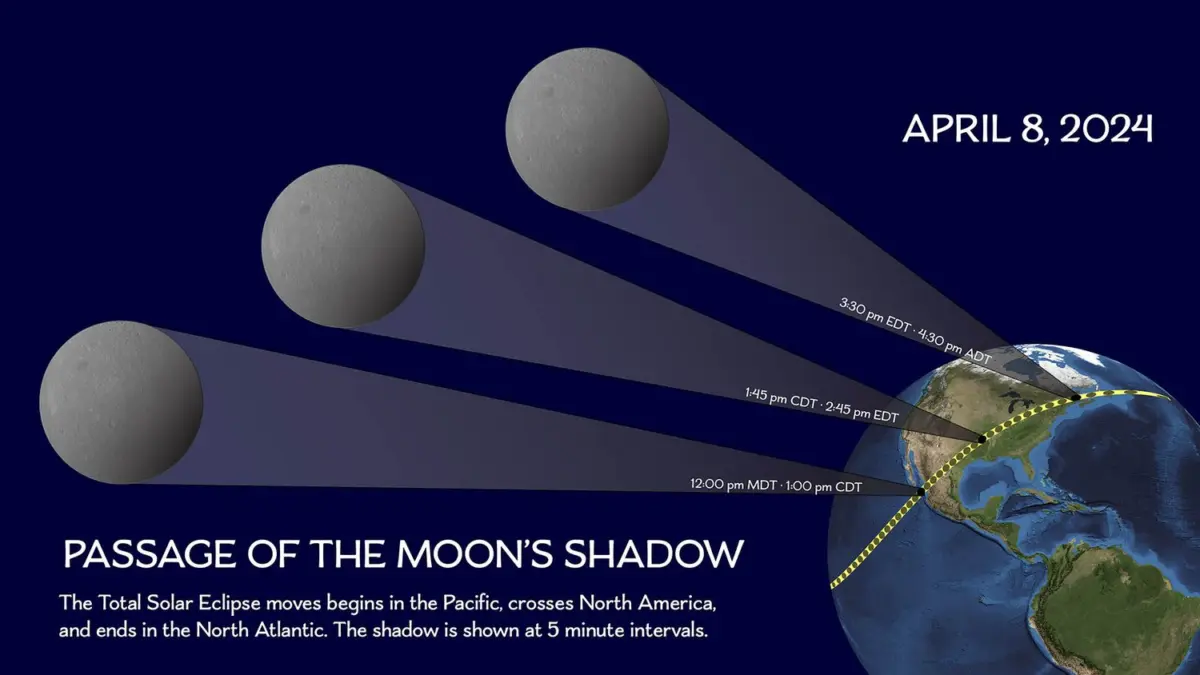
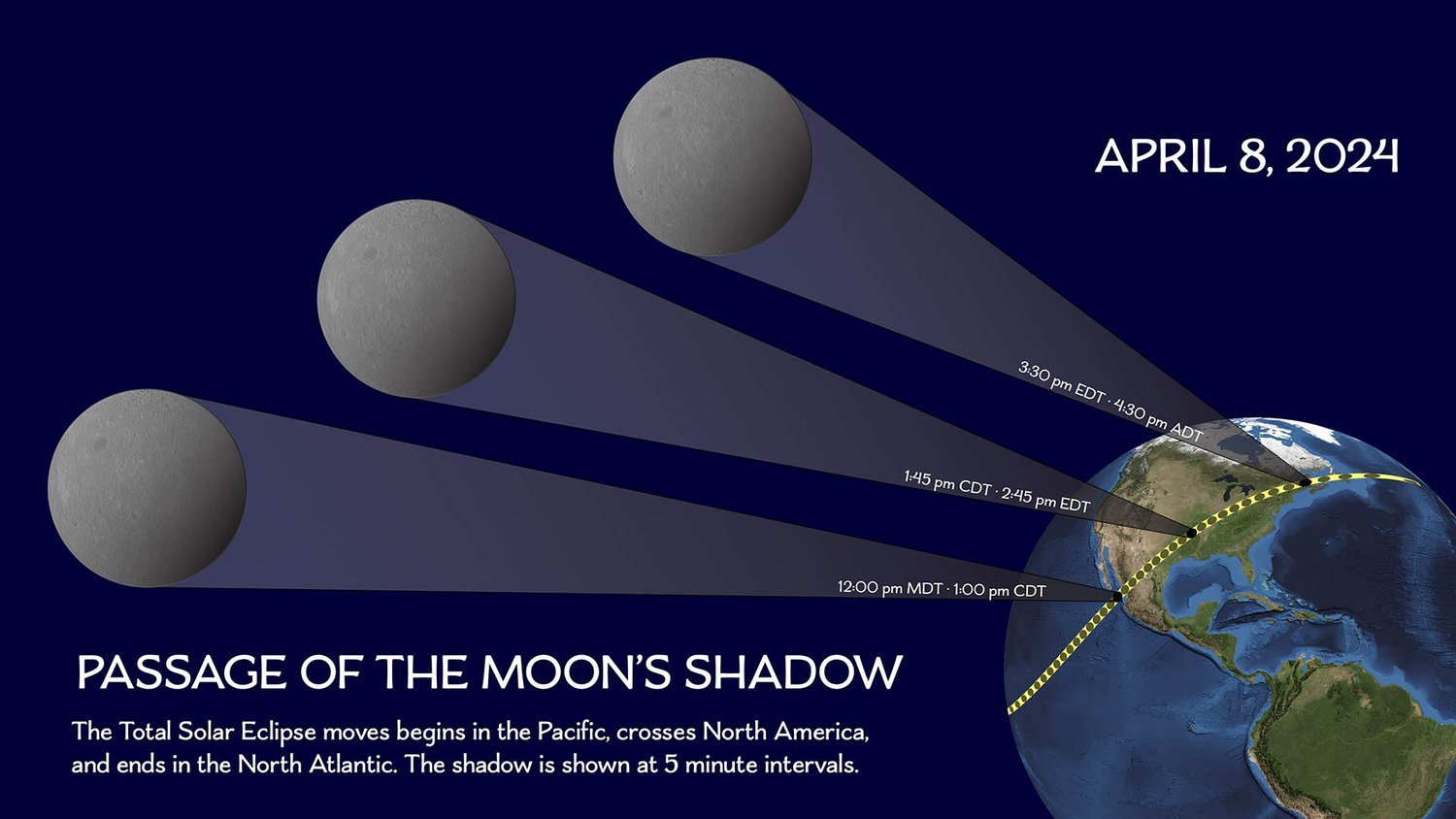
- Historical Context: The last total solar eclipse visible from continental Europe occurred on August 11, 1999. Globally, the most recent total eclipse occurred over North America on April 8, 2024.
Chronology and Trajectory: From the Arctic to the Mediterranean
The astronomical journey of the Moon’s shadow on August 12 will be a high-speed sprint across the Northern Hemisphere, tracking from the Arctic Circle down toward the Mediterranean basin just as evening approaches.
1. Siberia and the Arctic Ocean
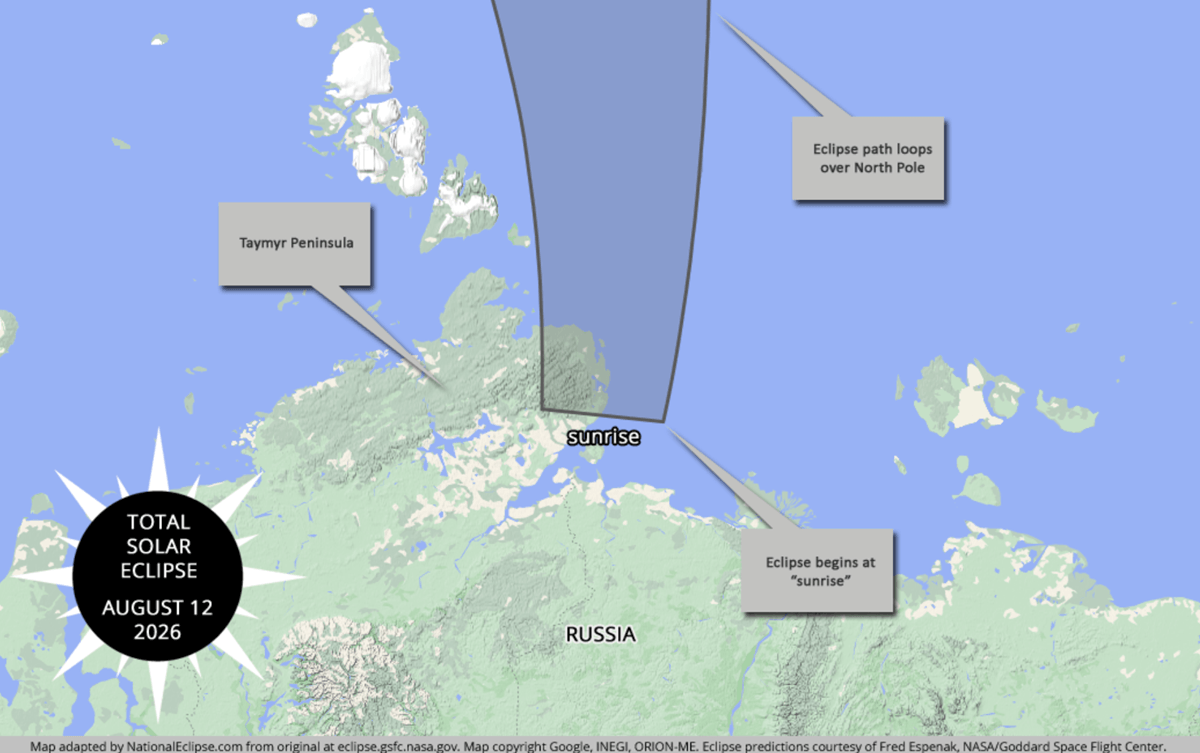
The eclipse’s trajectory officially begins at sunrise in northern Siberia. The umbral shadow quickly races north across the Arctic Ocean, brushing past the North Pole before descending southward toward the massive ice sheets of Greenland.
2. Greenland
In northeastern Greenland, totality begins around 16:14 local time, lasting roughly two minutes and eight seconds. As the shadow sweeps toward southeastern Greenland, the duration lengthens slightly to two minutes and 17 seconds near coastal glaciers. While permanent settlements in western Greenland will miss the direct path, a robust fleet of expedition cruise ships is expected to position themselves off the southeastern coast to capitalize on the view.
3. Iceland
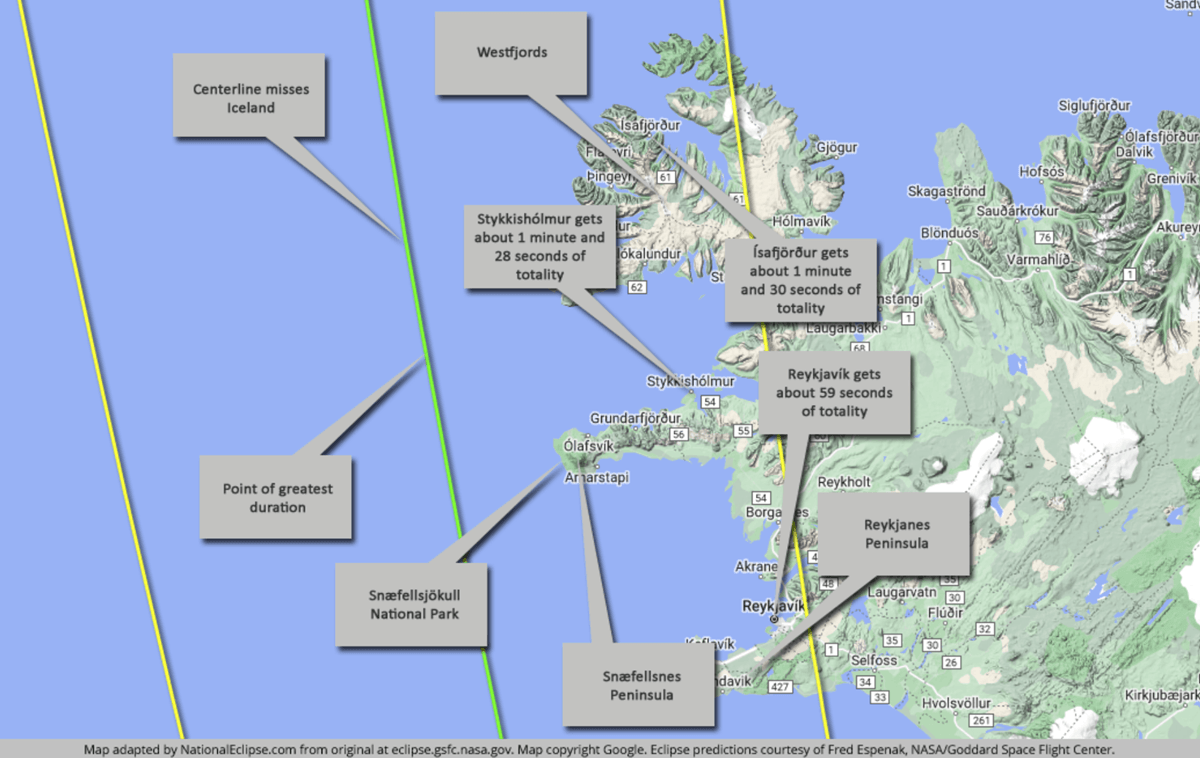
Entering Iceland through the rugged Westfjords, the shadow will race south toward the capital city, Reykjavik.
- Westfjords: Totality begins at 17:44 local time, lasting for approximately 1 minute and 30 seconds.
- Reykjavik: Totality begins at 17:48 local time, offering a brief 59 seconds of complete darkness amidst a broader two-hour partial eclipse window.
4. Spain
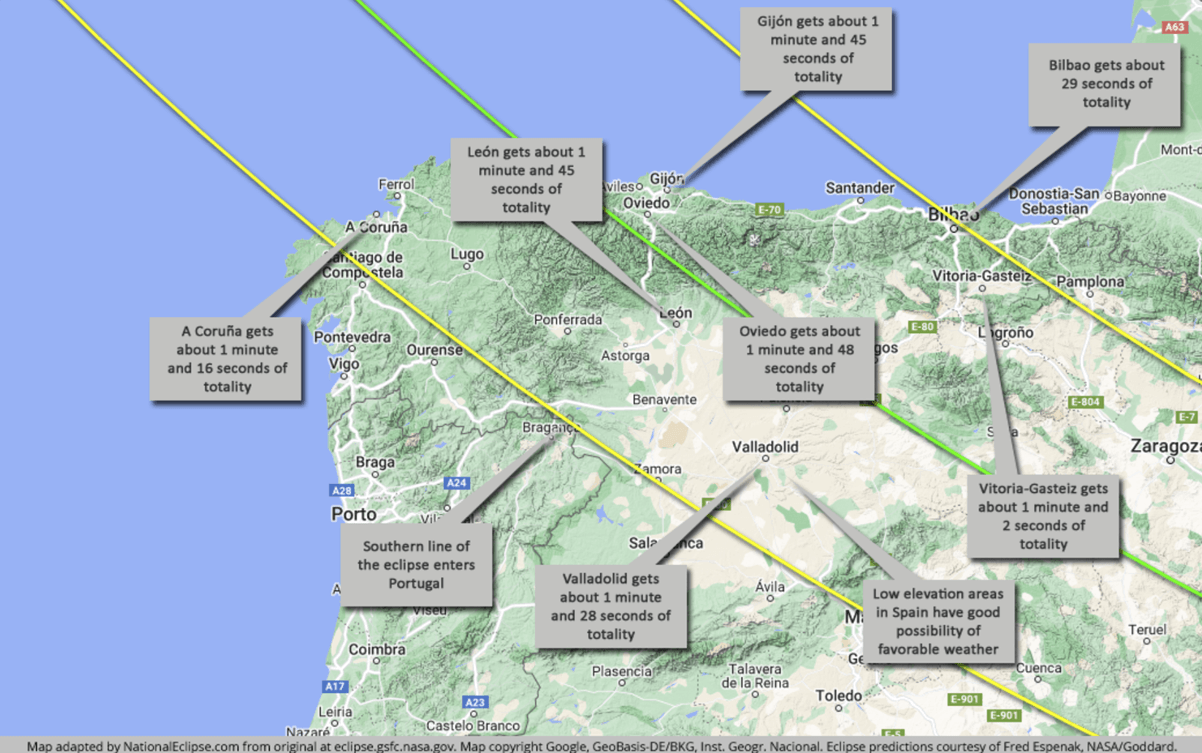
As the shadow accelerates across the Atlantic Ocean, it makes landfall in northern Spain during the late afternoon, transforming daytime into a dramatic twilight for millions of residents and tourists.
- First Contact (Spain): The partial phase begins at 19:30 CEST.
- Totality (Northern Spain): Commencing at 20:26 CEST, cities like A Coruña and Zaragoza will experience roughly 1 minute and 45 seconds of totality as the Sun hangs low in the western sky.
- Conclusion: The path tracks southeastward, clipping Palma de Mallorca with 1 minute and 36 seconds of totality before terminating entirely at sunset.
Supporting Data: Understanding Lunar Mechanics and Weather Forecasts
The Science of the Shadow
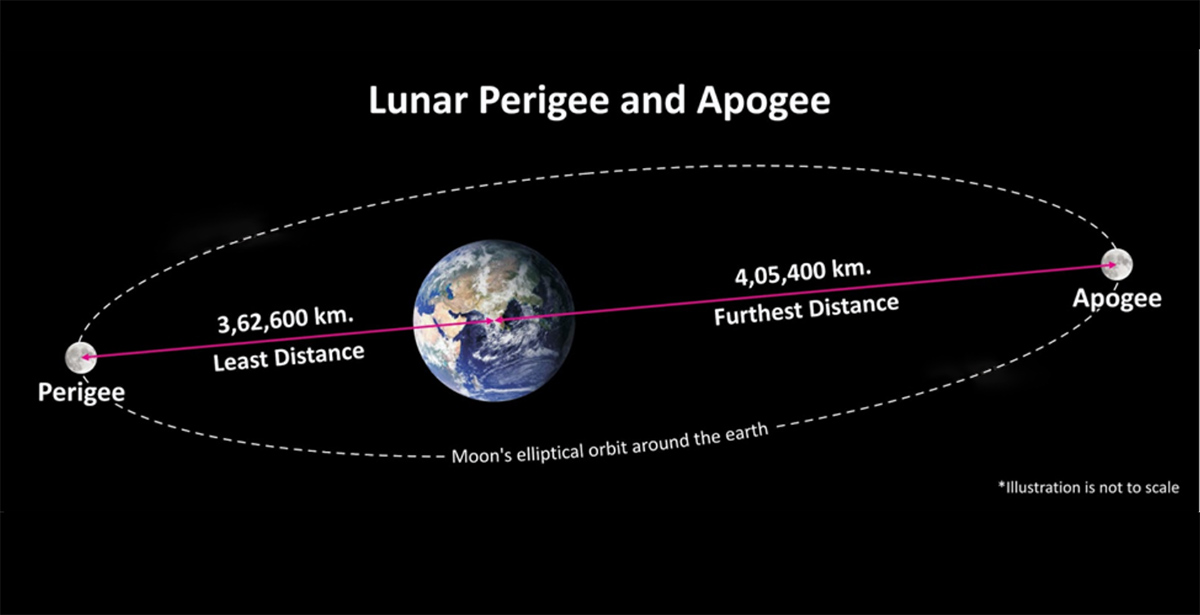
Why are total solar eclipses so rare for any given location on Earth? The answer lies in lunar mechanics. The Moon does not orbit Earth in a perfect circle; its path is elliptical. When the Moon is at its furthest point from Earth (apogee)—often called a Micro-moon—it appears smaller in the sky. When it is closer (perigee)—a Supermoon—it can appear up to 15% larger and 30% brighter.
Furthermore, the Moon’s umbral shadow on Earth is relatively small, typically spanning roughly 165 miles (267 km) across. Because the Earth rotates while the Moon orbits, this shadow races across the globe at thousands of miles per hour, restricting totality at any specific point on the ground to just a few minutes.
(Note: Astronomers remind us that due to the Moon slowly receding from Earth at a rate of a few centimeters per year, total solar eclipses will cease to occur millions of years from now as the Moon shrinks in apparent size from our perspective.)
Meteorological Outlook: Where Will the Skies Clear?
Weather is the ultimate deciding factor for any eclipse chaser. Current meteorological forecasts and climate models paint a split picture for the regions along the 2026 path:
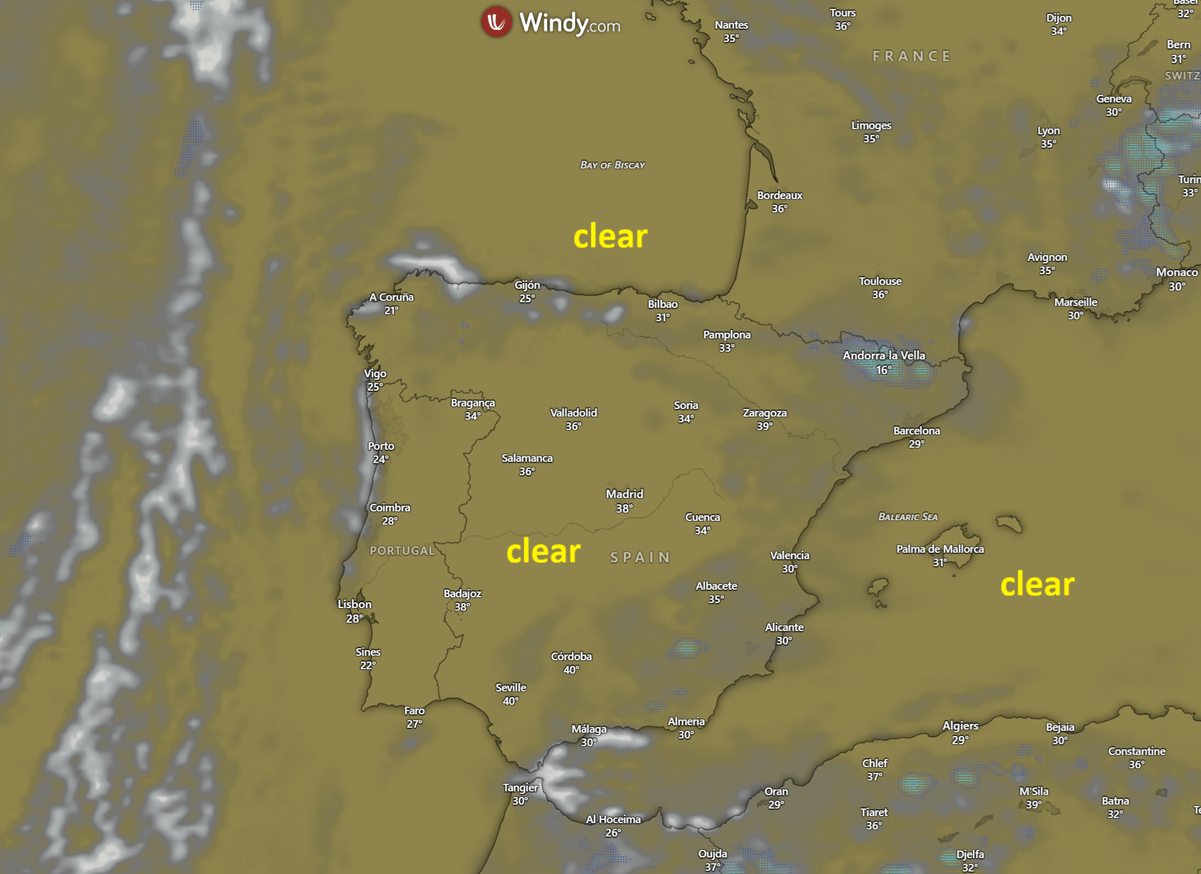
- Spain (Excellent Prospects): Summer climatology in the Iberian Peninsula heavily favors eclipse watchers. Hot, dry air masses and a general lack of clouds mean that Spain offers some of the highest statistical probabilities for clear skies anywhere along the path. While minor, thin high-level clouds may drift across eastern Spain, overall observing conditions are projected to be good to excellent.
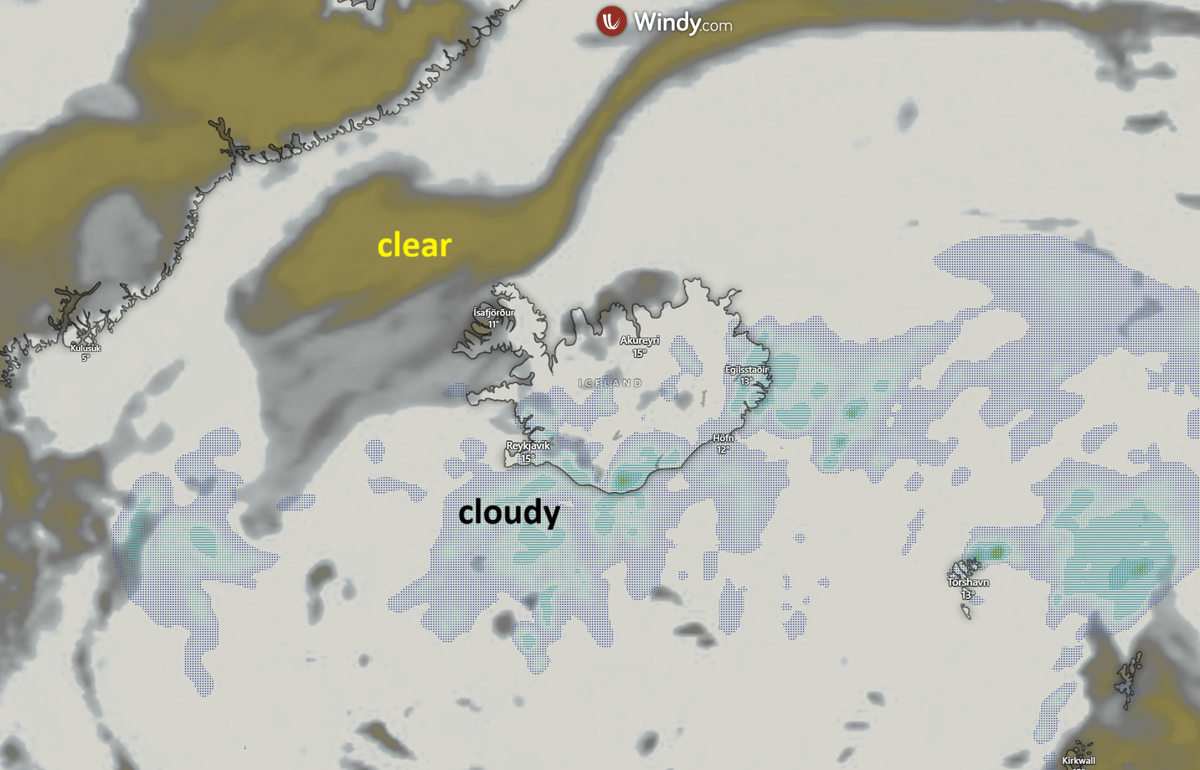
- Iceland (Challenging Prospects): Atlantic depressions frequently roll into Iceland during August, bringing significant cloud cover to much of the island. However, meteorologists note that prevailing southeast winds could create downslope conditions in the Westfjords, potentially scouring out localized clear breaks in the cloud cover for persistent observers.
Official Responses and Public Preparation
With millions of domestic and international tourists expected to converge on the narrow corridors of totality in Iceland and Spain, local governments, transit authorities, and astronomical societies have initiated comprehensive planning measures.
Infrastructure and Safety Measures
Municipalities in major Spanish transit hubs—such as A Coruña, Zaragoza, and Palma de Mallorca—are bracing for sudden influxes of traffic, packed public parks, and fully booked hotels. Authorities are urging travelers to finalize accommodations well in advance and utilize public transportation systems on August 12 to mitigate gridlock on rural and coastal roads.
Public health agencies and astronomical organizations are simultaneously launching robust educational campaigns regarding eye safety. Because the Sun’s blinding photosphere remains dangerously powerful even when partially obscured, official responses heavily emphasize the absolute necessity of certified protective eyewear.
"Never look directly at the un-eclipsed or partially eclipsed Sun without certified solar filters," warns the astronomical safety directive. "Permanent retinal damage and blindness can occur within seconds."
Educational workshops are being rolled out across European schools and community centers to ensure that children and vulnerable groups are properly supervised during the partial phases of the event.
Implications: Tourism, Science, and Cultural Impact
The August 2026 eclipse represents far more than a fleeting meteorological curiosity; it is a major economic and scientific catalyst.
Economic and Tourism Surge
Tourism boards in Iceland and Spain are anticipating a multi-million-dollar windfall. Tour operators report that specialized eclipse-chasing packages—ranging from high-end fjord cruises in Greenland to vineyard-viewing parties in northern Spain—have experienced surging demand. Local businesses are viewing the event as a vital extension of the summer tourism season, drawing high-value international travelers with a deep interest in science and nature.
Scientific Opportunities
For researchers, the fleeting moments of totality provide an invaluable window to study the solar corona—the Sun’s million-degree outer atmosphere. Normally washed out by the blinding brilliance of the solar disk, the corona can only be studied in detail from the ground during the natural filters of a total solar eclipse. Coupled with the simultaneous peak of the Perseid meteor shower, astrophysicists and amateur astronomers alike will have a rare dual laboratory in the sky, analyzing solar-atmospheric interactions and capturing high-resolution data that inform our understanding of space weather.
Looking Beyond 2026: The Future of Eclipses
For those who find themselves clouded out on August 12, 2026, or who simply catch the eclipse-chasing bug, the cosmic dance continues unabated.
The next global total solar eclipse will occur on August 2, 2027, traversing North Africa and the Middle East—stretching from Gibraltar through Algeria, Tunisia, Libya, Egypt, and into Saudi Arabia and Yemen. Notably, the 2027 eclipse will offer an exceptionally long duration of totality, exceeding six minutes in some areas.
As humanity looks toward the skies this August, the 2026 European eclipse serves as a powerful reminder of our place in the cosmos—uniting millions in a shared, timeless moment of awe beneath a suddenly darkened midday sun.
