

By Urban Infrastructure & Transit Desk
Published: November 2024
Main Facts
The Metropolitan Transportation Authority (MTA) is officially moving forward with one of the most ambitious and transformative public transit initiatives in New York City’s modern history: the Interborough Express (IBX). Designed to bridge transit deserts and connect millions of outer-borough residents, the IBX will introduce a state-of-the-art light rail system spanning 14 miles from Brooklyn to Queens.
While light rail transit is already a familiar sight in major American urban centers such as Seattle, Denver, and Dallas, the IBX marks a historic milestone as the MTA’s very first light rail network. According to New York State’s 2025 scoping document, this mode was selected because it "represents a cost-effective and constructible project mode," enabling rapid implementation without the astronomical tunneling costs traditionally associated with heavy subway expansion.
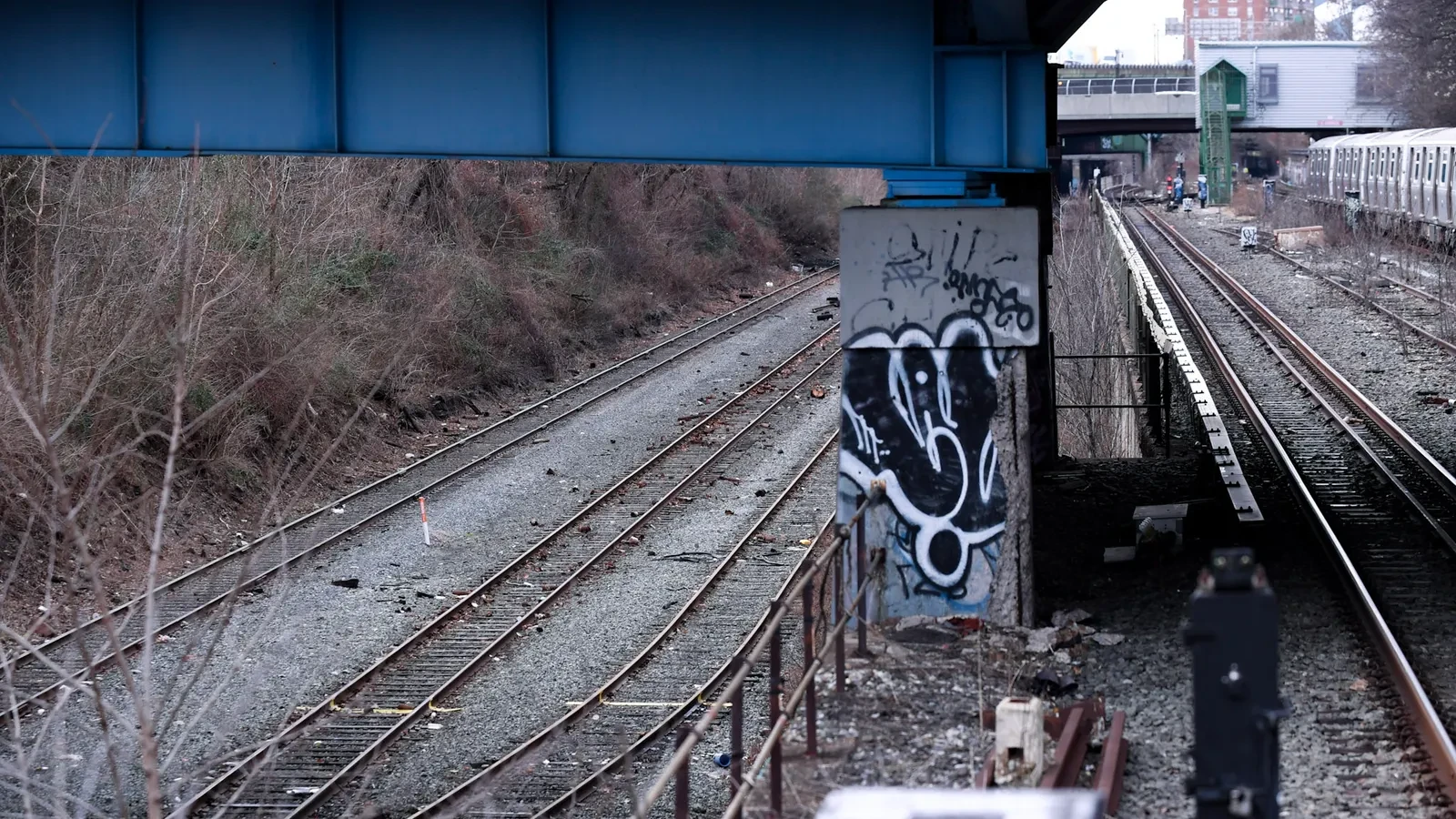
The IBX will operate alongside an existing 14-mile freight rail corridor, utilizing newly constructed tracks specifically designed for passenger transit. When fully operational, the MTA projects that the line will accommodate an estimated 160,000 daily riders, fundamentally altering commuting patterns across the city’s eastern and southern sectors. Crucially, the project represents the first new end-to-end rapid transit line built entirely within New York City since 1937, breaking nearly a century of reliance on legacy infrastructure expansion models.
Financing for the multi-billion-dollar undertaking is already taking shape. The project is backed by a robust $2.75 billion allocation within the MTA’s 2025–2029 Capital Plan, supplemented by $45 million secured in New York State’s fiscal year 2026 budget. Furthermore, New York Governor Kathy Hochul announced that the state will actively pursue federal funding to offset construction costs, with assurances that the state is prepared to step in should federal grants fall short.
Beyond transit connectivity, the project places a heavy emphasis on equity and modernization. Every station along the IBX route will be fully compliant with the Americans with Disabilities Act (ADA). Additionally, the transit authority has committed to prioritizing accessibility upgrades at four currently non-accessible legacy subway stations that will serve as transfer hubs for the new line.
Chronology
To understand the magnitude of the Interborough Express, one must look at the evolution of New York City’s transit priorities over the past century.
The Pre-War Era (Pre-1930s)
For decades, New York City’s rapid transit expansion was defined by the rapid growth of the Independent Subway System (IND), the Interborough Rapid Transit Company (IRT), and the Brooklyn-Manhattan Transit Corporation (BMT). The last major, entirely new end-to-end rapid transit line to be constructed and opened within the city limits debuted in 1937. Following World War II, the focus of urban planning shifted heavily toward automobile infrastructure, highway construction championed by Robert Moses, and the maintenance of existing subway assets, leaving outer-borough cross-town transit largely neglected.
The Conception of the Triboro RX (2010s)
The philosophical predecessor to the IBX began as an imaginative urban planning proposal known as the "Triboro RX." Conceived by the Regional Plan Association (RPA), the idea proposed utilizing existing, underutilized freight rail lines—specifically the Bay Ridge Branch—to connect Brooklyn and Queens without forcing commuters to travel into Manhattan just to travel laterally across the boroughs. For years, the concept remained an academic talking point, admired for its elegance but dismissed due to real-world complexities involving freight operators and funding.
Feasibility and State Commitment (2022–2023)
The project gained official institutional momentum when Governor Kathy Hochul and MTA leadership formally announced that the state would study the feasibility of the Triboro RX, rebranding the initiative as the Interborough Express. Subsequent MTA studies evaluated various transit modes, ultimately determining that light rail was superior to heavy rail or bus rapid transit (BRT) for this specific corridor due to engineering constraints, speed, and cost efficiency.
Capital Planning and Funding Allocations (2024–2025)
The transition from concept to concrete reality accelerated with the drafting of the MTA’s 2025–2029 Capital Plan. The inclusion of $2.75 billion earmarked specifically for the IBX provided the fiscal backbone required to advance engineering, design, and environmental reviews. The release of the state’s 2025 scoping document solidified light rail as the official mode of choice, clearing the path for preliminary design phases led by MTA Chair Janno Lieber and state transit officials.
Supporting Data
The necessity and viability of the Interborough Express are underscored by extensive demographic, economic, and engineering data compiled by the MTA and urban planning institutions.
Ridership Projections and Corridor Demand
- 160,000: Projected average weekday ridership once the IBX is fully operational.
- 14 Miles: The total length of the corridor, stretching from the Bay Ridge section of Brooklyn to Jackson Heights or Astoria in Queens.
- 17+: The number of potential neighborhoods directly connected by the line, many of which currently lack efficient transit access to neighboring boroughs.
- 1937: The year of the last completely new end-to-end rapid transit line opening within NYC limits, highlighting the historical drought of such infrastructure projects.
Financial Breakdown
- $2.75 Billion: Allocated funding from the MTA’s 2025–2029 Capital Plan.
- $45 Million: Initial state budget appropriation allocated in the fiscal year 2026 budget to kickstart early-stage execution.
- Federal Backing: Ongoing negotiations by Governor Hochul’s administration to secure federal capital grants through the Federal Transit Administration (Administration Capital Investment Grants program).
Integration and Accessibility Metrics
- 100%: Percentage of IBX stations that will achieve full Americans with Disabilities Act (ADA) compliance from day one.
- 4: Existing, non-accessible legacy subway stations slated for prioritized accessibility retrofits to facilitate seamless transfers to the IBX network.
- Up to 19: Total potential transfer connections to existing subway and commuter rail lines along the 14-mile route, knitting together fragmented segments of the regional transit web.
Official Responses
The announcement and progression of the Interborough Express have generated enthusiastic responses from elected officials, transit advocates, and community leaders who view the project as a critical corrective to historical infrastructure inequities.
New York State Governor Kathy Hochul has championed the project as a vital economic and social lifeline for outer-borough communities. Emphasizing the state’s financial dedication, Hochul noted that the administration is aggressively pursuing federal partnerships to ensure the project stays on budget and on schedule, adding that the state stands ready to fill any fiscal gaps if federal funding encounters delays.
MTA leadership has similarly praised the engineering pragmatism of the light rail model. MTA Chair Janno Lieber has emphasized that utilizing the existing right-of-way shared with freight rail minimizes community disruption while maximizing transit throughput. By opting for light rail, the MTA avoids the multi-billion-dollar underground tunneling costs that have historically bogged down New York infrastructure projects, allowing capital dollars to stretch further.
Local legislators have lauded the equity focus embedded in the project’s design. New York State Assembly Member Claire Valdez released a glowing statement regarding the accessibility commitments tied to the initiative:
"I’m thrilled that the long-awaited IBX is not only moving forward, but that existing stations are being prioritized for accessibility upgrades."
Transit advocacy groups, including the Riders Alliance and the Tri-State Transportation Campaign, have also voiced strong support, noting that the IBX will finally address the notorious "outer-borough penalty"—the time-consuming and inefficient requirement for commuters to travel into Manhattan simply to reach a destination just a few miles away in an adjacent borough.
Implications
The construction and operation of the Interborough Express carry profound implications for the future of New York City, extending far beyond simple transit times.
Economic Mobility and Neighborhood Development
For decades, economic opportunity in New York City has been heavily tethered to proximity to Manhattan-bound subway lines. Neighborhoods situated along the north-south corridors of Brooklyn and Queens—such as Sunset Park, Borough Park, Midwood, Flatbush, Crown Heights, East Flatbush, Brownsville, Canarsie, Ridgewood, Maspeth, and Elmhurst—have often experienced slower economic growth due to inadequate cross-town transit.
By establishing a rapid, reliable transit spine connecting these residential and commercial hubs, the IBX will decentralize economic activity. Residents will gain access to a wider array of employment centers, educational institutions, and retail corridors without enduring grueling, multi-seat commutes involving crowded buses and redundant subway trips into Manhattan.
Shifting Paradigm for NYC Infrastructure
The success or failure of the IBX will likely serve as a blueprint for future New York infrastructure projects. For generations, the city’s default transit expansion model involved deep underground heavy rail tunneling, which has notoriously suffered from soaring cost overruns and prolonged construction timelines.
By leveraging existing surface and right-of-way assets—specifically partnering with freight rail corridors—the MTA is pioneering a more pragmatic, cost-effective engineering philosophy. If the light rail model proves successful in a dense, complex urban environment like New York, it could unlock other dormant regional corridors for passenger rail conversion.
Accessibility and Social Equity
The commitment to universal ADA compliance on the IBX, paired with the mandatory retrofitting of non-accessible legacy transfer stations, marks a major win for disability advocates. Historically, the New York City subway system has faced severe criticism for its low accessibility rate, with a vast majority of stations lacking elevators. By integrating station modernization directly into the scope of a new mega-project, the MTA is signaling that transit equity is no longer an afterthought, but a foundational requirement of modern urban design.
Environmental and Traffic Impacts
With 160,000 daily riders projected to utilize the line, the IBX will remove thousands of private vehicle trips, rideshare vehicles, and crowded bus journeys from outer-borough roadways each day. This modal shift will play a critical role in helping New York City meet its aggressive carbon reduction and climate resiliency goals, easing street-level congestion, improving local air quality, and lowering carbon emissions across the metropolitan area.
Conclusion
The Interborough Express stands as a testament to what is possible when modern urban planning intersects with pragmatic engineering and political will. By transforming a dormant freight corridor into a high-capacity light rail network, the MTA is bridging physical and social divides that have persisted for nearly a century. As design, engineering, and funding efforts advance through the latter half of the decade, the IBX promises to redefine urban mobility, offering a blueprint for how New York City—and American transit as a whole—can build a more connected, accessible, and equitable future.
