

The modern landscape of American infrastructure development is undergoing a quiet yet profound revolution. For decades, massive civil engineering endeavors—such as interstate expansions, bridge overhauls, and mass transit corridors—have functioned primarily as financial liabilities for state and federal governments. These projects required immense upfront capital outlays, often straining public budgets and leaving transportation departments scrambling to maintain aging networks.
However, a new model of project delivery is gaining immense traction across the United States, turning heads among developers, investors, and policymakers alike. At the heart of this shift are public-private partnerships (P3s) utilizing a concession-based framework. Rather than acting as a drain on public resources, modern megaprojects are increasingly being structured as revenue-producing ventures that offer decades of stable work and financial returns for the private sector.
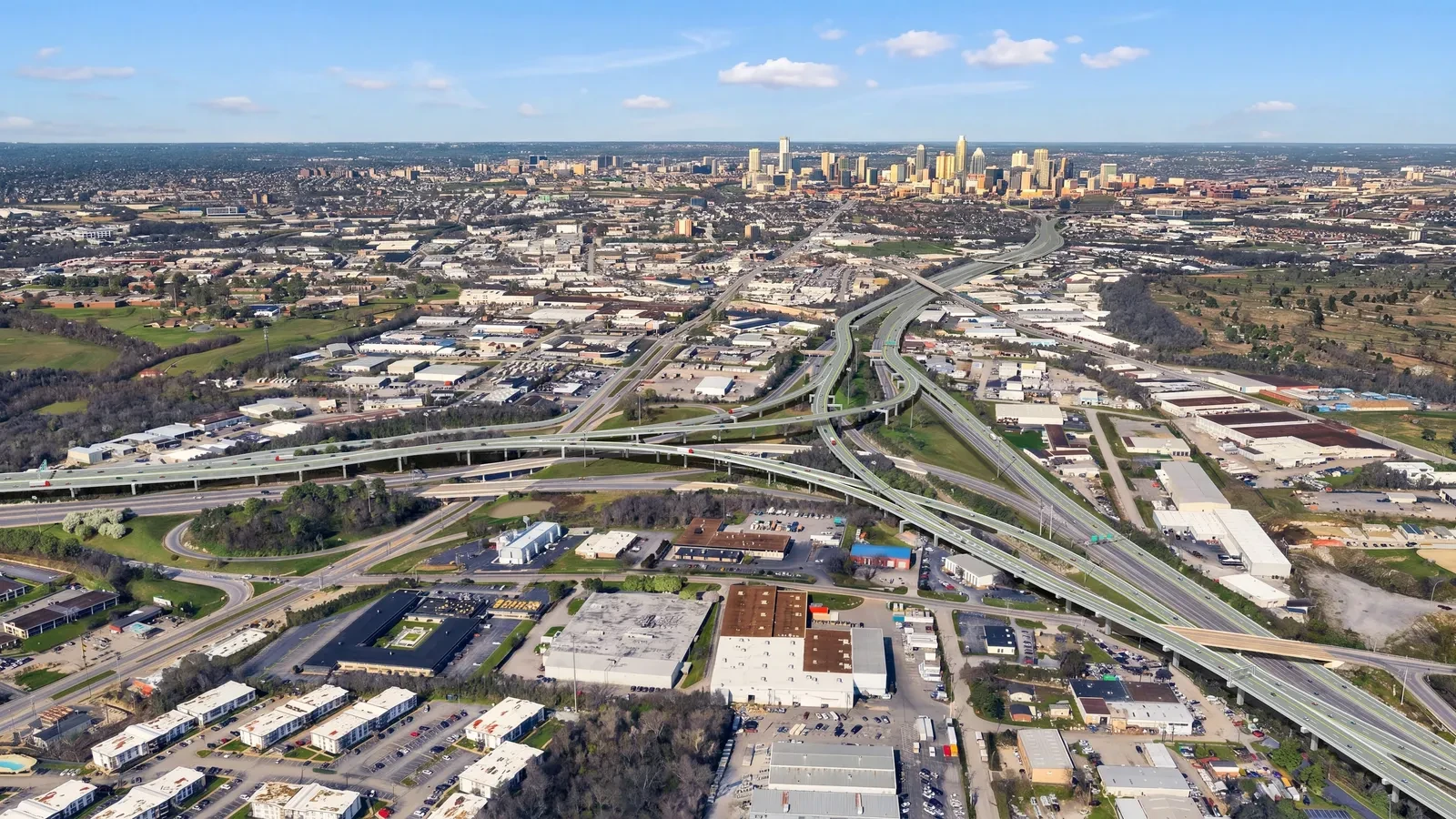
Two recent landmark initiatives—the $9.2 billion Interstate 24 Southeast Choice Lanes project in Tennessee and the $4.6 billion State Route 400 Express Lanes project in Georgia—exemplify this dynamic shift. Both projects leverage long-term concessions, allowing private consortia to design, build, finance, operate, and maintain critical transportation assets in exchange for the right to collect future use fees, such as toll revenues.
To understand how these mega-concessions operate, what they mean for the broader construction industry, and the inherent risks builders must navigate, Construction Dive spoke with J.P. Villamizar, head of advisory for Newport Beach, California-based GISI Consulting Group.
Main Facts: The Anatomy of Modern P3 Concessions
At their core, concession-based public-private partnerships alter the traditional risk-and-reward equation of public construction. In a standard design-bid-build or design-build contract, a government agency assumes the financial burden of the build and the subsequent operational costs. Once construction concludes, the public sector manages maintenance, often relying on fluctuating tax revenues.
Under a concession model, the framework changes dramatically:
- The Consortium Approach: A multi-disciplinary consortium—bringing together legal, financial, design, and construction entities into a single unified body—brings substantial upfront capital to the table.
- The Concession Fee: In major deals like Georgia’s SR 400, the private consortium provides a massive concession fee directly to the state Department of Transportation. For instance, Peach Partners—comprising Acciona Concessions, ACS Infrastructure, and Meridiam—committed a staggering $3.8 billion concession fee to the Georgia DOT. This capital can be recycled by the state to fund other essential roadway projects.
- Long-Term Engagement: Instead of packing up and leaving upon project completion, the winning consortium enters a decades-long partnership, frequently managing operations and maintenance for 30 to 56 years.
- Revenue Generation: The private partners recoup their initial investment and generate long-term profits through a share of future user fees, such as express lane tolls tied to variable pricing models.
Chronology: The Evolution of the P3 Model in U.S. Transportation
The journey toward widespread adoption of concession-based P3s in the American market has evolved over several decades, transitioning from experimental transit financing to mainstream infrastructure strategy.
- Early 1990s–2000s: The federal government began exploring alternative financing mechanisms, passing legislation such as the Intermodal Surface Transportation Efficiency Act (ISTEA) and authorizing the Transportation Infrastructure Finance and Innovation Act (TIFIA). These acts laid the groundwork for private investment in public roads, though initial projects faced skepticism and regulatory hurdles.
- Late 2000s–2010s: States like Virginia, Texas, and Florida pioneered early high-occupancy toll (HOT) lane concessions. While these projects proved that private capital could successfully deliver complex highway expansions, many were treated as isolated case studies rather than industry standards.
- Early 2020s: Post-pandemic economic pressures, combined with soaring construction material costs and federal funding injections like the Infrastructure Investment and Jobs Act (IIJA), forced state DOTs to look for creative ways to stretch public dollars. Concessions evolved from simple toll-road leases into comprehensive, multi-billion-dollar P3 ecosystems.
- Present Day (2024–2025): Projects like the $9.2 billion I-24 Southeast Choice Lanes in Tennessee and the $4.6 billion SR 400 Express Lanes in Georgia have cemented the concession model as the gold standard for mega-infrastructure. The entire construction industry is now closely monitoring these twin projects to gauge their success and scalability.
Supporting Data: Scale, Scope, and Financial Commitment
The sheer magnitude of these modern concession projects underscores why they are transforming the marketplace. They require financial engineering on a scale traditionally reserved for major corporate mergers rather than civil infrastructure.
- $9.2 Billion: The total estimated cost of the Interstate 24 Southeast Choice Lanes project in Tennessee, designed to alleviate chronic congestion in a rapidly expanding economic corridor.
- $4.6 Billion: The investment scale of the Georgia State Route 400 Express Lanes project, which aims to drastically improve mobility north of Atlanta.
- $3.8 Billion: The historic concession fee provided by Peach Partners to the Georgia Department of Transportation. This massive capital injection provides the state with immediate liquidity to fund secondary roadway and infrastructure initiatives across the region.
- 30 to 56 Years: The operational lifespan of typical P3 concession agreements. For example, the Peach Partners agreement for SR 400 spans a robust 56 years, guaranteeing participating firms decades of operational involvement.
Official Responses and Expert Insights
J.P. Villamizar, a leading authority on infrastructure advisory at GISI Consulting Group, offers a grounded perspective on how these models function on the ground and what they mean for the future of project delivery.
When asked whether a concession model alters core construction practices, Villamizar is clear: the fundamentals of engineering do not change.
"It doesn’t change the construction strategy or the sequencing," Villamizar explains. "What changes is that they are part of a consortium that includes legal, finance, construction, design, all into a single entity that is investing in this long-term asset and performing all of those duties within that consortium. So the construction sequencing, the phasing, none of that changes."
Addressing concerns over market accessibility—particularly whether smaller contractors are priced out of multi-billion-dollar megaprojects—Villamizar acknowledges the intense capital barriers currently at play.
"It’s going to be very difficult for one single entity to invest in a program and have the scalability from an execution perspective, but then also from a capital perspective to go and invest in a program like this," he notes. "I do feel that, for these large types of infrastructures, you have to have a consortium of entities that bring different values for that team."
However, Villamizar believes the industry’s horizon extends far beyond mega-scale highways. As states observe the rollout of the Tennessee and Georgia projects, smaller and medium-sized infrastructure programs are expected to adopt similar commercial structures.
"I think the industry and states are going to look at different types of projects that don’t have to be the mega-billion dollar projects, they could be the medium or smaller size, and use this alternative commercial model to fund their particular project. That would allow smaller or medium-sized firms to invest in those," Villamizar states. Beyond highways, he points to rapid growth and interest in the aviation sector—specifically terminal expansions and mega-expansions—as well as rail and mass transit as prime candidates for future P3 concessions.
Implications: Opportunities and Critical Risks for Contractors
For construction firms, entering a concession-backed consortium presents an enticing value proposition: decades of secure work. Participating in a project that spans 30 to 50 years provides a dependable revenue stream that buffers companies against normal market cyclicality. Furthermore, corridors selected for these projects—such as the booming population centers in Tennessee—boost robust economic development and guaranteed long-term demand for mobility improvements.
Yet, these opportunities come with substantial caveats and severe risks that contractors must carefully evaluate.
1. Capital Intensity and Due Diligence
Private investors and participating contractors are putting significant capital on the line. Investors focused strictly on financial returns must rely heavily on technical experts. Villamizar emphasizes that investors "are not the technical experts delivering the project." Consequently, rigorous due diligence is paramount. Contractors and financial partners must engage technical advisors to ensure that projects remain viable from both a constructability and budgetary standpoint.
2. Monetizing and Sharing Risk
One of the most critical determinants of a P3’s success is how risk is allocated and monetized. Villamizar stresses the necessity of transparent, upfront discussions between public agencies and private consortia regarding potential cost drivers.
- "It’s important for both the agency and the consortium to have a transparent, clear discussion on the cost of those potential risks and where they could be," Villamizar advises. "And if you have that discussion up front on both sides, that’s when a project is going to be successful."
3. External Variables and Long-Lead Items
Navigating a concession project requires managing complex external variables that can derail budgets if not properly accounted for in the initial agreement. Consortia must maintain intense focus on public interest and support, alongside logistical hurdles such as:
- Environmental permitting
- Utility relocations
- Right-of-way acquisition
- Management of long-lead material items
4. The Revenue Model
Ultimately, the viability of a concession project rests on the accuracy of its long-term revenue model. Because the return on investment depends heavily on future toll collections and user fees over decades, inaccurate traffic projections or public pushback against toll pricing can severely impact the financial health of the consortium.
Conclusion
The convergence of massive infrastructure needs, strained public budgets, and innovative private financing has pushed public-private partnerships and concession models to the forefront of civil construction. As projects like the I-24 Choice Lanes in Tennessee and the SR 400 Express Lanes in Georgia set new precedents, the industry is watching closely.
For contractors willing to navigate the complexities of long-term capital investment, risk-sharing, and multi-disciplinary collaboration, concessions offer a transformative path forward. By turning infrastructure from a fixed-cost government burden into a revenue-producing, multi-decade enterprise, the P3 model is redefining what is possible in American construction.
