


Editor’s note: This story focuses on the topics of mental health and suicide. If you or someone you know is having suicidal thoughts, call or text the Suicide & Crisis Lifeline at 988.
WASHINGTON — For many years, Trent Johnson kept the harrowing details of his brother Luke’s death strictly private. He carried the grief internally, shielded by professional norms and personal reservations. But as the vice president of the Midwest division for PCL Construction, Johnson eventually reached an inflection point where his silence felt at odds with his leadership role.
“I feel that I can’t ask people to talk about it if I can’t talk about it myself,” Johnson reflected. “So, I’ve slowly, over the last few years, gotten more and more comfortable with sharing the story.”
During a major company-wide meeting dedicated to mental health awareness, Johnson finally broke his long-held silence, telling his colleagues that his brother had died by suicide in 2013. The reaction was immediate and profound. Almost instantly, his phone buzzed with notifications. Colleagues reached out directly to offer condolences, thank him for his vulnerability, and share their own private struggles with loss and despair. For many on his team, Johnson’s confession provided a vital, human context to the ongoing mental health crisis quietly eroding the foundations of the construction industry.
Johnson’s advocacy extends well beyond corporate conference rooms. He actively champions industry-targeted philanthropic events, such as an upcoming charity golf tournament supporting suicide prevention efforts. His personal mission aligns directly with the broader framework of Construction Suicide Prevention Week and National Suicide Prevention Awareness Month. Yet, as Johnson and other industry experts readily admit, annual awareness campaigns are merely the scaffolding. If the construction sector is genuinely going to save vulnerable workers, it must construct a permanent framework that addresses the underlying, systemic causes of psychological distress.
“We need to move from awareness to action,” Johnson emphasized.
The Landscape of Crisis: Main Facts
The construction industry has long carried a grim statistical distinction. Year after year, it ranks at or near the top of all industries for worker deaths by suicide. According to the most recent data analyzed by North America’s Building Trades Unions (NABTU) and CPWR—The Center for Construction Research and Training—construction recorded 41.9 suicides per 100,000 workers.
While these figures remain profoundly sobering, recent data hints at incremental progress. The 2024 metrics registered a slight downward tick, showing a 1.7% decrease in construction worker suicides compared to the previous year.
This persistent crisis has finally begun penetrating legislative halls. In August, U.S. Senator Catherine Cortez Masto of Nevada introduced the Constructing the Path to Suicide Prevention Act, a federal legislative effort aimed at deepening research, improving data collection, and better understanding the specific occupational drivers of suicide in the trades.
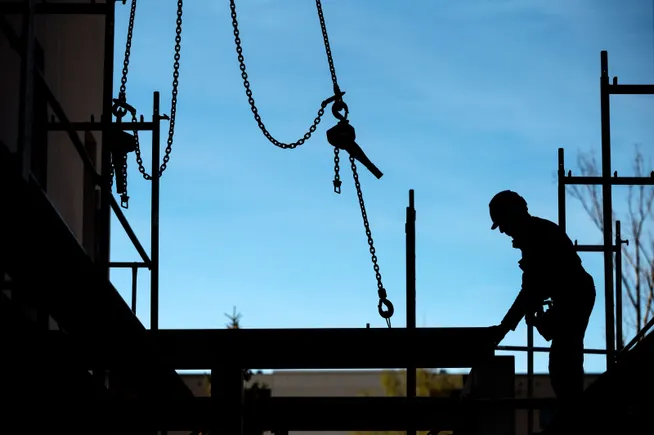
Despite these legislative and statistical glimmers of hope, industry analysts warn that closing the mortality gap is an uphill battle. It demands unyielding, consistent intervention, innovative corporate benefits, and a radical cultural shift across every jobsite in America.
A Decade of Reckoning: Chronology of an Industry Awakening
To understand how the construction industry arrived at its current intersection of advocacy and peril, it is necessary to examine how the conversation has evolved over the past decade.
- 2013: Luke Johnson dies by suicide, a private tragedy that would ultimately inspire his brother, Trent Johnson, to transform corporate mental health advocacy years later.
- 2019: Construction Suicide Prevention Week is formally established as a nationwide, concerted initiative. It provides jobsites with structured opportunities to implement "safety stand-downs," temporarily halting work to discuss mental health and dismantle lingering stigmas.
- August 2024: Recognizing the systemic nature of the crisis, federal lawmakers step up. Senator Catherine Cortez Masto introduces the Constructing the Path to Suicide Prevention Act to federally fund and research suicide drivers within the trades.
- September 2024–Present: Awareness weeks and months continue to multiply across the nation. However, industry leaders pivot their messaging, arguing that annual tool-box talks are no longer sufficient and that structural reform—addressing physical pain, heavy workloads, and inadequate mental health utilization—must become the primary objective.
The Utilization Paradox: Supporting Data and Metrics
While construction companies increasingly boast about offering robust mental health benefits, empirical data reveals a startling disconnect between availability and actual utilization.
John Gaal, director of worker wellness at the nonprofit Missouri Works Initiative, has dedicated years to studying suicide rates and mental health behaviors within the building trades. During a comprehensive survey of carpenter apprentices in St. Louis and Toronto, Gaal uncovered a shocking statistic: exactly 0% of respondents reported utilizing traditional Employee Assistance Programs (EAPs) or Member Assistance Programs (MAPs) when experiencing psychological distress.
Assuming a rounding error, Gaal double-checked the raw data. The zeros held firm.
“This was very disturbing,” Gaal said. “And as I dug further into this in our industry, there’s only about 3% to 7% uptake on EAPs and MAPs overall.”
Josh Liss, CEO and co-founder of Counslr—a text-based mental health support platform—reports matching trends, noting that human resource professionals across various sectors frequently report EAP utilization rates as low as 2%. However, when Counslr establishes partnerships with construction-focused employers, the engagement profile shifts dramatically: 89% of employee users report that the platform represents the very first time they have ever accessed company-sponsored mental health assistance.
Liss attributes the chronic underutilization of legacy EAPs to financial anxiety and friction in the user experience. Most traditional EAPs provide a limited number of free counseling sessions, after which the worker is expected to pay out of pocket.
“So people say to themselves, ‘Is the issue I’m dealing with big enough to use up one of my free sessions, or should I suck it up and wait for a bigger issue?’” Liss explained. “Which forces people to think with their wallets, which is not what we want.”

Compounding the problem is the demographic reality of the workforce. Stephanie Lemek, a former HR construction professional and founder of the mental health consulting firm The Wounded Workforce, points directly to the persistent "macho man" archetype embedded in construction culture.
“My favorite audience is the person who absolutely does not want to be talking about mental health,” said Lemek, who serves on the board for Construction Suicide Prevention Week. “That foreman or superintendent with their arms crossed, rolling their eyes, saying, ‘I can do this work. I’ve been doing it for years. I don’t need that support.’”
Despite generations of progress in softening these attitudes, Lemek notes that the industry will always harbor "John Wayne types"—traditionalists who reject touchy-feely interventions and require an entirely different engagement strategy.
Official Responses and Strategic Shifts
Industry leaders and mental health professionals agree that standard approaches—such as asking workers to sit in a circle and share their feelings—often alienate the very individuals most at risk. The solution, experts argue, lies in reframing mental health through the lens of existing operational strengths.
“I’m a big believer of starting in a place of existing strength,” Lemek said. “Instead of having mental wellbeing, like Kumbaya circles, everyone is used to talking about safety on the jobsite. So maybe it’s as simple as, once a month, your safety stand-down or your toolbox talk is mental health-focused.”
When companies integrate this approach effectively, the results can be transformative. Trent Johnson noted tangible successes on projects where superintendents received targeted training in crisis de-escalation.
“I can tell you unequivocally that on projects where we have actually had people with mental health crises on our project sites and the superintendents were trained in how to approach someone that’s in a mental crisis and walk them through it and talk them through it, it’s been very, very effective,” Johnson affirmed.
Beyond dialogue, experts stress that leadership must address the physical root causes of psychological strain. Construction is grueling labor, demanding immense physical fortitude. When chronic physical pain collides with occupational stress, the emotional toll compounds exponentially.
Paula Allen, global leader of research and insights at TELUS Health, a Vancouver-based health and human services company, highlights the direct neurobiological link between physical suffering and mental despair.

“Pain leads to anxiety. Pain leads to more pain. Pain leads to a sense of helplessness,” Allen explained.
To break this cycle, Allen advocates for structural changes in how labor is scheduled and distributed. Rather than treating physical exhaustion as an unavoidable hazard, project managers can design workflows that mitigate chronic strain. For instance, companies can establish mandatory job rotation schedules for heavy lifting, ensuring that no single worker bears the brunt of punishing physical labor without adequate recovery breaks.
Lemek echoes these sentiments, noting that operational flexibility—such as granting crews an extra day off once a month following grueling stretches of consecutive full-time shifts—yields massive dividends in workforce morale and well-being.
Implications for the Future of Building
As the construction industry observes Construction Suicide Prevention Week, stakeholders are unified in their message: raising awareness for five days a year is merely the starting line. To secure long-term viability, companies must embed mental health support into the daily rhythm of operations year-round.
The implications of failing to do so extend far beyond human tragedy; they directly impact project safety, labor retention, and corporate sustainability in the face of a chronic nationwide labor shortage. When a skilled tradesperson suffers in silence, the entire jobsite absorbs the shockwave.
Ultimately, industry veterans emphasize that the metrics of success cannot be measured solely by the number of pamphlets handed out or toolbox talks conducted. True progress will be marked by the industry’s ability to reach the quietest, most resistant workers before crisis turns to tragedy.
As Josh Liss poignantly summarized: “If there was one really important take-home message that I could drill down on, it would be that the people who need support most are the least likely to speak up.”
