Published Date: September 1, 2026 Author: Agustina Íñiguez (Adapted & Expanded) Location: Saint-Ouen, Paris, France
Main Facts
In an era dominated by rapid digital fabrication, standardized mass-production, and hyper-optimized industrial supply chains, the Paris-based practice Atelier CRAFT is championing a radical return to tactile intelligence. Founded in 2016 in Saint-Ouen, the multi-disciplinary studio operates at the intricate intersection of architecture, interior design, scenography, and craftsmanship. Guided by their core manifesto—"Transform design through making"—the practice rejects the traditional silos that separate conceptual design from physical execution.
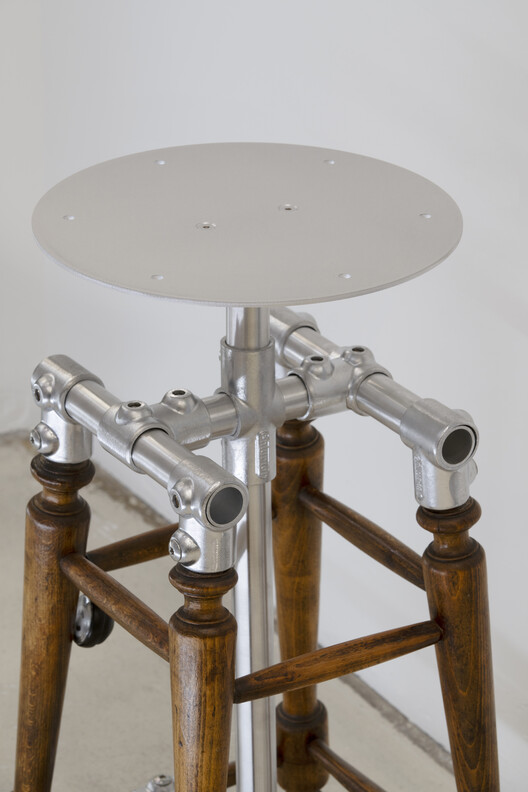
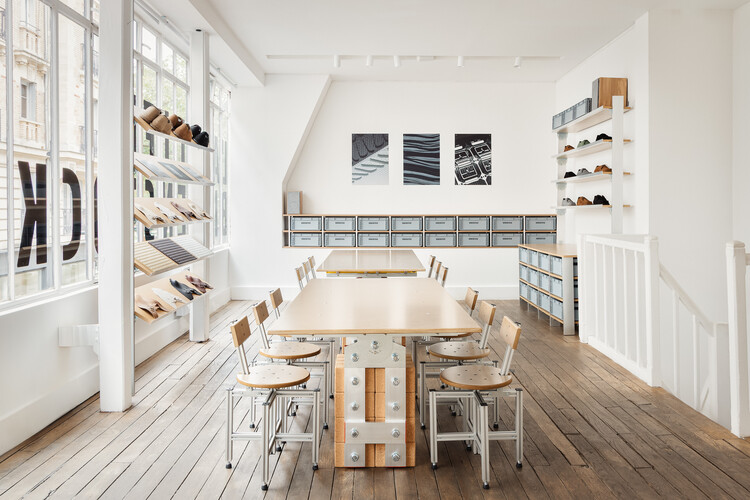
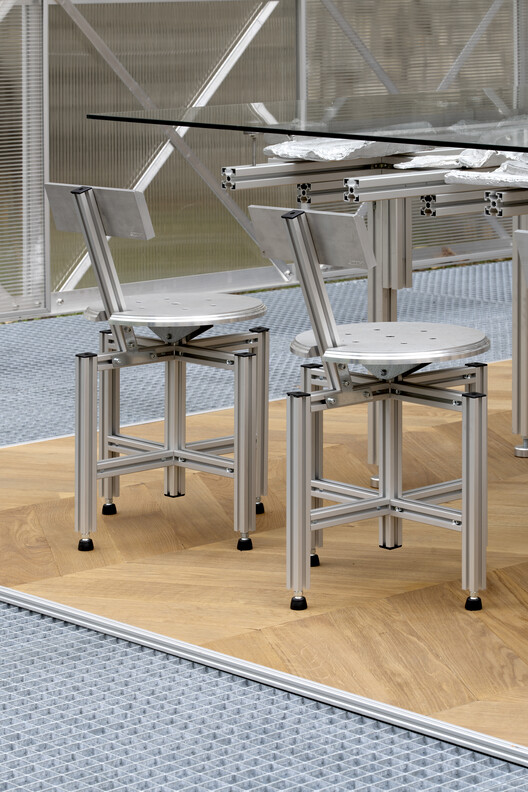
By combining raw timber, industrial components, and carefully curated reused objects, Atelier CRAFT pioneers an architecture of reversibility. Their portfolio spans high-profile cultural, commercial, and social environments, including innovative retail spaces for Birkenstock and New Balance, diplomatic culinary pavilions like AMBACTOS, and poetic historical interventions such as Palanquin 1804–2024. Rather than hiding structural elements behind polished finishes, the studio exposes the underlying mechanics of assembly, placing the artisan’s hand, raw material honesty, and ecological accountability at the forefront of the spatial experience.
Chronology of Evolution: From Workshop Roots to Global Recognition
To understand Atelier CRAFT’s distinct trajectory, one must trace the studio’s steady expansion from an experimental workshop into a recognized voice in contemporary European design:
2016 (Foundation): Atelier CRAFT is established in Saint-Ouen, Paris, born from a shared desire between its founders to bridge the widening gap between theoretical design and physical craftsmanship.
2019–2023 (Commercial Scenography & Material Exploration): The practice gains critical traction through temporary and permanent commercial installations—such as retail spaces for New Balance Citadium Caumartin—refining their methodology of borrowing, renting, and repurposing materials.
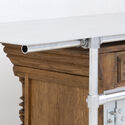
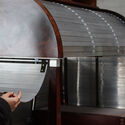
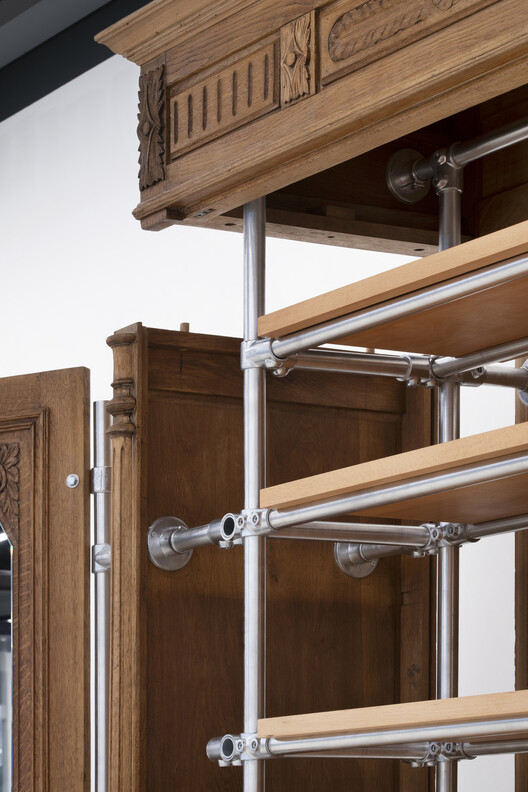
2024 (Palanquin 1804–2024): The studio undertakes a delicate historical hybrid project, reinterpreting a 19th-century handcrafted desk. By introducing a contemporary supporting structure that respects the original joinery, they prove that historical artifacts can be adapted for modern utility without losing their intrinsic heritage.
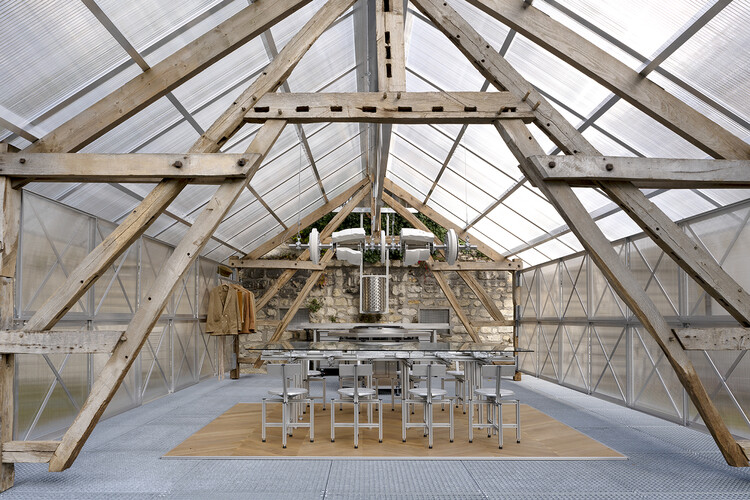
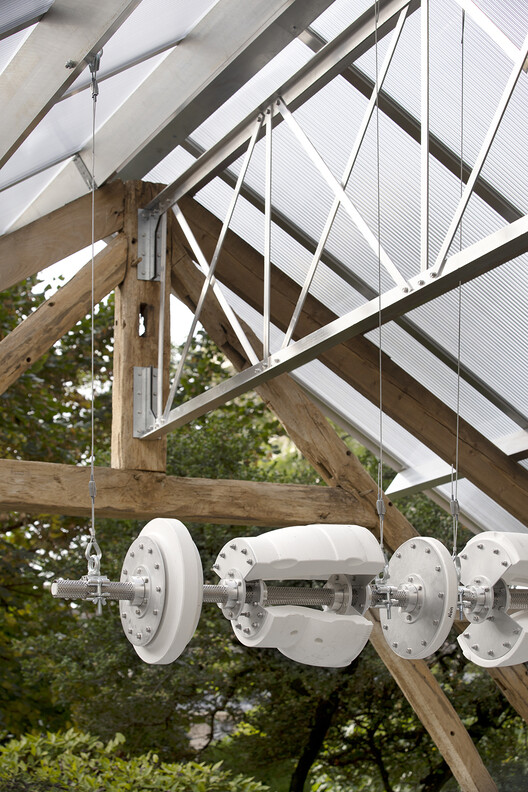
2025 (AMBACTOS, Tomorrow’s Embassy Kitchen): Atelier CRAFT completes a major milestone in diplomatic architecture. By placing workers, raw materials (such as reclaimed farm oak), and French culinary arts at the heart of the embassy space, they redefine the visual language of political representation.
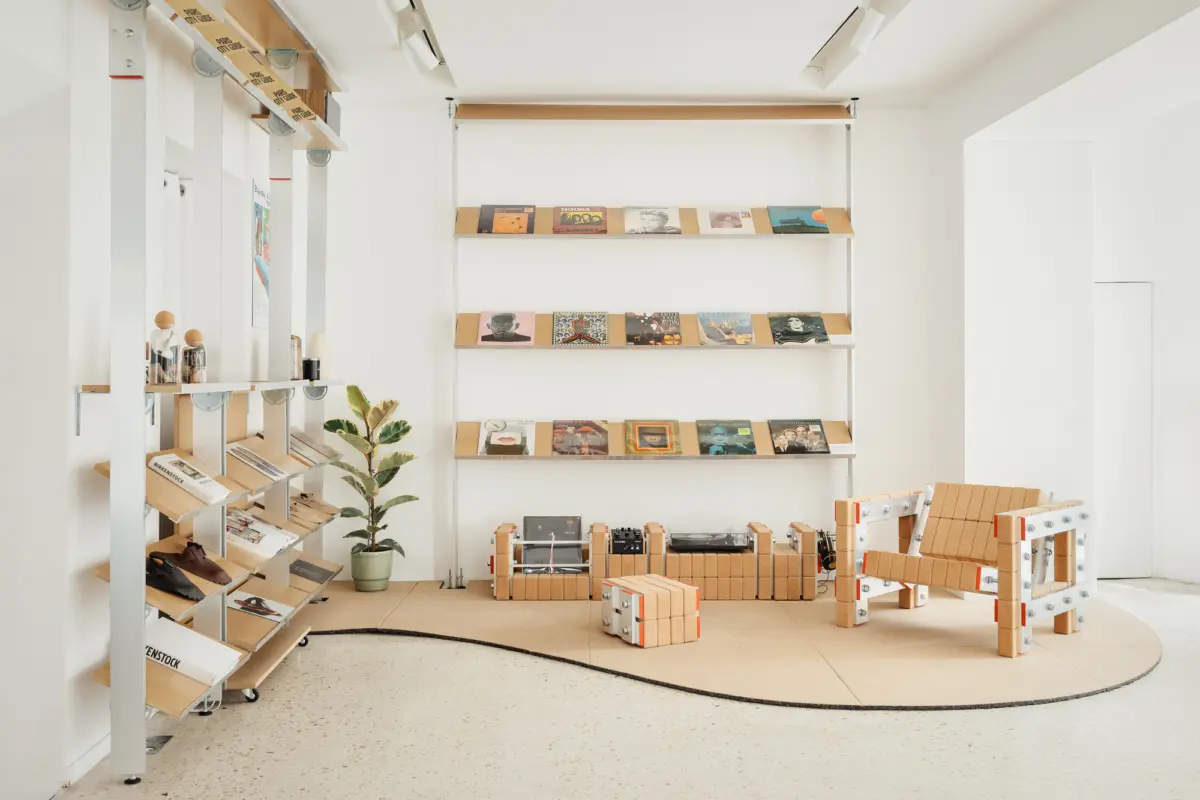
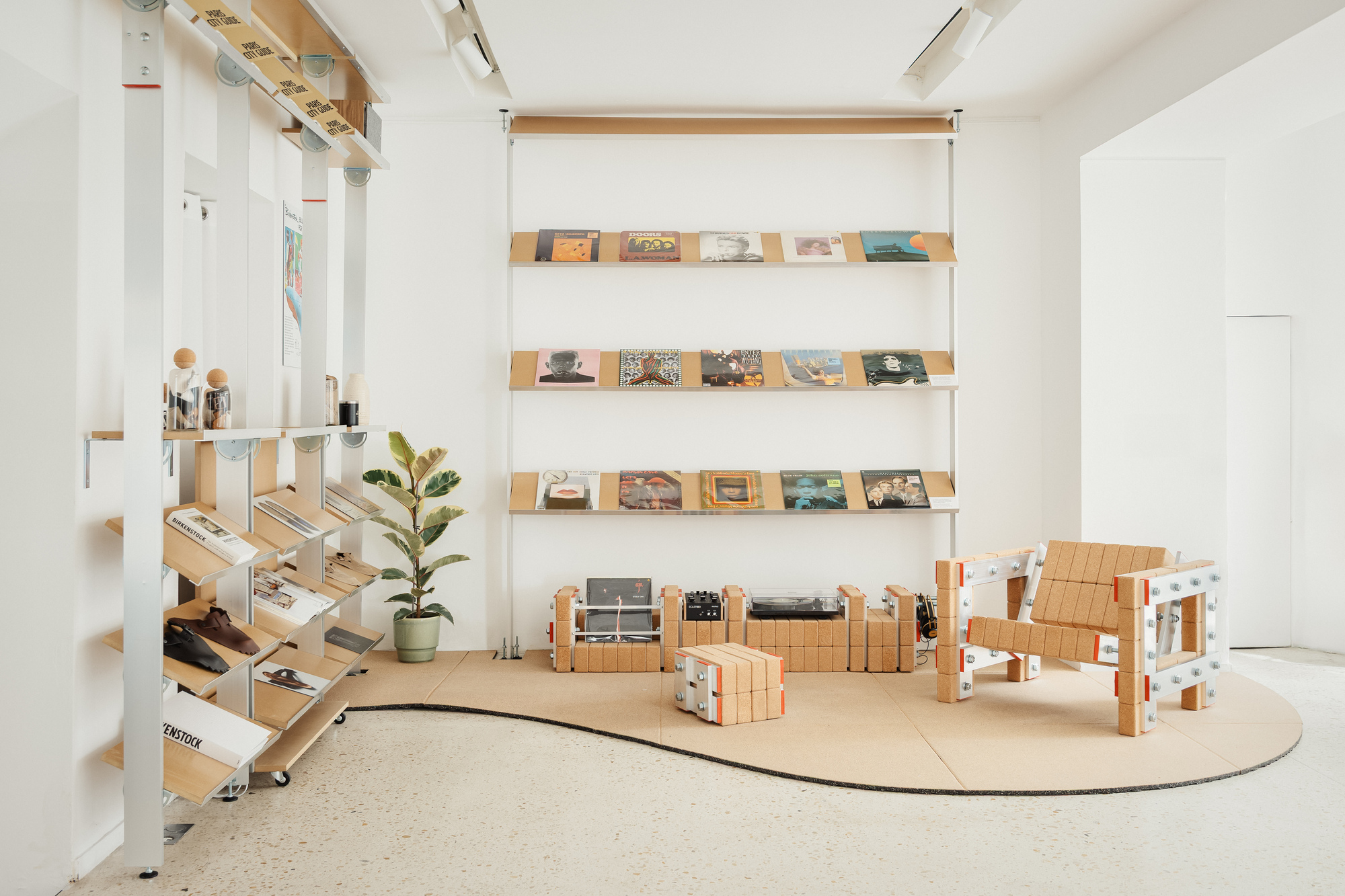
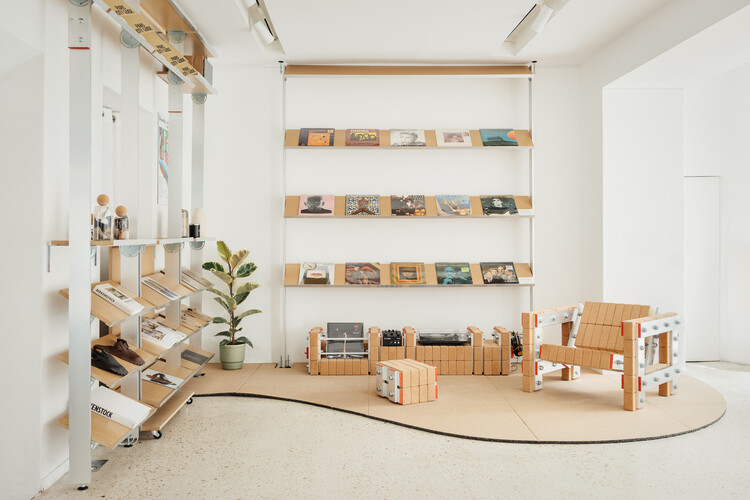
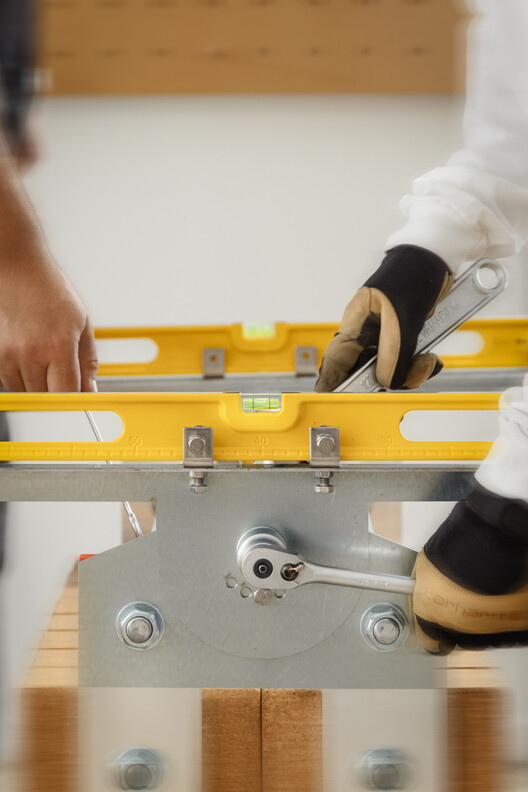
Late 2025 (L’Atelier Birkenstock): The studio launches a major retail architecture project utilizing recycled cork—directly sourced from the client’s manufacturing waste streams—paired with industrial elements like mason’s rules and medium-density fiberboard (MDF) to make the construction process transparent to the consumer.
2026 (Present Day): As part of ArchDaily’s ongoing exploration into "The Architecture of Craft," Atelier CRAFT articulates its broader mission: advocating for the reintegration of hand-based learning and manual experimentation into mainstream architectural education.
Supporting Data and Materiality Metrics
Atelier CRAFT’s operational framework relies on a strict taxonomy of material sourcing and environmental responsibility. Moving away from standard linear consumption, the studio categorizes its material acquisition into five distinct protocols:
Rental: Primarily deployed for ephemeral and short-term scenography projects to eliminate post-event waste.
Borrowing: Sourcing components directly from clients or local suppliers with guaranteed return protocols.
Secondhand Procurement: Rescuing elements from demolition sites, historical archives, and industrial yards.
In-House Workshop Stock: Utilizing leftover timber, metal offcuts, and experimental mock-ups generated organically within their Saint-Ouen facility.
New Acquisition with Reversibility Guarantees: Purchasing new materials strictly under the condition that they can be disassembled and reused down the line.
Through these methods, the studio avoids greenwashing, treating circularity not as a superficial marketing metric, but as an invisible structural baseline that liberates the design team to focus on narrative building, tactile beauty, and spatial psychology.
Official Responses: In Conversation with Atelier CRAFT
In an exclusive interview with ArchDaily, the founders of Atelier CRAFT unpack the philosophy behind their hybrid practice, the dialogue between manual and industrial systems, and their vision for the future of the built environment.
On the Genesis of Design and Contextual Roots
"Our design process always begins with a story: we research historical, social, and cultural narratives. This is why our choices for each project or client are always grounded in the context, either with materials or historical references. After years of making, we’ve also begun to define a constructive language and recognize our obsessions: the repurposing of objects, the beauty of raw material, and craft. We summarize our philosophy in one sentence: Transform design through making."
On Hybrid Practice and the Artisan’s Touch
"We have a hybrid creative practice of designer/maker. Bringing together the design and the making has always been a guiding principle since the beginning… Having our design studio and workshop intertwined allows us to create in a very organic way and with great freedom: we don’t need to draw everything because most design solutions emerge in the workshop while experimenting.
To be honest, we have never defined ourselves as artisans, as our goal is not to develop specific skills within a particular field. However, we are influenced by craftsmanship because of spatial relationships… We simply seek to ensure the reversibility of our projects and bring transparency to the construction process, showing how things are made."
On Bridging Craftsmanship and Industrial Efficiency
"Our work sits between manual and semi-industrial. Industry is fascinating because of its efficiency and optimization, but its limitation lies in the lack of adaptability to specific contexts. It tends to de-specify everything. DIY, on the other hand, guarantees uniqueness but is difficult to reproduce. We aim to question the industry, reclaim its know-how, and see how it can be applied at smaller, more contextual scales. By mixing both worlds, craftsmanship and mass production, we can imagine optimized yet contextualized responses."
On Reconciling Timeframes: The Palanquin Project
"On this particular project, Palanquin 1804–2024, it was interesting to work with a prestigious, well-crafted piece of furniture from the 19th century… When we got it, the fact that it was handcrafted made us realize what could or couldn’t be done with it in order to respect the artisans’ work. At that time, it was designed to be completely disassembled. Despite being 220 years old, the desk was still in one piece and in excellent condition. Our idea was to honor the skills of its makers while incorporating our own touch… In this way, our purpose is to create timeless objects and spaces that draw on the past, which we try to adapt into present uses so that it can endure into the future. Our work attempts to conciliate these three timeframes."
Implications for Modern Architecture and Education
The work of Atelier CRAFT signals a profound shift in how the architectural profession must adapt to ecological realities and technological fatigue. By demonstrating that craft and industry are not mutually exclusive, the studio points toward several vital implications for the future of the built environment:
The Re-embedding of Architectural Education: Modern architecture schools have historically divorced the drawing board from the workshop. Atelier CRAFT’s philosophy advocates for the reintroduction of hand-based learning, physical modeling, and material experimentation into academic curricula, ensuring future architects understand the physical consequences of their lines.
Challenging the Homogenization of Commercial Spaces: Corporate retail and institutional architecture often rely on globalized supply chains that strip spaces of local identity. By repurposing industrial waste—such as Birkenstock’s cork dust or reclaimed farm timber—Atelier CRAFT proves that commercial interiors can carry site-specific historical narratives.
Redefining Monumentality and Power: Through projects like AMBACTOS, the studio shifts the architectural expression of diplomatic power away from intimidating, impenetrable stone facades toward spaces of hospitality, transparency, and manual labor appreciation.
The Rise of Reversible Architecture: As urban demolition generates staggering volumes of global waste, Atelier CRAFT’s strict adherence to mechanical joints, demountable structures, and material tracking offers a scalable blueprint for the circular economy.
Ultimately, Atelier CRAFT bridges the gulf between the mind and the hand. In doing so, they provide a compelling roadmap for contemporary architecture: one where buildings and objects are not merely assembled, but thoughtfully crafted to endure through past, present, and future.