

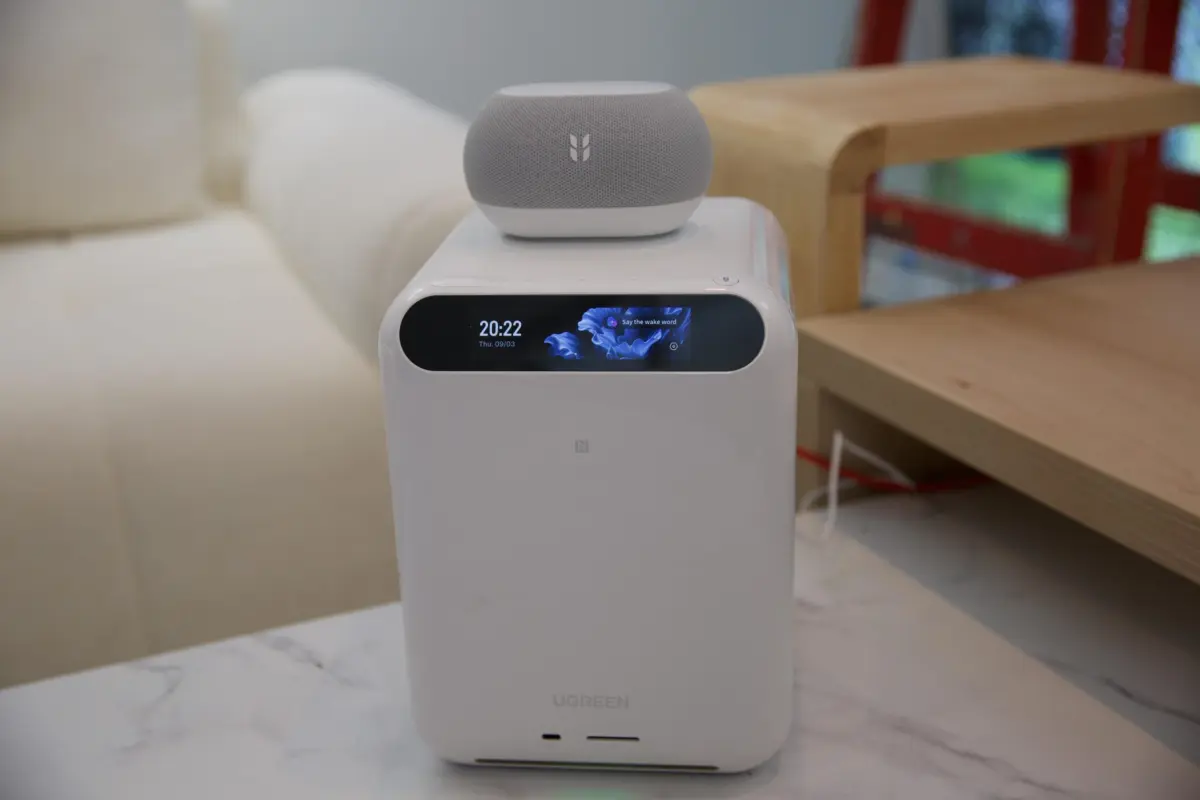
BERLIN — Known globally for its reliable charging accessories, high-powered power banks, and robust Network-Attached Storage (NAS) solutions, Ugreen is boldly expanding its territory. This week at the IFA tech show in Berlin, the company made a monumental splash by announcing the HomeAgent smart home platform. Marrying local security camera storage, advanced on-device artificial intelligence, and comprehensive smart home control into a single ecosystem—all managed by an in-house voice assistant named Uliya—Ugreen is positioning itself as a heavyweight contender in the burgeoning local-first smart home market.
As consumer fatigue over recurring cloud subscriptions mounts and data privacy concerns reach an all-time high, Ugreen’s timing could not be more precise. The company’s pitch is simple yet ambitious: keep all user data strictly inside the home, eliminate monthly fees, and leverage powerhouse on-device hardware to handle sophisticated smart home automations.

Main Facts: What is Ugreen HomeAgent?
At the core of the HomeAgent ecosystem is a sophisticated local hub that acts as the central brain for the entire smart home. Unlike traditional smart home hubs that rely heavily on cloud computing to process voice commands, run automations, and analyze security footage, Ugreen’s HomeAgent system processes everything locally.
The platform is designed around three distinct hub configurations, catering to varying levels of consumer demand and computational necessity:

- HomeAgent HA100: The entry-level model, built to execute simple, rule-based automations and respond to specific, direct voice commands.
- HomeAgent HA100 Pro: A mid-tier upgrade that introduces semantic and context-aware understanding to the local voice assistant.
- MasterAgent MA100: The powerhouse of the lineup. Powered by an enterprise-grade NVIDIA Jetson Thor T5000 platform, this flagship model delivers up to a staggering 2,070 TFLOPS of local AI performance, combining a high-capacity NAS and a smart home controller into one monolithic device.
Alongside these hubs, Ugreen introduced a dedicated smart speaker to host the Uliya voice assistant, a line of security cameras under the SynCare branding (including the Indoor Cam ID500 Pro, the PoE Cam OD600 Pro, and the battery-powered OD800 Pro), and a unique E Ink Spectra-powered digital photo frame that showcases personal photos stored securely on the local hub.
Chronology: The Journey to IFA and the Roadmap Ahead
Ugreen’s evolution into smart home infrastructure has been methodical, building upon its foundational success in consumer electronics and data storage.

- Phase 1: Building the Base (Prior Years): Ugreen established a formidable reputation in the peripherals market, perfecting external power delivery, multiport chargers, and eventually breaking into consumer NAS enclosures. These products laid the technical groundwork for handling large amounts of local data storage.
- Phase 2: Development of Edge AI (Late 2024–Early 2025): Recognizing the industry-wide shift toward privacy-focused edge computing, Ugreen engineers began developing a unified software platform capable of handling multi-camera video streams, natural language processing, and IoT protocols locally.
- Phase 3: The IFA Unveiling (This Week): Ugreen officially pulled back the curtain on the HomeAgent platform at IFA in Berlin. Journalists and industry analysts were treated to hands-on demonstrations showcasing natural language automation control—such as turning on Nanoleaf lights and adjusting smart blinds simultaneously via Uliya.
- Phase 4: Crowdfunding Launch (October): Eschewing an immediate traditional retail rollout, Ugreen announced that the HomeAgent system will debut on Kickstarter this coming October, featuring discounted early-bird pricing to gauge consumer demand and build an early adopter community.
- Phase 5: Retail Release and Ecosystem Expansion (Late 2025 and Beyond): Full retail pricing has yet to be finalized. Following the crowdfunding campaign, Ugreen plans to roll out certified device compatibility lists and broaden its third-party hardware integrations.
Supporting Data: Hardware, Compute, and Ecosystem Specifications
To truly understand where Ugreen fits in the market, one must examine the raw specifications and operational metrics of the HomeAgent ecosystem:
- AI Processing Performance: The flagship MasterAgent MA100’s NVIDIA Jetson Thor T5000 platform boasts up to 2,070 TFLOPS of AI capability, enabling complex on-device computer vision tasks.
- Local Features Enabled by AI:
- Cross-camera tracking across multiple properties or rooms.
- Precise smart alerts distinguishing between people, vehicles, pets, and packages.
- Conversational status queries, such as asking, "Where is my pet now?"
- AI-powered video search that generates text descriptions of historical events.
- Connectivity Protocols: The HomeAgent hub serves as a certified Matter controller, offering broad compatibility with third-party devices operating on Wi-Fi, Zigbee, Thread, Bluetooth, NFC, ONVIF/RTSP, and PoE (Power over Ethernet).
- Initial Device Compatibility: While any standard-compliant Matter device should theoretically connect, Ugreen’s initial phase explicitly supports lights, switches, sensors, and curtains, with a curated approved list featuring brands like Aqara, ThirdReality, SwitchBot, and Eve.
- Storage and Fees: By storing all video feeds and personal media (music, movies, photos) locally on built-in storage or via an SD card slot on the hub, users completely bypass the monthly subscription fees required by mainstream cloud-dependent ecosystems like Amazon Ring/Alexa and Google Nest/Gemini for Home.
Note on Connectivity: While the system is heavily focused on local processing, Ugreen notes a few natural caveats: internet access is still required if users wish to receive push notifications, view security feeds remotely while away from the home network, or optionally route the Uliya voice assistant through the cloud.

Official Responses and Industry Context
Ugreen’s aggressive pivot places it squarely in a rapidly expanding niche of the smart home market. Consumers are increasingly pushing back against the subscription fatigue brought on by tech giants charging monthly fees just to view historical security footage or utilize advanced AI features.
Ugreen is not alone in identifying this consumer pain point. At the very same IFA show, competitor Anker launched a strikingly similar product, the Eufy MindBase, signaling an industry-wide trend toward localized, high-compute home servers. Other players like SwitchBot, Reolink, and Aqara have also made substantial headway into local-first automation.

When speaking with media representatives at the Ugreen IFA booth, executives emphasized that the primary design philosophy of HomeAgent is user sovereignty. "Your digital life belongs in your home, not on a remote server," a company spokesperson suggested during hardware demonstrations. By removing the middleman—the cloud server—Ugreen aims to eliminate single points of failure, latency issues, and privacy vulnerabilities associated with data harvesting.
Industry analysts, however, have noted potential hurdles. Chief among them is pricing. The inclusion of enterprise-grade silicon like the NVIDIA Jetson Thor T5000 in the MasterAgent MA100 means that the top-tier configuration will likely carry a substantial upfront cost. Furthermore, while the platform relies on the universal Matter standard, early device compatibility lists are relatively narrow, meaning enthusiasts accustomed to the sprawling ecosystems of Home Assistant or Apple HomeKit may need to exercise patience as Ugreen certifies more third-party hardware.

Implications: What HomeAgent Means for the Future of Smart Homes
The introduction of Ugreen’s HomeAgent platform highlights a broader philosophical battleground in consumer technology: Edge AI vs. Cloud AI.
For years, mainstream smart home adoption has been dictated by companies that treat consumer data as a recurring revenue stream. Cameras stream footage to AWS or Google cloud servers, where compute-heavy neural networks parse the video before sending notifications back to your phone. This model has resulted in continuous subscription overheads and valid anxieties regarding domestic privacy.

Ugreen’s approach—bringing massive localized compute power directly into a living room or utility closet hub—redefines what a smart home appliance can be. It bridges the gap between traditional DIY enthusiast setups (such as custom server racks running local LLMs and Home Assistant) and plug-and-play consumer electronics.
If successful, HomeAgent could pressure legacy smart home giants to rethink their monetization models, forcing them to offer robust local storage alternatives or risk losing privacy-conscious consumers to hardware-forward brands like Ugreen and Anker.

However, the ultimate success of the platform will not be determined on a convention floor in Berlin. It will rest entirely on user experience: how seamlessly the system handles edge cases, how intuitive the Uliya voice assistant proves to be in day-to-day use, and whether the initial hardware pricing structure proves accessible enough to convince everyday consumers to make the switch to local-first living.
As the HomeAgent platform prepares for its crowdfunding debut this October, the smart home industry is watching closely. Ugreen may have built its reputation on keeping our phones charged on the go, but its next great venture is dedicated to keeping our smart homes secure, private, and entirely under our own roof.
