

Main Facts
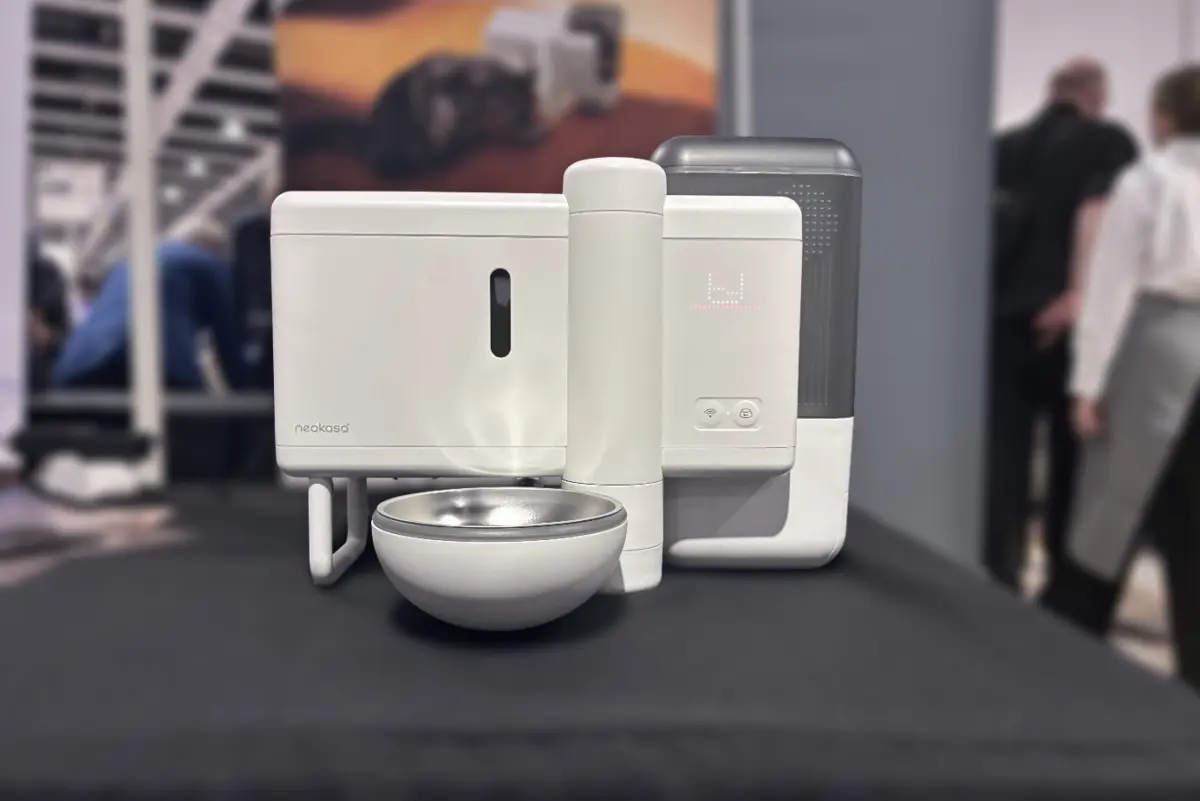
The landscape of pet technology is rapidly evolving, moving far beyond the simple mechanical timers and basic dry-kibble dispensers of the past. At a press preview ahead of IFA 2026 in Berlin, smart home and pet care brand Neakasa introduced its latest innovation: the Riko (also referred to as the Rika). Retailing at $200, the Riko is an automated, smart wet-food maker designed primarily for cats, functioning much like an "Instant Pot" for feline gastronomy.
Unlike traditional automatic pet feeders, which are almost exclusively limited to dry kibble, or legacy wet-food alternatives that rely on bulky refrigeration trays to keep pre-poured cans or pouches fresh for a couple of days, the Riko takes a completely different approach. It houses a dedicated compartment for shelf-stable freeze-dried food alongside a built-in water reservoir. When mealtime arrives—either triggered manually or scheduled via a companion smartphone app—the device automatically combines and rehydrates the ingredients in real time, serving up a fresh, gourmet meal on demand.
Roughly the size of an average kitchen drip coffee maker, the unit is designed to hold enough freeze-dried provisions to sustain a cat for up to seven days. While marketed specifically toward feline companions, its autonomous preparation and portion-control capabilities open up intriguing possibilities for small dog breeds as well. The device represents a significant leap forward for busy pet owners who want to feed their animals wet food without the hassle of manual scooping, spoilage worries, or the limitations of short-term refrigerated trays.
Chronology
To understand how the Riko came to be one of the most talked-about gadgets ahead of IFA 2026, it helps to look at the timeline of automated pet care evolution and Neakasa’s product trajectory:

- The Dry-Food Era (Early 2010s–Early 2020s): For over a decade, automatic pet feeders meant one thing: plastic hoppers that dropped dry kibble down a chute on a timer. While great for convenience, this left owners of pets requiring wet food—often prescribed by veterinarians for urinary tract health, hydration, or picky eaters—entirely out in the cold.
- The Refrigeration Generation: Competitors attempted to solve the wet-food dilemma by introducing compartmentalized trays fitted with ice packs or small internal refrigeration units. These devices typically maxed out at two to three meals, requiring frequent manual reloading and cleaning to prevent bacterial growth.
- Neakasa’s Rise in Smart Pet Care: Shenzhen-based Neakasa built a strong reputation in the global smart pet market through products like self-cleaning litter boxes (such as the popular Neakasa M1) and automated dry-food dispensers. However, the company lacked a robust solution for wet-food enthusiasts.
- Late 2024 to Mid-2026 (Development & Prototyping): Recognizing a major gap in the market for automated wet feeding that didn’t rely on refrigeration, Neakasa engineers developed a system utilizing shelf-stable, freeze-dried components combined with automated water mixing—eliminating the spoilage clock entirely.
- September 2026 (IFA Preview & Launch): Neakasa debuted the Riko at a press preview event ahead of the official opening of IFA 2026 in Berlin. Garnering immediate attention from tech and lifestyle journalists for its unique "Instant Pot-style" functionality, the device officially went on sale for $200 via Neakasa’s direct-to-consumer website.
Supporting Data and Technical Specifications
The Riko’s unique value proposition relies on specific design choices and capacities tailored to modern pet parenting needs:
- Price Point: $200 USD, positioning it competitively against high-end smart litter boxes and premium multi-meal refrigerated pet feeders.
- Capacity: The dry storage compartment holds enough freeze-dried food to last approximately 7 days before needing a refill.
- Water Integration: Features an integrated water reservoir that measures and dispenses exact proportions of water to rehydrate the food precisely to the desired consistency.
- Footprint: Engineered to be compact, roughly matching the size and counter or floor footprint of a standard kitchen drip coffee maker.
- Connectivity: App-enabled smart integration allows users to set custom feeding schedules, monitor intake habits, and trigger on-demand meals remotely.
- Target Audience: Optimized for cat owners, though structural design and portion sizes make it adaptable for small canine companions.
Official Responses and Industry Perspectives
While consumer tech exhibitions like IFA are traditionally dominated by televisions, smartphones, and household kitchen appliances, pet tech has carved out an increasingly prominent space on the show floor.
Industry analysts and reviewers have responded enthusiastically to the Riko’s mechanical ingenuity. Writing for CNET during the Berlin preview, Managing Editor for Home and Kitchen David Watsky noted: "As strange as it may sound, this one makes great sense for busy or forgetful owners of cats that prefer wet food… This is the first one we’ve seen that whips up your cat’s lunch in real time."
Neakasa representatives emphasize that the Riko was born out of direct consumer feedback regarding the limitations of existing wet-food automated solutions. Traditional units forced owners into a rigid routine of washing out open cans, managing sticky leftovers, and worrying about food spoiling if a pet decided not to eat immediately. By shifting the paradigm from storing pre-wet food to manufacturing it fresh at the exact moment of consumption, Neakasa aims to eliminate food waste and reduce the daily friction points of pet care.

Implications
The introduction of the Neakasa Riko carries several broader implications for the pet tech market, veterinary health standards, and daily consumer habits:
1. A Shift in Pet Nutrition Habits
Veterinarians frequently recommend wet food for cats due to its high moisture content, which helps prevent kidney disease and urinary tract blockages. However, many owners default to dry kibble simply because automated dry feeders are vastly more convenient. By bridging the gap between convenience and wet-food diets, devices like the Riko could lead to healthier long-term dietary habits for millions of indoor cats.
2. The Evolution of "App-Connected" Pet Care
The Riko is part of a larger trend where smart home ecosystems extend past human comfort into total pet wellness. When paired with smart litter boxes that track waste output and smart water fountains that monitor hydration, automated real-time feeders give owners a comprehensive data loop regarding their pet’s health, making it easier to spot early signs of illness or stress.
3. Market Disruption for Pet Appliance Manufacturers
For years, the wet-food automatic feeder category remained stagnant, dominated by mechanical lids and ice packs. The success or failure of the $200 Riko will likely dictate whether competitors rush to adopt "real-time rehydration" technology. If consumers embrace the concept of freeze-dried dispensing, we may soon see an influx of multi-ingredient, custom-blend smart pet kitchens capable of mixing supplements, medications, and specialized diets on the fly.

Ultimately, the Riko proves that innovation in the smart home sector is no longer confined to human kitchens. Whether cats are ready to embrace their inner sous-chef remains to be seen, but for busy owners, the era of automated gourmet pet dining has officially arrived.
