

By Dominic Preston
Enriched and Expanded Reporting
Introduction: The Timing Paradox of the Global Stage
In the fast-paced ecosystem of mobile technology, geography and release timing can completely alter how a device is perceived. When Vivo originally pulled the curtain back on the X Fold 6 in China this past June, it was received as a competent, iterative entry in a crowded domestic market. However, months later, as the device prepares for its international rollout, the broader smartphone landscape has shifted dramatically.
With industry heavyweights like Apple and Samsung migrating toward shorter, wider, passport-style form factors—exemplified by devices like the Samsung Galaxy Z Fold 8 and the heavily discussed iPhone Duo—Vivo’s global contender suddenly feels caught in a temporal crossfire. Booming onto the international scene with a taller, narrower traditional smartphone aspect ratio, the X Fold 6 risks looking momentarily old-fashioned. Yet, beneath its familiar physical dimensions lies a powerhouse engineered to shatter expectations—boasting camera hardware and battery capacity that few competitors on the global stage can match.
Main Facts: What Defines the Vivo X Fold 6?
As Vivo brings its flagship foldable to international markets, prospective buyers and tech enthusiasts must weigh traditional ergonomics against bleeding-edge internal specifications. The device arrives with a distinct set of hardware choices that position it uniquely within the upper echelon of modern foldables.
- Display Architecture: The X Fold 6 features a 6.51-inch cover display utilizing a standard, candy-bar smartphone 20:9 aspect ratio. Unfolded, it reveals an expansive 8.02-inch internal panel that opens into a near-square workspace.
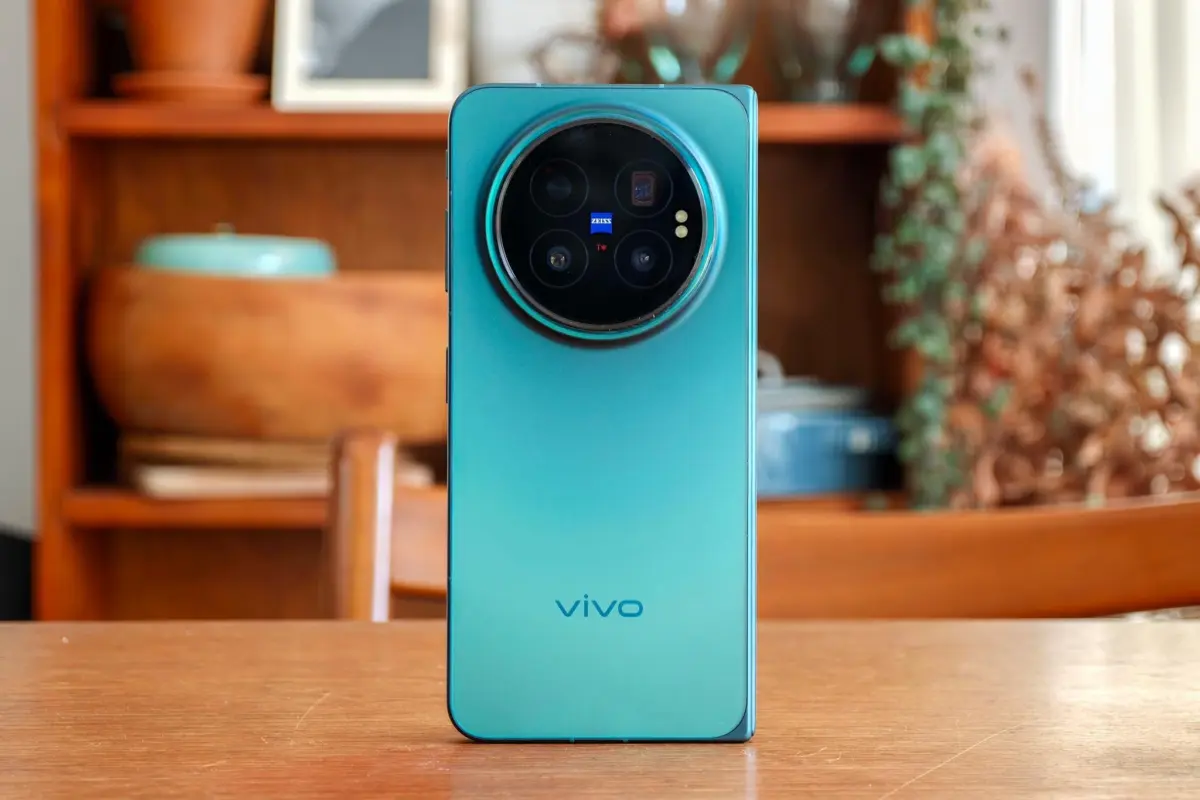
- Camera Capabilities: The crowning achievement of the hardware suite is its imaging system. It houses a massive 1/1.4-inch-type, 200-megapixel main camera sensor—standing as one of the largest photographic sensors ever embedded in a foldable chassis, trailing only select Huawei models. This is supported by dual 50-megapixel auxiliary lenses dedicated to telephoto and ultrawide duties.
- Internal Powerhouse: Processing duties are handled by a customized "Super Edition" of the MediaTek Dimensity 9500 chipset, tailored specifically for high-efficiency multitasking and heavy graphical loads.
- Battery and Durability: Fueling the system is a massive 6,900mAh battery cell, which pushes boundaries for foldable endurance. Durability-wise, the device carries an IP59 rating, offering robust protection against dust and high-pressure water ingress, though it stops short of the absolute peak of ruggedization.
- Physical Trade-offs: While the internal specifications are top-tier, the physical hardware still betrays some maturing technology; the screen crease remains visibly noticeable compared to the rapidly improving hinge systems of its newest rivals.
Chronology: The Journey from Domestic Launch to Global Expansion
To understand how the Vivo X Fold 6 arrived at this pivotal moment, it is necessary to retrace its developmental and commercial timeline over the past year.
Phase 1: The Domestic Debut (June)
When Vivo initially announced the X Fold 6 in its home market of China, the foldable market was locked in a fierce, localized war for thinness, weight reduction, and crease minimization. At that time, the device was benchmarked primarily against domestic competitors from brands like Honor, Xiaomi, and Oppo. It was praised for its refined build quality and aggressive processing choices, securing its place as a reliable high-end option for Chinese consumers.
Phase 2: The Evolving Global Landscape (Summer – Autumn)
While the device enjoyed its domestic run, the global market underwent a radical design philosophy shift. Apple’s rumored entry into the foldable space and Samsung’s aggressive marketing push with the Z Fold 8 popularized a broader, shorter cover screen layout. This ergonomic pivot made traditional, tall candy-bar cover displays—once the industry standard—look increasingly dated to Western tech consumers accustomed to typing on wider exterior screens.
Phase 3: The International Threshold (Present)
Vivo has officially initiated the global rollout of the X Fold 6, setting the stage for western and international consumers to experience the device firsthand. While initial review units have begun landing on desks across the tech journalism sphere, the company has maintained a quiet stance regarding precise pricing structures and country-by-country availability windows, promising localized updates as distribution pipelines lock into place.
Supporting Data: Specifications and Competitive Benchmarks
To fully appreciate where the Vivo X Fold 6 fits into the modern ecosystem, a direct look at its quantitative metrics reveals a device of stark contrasts.
Hardware Comparison Matrix
| Feature | Vivo X Fold 6 | Samsung Galaxy Z Fold 8 | Industry Average (2025) |
|---|---|---|---|
| Cover Display Size | 6.51 inches | Shorter, wider form factor | Varies (Trending wider) |
| Cover Aspect Ratio | 20:9 (Traditional) | Passport-style (18:9 or similar) | Shifting wider |
| Inner Display Size | 8.02 inches (Near-square) | Optimized for landscape workflows | ~7.8 to 8.0 inches |
| Main Camera Sensor | 200MP (1/1.4-inch-type) | Standard flagship sensor suite | 50MP – 108MP |
| Battery Capacity | 6,900mAh | ~4,400mAh – 4,800mAh | ~4,500mAh – 5,000mAh |
| Ingress Protection | IP59 | IP48 / IP68 variants | IPX8 to IP59 standard |
| Processor | MediaTek Dimensity 9500 ("Super Edition") | Qualcomm Snapdragon / Custom Tensor | Flagship 3nm/4nm silicon |
Battery and Imaging Analysis
The inclusion of a 6,900mAh battery addresses the Achilles’ heel of early foldables: longevity under heavy dual-screen usage. Traditional foldables have long struggled to accommodate large power cells without ballooning in thickness. Vivo’s engineering team has managed to pack a massive cell into a relatively sleek chassis, aided by the power-efficient architecture of the MediaTek Dimensity 9500 "Super Edition."
On the imaging front, the 200MP main sensor breaks convention. While many manufacturers compromise on camera hardware to save interior space for hinge mechanisms and battery layouts, Vivo has doubled down. By pairing this ultra-high-resolution primary sensor with dual 50-megapixel supporting lenses, the X Fold 6 aims to bridge the historical gap in photo quality between traditional slab flagships and folding alternatives.

Official Responses and Industry Stakeholder Perspectives
As the X Fold 6 breaches international borders, reactions from industry analysts, mobile reviewers, and manufacturing insiders highlight the tightrope walk Vivo must perform.
Industry analysts point out that while Western consumers have grown accustomed to Samsung’s ecosystem dominance, alternative brands like Vivo, OnePlus, and Honor represent the bleeding edge of hardware experimentation. However, supply chain hurdles and software localization remain significant talking points.
"The global foldable market is no longer just about whether a phone can fold; it’s about whether it can outperform a standard slab flagship in everyday usability. Vivo has brought a bazooka to a knife fight with its camera and battery, but it must convince buyers that its tall exterior screen is a feature, not a relic."
— Anonymous Mobile Technology Analyst
Vivo’s product strategy representatives have historically emphasized a commitment to uncompromising hardware performance. Although specific regional pricing details and launch partner announcements were withheld during the initial global briefing, corporate communications suggest that Vivo is adopting a calculated, market-by-market rollout strategy to gauge demand against entrenched western competitors.
Implications: What the X Fold 6 Means for the Future of Foldables
The arrival of the Vivo X Fold 6 on the international stage triggers several critical implications for the trajectory of foldable smartphone development:
1. The Ergonomic War: Tall vs. Wide
The most immediate takeaway is the ongoing ideological battle over cover screen ergonomics. While Samsung, Apple, and Google lean into wider, pocket-friendly exterior ratios that mimic standard slab phones, Vivo’s adherence to a 20:9 ratio proves that not all manufacturers agree on the ideal handling experience. For users who prefer a familiar, narrow one-handed typing experience when the phone is closed, the X Fold 6 serves as a welcome alternative. For those who demand a spacious keyboard without opening the device, it may present a frustrating hurdle.
2. Raising the Bar for Foldable Optics
For years, consumers have accepted that choosing a foldable meant accepting inferior camera performance compared to dedicated photography flagships like the Samsung Galaxy Ultra series or Vivo’s own X-series slab phones. By integrating a 200MP primary sensor and robust secondary optics, the X Fold 6 signals that the era of photographic compromise in foldables is drawing to a close. Competitors will now be pressured to match these sensor sizes, or risk losing ground among photography enthusiasts.
3. Battery Anxiety Erasure
With a 6,900mAh power cell, Vivo has effectively neutralized battery anxiety in the foldable category. If other original equipment manufacturers (OEMs) fail to scale up their battery capacities, they risk looking severely underpowered next to devices capable of effortlessly pushing through intensive multi-day workflows.
4. Global Market Dynamics
Vivo’s continued push outside of China demonstrates the brand’s long-term ambition to establish itself as a tier-one global player. Even if regional availability remains restricted at launch, the mere presence of hardware this aggressive forces established giants to innovate faster, benefiting consumers worldwide.
Conclusion: A Worthy Contender Awaiting the Final Verdict
The Vivo X Fold 6 arrives globally as a complex paradox. Its physical dimensions may echo an earlier era of foldable design, but its internal specifications—namely its monstrous battery and industry-leading camera sensor—propel it firmly into the modern conversation.
As journalists and consumers put the device through its paces in real-world testing environments, the ultimate measure of its success will not just be how it looks on paper, but how it feels in the hand. If Vivo can successfully marry its peerless hardware capabilities with localized software polish and competitive pricing, the X Fold 6 could very well disrupt the global foldable hegemony, proving that being slightly old-fashioned in shape is entirely forgivable when you are light-years ahead in substance.
