

By Anthony Capkun
Published: October 1, 2026
Introduction: Navigating a Period of Transformation in Metal Construction
The metal construction industry stands at a critical intersection of technological innovation, regulatory evolution, and operational complexity. As material science advances, labor markets shift, and weather patterns demand more resilient infrastructure, staying ahead of industry trends is no longer optional for contractors, architects, and manufacturers—it is a matter of survival and competitive advantage.
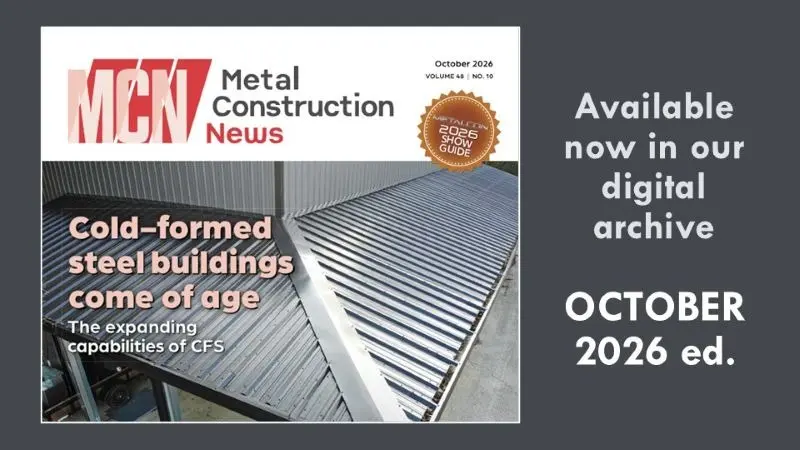
Against this backdrop of rapid transformation, Metal Construction News (MCN) has officially released its highly anticipated October 2026 edition. Packed with in-depth features, critical technical analyses, and essential event guides, this month’s publication addresses the most pressing challenges and exciting opportunities facing the sector today. From the architectural maturation of cold-formed steel (CFS) to the nuanced realities of thermal envelope failures and multi-site labor tracking, the October 2026 issue serves as an indispensable roadmap for professionals across the built environment.
Main Facts: What’s Inside the October 2026 Edition
The October 2026 issue of Metal Construction News curates a diverse array of editorial content designed to address both the macro-level trends and micro-level operational hurdles experienced by metal construction stakeholders.
Key editorial features in this month’s release include:
- The Maturation of Cold-Formed Steel (CFS): An exploration of how contemporary advancements in structural design, engineering software, and prefabrication techniques are pushing CFS systems into new structural frontiers and architectural typologies.
- The Official METALCON 2026 Show Guide: A comprehensive preview of the industry’s premier annual event, offering readers a deep dive into floorplans, key exhibitors, specialized workshops, masterclasses, and educational session tracks.
- Thermal Failure Analysis of Ice Damming: A paradigm-shifting look at ice damming in large-scale metal distribution centers, reframing the issue from a simple maintenance leak to a complex thermodynamic system failure.
- Modern Labor Tracking Complexities: A tactical evaluation of how distributed, multi-site construction operations complicate workforce management, leading to skewed job costs and compromised future bidding strategies.
- Next-Generation Safety Gear Standards: An investigative look into the growing chasm between minimum OSHA-compliant safety equipment and cutting-edge personal protective equipment (PPE) that leverages modern ergonomic and technological insights.
- Wind-Driven Rain and Hurricane-Resistant Louvers: A technical breakdown for coastal architects navigating the strict performance requirements of AMCA 550-certified louvers along the Atlantic and Gulf coasts.
Chronology: The Evolution of Industry Priorities Leading to Fall 2026
To understand why the topics featured in the October 2026 issue are so vital, one must examine the chronological progression of challenges that have shaped the metal construction sector over the past several years:
2023–2024: The Post-Pandemic Pivot and Supply Chain Stabilization
Following years of extreme supply chain volatility and erratic material pricing—particularly concerning structural steel and aluminum—the industry entered a phase of stabilization. Contractors shifted their focus from mere material availability to project efficiency, digital integration, and value engineering. During this window, early adopters began experimenting with advanced BIM (Building Information Modeling) integrations for cold-formed steel framing.
2025: The Labor Crunch and Regulatory Tightening
By 2025, skilled labor shortages reached a fever pitch. Contractors managing multiple simultaneous jobsites found traditional, paper-based, or siloed digital time-tracking methods entirely inadequate. Simultaneously, regulatory bodies began scrutinizing building envelope thermal performance more aggressively, paving the way for a deeper engineering focus on complex thermal bridging, insulation continuity, and severe weather mitigation in coastal zones.
2026: The Convergence of Tech, Resilience, and Precision
Entering late 2026, the industry has embraced a holistic approach to project delivery. The October 2026 MCN issue captures this exact moment, highlighting how innovations in CFS engineering, advanced thermal diagnostics, and sophisticated labor-tracking tools have converged. Rather than solving isolated problems, modern metal construction professionals are now tackling system-wide optimizations.
Supporting Data and Deep-Dive Analysis into Feature Topics
A closer examination of the core topics featured in the October 2026 edition reveals the technical and economic drivers reshaping the marketplace.
1. Cold-Formed Steel (CFS) Comes of Age
For decades, cold-formed steel was primarily viewed through the lens of interior partitioning, light framing, and low-rise secondary structures. However, the October issue highlights a structural renaissance. Driven by superior CAD/CAM integration, automated roll-forming equipment, and advanced finite element analysis (FEA), structural engineers are now specifying CFS for mid-rise load-bearing applications, modular healthcare facilities, and complex architectural facades.
The primary advantage lies in the high strength-to-weight ratio of CFS, which significantly reduces foundation loads and erection times compared to traditional heavy structural steel or cast-in-place concrete. Furthermore, pre-paneled CFS wall systems allow for off-site prefabrication, mitigating labor shortages by moving skilled work indoors into controlled manufacturing environments.
2. Redefining Ice Damming: Beyond the Leak
Maintenance teams at large-scale distribution centers have historically treated winter ice damming as an isolated waterproofing failure—a localized breach where melting snow refreezes at the eaves, forcing water beneath roof panels. MCN’s October feature reframes this phenomenon entirely: ice damming is fundamentally a thermal failure.
In expansive metal-clad distribution facilities—often spanning hundreds of thousands of square feet—internal heat loss, inadequate attic or ceiling plenum ventilation, and thermal bridging through structural purlins create uneven roof surface temperatures. When subsurface heat escapes unevenly, it melts snow uniformly across the upper roof slopes, which then refreezes upon reaching unheated eaves. Addressing this requires a systemic re-evaluation of continuous insulation (ci), air barrier continuity, and dynamic ventilation strategies rather than reactionary caulking and heating cable installations.
3. Multisite Work and the Labor Tracking Crisis
As contractors scale operations to meet regional demands, managing labor across decentralized jobsites has become a financial minefield. Misallocated project hours—such as unrecorded travel time between sites, undocumented crew shifts, and vague task categorizations—distort job cost accounting.
When labor costs are inaccurately assigned, project managers base future bids on flawed historical data. If bids are too low, profit margins evaporate; if they are too high, contractors lose out on work. The October issue explores modern digital solutions, geofencing technologies, and integrated ERP systems that enable real-time labor tracking, ensuring that field data matches back-office financial forecasting with surgical precision.
4. Safety Gear: Compliance vs. Performance
There is a distinct line between meeting the legal minimums established by the Occupational Safety and Health Administration (OSHA) and utilizing the pinnacle of worker protection equipment. The 2026 safety feature addresses a growing ethical and economic concern: why are many companies lagging behind in adopting next-generation safety gear?
Modern innovations in fall protection harnesses, wearable ergonomic exoskeletons, smart hard hats with integrated communication and heat-stress sensors, and high-visibility textiles offer vastly superior protection and worker comfort. Investing in advanced gear not only reduces catastrophic accident liabilities but also combats worker fatigue, improves retention, and enhances overall on-site productivity.
5. AMCA 550 Certification in Hurricane-Prone Regions
With meteorological models predicting increasingly volatile tropical storm seasons along the Atlantic and Gulf coasts, building envelope protection has taken center stage. Architects specifying louvers for ventilation must look beyond basic weather-louver designs.
The October issue emphasizes the critical importance of AMCA 550 (Standard Test Method for High Velocity Wind Driven Rain Resistant Louvers for Use Specific to Severe Weather Conditions). Unlike traditional water penetration tests, AMCA 550 simulates extreme hurricane-force winds driving heavy rain directly into building intake and exhaust openings. Failure to specify certified louvers can lead to catastrophic internal water damage, over-pressurization of building interiors, and subsequent structural envelope failure.
Official Industry Responses and Stakeholder Perspectives
The release of the October 2026 edition has elicited strong, positive reactions from industry associations, engineering bodies, and manufacturing leaders who view the publication as a timely reflection of the sector’s current trajectory.
"The discussions highlighted in this month’s MCN—particularly regarding the structural evolution of cold-formed steel and thermal building science—validate the research our engineering committees have been conducting all year," noted a representative from the cold-formed steel manufacturing sector. "We are moving away from treating materials in isolation and moving toward an era of integrated structural and thermal performance."
Similarly, contractor associations have praised the practical insights offered regarding multi-site labor tracking. In an environment where profit margins are razor-thin, the ability to capture real-time field data is viewed as an absolute game-changer.
Furthermore, event organizers behind METALCON 2026 expressed enthusiasm for the detailed show guide included in the issue. With thousands of attendees, exhibitors, and educators converging for the annual conference, the publication serves as the definitive primer for navigating the expansive exhibition floor and maximizing professional development opportunities.
Implications for the Future of Metal Construction
The cumulative insights provided across the pages of Metal Construction News’ October 2026 edition point toward several long-term implications for the industry:
- Elevated Engineering Standards: As CFS takes on more complex structural roles and building envelope diagnostics become more rigorous, the baseline engineering competency required across the supply chain will continue to rise.
- Technological Integration as a Standard: Software solutions for labor tracking, BIM-driven prefabrication, and thermal modeling are no longer exclusive to mega-contractors. Adoption is trickling down to mid-sized firms seeking to remain competitive.
- Proactive Risk Mitigation: Whether addressing hidden thermal failures like ice damming or specifying AMCA 550-certified louvers for hurricane resilience, the industry is shifting decisively from reactive maintenance to proactive, lifecycle-focused design.
Conclusion and Digital Archive Access
As the metal construction industry navigates the final quarter of 2026, staying informed through reputable, forward-looking publications remains essential. The October 2026 edition of Metal Construction News successfully bridges the gap between high-level architectural theory and boots-on-the-ground operational reality.
Professionals, engineers, architects, and contractors wishing to read the features in full, explore the comprehensive METALCON 2026 Show Guide, or examine past publications are encouraged to visit the official Metal Construction News Digital Edition Archive.
Metal Construction News extends its sincere gratitude to all industry contributors, advertisers, and editorial partners whose expertise made the October 2026 issue possible.
