

By Anthony Capkun
Published: October 1, 2026
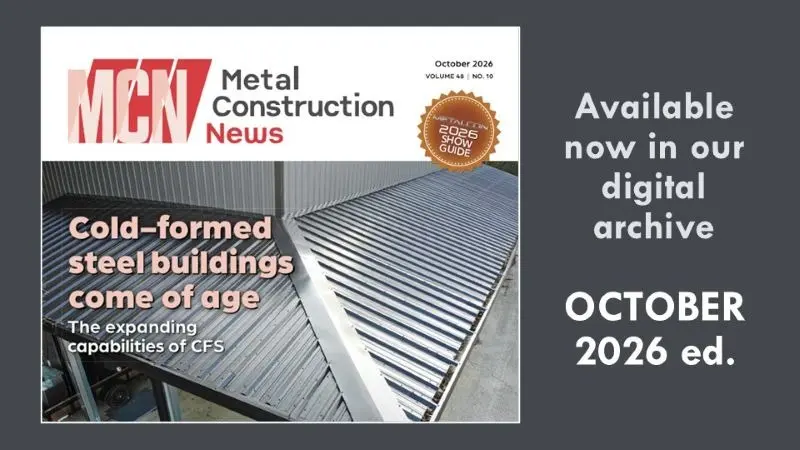
The metal construction and engineering sectors are undergoing a period of profound transformation, driven by surging demands for energy efficiency, labor productivity, and structural resilience against severe weather events. Capturing this pivotal moment, Metal Construction News (MCN) has officially released its highly anticipated October 2026 digital edition.
From groundbreaking developments in cold-formed steel engineering to critical updates on hurricane-resistant architecture, the October issue addresses the most pressing challenges and emerging opportunities facing contractors, architects, manufacturers, and project managers today.
As the industry converges for major annual showcases—most notably METALCON 2026—this month’s publication serves as both a strategic roadmap and an exhaustive technical resource. Below is an in-depth breakdown of the core features, industry implications, and expert insights highlighted in the October 2026 edition.
Main Facts: What’s Inside the October 2026 Issue
The latest edition of Metal Construction News delivers a comprehensive editorial lineup tailored to the evolving needs of the design and construction communities. The core coverage spans six critical pillars:
- The Evolution of Cold-Formed Steel (CFS): Highlighting how modern design software, precise prefabrication, and advanced engineering practices are pushing CFS systems into larger, more complex building typologies.
- The Official METALCON 2026 Show Guide: Serving as the definitive companion for attendees, featuring complete floorplans, exhibitor directories, masterclass schedules, and speaker rosters.
- The Building Science of Ice Damming: Reframing ice damming in large-scale metal distribution centers not merely as a weather leak, but as a critical thermal envelope failure.
- Labor Tracking in Multisite Operations: Addressing the financial drain of misallocated field hours, indirect travel times, and antiquated tracking systems in multi-location contracting firms.
- Next-Generation Safety Equipment: Evaluating the widening performance gap between baseline OSHA-compliant gear and the ergonomic, smart safety solutions defining the modern job site.
- Coastal Resilience via Certified Louvers: Providing an essential guide for coastal architects on implementing AMCA 550-certified louvers to withstand extreme wind-driven rain in hurricane corridors.
Chronology of Industry Shifts Leading to the October 2026 Release
To understand the weight of the topics covered in this month’s MCN issue, it is vital to examine the timeline of technological and regulatory pressures that shaped the metal construction landscape through the mid-2020s.
- Late 2023 – 2024: Supply chain stabilization post-pandemic gave way to a renewed focus on carbon reduction. Structural engineers began pushing for lighter, more recyclable framing materials, accelerating R&D in cold-formed steel. Simultaneously, labor shortages across North America forced contractors to re-evaluate digital tools for time tracking and resource allocation.
- Throughout 2025: Extreme weather events intensified scrutiny on building envelopes. Facility managers of large distribution centers reported rising operational failures, particularly regarding hidden thermal bridging and chronic ice damming. Meanwhile, coastal building codes grew increasingly stringent, forcing a industry-wide pivot toward certified protective components like AMCA 550 louvers.
- Early to Mid-2026: OSHA regulatory updates and technological innovations in wearable safety tech created a division in the marketplace. Contractors realized that "bare minimum" compliance was no longer sufficient to attract skilled labor or mitigate soaring insurance premiums.
- October 1, 2026: Metal Construction News synthesizes these multi-year trends into its flagship October edition, aligning its publication date with the industry’s premier gathering, METALCON 2026, to provide immediate, actionable intelligence to stakeholders.
Supporting Data and Technical Analysis
The features compiled in the October 2026 issue are rooted in rigorous building science, operational metrics, and regulatory standards.
1. Cold-Formed Steel (CFS) Comes of Age
For decades, cold-formed steel was largely relegated to interior partitions, lightweight framing, and low-rise commercial structures. However, advancements in Computer-Aided Engineering (CAE) and Building Information Modeling (BIM) have expanded its structural capacity. The October MCN feature details how high-strength steel grades (often yielding 50 ksi or higher) combined with panelized off-site prefabrication allow CFS to span greater distances, support heavier loads, and compete directly with traditional hot-rolled steel and concrete in mid-rise construction. This shift cuts foundation requirements due to a lighter dead load while drastically accelerating construction timelines.
2. Deconstructing the Thermal Failure of Ice Damming
Facility managers often treat ice damming as a seasonal nuisance managed by manual snow removal or emergency roof patch kits. MCN’s technical deep-dive argues otherwise: ice damming is fundamentally a thermal envelope failure. In massive metal distribution centers—which often feature expansive roof surfaces and complex mechanical penetrations—uncontrolled heat loss from the building interior melts lower layers of roof snow. This water runs down to colder eaves and refreezes, backing up water beneath standing seams. The article emphasizes that solving this requires holistic thermal modeling, superior continuous insulation, and optimized attic/ceiling ventilation design rather than reactive maintenance.
3. The Financial Impact of Multisite Labor Discrepancies
Labor costs remain the most volatile variable on any construction balance sheet. For contractors operating across multiple project sites simultaneously, tracking labor has become exponentially complex. MCN explores how misallocated hours—such as unassigned travel time between sites, undocumented delays, and manual data entry errors—can distort true job costs. According to industry analysts cited in the issue, even a minor 3% discrepancy in labor tracking can completely erase a project’s net profit margin and compromise the accuracy of future competitive bids.
4. Safety Gear: Compliance vs. Performance
The 2026 safety landscape is defined by a philosophical split. While OSHA standards provide the regulatory floor, modern manufacturing and construction firms are discovering that baseline compliance does not guarantee protection or worker retention. The latest safety gear features advanced load-dispersion harnesses, integrated IoT sensors for fall-event notification, and lightweight, breathable textiles designed to reduce worker fatigue. MCN outlines how investing in these next-generation systems yields measurable returns through reduced injury rates and improved workforce morale.
5. Hurricane-Prone Architecture and AMCA 550 Louvers
With meteorological data pointing toward increasingly violent storm seasons along the Atlantic and Gulf coasts, building envelope integrity is paramount. Architects specifying HVAC and ventilation openings can no longer rely on standard louver assemblies. MCN highlights the absolute necessity of AMCA 550-certified louvers (the standard for high-velocity wind-driven rain). These engineered louvers are tested to prevent the intrusion of water under hurricane-force winds, protecting sensitive interior mechanical systems and maintaining structural equilibrium inside the building during a severe weather event.
Official Perspectives and Expert Responses
Industry leaders, association heads, and technical contributors have welcomed the release of the October 2026 edition, noting its alignment with the practical challenges currently faced on job sites and in design offices.
"We are seeing a fundamental shift in how structural engineers view cold-formed steel," notes a prominent framing consultant featured in the October issue. "It is no longer viewed as an alternative material for secondary applications. With advanced software integrations and panelized manufacturing, CFS is a primary structural solution capable of meeting tight carbon budgets and accelerated schedules."
On the operations side, construction technology specialists have praised MCN’s focus on multisite labor tracking.
"Contractors can no longer afford to run multi-million-dollar operations on fragmented, paper-based timecards," stated an operations software strategist contributing to this month’s discourse. "When travel time and site-switching aren’t accounted for with precision, project managers are bidding blind. MCN’s analysis hits the nail on the head regarding the cumulative effect on company valuation and bid accuracy."
Furthermore, building envelope consultants have voiced strong support for the publication’s stance on ice damming and coastal resilience. By framing ice dams as thermal failures and emphasizing AMCA 550 compliance, the publication bridges the gap between theoretical engineering and everyday architectural practice.
Implications for the Metal Construction Industry
The insights published in the October 2026 edition of Metal Construction News carry wide-ranging implications for every stakeholder in the built environment:
- For Architects and Designers: The mandate is clear—sustainability and resilience must be baked into the schematic phase. Whether selecting AMCA 550 louvers for coastal projects or integrating CFS framing systems to lower embodied carbon, design professionals must stay ahead of tightening performance standards.
- For General Contractors and Project Managers: Operational efficiency will dictate market survival. Adopting automated, real-time labor-tracking tools and upgrading job-site safety equipment beyond mere regulatory minimums will reduce liability and protect profit margins in a competitive bidding environment.
- For Facility Owners and Maintenance Teams: A reactive maintenance strategy is no longer financially or structurally viable. Addressing thermal envelope vulnerabilities—such as the root causes of ice damming in large distribution centers—prevents catastrophic long-term damage and lowers total cost of ownership.
- For Attendees of METALCON 2026: The October edition serves as an essential pre-show guide. By reviewing the featured workshops, masterclasses, and exhibitor floorplans, participants can maximize their time on-site, engaging directly with the innovators driving these industry-shaping trends.
Conclusion
As the industry gathers for METALCON 2026, the October edition of Metal Construction News stands out as an indispensable resource. By blending technical building science with pragmatic business operations, Anthony Capkun and the MCN editorial team have delivered a publication that not only documents the current state of metal construction but actively charts its future.
Industry professionals can access the complete October 2026 edition online, alongside years of historical insights, by visiting the official Metal Construction News Digital Edition Archive.
MCN extends its sincere gratitude to all the expert contributors, structural engineers, architects, and industry partners whose insights made this landmark issue possible.
