

By ArchDaily Reporting Team
Published: August 10, 2026
Main Facts: The Battle for Public Space and Grassroots Resilience
In the architectural and urban design landscape of contemporary Latin America, few questions are as urgent as who gets to design the city, and for whom. A striking portrait of this dilemma emerged from a landmark 2021 study by the Brazilian Institute of Geography and Statistics (IBGE). The survey investigated the distribution of cultural and social facilities across Brazil’s 5,570 municipalities, laying bare a systemic deficit in public infrastructure.
The findings were both sobering and alarming: only 29.6% of Brazilian municipalities housed dedicated cultural and social facilities, such as public museums or community focal points. Even more starkly, traditional spaces for performance and assembly—such as theaters and dedicated concert halls—were found in a mere 23.3% of the country’s cities.
This statistical desert highlights a profound structural inequality. In vast stretches of Brazil, particularly in peripheral urban slums (favelas), rural settlements, and marginalized indigenous territories, the state has historically failed to provide the basic infrastructural scaffolding necessary for civic life, cultural expression, and collective enrichment.
Yet, where public policy falters, grassroots ingenuity often steps into the breach. When a women’s cooperative in Maranhão pool their resources to build a processing and community hub, or when a volunteer-led relief group in Bahia erects a communal kitchen and gathering space—such as the celebrated Soup of Hope project by Tadu Arquitetura—they are doing much more than filling a material vacuum. These initiatives represent a profound act of reclamation. They assert a fundamental right to the city and community life that should, by all accounts, be guaranteed by municipal, state, and federal public policy.
Chronology: A Trajectory of Urban Neglect and Grassroots-Led Recovery
Understanding the current wave of community architecture in Brazil requires looking back at how spatial policies—or the lack thereof—have shaped the country’s urban fabric over the decades.
- Late 20th Century (The Rapid Urbanization Era): Brazil undergoes massive rural-to-urban migration, leading to the explosive growth of metropolitan peripheries. Cities expand rapidly with little to no zoning, infrastructure, or provisions for public spaces, parks, and cultural centers.
- The 1988 Federal Constitution: Hailed as the "Citizen Constitution," it establishes urban reform principles and asserts that cities have a "social function." However, translating these legal ideals into tangible neighborhood-level infrastructure remains a persistent challenge.
- The 2000s (The Latin American Paradigm Shift): Across the continent, cities begin experimenting with spatial interventions to combat social violence. Most notably, Medellín, Colombia, launches its radical urban transformation strategy in 2005, aggressively boosting cultural budgets (from 0.6% to 5%) and introducing iconic "Library Parks" to vulnerable neighborhoods. This inspires architects and urban planners throughout South America.
- 2021 (The IBGE Wake-Up Call): The IBGE releases its definitive survey on Brazilian cultural infrastructure, quantifying what social workers and architects had long observed: nearly three-quarters of Brazilian municipalities lack basic cultural facilities.
- 2021–Present (The Rise of Community Architecture): Driven by budgetary constraints and institutional neglect, a new generation of Brazilian architecture practices—collaborating directly with cooperatives, indigenous groups, and grassroots NGOs—begins deploying low-impact, participatory, and locally sourced design strategies to build vital community centers, proving that profound social transformation can originate from the ground up.
Supporting Data: Dissecting the Infrastructural Deficit
To fully appreciate the gravity of Brazil’s architectural shortfall, it is necessary to examine the empirical data compiled by urban geographers, statisticians, and cultural economists.
The IBGE Cultural Infrastructure Index (2021 Data)
- Municipalities with Cultural/Social Facilities: 29.6%
- Municipalities with Theaters or Concert Halls: 23.3%
- Geographic Disparity: The concentration of these facilities heavily favors state capitals and major metropolitan hubs in the Southeast and South regions, leaving the North and Northeast—despite their rich cultural heritages—severely underserved.
The Medellín Benchmark (Comparative Latin American Context)
While Brazil struggles with decentralized and often underfunded cultural planning, the transformation of Medellín, Colombia, serves as a vital comparative model:
- Initial Municipal Cultural Budget: 0.6% (Pre-2005)
- Post-Reform Cultural Budget: 5.0% (Post-2005 implementation)
- Core Architectural Intervention: The deployment of decentralized Parques Biblioteca (Library Parks) designed by internationally acclaimed architects, acting as architectural catalysts for education, safety, and civic pride in historically violent neighborhoods.
In Brazil, the absence of comparable federal or state funding models means that community architecture projects must rely on unconventional financing: crowdfunding, international architectural grants, philanthropic partnerships, and sweat equity from the communities themselves.
Official Responses and Perspectives: Architects, Sociologists, and Policymakers
The paradigm of community architecture in Brazil challenges the traditional, top-down role of the architect as an isolated artistic genius. Instead, it repositions the architect as an active listener, facilitator, and technical collaborator.
The Architectural Perspective: Co-Creation and Local Materiality
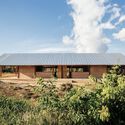
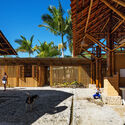
Contemporary Brazilian firms working in this sector emphasize that materials must reflect the ecosystem and identity of the place. Projects such as Xingu Canopies by Estúdio Gustavo Utrabo or the Community Center Camburi by CRU! Architects utilize regional timber, rammed earth, and locally sourced bamboo.
Camila Ghisleni, an architectural researcher and writer, notes:
"When a community builds its own facility, the architectural process transforms into an instrument of political empowerment. The design is no longer just about square footage or aesthetic expression; it becomes a physical manifestation of social cohesion."
The Sociological View: Claiming the "Right to the City"
Urban sociologists point out that public spaces in Brazilian cities are frequently securitized, commercialized, or entirely absent in low-income zones. By establishing community-led architecture—such as community kitchens, women’s workspaces, and grassroots cultural centers—residents reclaim spaces for socialization, mutual aid, and political organizing. These structures act as spatial bulwarks against urban fragmentation and social vulnerability.
The Public Policy Dilemma
Urban planners and municipal officials face mounting pressure to bridge the gap identified by the IBGE data. While progressive city administrations occasionally adopt participatory budgeting models, structural federal investments in localized cultural architecture remain inconsistent. Critics argue that relying solely on grassroots resilience is unfair; communities should not have to build their own civic infrastructure out of sheer survival necessity. Public policy must catch up to the ingenuity of the people.
Implications: The Future of Urbanism in Brazil and Beyond
The rise of community-driven architecture in Brazil carries profound implications for the future of global urban design, sustainability, and social justice.
- Decentralizing Expertise: Architecture education in Brazil is increasingly shifting its focus away from purely commercial real estate and luxury development, teaching students how to engage in participatory design, self-build methodologies, and social architecture.
- Climate Resilience and Local Materials: By utilizing vernacular techniques and regional materials (such as certified timber and earth), community architecture projects tread lightly on the environment, offering sustainable models for construction that bypass carbon-heavy industrial supply chains.
- A Blueprint for Policy Reform: The ultimate success of these four key projects—and dozens of similar grassroots interventions across the nation—should serve as a challenge to policymakers. They demonstrate how spaces should be built: inclusively, sustainably, and with deep respect for local culture.
Ultimately, community architecture in Brazil proves that buildings can be much more than shelters. When designed and constructed collectively, architecture becomes an engine for social healing, a political statement, and a tangible blueprint for a more equitable future.
