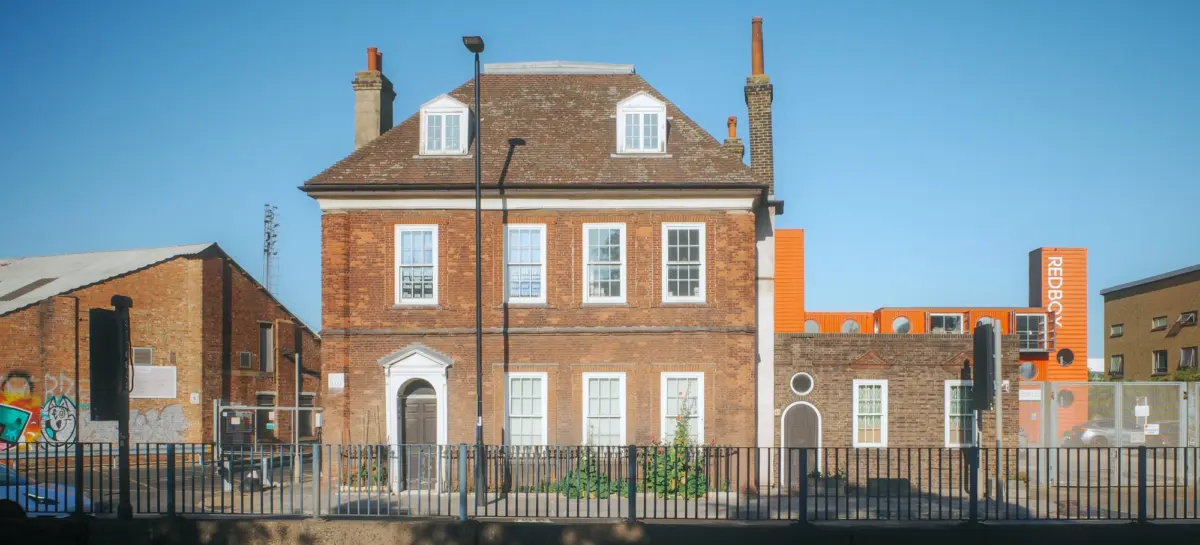
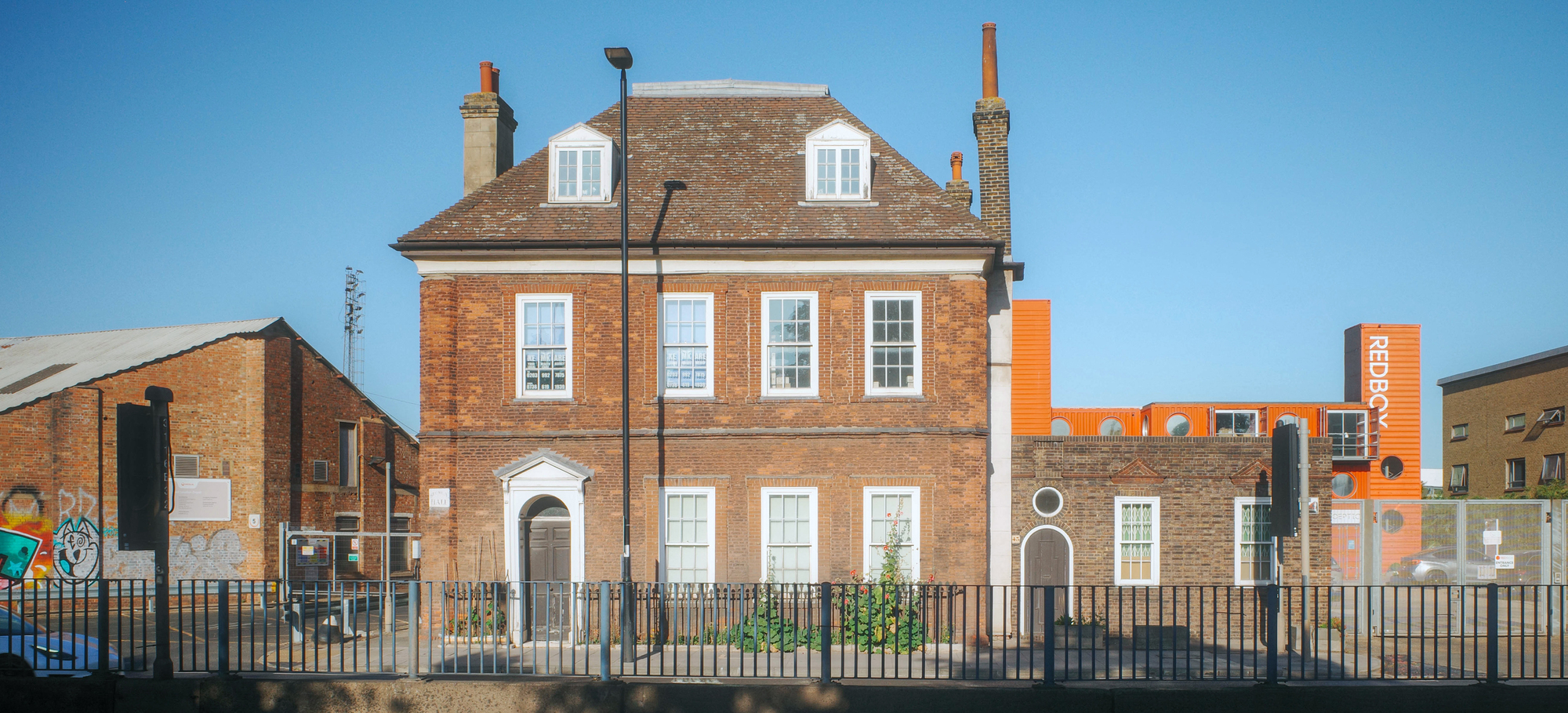
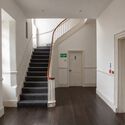
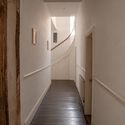
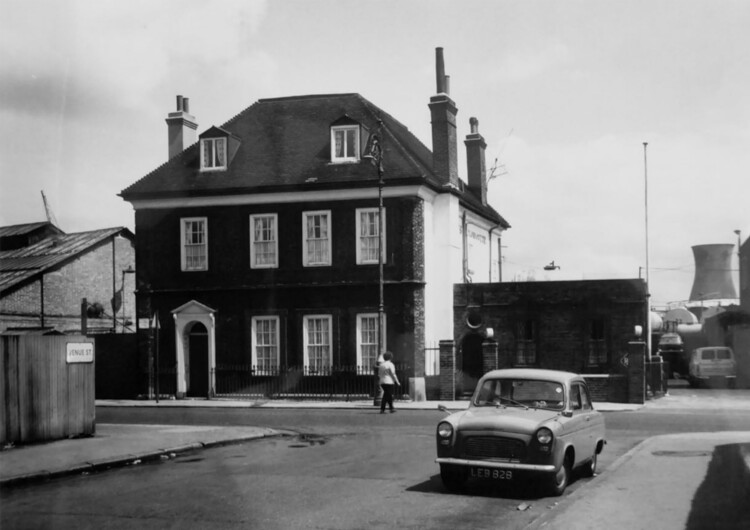
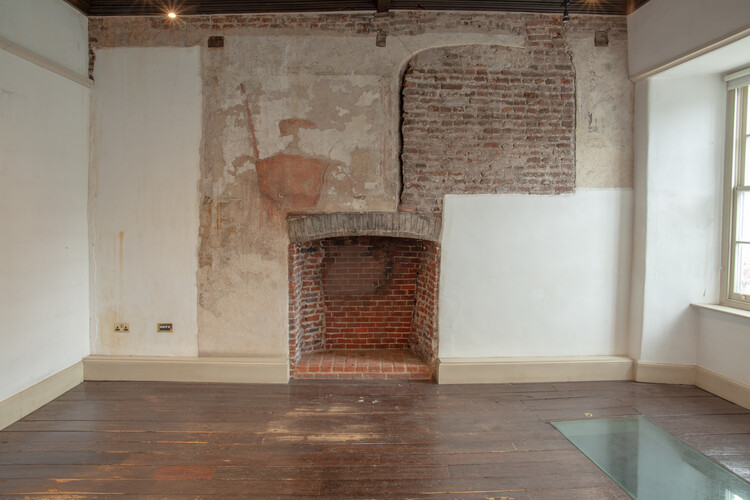
London, UK — In a bold move that marries heritage preservation with grassroots urbanism, the renowned London-based art, architecture, and design collective Assemble has announced its most ambitious workspace project to date. The collective has secured a 25-year lease—complete with an option to buy—on Bromley Hall, a sprawling early Tudor-period manor house widely recognized as one of the oldest standing residential structures in London.
The multi-phase intervention will weave together three distinct structures on the site: the c. 1485 Bromley Hall, the c. 1904–05 Old Poplar Library, and the industrial RedBox container building. Initially adding 14,000 square feet of functional area to Assemble’s existing portfolio, the long-term master plan will ultimately double this capacity. The project addresses a pressing crisis in the English capital: the systematic erosion of affordable creative and light industrial floor space, which urban projections warn could see a staggering 30% reduction across London by the year 2041.
By transforming a neglected Grade II*-listed landmark into a dynamic, messy, and experimental hub for makers, artists, and small-scale manufacturers, Assemble is championing a regenerative model of urban development that values long-term cultural resilience over short-term market gains.
Main Facts: The Bromley Hall Regeneration Initiative
At its core, the Bromley Hall project is designed to counter the hyper-gentrification and commercialization that routinely displaces London’s independent creative sector. Founded in 2010, Assemble has built its international reputation on community-focused craft and social architecture—most famously winning the prestigious Turner Prize in 2015 for its neighborhood revitalization work in Liverpool’s Granby Four Streets. Through its dedicated workspace branch, Assemble Workspace, the collective has spent over a decade constructing resilient ecosystems for making.
The Bromley Hall development is structured around a dual objective:
Heritage Restoration: Meticulously repairing and adapting a historically layered, Grade II*-listed building that has survived nearly eight centuries of social, political, and architectural upheaval.
Industrial Preservation: Providing secure, long-term tenure and collaborative infrastructure for creative industries, safeguarding practices that require spaces for loud, heavy, and experimental production.
The project site comprises three distinct architectural eras:
Bromley Hall (c. 1485): The historic heart of the complex, featuring medieval and Tudor craftsmanship, including the atmospheric Blount Room.
The Old Poplar Library (c. 1904–05): An early 20th-century civic building slated to absorb a portion of the expanded maker spaces.
The RedBox Container Building: A modern modular structure that will integrate industrial utility into the campus fabric.
Chronology: A Phased Vision for 2026 and Beyond
To ensure financial stability, community integration, and sensitive heritage handling, Assemble has structured the transformation of Bromley Hall into a meticulous three-phase timeline spanning over six years:
Phase 1: Inception & Proof of Concept (2026–2029)
The initial stage kicks off immediately following the lease acquisition. During this period, Assemble and an initial cohort of creative tenants will move directly onto the site. Capital works during these formative years will focus on essential stabilization, health-and-safety compliance, and the immediate revitalization of communal spaces—most notably the Blount Room and a shared communal kitchen. This phase is designed to test the operational model of the site while simultaneously launching a comprehensive fundraising and investment campaign aimed at securing the capital required to exercise the option to buy the property.
Phase 2: Acquisition & Major Capital Works (2029–2032)
Triggered by the successful fundraising cycle, this phase will see Assemble exercise its option to purchase Bromley Hall outright. With long-term ownership secured, the collective will execute heavy capital interventions. Proposed architectural additions include the construction of a contemporary link building connecting Bromley Hall to adjacent structures, alongside the comprehensive structural overhaul and modernization of the larger workspace buildings to meet contemporary light industrial standards.
Phase 3: Full Operation & Cultural Programming (2032 and Onward)
By 2032, the physical transformation of the site is slated for completion. The campus will reach its full capacity, housing a vibrant, dense community of makers, artisans, and micro-enterprises. Beyond daily production, the site will transition into a publicly accessible cultural destination, hosting a sustained, long-term program of public exhibitions, educational workshops, design lectures, and community events.
Supporting Data: Assemble’s Proven Workspace Track Record
Bromley Hall does not represent Assemble’s first foray into workspace management; rather, it represents the scaling of a proven, highly resilient operational model. Since establishing Sugarhouse Studios—their first experimental workspace on the fringes of London’s Olympic Park—in 2011, the collective has successfully delivered and operated five distinct creative hubs across the United Kingdom.
Notable projects within the Assemble Workspace portfolio include:
Sugarhouse Studios (Stratford): A pioneering incubator for makers that established Assemble’s methodology of self-built, low-cost community spaces.
Fabric Floor (Brixton): A specialized textile studio providing high-spec, affordable infrastructure for garment makers and fabric artists.
Leaside Yard (Bromley-by-Bow): A recent mixed-use hub demonstrating how light industrial activities can coexist with neighborhood public amenities.
These spaces are intentionally engineered to accommodate "loud, messy, and experimental practices" that are routinely priced out of standard commercial office parks. Current tenants across Assemble’s network include community sauna fabricators, avant-garde aluminum furniture designers, wholesale distributors of locally sourced organic produce, and rehabilitative record labels.
According to feedback from tenants such as Workshop East CIC, this ecosystem provides far more than mere physical square footage. By bundling affordable rent with high-quality administrative support, shared facilities, and collaborative commissions, Assemble creates a sustainable incubator that nurtures a new generation of craftspeople.
A Brief Architectural History of Bromley Hall
To understand the gravity of Assemble’s intervention, one must examine the astonishingly rich historical strata embedded within Bromley Hall’s walls. The earliest iterations of structures on the site date back to approximately 1255. Over the centuries, the manor has mirrored the shifting tides of British history:
15th–16th Century: Served as a residential manor, famously rumored to have housed a residence for one of Henry VIII’s mistresses, as well as operating as a royal hunting lodge.
17th Century: Functioned as a clandestine Civil War gunpowder factory.
18th–19th Century: Adapted multiple times into a wealthy merchant’s retreat, missionary headquarters, and a calico printing works.
20th Century: Operated as a pediatric hospital before falling into relative obscurity and architectural neglect.
Assemble’s portfolio demonstrates a profound fluency in breathing new life into complex historical fabrics. This approach was established in 2018 with the critically acclaimed transformation of the Goldsmiths Centre for Contemporary Art—a Grade II-listed former Victorian bathhouse—and continued with recent contemporary retrofits, such as the adaptation of ten Victorian villas within the North Oxford Conservation Area. Their adaptive reuse methodology consistently rejects sterile museological preservation in favor of community-driven interventions that build upon local narratives.
Official Responses: Voices from the Collective
Speaking on the acquisition, Mathew Leung of Assemble emphasized the deep philosophical alignment between the site’s historical challenges and the collective’s design ethos:
"Bromley Hall brings together many strands that we care about, from resourceful reuse and retrofit of buildings, to supporting the creative economy and collaborative practice within the city and seeking imaginative opportunities for public access and benefit," Leung stated.
"The site’s challenging context is what makes it a perfect opportunity for Assemble: we specialise in finding new life for overlooked spaces and delivering lasting cultural, social, and economic value. We’re excited about the prospect of putting down roots in the local area, working in residence and being the long-term stewards of the site. We’re looking forward to creating and managing a unique creative workspace with a critical mass of makers which can support sustained public access to heritage and programming on site."
In alignment with this participatory vision, Assemble is actively issuing an open call for project partners. The collective is currently seeking prospective workspace tenants, construction and design collaborators for the site’s refurbishment, and philanthropic funding partners or investors committed to civic infrastructure.
Broader Implications: Safeguarding London’s Cultural Ecosystem
The announcement of the Bromley Hall transformation arrives at a pivotal moment for London’s cultural and architectural landscape. The capital is currently experiencing a wave of high-profile heritage regenerations aimed at decentralizing culture and re-embedding civic functions into historic structures.
Among these parallel urban milestones are:
The London Museum’s Relocation: The long-awaited move of the London Museum to Smithfield’s meticulously restored General Market, scheduled to open its doors on November 28, 2026.
Olympia’s Cultural Transformation: The unveiling of the first phase of West London’s historic Olympia exhibition complex, masterminded by Heatherwick Studio and SPPARC as a sprawling mixed-use cultural destination.
The Serpentine Pavilion: The annual architectural showcase featuring the 25th pavilion designed by LANZA Atelier, anchoring public discourse on temporary and experimental spatial design.
While projects like Olympia and Smithfield represent monumental civic investments, Assemble’s work at Bromley Hall operates at a crucially different scale: the grassroots, human-centered micro-economy.
By securing a 25-year lease on London’s oldest domestic manor, Assemble is proving that heritage conservation and radical socio-economic utility are not mutually exclusive. Instead, by opening Bromley Hall’s ground floor and the historic Blount Room for community bookings—with heavily subsidized rates for non-commercial use—the project bridges the gap between elite architectural history and everyday civic participation.
As London faces the sobering reality of losing nearly a third of its industrial floor space over the next fifteen years, models like Assemble Workspace offer a vital blueprint. By anchoring makers in physical spaces they can steward, love, and eventually control, Bromley Hall stands poised to become a beacon of urban resilience—proving that the cities of tomorrow can successfully be built upon the foundations of yesterday.