

By Ananya Nayak
Published: August 4, 2026
Main Facts: The Invisible Casualties of Urban Warfare
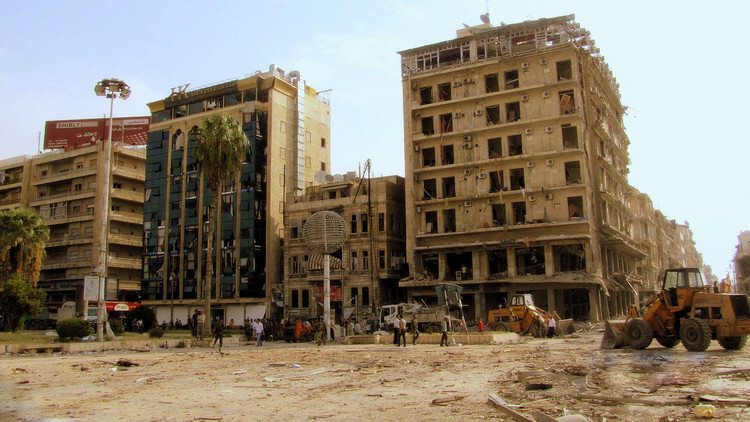
A war can erase a metropolitan skyline overnight. Roofs collapse into dust, historic thoroughfares become impassable, and centuries-old landmarks that once oriented everyday civic life are reduced to chaotic heaps of rubble. Yet, the most profound loss sustained during armed conflict invariably remains invisible. While buildings can be surveyed, photographed, digitally laser-scanned, and eventually rebuilt, the underlying knowledge that brought them into existence is remarkably fragile.
This human intellectual capital survives not in digital blueprints, but in the calloused hands of stonemasons who intuitively understand how a limestone vault distributes its dead load; carpenters who know how traditional timber joints flex and respond to seasonal micro-climates; plasterers who mix lime by memory and sensory feel rather than rigid automated measurements; and residents whose daily rituals keep these structural frameworks anchored in living culture.
When these craftspeople are displaced, killed, or forced to abandon their lifelong trades due to protracted violence, post-conflict reconstruction inherits a crisis that no 3D drawing or BIM (Building Information Modeling) software can solve. Stone can always be quarried and hauled anew, but recovering the tacit knowledge required to shape it takes generations.
As active conflicts across the Middle East—specifically in Syria, Iraq, Lebanon, and Palestine—gradually shift from immediate humanitarian emergency response toward long-term physical and social recovery, a critical question looms over international relief efforts. Historically, reconstruction has been quantified through crude metrics: houses delivered, kilometers of electrical grid restored, or monuments patched up.
These indicators, however, overlook a more fundamental inquiry: Who will possess the systemic knowledge required to repair these structures twenty years from now? Increasingly, international cultural heritage organizations recognize that safeguarding architectural knowledge is not a peripheral luxury separate from reconstruction, but rather its absolute core.
Chronology: From Emergency Digital Archiving to Grassroots Revival
The lifecycle of post-conflict architectural recovery follows a distinct trajectory, beginning long before heavy machinery or construction crews ever arrive on site.
Phase 1: Digital Documentation as Resistance (Ongoing Conflicts)
When historic urban centers remain active war zones or inaccessible due to active hostilities, documentation becomes the primary act of preservation. When physical buildings continue to deteriorate under shelling, smartphone photography, photogrammetry, Geographic Information Systems (GIS) mapping, and oral history preservation emerge as the only surviving shields of architectural heritage.
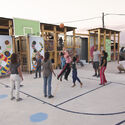
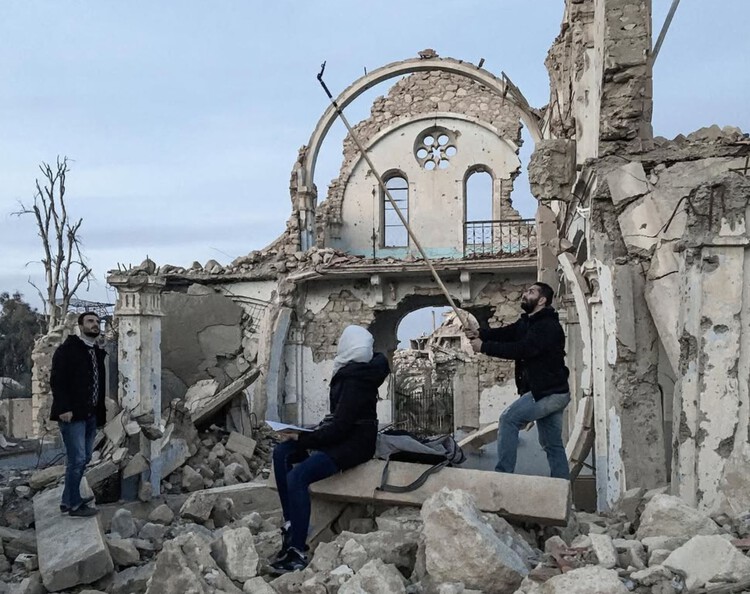
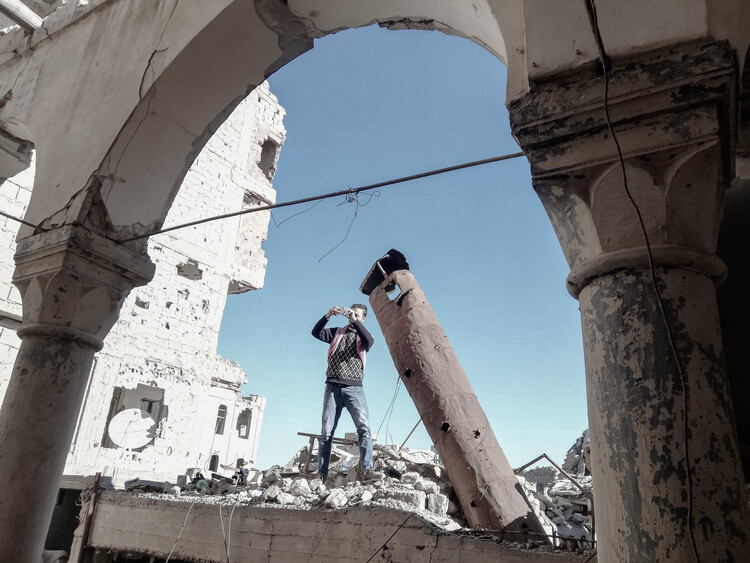
A striking pioneer of this methodology is the Deir ez-Zor Heritage Library in eastern Syria. Established in 2018 while the Syrian civil war was still actively raging, architects and conservation specialists utilized rudimentary tools—smartphones, standard consumer laptops, and open-source photogrammetry software—to document the city’s historic Main Street. They systematically surveyed Ottoman-era architecture, traditional markets, churches, mosques, and vernacular residences under constant physical threat.
When subsequent natural disasters, such as the devastating 2023 Turkey-Syria earthquake, dealt additional blows to already weakened structures, these digital archives became the single most complete records of the city’s architectural identity. Crucially, the initiative expanded past physical masonry: former residents contributed personal memories, shop owners mapped out lost commercial histories, and local woodworkers documented vernacular joinery techniques.
Phase 2: Independent Coalitions and Local Repositories
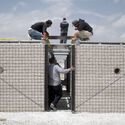
Following the path forged by Deir ez-Zor, independent civil society groups across Syria stepped up to fill institutional vacuums. Organizations such as the Archive of Modern Architecture in Syria (AMASyria), the Turathuna Foundation, and Rafekatuna operating on micro-budgets have built vital digital repositories, rescued endangered architectural drawings, and recorded vanishing oral histories. These groups demonstrate that the intellectual groundwork for urban recovery is frequently laid by grassroots networks operating outside formal state frameworks.
Phase 3: Capacity Building and Apprenticeship (Post-Conflict Recovery)
Once active fighting subsides, the focus transitions from documentation to hands-on craftsmanship. This phase addresses the gap between digital models and physical reality.
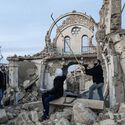
- Aleppo, Syria: The restoration of Aleppo’s historic districts proved that repairing medieval limestone structures demanded the revival of localized masonry techniques capable of matching hundreds of years of vernacular engineering.
- Beirut, Lebanon: Following the catastrophic August 2020 port explosion, thousands of heritage buildings suffered severe damage. The immediate recovery phase exposed an acute shortage of specialized craftspeople skilled in traditional lime mortars and timber conservation. Restoration agencies quickly pivoted, pairing conservation sites with live apprenticeships for young masons, joiners, and metalworkers, fusing building repair directly with workforce training.
Supporting Data & Institutional Responses: Institutionalizing Craft
Major international bodies have fundamentally restructured their mandates to reflect this philosophy of knowledge-led recovery.
UNESCO and ICCROM in Mosul, Iraq
The UNESCO "Revive the Spirit of Mosul" programme places the preservation of traditional knowledge at the absolute center of its operational strategy. Following the catastrophic destruction of Iraq’s second city, UNESCO deliberately framed its mandate beyond mere architectural replication.
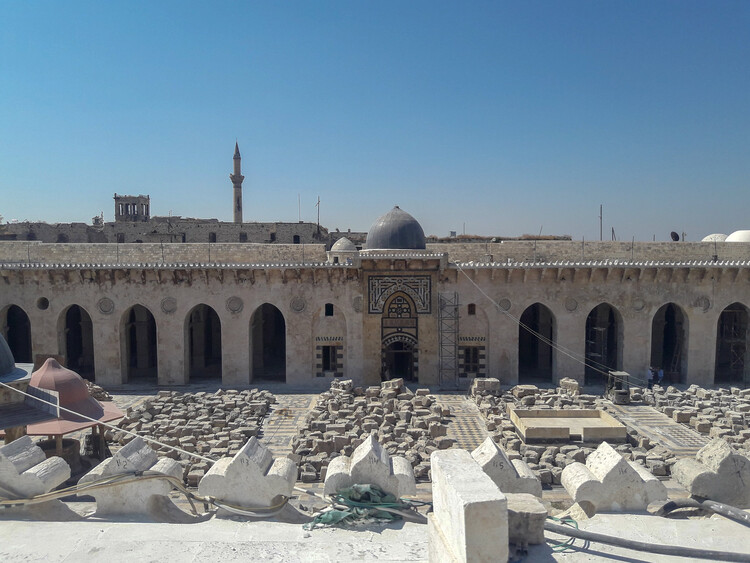
Partnering with ICCROM (International Centre for the Study of the Preservation and Restoration of Cultural Property), UNESCO launched extensive capacity-building initiatives designed to train young local professionals, engineers, and apprentices in traditional construction methodologies.
- Employment & Retention: Thousands of local jobs were directly generated through artisanal restoration activities.
- Knowledge Retention: Unlike historical models where foreign consultants imported expertise and departed upon project completion, training programs ensured that technical know-how remained permanently embedded within the local community.
"Ambulance for Monuments" in Romania
This paradigm is not exclusive to the Middle East. Romania’s Ambulance for Monuments applies a philosophy of minimal, emergency stabilization to endangered European heritage. Their methodology is intentionally modest: intervene just enough to halt structural decay, while simultaneously running workshops to train university students, local tradespeople, and rural communities in traditional conservation techniques. The underlying objective is shifting heritage stewardship from an elite academic discipline into a shared, decentralized local skill.
Implications: Redefining the Metrics of Successful Reconstruction
The lessons drawn from Aleppo, Beirut, Mosul, and emerging recovery discussions in Gaza point toward a profound philosophical shift in how global architecture views post-conflict environments.
The Fallacy of Imported Expertise
A historic monument or vernacular urban fabric cannot be authentically resuscitated through imported Western industrial construction methods or flat-packed modern materials. Traditional architecture is inextricably bound to regional material ecologies, local climatic adaptations, and craftsmanship refined across generations. A rebuilt urban district that relies indefinitely on foreign consultants remains fragile and culturally alienated from its inhabitants. Conversely, a city that successfully regenerates its network of local craftspeople, vocational workshops, and material supply traditions achieves true structural and cultural autonomy.
Measuring True Recovery
Traditional metrics of urban recovery—square meters of housing delivered, speed of roadway clearance, or millions of dollars disbursed—are fundamentally flawed if they ignore human capital. A city may have its physical skyline reinstated within a decade, but if the generational chain of artisanal transmission is broken, the city has merely built a theatrical stage set rather than a living habitat.
As international coalitions begin looking toward long-term reconstruction frameworks in regions like Gaza, policymakers must elevate documentation, craft education, and localized material stewardship out of the category of "secondary cultural concerns." Without them, reconstruction degrades into superficial repair devoid of cultural continuity.
Conclusion
Across every successful case study of post-conflict urban recovery, a singular, undeniable pattern emerges: buildings can be reconstructed from pixels, blueprints, and digital point clouds, but recovering the human intellect required to maintain them is a monumental, generational undertaking.
While a physical skyline can be hoisted back into place within a decade, cultivating the community of hands, minds, and memories that know how to keep that skyline standing takes generations. Rebuilding cities does not begin with the pouring of concrete; it begins with the restoration of knowledge.
