

Published Date: August 28, 2026
Author/Source Adaptation: Based on ArchDaily Community Submissions by Antonia Piñeiro
Main Facts: The Architecture of Innovation
Research is fundamentally a structured, relentless pursuit of the unknown—a continuous cycle of analyzing, testing, interpreting, and problem-solving that drives societal disruption. Yet, the physical spaces that house this pursuit have historically lagged behind the speed of human imagination. To transcend sterile desktop calculations and dense academic theory, scientific inquiry requires specialized environments designed to spark experimentation, serendipity, and cross-disciplinary collaboration.
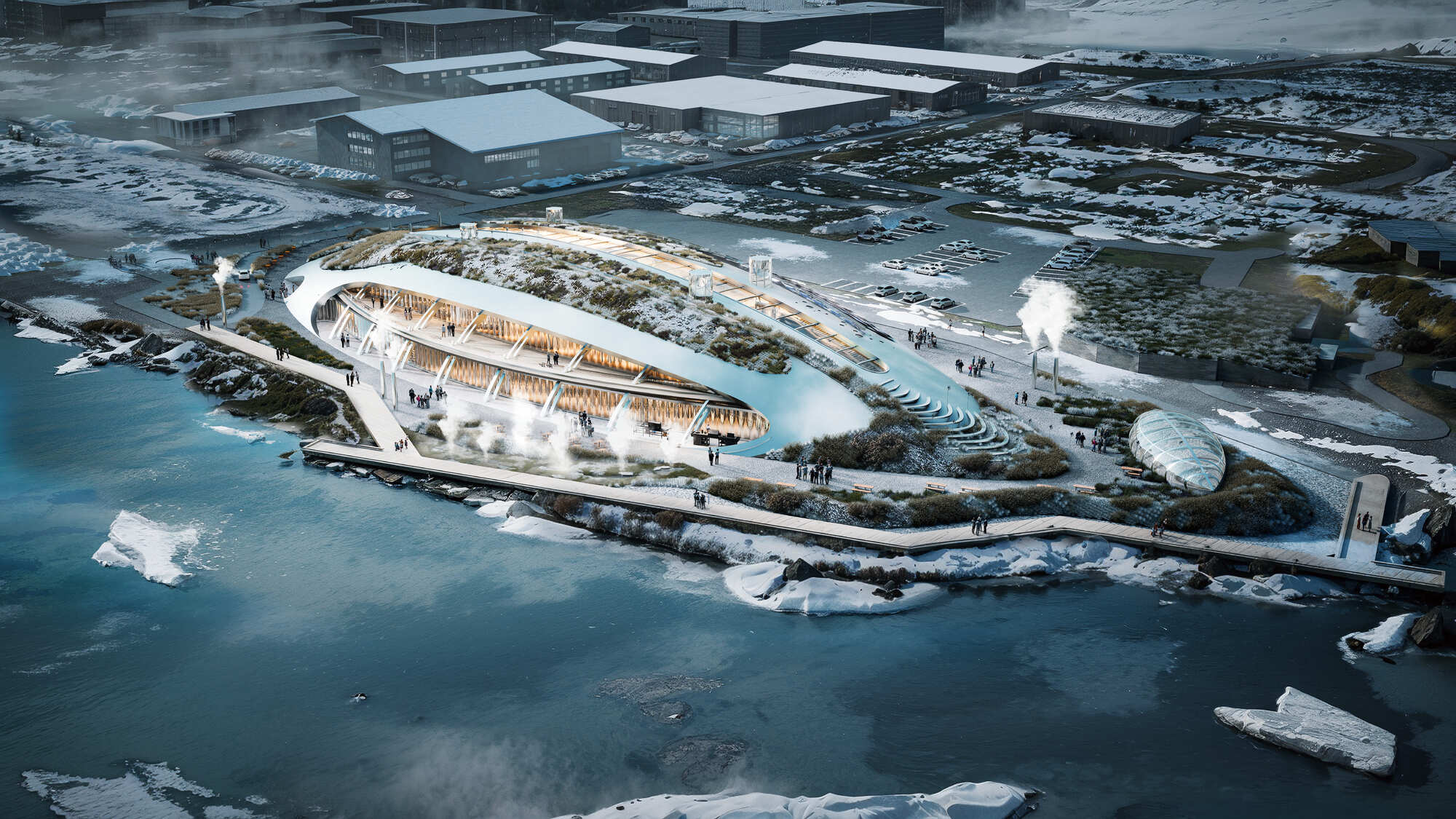
In a recent showcase curated from the global ArchDaily community, architectural visionaries have unveiled six unbuilt research centers that challenge traditional laboratory typologies. Spanning Germany, Iceland, the Netherlands, Oman, Argentina, and an offshore maritime site, these speculative designs reimagine how laboratories, workshops, observatories, gardens, auditoriums, and exhibition halls intersect. Rather than functioning as isolated silos, these unbuilt proposals treat architecture as a dynamic apparatus for discovery, blending ecological sensitivity with high-performance functionality to prepare curious minds and skeptics alike for alternative futures.
Chronology: The Evolution of Scientific Workspaces
To understand the weight of these six contemporary proposals, it is vital to trace how the typology of the research center has evolved over the past century:
- The Mid-20th Century (The Industrial Silo): Post-WWII research facilities were defined by rigid hierarchies, closed doors, and compartmentalized laboratories. Architecture prioritized safety and containment over collaboration, often resulting in utilitarian, inward-looking concrete blocks.
- The Late 20th Century (The Suburban Tech Park): The rise of the digital and biotech revolutions shifted campuses outward. Research centers adopted sprawling corporate suburban layouts, though they frequently remained bound to vehicular-dependent single-use zoning.
- The Early 21st Century (The Urban Innovation Hub): As technology merged with urban density, research centers moved back into city centers, emphasizing transparency, glass facades, and shared common spaces to encourage cross-pollination between tech sectors, academia, and the public.
- The 2026 Horizon (Speculative Ecosystems): Today’s unbuilt visions—as highlighted by the ArchDaily community—move past mere "open-plan offices." They integrate directly with natural geography (geothermal activity, marine life, and desert wadis), turning the building envelope itself into an active participant in the scientific process.
Supporting Data: Typologies of the Six Unbuilt Centers
The selected unbuilt projects represent a diverse spectrum of geographical, material, and theoretical investigations. Below is a breakdown of the architectural strategies deployed across the globe:
| Project Name | Location / Context | Lead Designers | Primary Typology & Spatial Strategy |
|---|---|---|---|
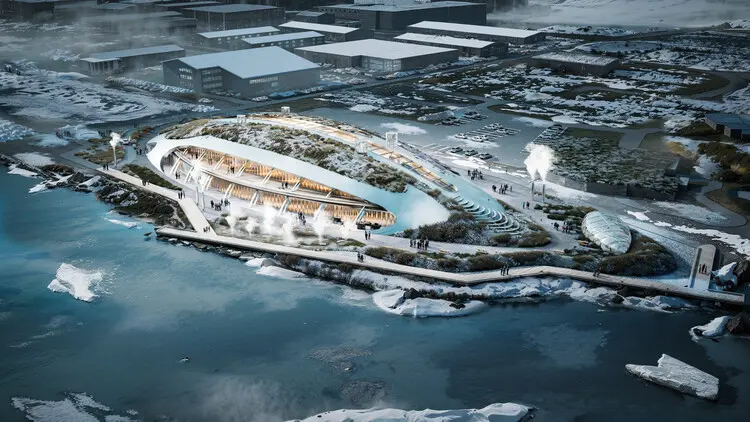
| Whale Leaps Geothermal Nexus | Coastal / Geothermal Site (Icelandic context) | Yufeng Tu, Jiayu Zhu, Peixuan Wu | Large-scale, organic-shaped coastal building inspired by marine life; harnesses geothermal energy flows. |
| Max Planck Campus Martinsried | Germany | Arup | Flexible campus layout featuring modular research clusters designed to adapt to shifting scientific needs. |
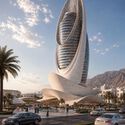
| Muscat Vertical Innovation Valley | Oman | Nobico Studio | Isolated high-rise vertical tower drawing conceptual inspiration from the natural geometry of the wadi. |
| NOVASIS | Iran / Middle Eastern Context | Mohsen Laei Architects | Advanced multi-disciplinary innovation center integrating regional climatic responses with high-tech laboratories. |
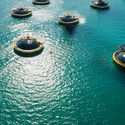
| Unnamed Offshore Floating Facility | Offshore / Maritime | ArchDaily Community Contributors | Floating structure originally conceived as an agrarian testbed, re-engineered for marine research. |
| Astronomical Observation Center | Unspecified / Open-Air Horizon | Community Contributors | Large-scale glazed pavilion optimized for atmospheric and astronomical tracking. |
(Note: Additional community submissions expand the total project pool to over 110 auxiliary concept variations, illustrating a massive grassroots interest in rethinking scientific architecture).
Official Responses and Design Philosophy
Architects and spatial theorists have increasingly argued that the physical design of a workplace directly influences the breakthroughs generated within it. Representatives from the design teams emphasize that the future of research cannot be accommodated by standardized commercial floor plans.
"When you design a space for disruptive science, you are not merely organizing desks and fume hoods; you are choreographing human curiosity," notes one contributing designer team. "Traditional architecture tells researchers where to walk and how to work. These unbuilt proposals invite inhabitants to question boundaries, offering fluid transitions between indoor laboratories and open-air experimentation zones."
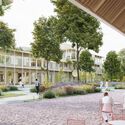
Furthermore, engineering consultants like Arup, whose work on the Max Planck Campus Martinsried emphasizes modularity, point out that scientific equipment evolves much faster than traditional building lifecycles. "A research center built today must be structurally capable of entirely reinventing its interior layout within a decade without disrupting ongoing experiments," design strategists note. By implementing modular research clusters, these unbuilt plans solve the perennial dilemma of technological obsolescence in laboratory design.
Implications: How Unbuilt Visions Shape Future Realities
While these six projects remain unbuilt, their value extends far beyond physical construction. Speculative architectural proposals serve as testbeds for ideas that eventually infiltrate mainstream construction practices.
1. Environmental Integration vs. Isolation
Historically, laboratories operated as hermetically sealed boxes, entirely detached from their surrounding ecosystems. Projects like the Whale Leaps Geothermal Nexus and the Omani Vertical Innovation Valley invert this paradigm. By anchoring architectural form to local geological phenomena—such as geothermal currents and desert wind patterns—these designs demonstrate that scientific facilities can actively participate in local ecologies rather than disrupting them.
2. The Democratization of Science
Modern architectural strategies for research centers increasingly incorporate public-facing exhibition spaces, educational auditoriums, and accessible botanical gardens. By blurring the line between the rigorous interior lab and the public realm, these designs combat public skepticism toward science, fostering an environment where communities can engage directly with ongoing discoveries.
3. Flexibility and the Post-Pandemic Workplace
The emphasis on modularity seen in the Martinsried campus proposal highlights a post-pandemic shift toward resilient spatial planning. As remote work, artificial intelligence integration, and rapid biotech pivots redefine how teams collaborate, rigid floor plans are rapidly becoming obsolete. Flexible, interconnected clusters ensure that researchers can seamlessly transition from digital modeling to physical prototyping.
Conclusion
The ArchDaily community’s showcase of these six unbuilt research centers serves as a powerful reminder that architecture is an act of anticipation. By visualizing laboratories shaped by whales, towers inspired by desert wadis, and floating stations born from agrarian roots, these designers challenge us to rethink how our built environment can foster the next wave of human progress. Though unbuilt today, these blueprints lay the conceptual groundwork for the laboratories where tomorrow’s realities will be forged.
