

Published: September 11, 2026
Author: Antonia Piñeiro (Enriched and Expanded Edition)
Main Facts
In the realm of architecture, a physical structure serves as an enduring testament to the era of its creation. The spatial propositions, material choices, and urban scale of an architectural design frequently outlive the lifespan of a single human generation, seamlessly integrating into a broader historical and cultural narrative. This cross-cutting characteristic is particularly pronounced in specialized project typologies: memorial sites, sacred cemeteries, historical museums, and community-centric educational spaces.

In recent years, however, the conceptualization of heritage has expanded far beyond static, permanent buildings. Contemporary architectural discourse increasingly embraces construction techniques, ancestral forms, indigenous geometries, and even living natural landscapes as foundational elements of cultural memory.
To explore this evolution, a recent curation by the ArchDaily community highlights five visionary, unbuilt architectural projects from around the globe. Spanning Kosovo, Canada, China, Egypt, and Bangladesh, these unbuilt concepts utilize material forms, spatial sequences, and contextual integration to provoke remembrance, reflection, and a deeper connection to historical legacy. Despite their diverse geographical and cultural frameworks, each project leverages architecture as a symbolic vessel that bridges the present moment with deep-seated history.

Chronology and Evolution of Heritage Architecture
The conceptual trajectory of monumental and heritage architecture has undergone a profound transformation over the past century. Understanding how contemporary architects approach unbuilt memorials and cultural spaces requires tracing this historical shift:
- Pre-20th Century (The Era of Monumental Permanence): Historically, memorials and heritage sites were designed primarily to glorify rulers, commemorate decisive military victories, or enshrine religious dogma. Built from durable materials like granite and marble, these structures relied on classical symmetry, grand scales, and permanence to project timeless authority.
- Late 20th Century (The Shift Toward Counter-Monuments): Following the collective traumas of the World Wars and various global conflicts, architectural philosophy shifted. The concept of the "counter-monument" emerged—structures that actively reject traditional triumphalism in favor of spaces that invite introspection, sorrow, and critical public engagement.
- Early 21st Century (Ephemeral, Ecological, and Intangible Heritage): Today, the definition of heritage has broadened to encompass intangible cultural practices, ecological systems, and sustainable indigenous knowledge. Modern architects increasingly recognize that nature, climate, and community rituals are just as vital to cultural preservation as bricks and mortar.
- September 2026 (The ArchDaily Community Showcase): The unveiling of the five unbuilt projects marks a contemporary milestone in how global architects envision memory. Rather than relying solely on grand physical footprints, these concepts integrate local materials, environmental stewardship, and vernacular traditions to address historical trauma and communal identity.
Supporting Data and Project Breakdown
The five unbuilt projects selected from the ArchDaily community represent a diverse geographic spread, each addressing heritage through a unique conceptual lens. Here is a detailed breakdown of the featured designs:

1. Dr. Ibrahim Rugova Memorial Park and Presidential Library (Kosovo)
- Designed By: Maden Architects
- Typology: Memorial Park and Presidential Library
- Context & Concept: Located in Kosovo, this project pays homage to a pivotal political figure while serving as a civic anchor. The design merges landscape architecture with institutional programming, establishing a reflective public park that frames national history through integrated spatial walkways and open architectural volumes.
2. Tranquility Living Memorial Commons (Canada)
- Designed By: ARCCAN Studio
- Typology: Memorial Commons / Cemetery Architecture
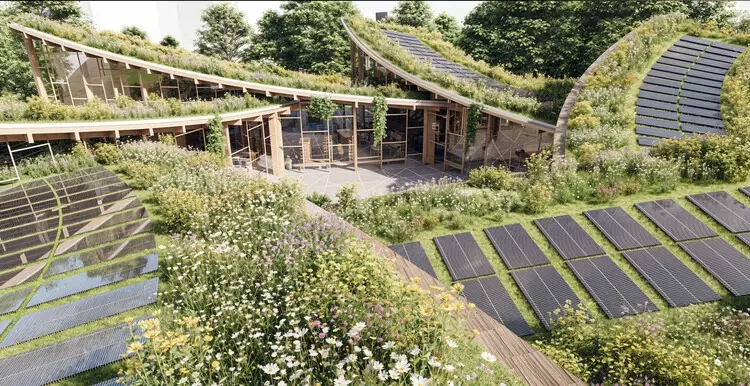
- Context & Concept: Addressing modern approaches to remembrance and grief, this Canadian project redefines the traditional cemetery. Instead of closed, somber enclosures, the "Living Memorial Commons" integrates natural topography and sustainable plantings, creating a dynamic public park where memory coexists with everyday community life.
3. SHIJI COMMONS Community Hall (China)
- Designed By: StudioTiltedCircle
- Typology: Community Center and Heritage Hall
- Context & Concept: Set within the rapidly changing landscape of China, this project honors ancestral forms and regional construction techniques. By reinterpreting indigenous geometries and local material palettes, the community hall acts as a bridge between rapidly expanding urban modernities and vanishing rural heritage.
4. Pathos Narrative War Museum & Memorial (Egypt)
- Designed By: Omar Assla
- Typology: War Museum and Memorial Site
- Context & Concept: Positioned within a landscape shaped by historical conflict, this Egyptian proposal utilizes raw, earth-toned materials to evoke the gravity of war. The museum is structured as a narrative journey, guiding visitors through subterranean and semi-open spaces that encourage solemn reflection on historical trauma and resilience.
5. Tree as Teacher Eco-Cultural Art School (Bangladesh)
- Designed By: Md Jisan Rizvi
- Typology: Educational Architecture and Eco-Cultural Center
- Context & Concept: Located in Bangladesh, this school shifts the paradigm of heritage preservation toward living ecosystems. By centering the design around existing natural elements—specifically ancient trees—the project uses nature itself as an educational tool, blending indigenous craft traditions with environmental pedagogy.
Official Responses and Theoretical Perspectives
The discourse surrounding unbuilt architectural projects often centers on their theoretical potency. Unlike built structures, which must navigate strict zoning laws, budgetary constraints, and material limitations, unbuilt conceptual designs exist as pure ideological manifestos.
Architectural theorists and community leaders have increasingly emphasized the value of these unbuilt visions:

- Challenging Conventional Forms: Urban planners note that unbuilt submissions to open architectural platforms like ArchDaily allow designers to experiment freely with spatial layouts that prioritize human emotion over commercial viability.
- The Role of Materiality: As highlighted in the community selection, material choices are rarely accidental. Whether utilizing rammed earth in Egypt, reclaimed timber in China, or living flora in Canada and Bangladesh, the choice of medium is directly tied to cultural identity.
- Democratizing Heritage: By opening the submission process to a global community of emerging architects, the initiative challenges top-down historical narratives, allowing local practitioners to define how their specific regional histories are memorialized.
Implications for the Future of Architecture and Memory
The exploration of these five unbuilt projects carries significant implications for the future design of public spaces, museums, and memorials worldwide:
- Integration of Ecology and History: The inclusion of projects like the Tree as Teacher Eco-Cultural Art School signals a paradigm shift. Future memorials and heritage sites will likely move away from cold, sterile stone structures toward living, breathing landscapes that sequester carbon while honoring the past.
- Decentralizing Architectural Narratives: By showcasing proposals from Kosovo, Egypt, Bangladesh, China, and Canada, contemporary architectural media is actively dismantling Eurocentric definitions of heritage, proving that meaningful spatial storytelling is a universal human endeavor.
- The Value of the "Unbuilt": Even without physical foundations, these concepts serve as critical blueprints for public discourse. They challenge city officials, developers, and communities to rethink how public spaces can actively heal historical wounds rather than merely occupying physical space.
Ultimately, these unbuilt structures remind us that architecture is not just about shelter or utility—it is the physical manifestation of collective memory, acting as a permanent anchor in a rapidly changing world.
