

By Automotive Technology Desk
Published: September 2026
Main Facts
The global electric vehicle (EV) charging landscape is experiencing a profound schism. While Chinese automotive giants continue to shatter performance milestones, redefining refueling times from minutes to seconds, Western infrastructure remains comparatively stagnant.
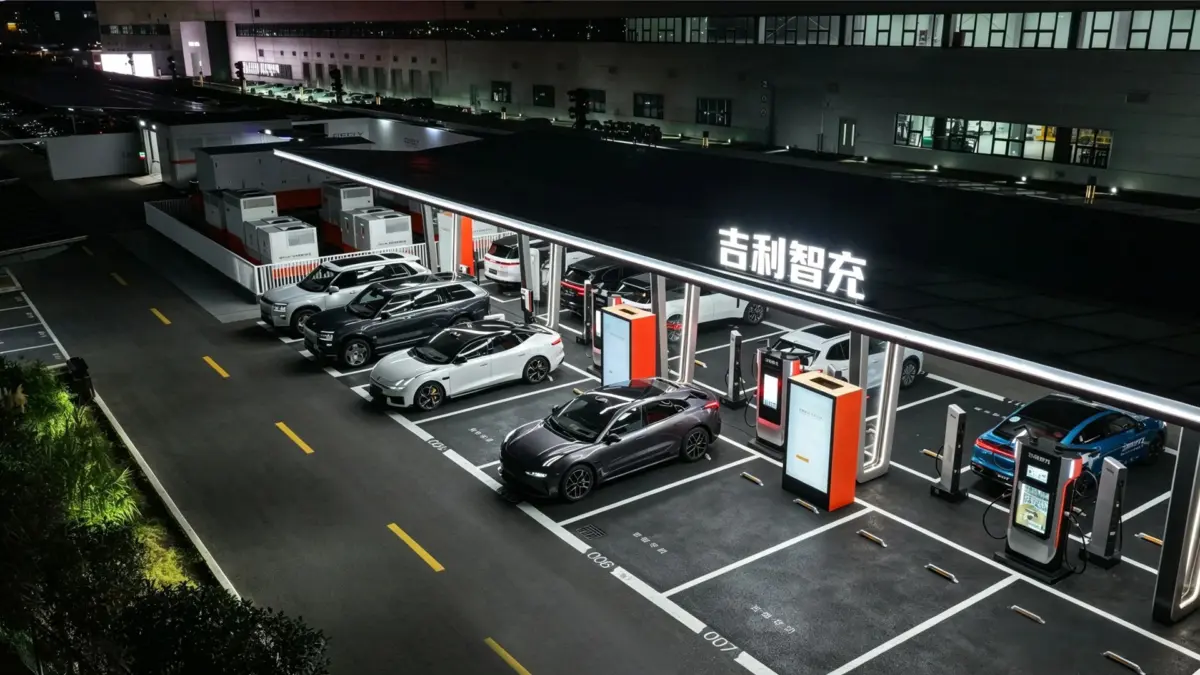
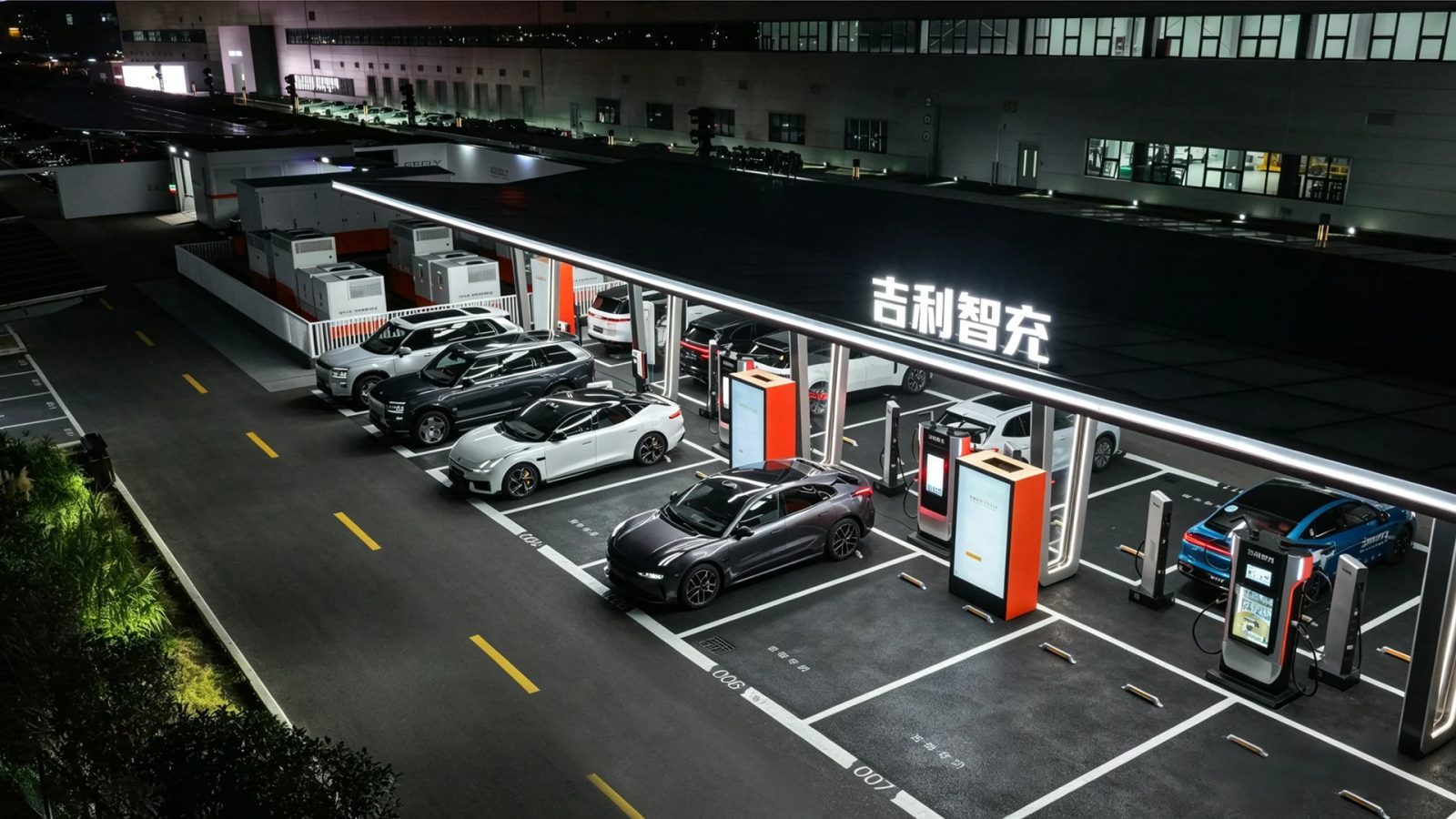
The latest seismic shift comes from Chinese automaker Geely, which unveiled a staggering 2.2-megawatt (2.2MW) ultra-fast charging system capable of replenishing an EV battery in under five minutes. Demonstrating an unprecedented manufacturing and deployment velocity, Geely has already operationalized these stations across five major Chinese cities—Hangzhou, Shanghai, Ningbo, Jiaxing, and Xi’an—just days after the initial announcement. The company has laid out an aggressive infrastructure roadmap, targeting 15,000 similar charging sites by the end of next year.
By contrast, the United States is struggling to scale even a fraction of that power. The fastest upcoming high-capacity public charger in the US—a 750kW system spearheaded by EVgo—has been delayed into 2027. Meanwhile, standard American public fast chargers hover between 150kW and 350kW.
The technological gap highlights a widening chasm in the global EV arms race. As Chinese automakers compete over seconds of charging efficiency while aggressively expanding megawatt-level networks, US infrastructure is hindered by a combination of regulatory friction, political roadblocks, protectionist trade policies, and slower capital deployment.
Chronology of the Megawatt Race
To understand the sheer momentum of China’s EV ecosystem, one must examine the rapid-fire succession of technological milestones achieved over the past year:
- March 2025 – September 2025: Tesla officially rolls out its long-awaited V4 Supercharger stations featuring a 500kW peak capacity, marking a slow, incremental upgrade over its V3 network. The industry standard in the US remains largely capped below 350kW.
- March 2026: BYD stuns the global market by introducing a 1.5MW "flash charger," boasting speeds more than three times faster than standard Western hardware.
- August 2026: Demonstrating staggering operational scale, BYD reports the successful installation of 10,000 hyper-fast 1.5MW chargers across China in a mere five months. Simultaneously, early architectural drafts for ultra-high-voltage systems emerge.
- September 2026 (Mid-Month): Geely leapfrogs the competition by formally announcing a 2.2MW charging architecture. Utilizing advanced thermal-control algorithms designed to mitigate battery degradation under extreme electrical loads, the system is engineered to handle massive energy throughput.
- September 2026 (Late-Month): In a feat of engineering and supply-chain execution that has baffled Western analysts, Geely transitions from press release to physical reality, deploying active 2.2MW-class stations in five major economic hubs across China. Concurrently, Geely secures a strategic foothold in the battery-swapping sector by acquiring a 30% stake in NIO’s power division for roughly $2.2 billion (RMB 16 billion).
- Late 2026 / 2027 Projections: In the US, EVgo delays the commercial rollout of its anticipated 750kW charging architecture from late 2026 to sometime in 2027, highlighting the chronic delays plaguing North American infrastructure development.
Supporting Data & Technical Breakdown
The numbers defining the modern EV charging space illustrate two entirely different realities for motorists in the East and the West.
Power Output and Architecture
Geely’s new 2.2MW system operates at an extreme electrical specification of 1,500 volts and 1,500 amps. Because consumer EVs capable of accepting a direct 1,500V intake are not yet in mass production, the system utilizes a dual-head power-sharing configuration. This allows two vehicles to simultaneously pull over 1,000kW (1MW) of power each.
To counteract the immense thermal and chemical stress placed on lithium-ion cells during high-current intake, Geely integrated an artificial intelligence-driven thermal-control algorithm. This system regulates internal cell temperatures and utilizes pulse-restoration techniques designed to preserve battery longevity, actively combating the historical degradation associated with ultra-fast charging.
The Scale of Chinese Deployment
China’s advantage is not merely theoretical; it is rooted in massive volume. BYD’s rollout of 10,000 megawatt-level chargers in five months set a benchmark for infrastructure deployment. Geely’s parallel target of 15,000 sites by the close of next year reinforces an industrial policy where charging infrastructure precedes mass vehicle adoption, eliminating range anxiety entirely.
The Western Baseline
In the United States, the baseline is starkly different:
- Tesla Superchargers: While Tesla operates the largest reliable fast-charging network in North America, its V4 stations max out at 500kW—a standard that took three years to transition from announcement to widespread physical rollout. Most legacy Tesla stalls remain capped at 350kW or lower.
- Tesla Megacharger: Designed primarily for heavy-duty commercial vehicles like the Tesla Semi, the proprietary Megacharger operates at 1.2MW—still significantly lower than the consumer-facing 1.5MW to 2.2MW hardware currently standard across multiple Chinese brands.
- EVgo’s 750kW System: Hailed as a major leap forward for US infrastructure, EVgo’s upcoming system relies on a partnership with Delta Electronics originally forged in 2024. Initially slated for the latter half of 2026, the project has been officially pushed to 2027. Furthermore, the system shares power across stalls, meaning individual vehicles will rarely experience the theoretical peak output. Currently, ultra-high-intake vehicles like the upcoming Mercedes-AMG GT EV are rare exceptions in the domestic market.
Official Responses and Industry Reactions
The widening technological disparity has triggered alarm bells across Western automotive boardrooms, while policymakers remain divided on how to respond.
Executives from traditional US and European automakers have privately expressed concern over the widening gulf in supply-chain agility. Major automotive lobbying groups, such as the Alliance for Automotive Innovation, have repeatedly petitioned lawmakers to reassess rigid domestic production mandates and trade barriers that inadvertently isolate the North American market from global advancements.
Conversely, political figures have doubled down on protectionist measures. The implementation of steep tariffs on Chinese automotive imports—initially enacted under the Biden administration and subsequently expanded—aims to protect domestic manufacturing. However, critics argue these tariffs have created a protective bubble, insulating legacy automakers from competitive pressures and slowing the pace of technological innovation.

In the sphere of public policy, federal funding initiatives intended to catalyze domestic charging expansion have faced systemic delays. The National Electric Vehicle Infrastructure (NEVI) formula program, designed to disburse billions in federal grants to states for highway charging buildouts, has faced repeated administrative bottlenecks, shifting political priorities, and regulatory restructuring. While proponents of domestic manufacturing argue that strict "Buy America" provisions are vital for long-term national security, industry analysts counter that excessively rigid rules have effectively stalled private-sector deployment, leaving consumers with an aging, underpowered public grid.
Implications for the Global Automotive Market
The divergence in EV charging technology carries profound implications for geopolitics, global trade, and the future viability of the Western automotive industry.
1. The Death of Range and Refueling Anxiety
In China, the conversation around EVs has shifted away from fundamental usability. When a vehicle can recover hundreds of kilometers of range in the time it takes to purchase a cup of coffee—measured in seconds rather than hours—the psychological barrier to EV adoption collapses. Western markets, forced to rely on 150kW to 350kW systems that require 20 to 40 minutes per stop, will continue to battle consumer resistance, particularly among apartment dwellers and long-distance commuters who lack home-charging access.
2. The Isolation of the North American Market
By implementing prohibitive tariffs and legislative hurdles aimed at blocking Chinese automotive technology entirely, North America risks creating a technological "city-in-a-hole." While European markets maintain a more porous, competitive environment where Asian battery and charging innovations gradually filter in, the US risks falling generations behind in core electrical architecture. Shielding domestic legacy brands from competition does not foster innovation; historically, it breeds complacency.
3. Hedging Bets: The Battery-Swapping Paradox
Geely’s simultaneous investment in ultra-fast charging and a multi-billion-dollar stake in NIO’s battery-swapping infrastructure highlights a pragmatic multi-pronged strategy. While megawatt charging represents the pinnacle of wired refueling, battery-swapping technology provides an instant alternative for commercial fleets and high-utilization vehicles. By hedging its bets across both paradigms, Geely ensures market dominance regardless of which standard ultimately captures consumer preference.
4. The Imperative of Acceleration
The global technology race does not pause for domestic political gridlock. China’s ability to conceptualize, engineer, manufacture, and deploy multi-megawatt charging grids within a matter of months demonstrates a level of industrial execution that the West currently cannot match. If North America and Europe wish to remain relevant in the twenty-first-century automotive landscape, protectionist isolationism must give way to aggressive infrastructure investment, streamlined regulatory frameworks, and a willingness to engage with—and surpass—global standards of excellence.
