

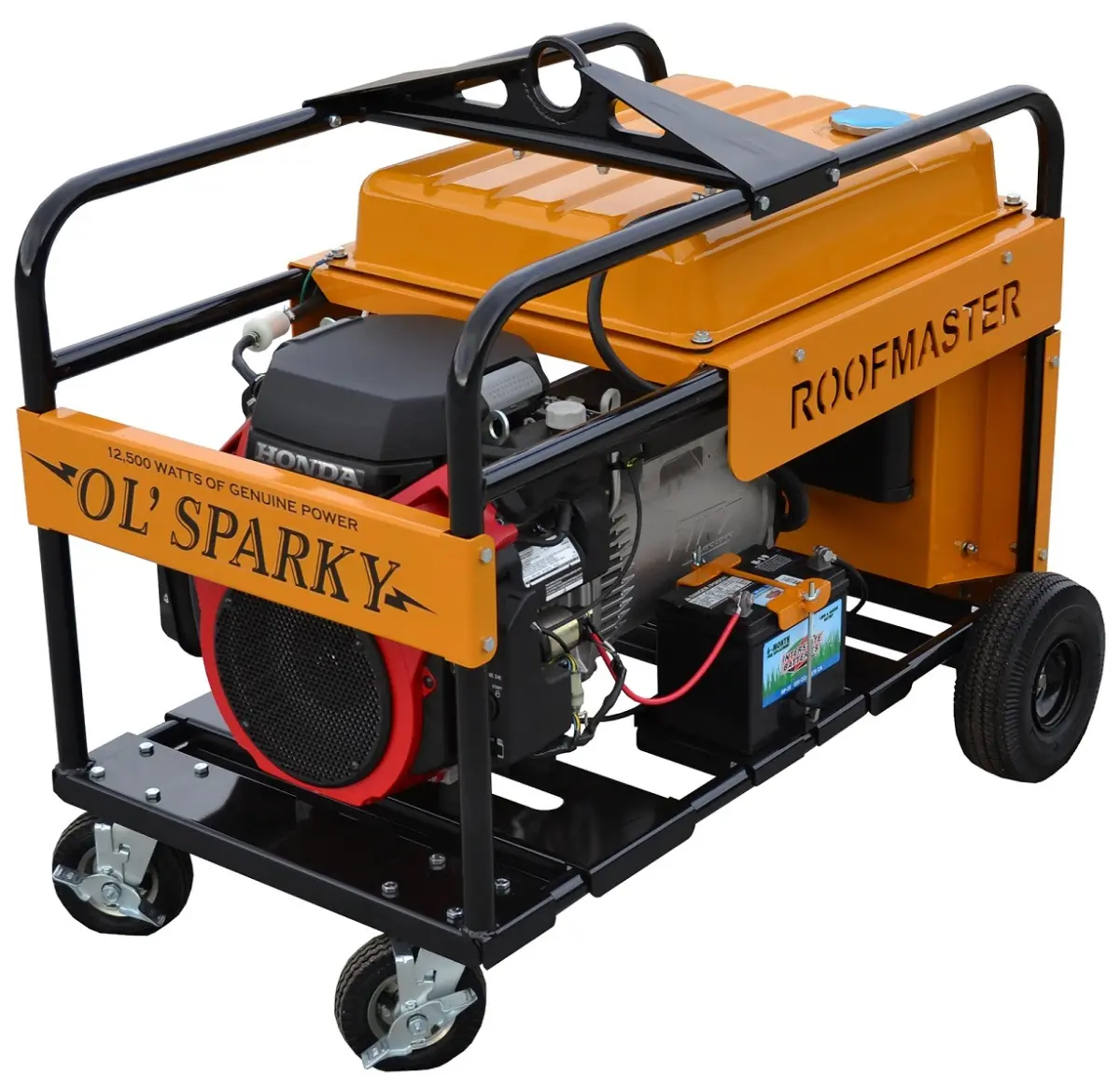
SACRAMENTO, CA — On January 1, 2024, California officially enacted one of the most sweeping environmental mandates in its history: a near-total ban on the sale of new gas-powered equipment utilizing Small Off-Road Engines (SORE) rated under 25 gross horsepower. While the public face of this legislative shift focused heavily on residential lawnmowers and leaf blowers, the regulatory dragnet has swept up critical industrial equipment, leaving commercial sectors—most notably roofing and specialized construction—scrambling to adapt to a rapidly changing operational landscape.
1. Main Facts: The Scope of Assembly Bill 1346
Passed in 2021 and implemented at the start of 2024, Assembly Bill 1346 (AB 1346) targets spark-ignition engines rated at or below 19 kilowatts—equivalent to 25 gross horsepower. The law effectively prohibits the sale of new gas-powered equipment in this category within the state of California.
+-----------------------------------------------------------------------+
|                         ASSEMBLY BILL 1346                            |
|  Applies to Small Off-Road Engines (SORE) < 25 HP (19 kW)             |
+-----------------------------------+-----------------------------------+
|          BANNED FOR SALE          |         STILL PERMISSIBLE         |
|        (New 2024+ Models)         |         (Existing/Legacy)         |
+-----------------------------------+-----------------------------------+
| • Gas-powered leaf blowers        | • Pre-2024 gas equipment owned    |
| • Gas lawnmowers & weed trimmers  |   by contractors or homeowners    |
| • Portable gas-powered generators | • Sales of remaining pre-2024     |
| • Industrial roofing pumps        |   certified manufacturer stock    |
| • Tear-off & application machines | • Diesel engines & heavy-duty     |
| • Chainsaws & utility carts       |   equipment (> 25 horsepower)     |
+-----------------------------------+-----------------------------------+
While the policy allows contractors and homeowners to continue using their existing, legally acquired gas-powered equipment, it cuts off the supply chain for new replacements. The regulatory definition of SORE includes a wide array of tools that extend far beyond residential lawn care:
- Roofing Equipment: Material handling pumps, tear-off machines, and hot-asphalt application equipment.
- Jobsite Power: Portable generators, which are essential for powering high-voltage tools on undeveloped or off-grid construction sites.
- Specialty Vehicles & Tools: Non-diesel utility carts, chainsaws, and concrete saws.
Although the agricultural and heavy construction sectors received narrow exemptions for specific heavy-duty machinery, the vast majority of commercial roofing tools fell outside these protections. Consequently, distributors and manufacturers are legally barred from selling new, post-2024 manufactured gas equipment in California once existing certified inventories are depleted.
2. Chronology: From Legislative Inception to the 2024 Cliff
The path to the current regulatory reality was paved over several years of legislative maneuvering, regulatory rulemaking, and industry pushback.
[Oct 2021] Gov. Newsom signs AB 1346 into law
   │
[Dec 2021] CARB adopts formal implementation regulations
   │
[2022-2023] Transition window; manufacturers build compliant pre-2024 inventory
   │
[Jan 1, 2024] Ban on sales of new post-2024 SORE gas engines takes effect
   │
[Present] Squeezed supply chains; rapid depletion of remaining legacy stock- October 9, 2021: Governor Gavin Newsom signs AB 1346 into law, directing the California Air Resources Board (CARB) to adopt regulations to phase out SORE sales by 2024, or as soon as CARB determines is technologically and commercially feasible.
- December 9, 2021: CARB formally adopts regulations implementing the mandate. The board establishes the January 1, 2024 deadline for zero-emission requirements on SORE, setting up a tight two-year window for manufacturers to pivot.
- 2022–2023 (The Transition Phase): Manufacturers and distributors utilize this period to produce and stockpile equipment featuring pre-2024 certified engines. Under the law, these legacy-compliant machines remain legal to sell until inventories are exhausted. Industry associations begin warning members of impending equipment shortages.
- January 1, 2024: The ban officially takes effect. New manufacturing and importation of non-compliant gas-powered SORE equipment for sale in California becomes illegal.
- Present Day: Distributors report rapidly dwindling stocks of 2023-certified gas equipment. Contractors face the reality of transitioning to electric alternatives or managing aging fleets of legacy gas tools.
3. Supporting Data: Emissions Versus Industrial Energy Needs
The Environmental Rationale
CARB’s regulatory push was driven by stark emissions data. According to CARB projections, the cumulative emissions from SORE in California exceeded those of light-duty passenger cars in the state by 2020.
To put this in perspective, CARB estimated that operating a commercial gas-powered leaf blower for one hour emitted the same amount of smog-forming reactive organic gases (ROGs) and nitrogen oxides ($NO_x$) as driving a 2017 Toyota Camry approximately 1,100 miles—roughly the distance from Los Angeles to Denver.
EMISSIONS COMPARISON (Smog-Forming Pollution)
========================================================================
[1 Hour] Commercial Gas Leaf Blower  ░░░░░░░░░░░░░░░░░░░░░░░░░░░░░░░░░░░
[1,100 Mi] 2017 Toyota Camry         ░░░░░░░░░░░░░░░░░░░░░░░░░░░░░░░░░░░
========================================================================
While these statistics successfully rallied environmental advocates, industrial sectors point out that the comparison fails to account for the massive energy density differences required by heavy commercial applications versus light consumer use.
The Energy Density Gap
The primary challenge for commercial contractors—particularly in roofing—is the physical limitation of current battery technology. Gasoline possesses an energy density of approximately 46 Megajoules per kilogram ($MJ/kg$). In contrast, state-of-the-art lithium-ion batteries yield only about 0.5 to 0.9 $MJ/kg$.
ENERGY DENSITY COMPARISON (MJ/kg)
========================================================================
Gasoline               [46.0 MJ/kg]  ███████████████████████████████████
Lithium-Ion Battery    [ 0.9 MJ/kg]  █
========================================================================
For a residential homeowner cutting a lawn, a 56-volt battery is highly efficient. However, for a commercial roofing crew operating on a multi-story industrial building, the power requirements are vastly different:
- Hot Air Welders: Commercial single-ply membrane roofing requires continuous hot-air welding equipment (such as Leister automatic welders) that operates at temperatures up to 1,200°F (650°C). These machines typically require steady, clean 230-volt, single- or three-phase power.
- Continuous Runtime: A typical roofing crew operates 8 to 10 hours a day. Generating this level of sustained thermal energy via portable batteries would require battery packs weighing hundreds of pounds, creating safety hazards on elevated roof decks.
- Generator Dependency: Without on-site utility power (which is rarely active during the structural roofing phase of new construction), crews rely on 10kW to 15kW portable generators—most of which fall squarely under the 25-horsepower SORE threshold.
4. Official Responses: Regulatory Ambition Meets Industry Friction
The implementation of AB 1346 has drawn contrasting responses from state regulators and trade representatives.
The Regulatory Perspective (CARB)
CARB maintains that the transition is both necessary for public health and technologically viable. To ease the financial burden on small businesses, the state allocated tens of millions of dollars to the Clean Off-Road Equipment Voucher Incentive Project (CORE). This program offers point-of-sale discounts on zero-emission lawn and garden equipment.
CARB officials argue that battery technology is advancing rapidly, and that early adoption will drive down costs and spur infrastructure development. They also point out that the reduction in localized emissions directly benefits the health of the laborers operating the machinery.
The Industry Perspective
Commercial trade groups, such as the National Roofing Contractors Association (NRCA) and various California-based contracting coalitions, argue that the regulations were written with a "one-size-fits-all" mindset that ignored specialized industries.
A spokesperson from a major West Coast roofing distributorship highlighted the disconnect:
"The legislature told the public they were banning lawnmowers and leaf blowers. What they didn’t make clear was that they were also banning the portable generators we use to run safety equipment, the pumps we use to move cold-applied adhesives, and the tear-off machines that remove heavy commercial roofing. We cannot run a 240V hot-air welder off a standard tool battery. Until the utility grid is accessible on every active jobsite from day one, we need portable, liquid-fueled power."
Contractors also express concern over jobsite logistics. "Where are we supposed to charge these massive battery banks?" asks one commercial project manager. "If we have to bring a diesel generator [over 25 hp] just to charge batteries for our smaller tools, we are actually burning more fuel and creating more emissions than if we just used a small, efficient SORE engine in the first place."
5. Implications: The Road Ahead for Contractors and Suppliers
The enforcement of AB 1346 is triggering immediate structural shifts across the construction, roofing, and equipment leasing sectors.
+-----------------------------------------------------------------------+
|                    IMMEDIATE MARKET IMPACTS & STRATEGIES              |
+-----------------------------------------------------------------------+
|  1. THE "BUY YESTERDAY" RUSH                                          |
|     Contractors are aggressively buying remaining pre-2024 certified  |
|     gas-powered stock before inventories dry up completely.           |
+-----------------------------------------------------------------------+
|  2. REPAIR AND MAINTENANCE SQUEEZE                                    |
|     Instead of replacing worn equipment, companies are investing      |
|     heavily in rebuilding older, grandfathered gas engines.           |
+-----------------------------------------------------------------------+
|  3. LOGISTICAL AND SITE HURDLES                                       |
|     Projects face delays as crews wait for temporary utility hookups, |
|     or resort to larger, louder diesel generators (> 25 HP).          |
+-----------------------------------------------------------------------+
|  4. SUPPLY CHAIN FLIGHT                                               |
|     Potential rise in out-of-state equipment sourcing, raising legal  |
|     and regulatory compliance questions for California projects.      |
+-----------------------------------------------------------------------+
1. The Inventory Rush and "Buy Yesterday" Strategy
For contractors, the immediate play is procurement. Because distributors are allowed to sell through their pre-2024 certified inventory, a run on legacy gas-powered generators, pumps, and specialized roofing tools is currently underway. Equipment experts advise that if a contractor anticipates needing a new gas generator or tear-off machine within the next three years, the time to purchase is now. Once these stockpiles are gone, the market will face a hard stop.
2. Elevated Maintenance of Legacy Fleets
As new gas equipment becomes unobtainable, the valuation of existing, grandfathered fleets will skyrocket. Contractors are expected to invest heavily in rebuilding and maintaining older engines rather than scrapping them. This could lead to an unintended "Oasis Effect," where older, dirtier engines remain in service far longer than they otherwise would have, as companies delay transitioning to unproven electric alternatives.
3. Shift to Larger, Non-SORE Diesel Equipment
To circumvent the 25-horsepower limit, some equipment manufacturers and contractors are looking toward larger diesel-powered generators and industrial engines that do not fall under the SORE definition. However, these units are heavier, more expensive, more difficult to transport to elevated work areas, and subject to different CARB diesel regulations, adding another layer of compliance complexity.
4. Project Delays and Infrastructure Deficits
Without reliable portable power, construction timelines may stretch. If a project cannot secure an early utility hookup from local power providers—a common bottleneck in California development—crews cannot easily run electric-welding or high-draw application tools. This infrastructure deficit risks stalling projects at the critical dry-in phase, leaving structures vulnerable to weather damage.
5. Out-of-State Sourcing Risks
While purchasing non-compliant SORE equipment out-of-state and bringing it into California is illegal for commercial operations, regulatory agencies will face significant enforcement challenges. Contractors operating near state borders may face scrutiny regarding the origin and acquisition dates of their equipment fleets, potentially leading to audits and steep fines for non-compliance.
Looking Forward
California’s ambitious push toward an emissions-free future is serving as a regulatory laboratory for the rest of the United States. However, the transition of the SORE market highlights the friction that occurs when environmental policy outpaces industrial battery capability. For the roofing and construction sectors, the coming years will test their operational resilience as they balance compliance with the physical realities of the jobsite. For now, the industry’s clearest path forward is securing the remaining legacy stock before the supply runs completely dry.
