Published: September 24, 2026 Author: Agustina Iñiguez (Adapted & Expanded) Source: ArchDaily / Francis Kéré: Building Stories (Taschen)
Main Facts
In the contemporary architectural landscape, few figures command the philosophical depth and community-driven ethos of Pritzker Architecture Prize laureate Diébédo Francis Kéré. In his recently spotlighted book, Francis Kéré: Building Stories (published by Taschen), the Berlin-based, Burkinabé-born architect posits a radical yet intuitive premise: time is a foundational building material.
While traditional Western construction paradigms often view time as an adversary—a resource to be aggressively managed, minimized, and rushed against strict financial deadlines—Kéré approaches time as a living, breathing component of the spatial design process. For Kéré, architecture does not reach its definitive conclusion the moment the last scaffolding is dismantled or the final certificate of occupancy is signed. Instead, architecture truly begins when its inhabitants move in, adapt the rooms, leave their marks, and start making the space their own.
Key elements of Kéré’s philosophy include:
Progressive Design Evolution: Kéré frequently continues the design and developmental process even after construction has commenced, allowing physical structures to respond dynamically to unforeseen site conditions and evolving community needs.
Material Temporality: Utilizing local, readily available materials—such as clay, laterite stone, and eucalyptus timber—that age, weather, and integrate organically into their surrounding landscapes.
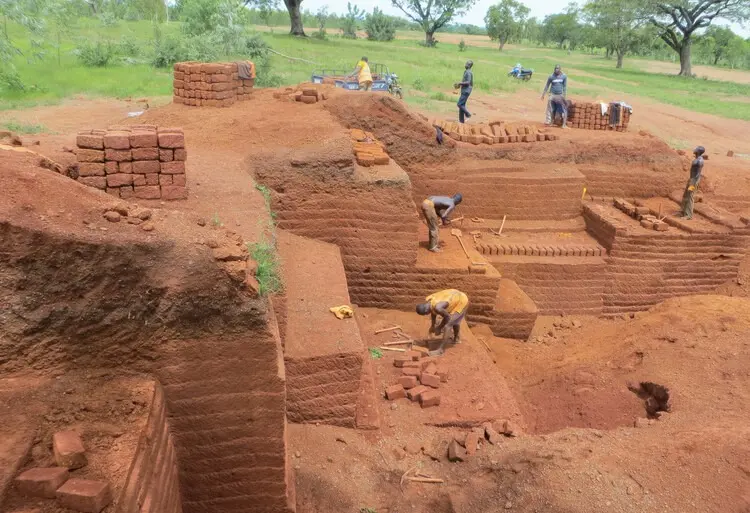
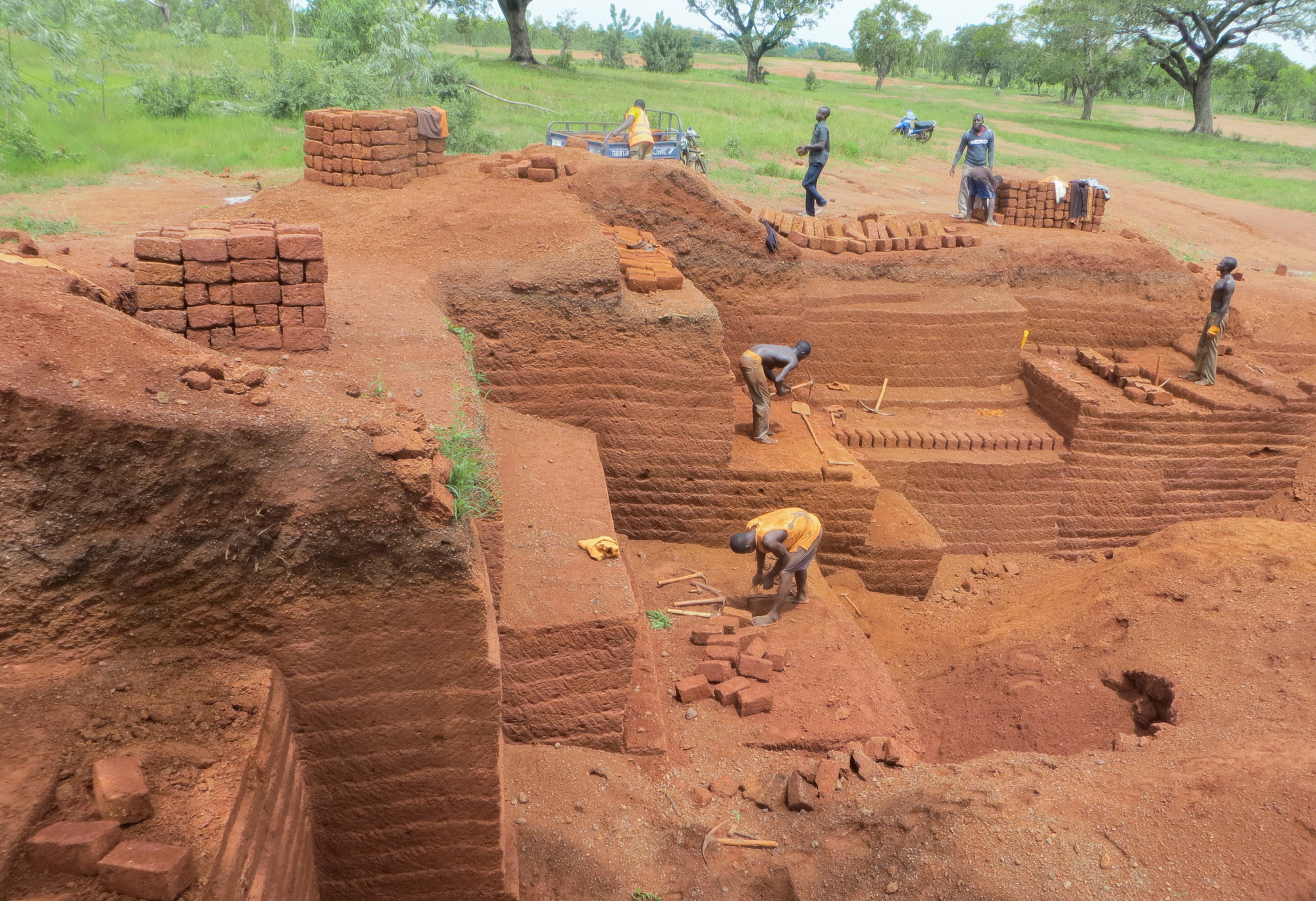
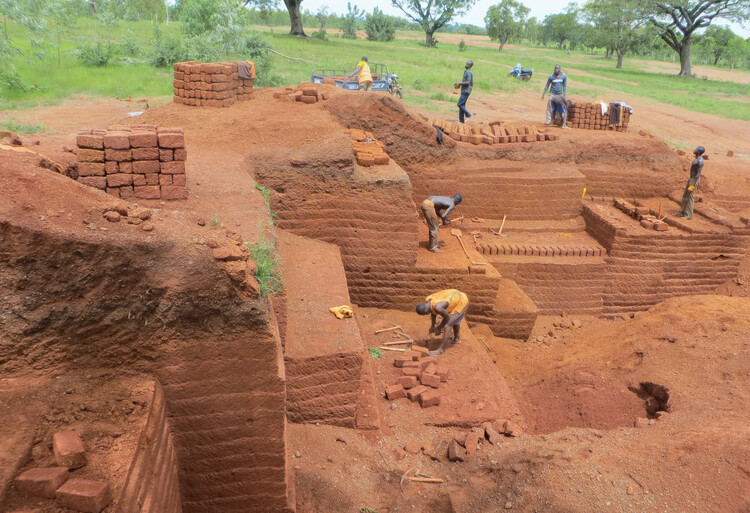
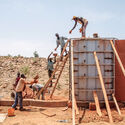
Collaborative Construction: Incorporating local labor, traditional craftsmanship, and community-wide participation (such as human chains to pour walls or manual extraction of laterite bricks) to infuse buildings with collective memory from day one.
Chronology of Evolution: From Gando to Global Recognition
To understand how time became a core structural pillar in Francis Kéré’s portfolio, one must trace the historical and professional trajectory of his practice, Kéré Architecture.
1. Formative Years and the Gando Primary School (Early 2000s)
Long before receiving international acclaim, Kéré’s career was defined by resourcefulness and temporal patience. While studying architecture at the Technische Universität Berlin, he raised funds to build a primary school in his native village of Gando, Burkina Faso. Lacking advanced industrial machinery, the project relied heavily on the rhythm of local labor seasons.
Villagers molded compressed earth blocks from local clay mixed with cement for stabilization. The construction timeline stretched to accommodate agricultural harvesting cycles, transforming the school into a collaborative community artifact. The building’s signature wide, elevated corrugated metal roof protects the earthen walls from seasonal monsoon rains while allowing hot air to escape—a design that relies on the natural passage of time and climate to perform efficiently.
2. Scaling Up: The Schorge Secondary School and Laterite Extraction (2010s)
As Kéré’s practice matured, temporal methods were scaled up to handle larger institutional complexes, such as the Schorge Secondary School in Koudougou, Burkina Faso. Here, the temporal process manifested deeply in the extraction of local laterite stone. Quarried directly from the earth, the stone absorbs daytime heat and slowly releases it at night, naturally regulating indoor temperatures. The construction phase acted as an educational workshop, training local youth in sustainable construction techniques that ensured the buildings could be maintained and expanded by the community over generations.
3. Institutionalizing Process: The Berlin Office and Global Exhibitions (Present)
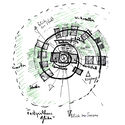
Today, Kéré Architecture operates out of Berlin while maintaining deep roots across the African continent. Projects such as the Naaba Belem Goumma Secondary School—where workers famously formed human chains to pour concrete and earth walls—and the master planning of the Opera Village in Laongo (anchored by a spiral theater layout) reflect a mature design philosophy. In these works, time functions as an elastic boundary, permitting structures to expand organically outwards as cultural and educational programming grows.
Supporting Data & Context
To contextualize Kéré’s approach, architectural historians and theorists frequently contrast his temporal methodology with the hyper-accelerated "fast-track" construction models dominating Western commercial real estate.
Embodied Energy vs. Lifespan: Buildings constructed with industrialized concrete and glass often carry massive upfront carbon footprints and require energy-intensive mechanical climate control. In contrast, Kéré’s buildings leverage thermal mass and local earth, reducing operational energy consumption by up to 70% in extreme climates.
Community Engagement Metrics: Studies on participatory architecture indicate that buildings constructed with local labor experience significantly lower rates of vandalism and higher rates of long-term adaptive reuse. Because the community invests its own physical time and sweat equity into the building, the structure commands deep civic stewardship.
Material Lifecycle: Materials like laterite and local timber do not degrade in a destructive sense; rather, they patina. Rainwater leaves mineral streaks, sun bakes the earth walls into harder formations, and vegetation encroaches on outer perimeters, effectively erasing the boundary between the built environment and the natural landscape.
Official Statements and Critical Perspectives
In Francis Kéré: Building Stories, the architect reflects extensively on the philosophical underpinnings of his work:
"After all, time is a key ingredient of my profession… Architecture is constantly evolving and transforming over time. Bricks, doors, windows, walls, stairs, and other elements become the protagonists of a process that begins with a sketch and eventually takes shape as a built work."
Critics and curators have echoed these sentiments, noting that Kéré’s work challenges the 20th-century modernist fixation on static, pristine, and unchanging architectural monuments. Instead, Kéré aligns with a vernacular tradition where a building is a living organism.
When Kéré was awarded the Pritzker Architecture Prize in 2022—making history as the first African architect to receive the honor—the jury explicitly commended his ability to design paradigms that are "sustainable in a material sense, but also in an institutional and community sense." The jury noted that his buildings grow with the people, adapting flexibly to social shifts without losing their structural integrity or cultural resonance.
Implications for the Future of Architecture
The elevation of time as a primary building material carries profound implications for global architectural practice, especially in an era defined by the climate crisis and rapid urbanization.
While contemporary green architecture heavily focuses on numerical metrics—such as LEED certifications, operational carbon, and material recycling ratios—Kéré’s philosophy reminds the profession that true sustainability is temporal. An architecture that is built to age gracefully, absorb local climate fluctuations, and invite ongoing human modification inherently resists premature demolition.
2. Shifting from Static Monuments to Open-Ended Frameworks
Urban planners and institutional clients are increasingly looking toward Kéré’s methods to design flexible infrastructure. By refusing to view the architectural blueprint as an immutable, sacred document, architects can create frameworks that welcome future additions, programmatic shifts, and grassroots interventions by inhabitants.
3. Re-humanizing the Construction Process
In an age of automated construction, prefabricated modular pods, and robotic assembly, Kéré’s insistence on manual, communal labor—such as human chains passing buckets of earth or villagers carving bricks—restores human dignity to the building site. Time spent building together becomes social capital, ensuring that the finished structure is not merely a container for life, but an active participant in the community’s collective history.
Ultimately, Francis Kéré’s work teaches us that architecture is never truly finished. It breathes, it weathers, it adapts, and—above all—it lives in tandem with the passage of time.